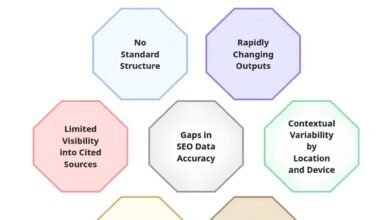
The 2026 Rank Tracker (and what “AI status” actually means)

I still remember the sinking feeling during a quarterly review a few years ago. My dashboard showed green arrows everywhere—rankings were stable, and we were holding the top 3 spots for our primary keywords. But the client looked at me and asked, “If we’re winning, why are leads down 15% this month?”
It was a harsh lesson: rankings alone don’t explain visibility anymore.
In 2026, the definition of “winning” has shifted. A standard blue link at position #1 is great, but if Google’s AI Overview pushes that link below the fold, or if a user gets their answer directly from ChatGPT without ever searching, your traditional rank tracker is lying to you by omission. To regain control, you need software that tracks the full spectrum: classic organic positions, local pack visibility, and the new frontier—AI status.
“AI status” simply refers to your visibility within generative search features. Are you being cited as a source in a Google AI Overview? Is your brand mentioned when someone asks Gemini for a recommendation? This guide covers the best SEO rank tracker 2026 options that help you measure this new reality, distinguishing between tools built for speed, depth, or enterprise scale.
If you need a shortlist, look for tools that offer accurate daily tracking plus AI Overview detection. For pure speed and enterprise needs, AccuRanker is the leader. For all-in-one SEO management with decent AI insights, Semrush or Ahrefs remain the gold standard. For local businesses needing granular city/ZIP data without the bloat, Nightwatch is my go-to.
Search intent and how I’m approaching this guide
If you found this article, you likely fall into one of two camps. You either have a rank tracker that feels outdated and want to know what’s better, or you’re building a new stack and need to justify the budget. I’ve structured this as a field guide, not a sales brochure.
If you are looking for a tool comparison, jump straight to the comparison table below. If you want to know how to actually set up a modern tracking system that alerts you to AI shifts, follow the workflow section. My goal is to help you move from “guessing” to “knowing” in under 60 minutes.
Why AI-visibility tracking matters for SEO in 2026 (rankings don’t tell the whole story)

The biggest shift in search behavior isn’t that people stopped searching; it’s that the interface changed. AI Overviews (AIOs) now appear in approximately 27.46% of SERPs . That is more than a quarter of all searches where the traditional top result is pushed down.
But here is the statistic that keeps me up at night: about 95% of AI Overview sources aren’t found within the organic top-20 rankings .
Let that sink in. You could be ranking on page 3—invisible in the classic sense—yet be the primary citation in the AI answer at the very top of the page. Conversely, you could be ranking #1 organic, but the AI Overview cites three of your competitors and ignores you entirely.
I recently saw this happen with a client in the legal software space. Their “pricing” page fell to position #6, panic set in, but traffic actually increased. Why? Because an AI Overview had started appearing for that query, and it was pulling a direct quote from their pricing table. Without AI visibility tracking, we would have wasted weeks trying to “fix” a ranking that wasn’t broken, while missing the real win.
What counts as “AI status” (simple definition for beginners)
When I talk about AI status, I’m looking for two things:
- Presence: Does an AI feature (like Google AIO) appear for this keyword?
- Citation: Is my domain linked or mentioned as a source within that feature?
It is distinct from a featured snippet. It is dynamic, often query-dependent, and can fluctuate based on the user’s location or search history.
Real-time vs daily updates: why speed changes how you respond
Most beginners are fine with daily updates. If you are reporting to a client once a month, knowing exactly where you ranked at 2:00 PM on a Tuesday versus 4:00 PM doesn’t change your strategy.
However, if you are running a high-stakes campaign—say, Black Friday sales or a major product launch—waiting 24 hours for data is painful. This is where real-time tools like AccuRanker or on-demand refresh buttons in tools like SE Ranking shine. I’d pay for on-demand updates when I’m actively testing meta title changes or debugging a sudden traffic drop. Otherwise, daily is usually sufficient for the budget-conscious.
What I monitor in a modern rank tracker: rankings, AI features, and business signals

Stop trying to track everything. I used to track 5,000 keywords for a small site, and it was just noise. Today, I use a specific KPI map to separate vanity metrics from business signals.
Here is exactly what I look at every Monday morning:
| Metric Category | Specific Metric | What it tells me | Check Frequency |
|---|---|---|---|
| Classic SEO | Position & Weighted Avg Position | Are we generally moving up or down? | Weekly |
| Visibility | Share of Voice (SoV) | How much market space do we own vs. competitors? | Monthly |
| AI Features | AIO Presence & Citations | Is AI answering this query? Are we the source? | Weekly |
| SERP Features | Snippet/Map Pack ownership | Are we winning the visual real estate? | Weekly |
| Business | Traffic & Conversion Value | Is the ranking actually making money? | Monthly |
Classic metrics (still useful): position, visibility trend, winners/losers
Don’t throw the baby out with the bathwater. Keyword rankings are still the best leading indicator of health. If I see a site-wide drop in average position, I know a technical issue or algorithm update hit us before revenue even dips. Just remember: single-day drops happen. Don’t panic unless the trend holds for 3–5 days.
AI-aware metrics: AI Overviews, assistant citations, contextual visibility
This is the new layer. Tools like Semrush and Ahrefs are shifting toward contextual visibility. They try to estimate how often your brand appears in AI results. I treat this data as directional, not absolute. If a tool says I’m cited in 15% of AIOs, the real number might be 10% or 20%, but if it drops to 0%, I know I have a problem.
How I choose the best SEO rank tracker 2026 (beginner checklist + decision criteria)

Choosing software is exhausting. I’ve seen too many agencies buy a $500/month Enterprise suite when all they needed was a $49/month tracker and a nice report template. If you are a US local business or a mid-sized agency, here is how you should score your options.
Non-negotiables for 2026 tracking (my minimum feature set)
I won’t put my credit card down for a tool that lacks these:
- Accurate SERP parsing: It must differentiate between organic, maps, and features.
- Mobile vs Desktop split: 60%+ of traffic is mobile; tracking only desktop is dangerous.
- AI Overview Detection: Must label if an AIO exists for the keyword.
- Tagging & Grouping: I need to filter by “Blog Posts” vs “Product Pages.”
- Daily Updates: Weekly tracking is too slow for 2026 volatility.
Local SEO and multi-location tracking (city and ZIP-level precision)
If you have clients with physical doors—think HVAC, Dental, Legal—national rankings are useless. A dentist ranking #1 in “USA” means nothing if they are invisible in their specific zip code.
For these scenarios, granularity is key. I use tools like Nightwatch or Local Falcon (a specialist tool) to track rankings at the ZIP code level. I’ve seen cases where a business ranks #1 in Austin but falls to #15 just 20 miles away in Round Rock. If your tool averages those out, you miss the insight.
Comparison table: best SEO rank tracker 2026 software

Here is the landscape as I see it today. I’ve selected these based on reliability, feature sets regarding AI, and value for money.
| Tool | Best For | Update Speed | AI Visibility Features | Local Granularity | Budget Level |
|---|---|---|---|---|---|
| Semrush | All-in-one Management | Daily | High (Semrush Sensor + AIO tracking) | City/Zip | $$$ |
| Ahrefs | Deep Data & Links | Varies (Tiered) | Medium (SERP features identification) | City/State | $$$ |
| AccuRanker | Enterprise / Speed | On-Demand / Real-Time | High (AI pixel depth & AIO tracking) | Exact Location | $$$$ |
| Nightwatch | Local & Agency Reporting | Daily | Medium (SERP Feature tracking) | Zip Code (Precise) | $$ |
| SE Ranking | Agencies / Value | Daily (Real-time option) | Medium-High | City/Zip | $$ |
| Zutrix | AI-First / Budget | Daily | High (AI-powered alerts) | City | $ |
| Mangools | Freelancers / UX | Daily | Low (Basic SERP watcher) | City/State | $ |
Quick decision guide:
- Pick AccuRanker if: You have a large budget and need instant data to make decisions during high-volatility campaigns. Their “share of voice” metric is top-tier.
- Pick Nightwatch if: You manage local SEO clients. The map tracking and ZIP-level accuracy are hard to beat for the price.
- Pick Zutrix if: You want modern AI alerts (like Slack notifications) on a freelancer budget.
- Pick Semrush/Ahrefs if: You want one login for everything—tracking, keyword research, and audits—and you can stomach the higher monthly fee.
Affordable vs enterprise suites: what you really get for the extra spend
This is the most common FAQ I get. Why pay $129+ for a suite when a tracker is $29?
3 reasons to buy a Suite:
- Context: You see competitor data alongside your own without setting it up manually.
- Workflow: You can click a dropped keyword and immediately audit the page or check backlinks.
- Consolidation: One invoice, one login for the whole team.
3 reasons NOT to:
- Complexity: Beginners often get lost in the noise of 50 different tools.
- Cost: You pay for features you never use.
- Lag: Dedicated trackers (like AccuRanker) are often faster at updating than massive databases.
A simple decision tree (visual): which tracker category fits me?
Start → Do you need Backlink/Audit tools?
Yes: Go All-in-One (Semrush/Ahrefs)
No: Do you need Real-Time updates?
Yes: AccuRanker
No: Is Local/Zip critical? → Yes: Nightwatch / No: SE Ranking or Zutrix
My step-by-step workflow to set up rank tracking + AI visibility monitoring (in ~60 minutes)

Buying the tool is the easy part. Setting it up correctly is where most people fail. I’ve audited accounts where the user was tracking “global” volumes for a local plumber—useless data. Here is my setup routine. Once tracking highlights a gap in your content strategy, I often use an AI article generator to quickly draft a comprehensive piece that targets those missing terms.
Step 1–3: pick keywords that match revenue (not vanity)
Don’t dump 500 keywords in on day one. Start with 25–50 that actually matter.
- Brand terms: Your name and variations (defend these).
- Money pages: The “buy [product]” or “[service] near me” terms that drive leads.
- High-intent info: Questions your customers ask before buying.
Pro Tip: If you sell expensive consulting, tracking “what is consulting” is vanity. Tracking “best consulting firms for finance” is revenue.
Step 4–6: configure locations, devices, and AI/SERP feature monitoring
For US businesses, I almost always default to Mobile tracking first, as Google is mobile-first indexing.
- Location: Be specific. “United States” is too broad for most. Pick your top 3 target cities.
- Language: English (US).
- Features: Go into the settings (often hidden in “Advanced”) and toggle on tracking for “Local Pack,” “Featured Snippets,” and “AI Overviews/SGE” if the tool supports it.
Caution: Location-based tracking is noisy. Don’t obsess over a ranking difference between North and South Chicago unless you have physical stores there.
Step 7–9: alerts, reporting cadence, and the action loop
I set two types of alerts:
- Emergency: Keyword leaves top 3 (Instant email).
- Opportunity: Keyword enters top 10 (Weekly digest).
My Friday 30-minute check-in is simple: I look at the “losers” list. If a money page dropped, I inspect the SERP manually. Did an AI Overview pop up? Did a competitor change their title tag? That dictates my Monday to-do list.
Reporting, alerts, and automation: turning rank data into consistent publishing and wins
Data without action is just trivia. The goal of tracking is to know when to act. When I see a cluster of keywords striking distance (positions 11–20), that is my signal to publish supporting content. If you are managing multiple sites, this is where an Automated blog generator becomes a lifesaver—it helps you spin up quality supporting articles to build topical authority without needing a dedicated writer for every single post.
However, automation isn’t “set and forget.” It’s about consistency. I use it to keep the blog active while I focus my manual energy on the high-value money pages.
A beginner-friendly weekly report format (what I include, what I ignore)
My weekly report is one page. Clients/bosses don’t read 50 pages.
- Top 3 Wins: Keywords that moved up significantly.
- Top 3 Risks: High-value keywords that dropped.
- AI Visibility Note: “We are now appearing in AI Overviews for [Topic].”
- Action Plan: “Refreshing content on Page X to recover position.”
Common rank-tracking mistakes I see in 2026 (and how I fix them fast)
I’ve made plenty of mistakes—like the time I panicked over a ranking drop that turned out to be a localized Google test that reverted 24 hours later.
- Mistake: Tracking generic volume.
Why it hurts: You optimize for traffic that doesn’t convert.
Fix: Filter keywords by “Intent” (Commercial/Transactional). - Mistake: Ignoring mobile rankings.
Why it hurts: Most users are on phones; desktop ranks are often vanity.
Fix: Set “Mobile” as your primary device in the project settings. - Mistake: Reacting to daily noise.
Why it hurts: You change strategy before the algorithm settles.
Fix: Never change on-page elements based on less than 7 days of data. - Mistake: Not annotating changes.
Why it hurts: Rankings drop and you forget you changed the H1 tag last week.
Fix: Use the “Notes” or “Events” feature in your tracker every time you deploy code or content. - Mistake: Ignoring AI Overview displacement.
Why it hurts: You think you’re #1, but AI is stealing the clicks.
Fix: Check the “Pixels from Top” or “Visual Rank” metric, not just organic position.
Mistake-to-fix checklist (copy/paste)
☐ Are my primary keywords tagged by product/service category?
☐ Is my location set to my actual service area (not “Global”)?
☐ Is mobile tracking enabled?
☐ Do I have alerts set for top-3 drops?
☐ Have I filtered out keywords with zero search volume?
FAQs + conclusion: choosing the best SEO rank tracker 2026 and what I’d do next
We have covered a lot, from the rise of AI visibility to the nitty-gritty of ZIP-code tracking. If you take one thing away, let it be this: Rankings are just a proxy for attention. As AI takes more of that attention, your tools need to adapt.
FAQ: Why is AI-visibility tracking important for SEO in 2026?
Because visibility is no longer linear. With AI Overviews appearing in over 27% of searches , being the #1 blue link doesn’t guarantee clicks. You need to know if you are being cited in the AI answer, which often pulls from sources outside the top 10 rankings.
FAQ: What distinguishes real-time rank tracking tools from daily update tools?
Think of daily tools like reading the morning newspaper—it tells you what happened yesterday. Real-time tools (like AccuRanker) are like a stock ticker. If you need to react instantly to a competitor’s move or a PR crisis, choose real-time. For standard SEO maintenance, daily is fine.
FAQ: How do affordable AI rank-tracking tools compare to enterprise suites?
Affordable tools (Zutrix, Nightwatch) focus on doing one thing well: tracking positions. Enterprise suites (Semrush, Ahrefs) are ecosystems that include auditing, backlink analysis, and content marketing tools. If you already have an audit tool, a specialized tracker is often smarter and cheaper.
Your Next Moves:
- Audit your stack: If your current tracker doesn’t show SERP features or AI status, it’s time to switch.
- Start small: Set up a project with your top 30 revenue-driving keywords.
- Execute: Use the data. When you find a keyword where you have low visibility, use an AI SEO tool to help you create the content needed to compete.
The landscape is changing, but the goal remains the same: get found. With the right SEO content generator and a sharp rank tracker, you can turn that volatility into opportunity.