Introduction: why I’m tracking visibility in AI answers in 2026 (and why you probably should, too)

It happens more often than we care to admit. A prospect opens ChatGPT or Perplexity and types, “What is the best payroll software for small businesses with tight budgets?” If your brand isn’t in that generated answer, you don’t exist to that buyer. They aren’t going back to Google to check page two.
This shift in behavior has fundamentally changed my Monday morning reporting routine. In 2024, I checked Google Search Console rankings religiously; in 2026, I also have to check whether AI assistants are citing, recommending, or ignoring us completely on the same topics.
But measuring this is messy. “Rank” doesn’t mean position #1 anymore—it means being part of a synthesized conversation. This guide is for the growth marketers and SEO leads trying to make sense of this new layer of data. I’ll break down the tools that actually work, how to set up a tracking workflow that isn’t a time-suck, and the specific metrics that justify the budget.
AI rank tracking tools explained: what they measure (and why it’s not traditional rank tracking)

If you are coming from a traditional SEO background, you need to adjust your mental model. We aren’t tracking a static list of blue links anymore. We are tracking a dynamic, conversational output that changes based on context.
Quick definition: What is an AI rank tracking tool?
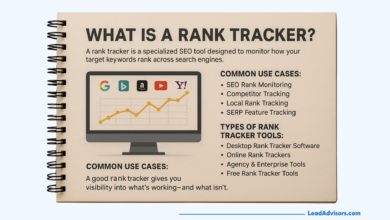
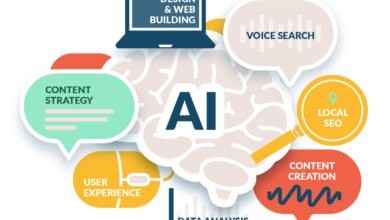
AI rank tracking tools (often called AI visibility or GEO tools) simulate real-user prompts across multiple Large Language Models (LLMs) like ChatGPT, Gemini, and Claude. They measure how often your brand appears, the sentiment of the mention, and which sources the AI cites to construct its answer.
Why AI visibility is different from traditional SEO tracking
Think about a standard keyword like “best CRM for real estate agents.” In traditional SEO, you fight for a slot on the first page. Even if you are #4, you are visible.
In an AI-generated answer, the model synthesizes information. It might say, “HubSpot is great for scaling, while Salesforce is better for enterprise.” If you aren’t mentioned in that synthesis, your “rank” is effectively zero. Furthermore, LLMs hallucinate, drift, and personalize answers. A tool that only pings an API once a month misses the reality of user experience. We need tools that handle prompt variations, archive the full text response, and identify citations—because unlike Google, the AI doesn’t just link to you; it speaks for you.
What “rank” means in LLMs: the metrics and features that actually matter

When I evaluate these tools, I ignore the vanity scores (like “AI Score: 98/100”) until I verify the raw data behind them. Here are the metrics I actually use to make decisions:
| Metric | What it tells me | When I use it |
|---|---|---|
| Share of Voice (SOV) | Percentage of prompts where my brand appears. | Monthly executive reporting to show market presence. |
| Citation Presence | Are my URLs linked as sources? | Technical SEO audits to see if we are indexable/authoritative. |
| Sentiment Analysis | Is the mention positive, neutral, or negative? | PR monitoring (e.g., catching a “too expensive” label). |
| Position in Answer | Does the AI recommend me first or as an afterthought? | Competitive analysis against top rivals. |
How tracking works under the hood (real-browser simulation vs API)
This is the technical detail that breaks most cheap tools. Some platforms just ping an official API (like the OpenAI API). This is cleaner but inaccurate because APIs often behave differently than the web interface (ChatGPT Plus) your customers use. I prefer tools that use real-browser simulation—they spin up a headless browser, log in, and type the prompt exactly like a human.
What to ask a vendor:
- Personalization: Do you run prompts from a “clean” browser, or do you retain history?
- Location: Can I set the prompt origin to specific US cities? (Crucial for “near me” queries).
- Response Archiving: Do you save the full text of the answer? (If they don’t, you can’t debug bad mentions).
Integrations and exports: GA4, SEO suites, and BI workflows
Measurement is useless if it doesn’t correlate with traffic. I’ve found that high citation visibility usually leads to a lift in referral traffic and branded search volume, though attributing it directly is tricky.
I look for tools that bridge this gap. For instance, RadarKit.ai has made waves by integrating with GA4, allowing you to overlay AI visibility data against actual traffic drops or spikes. Other tools, like Otterly.ai, integrate directly into Semrush, which is a lifesaver if you want to keep your workflow inside one tab. For my monthly deep dives, I still rely on a simple CSV export to look for trends—like a spike in mentions after a major product launch.
How I choose AI rank tracking tools: a simple framework by business stage

There is no single “best” tool because the pricing models are wildly different. A startup tracking 50 prompts needs a different engine than an enterprise monitoring compliance across 10,000 queries. Here is the decision matrix I use:
| Business Stage | Primary Goal | Must-Have Features | Best-Fit Pricing |
|---|---|---|---|
| Startup / SMB | Brand discovery & testing | Easy dashboard, low minimums | Wallet-based (Pay-as-you-go) |
| SEO Agency / Growth Team | Client reporting & optimization | Historical data, citation tracking, exports | Subscription (Monthly recurring) |
| Enterprise / Brand Protection | Governance & risk management | Hallucination detection, SSO, API access | Custom / Enterprise |
A note on execution: These tools only diagnose the problem. Once I see we aren’t ranking, I need to fix the content. That’s where I pivot to execution tools. I use Kalema not to track the rank, but to take the insight (“we lack authority on this topic”) and generate the high-quality, intent-matched articles needed to earn that citation.
Pricing models in plain English (wallet vs credits vs subscriptions vs enterprise)
Pricing is confusing in this space. Wallet-based models (like AI Rank Checker) let you buy $50 of credits and burn them as you check. This is perfect for sporadic testing. Subscriptions (like Peec AI or ZipTie) are better for stability. If you are calculating costs, do this math: (Number of Prompts) × (Number of Engines) × (Frequency per Month). For 25 prompts on 4 engines weekly, that’s 400 checks a month.
Use-case fit: brand mentions vs product-level visibility vs governance
Most people just track their brand name. That’s a mistake. If you are a D2C brand selling ergonomic chairs, you need product-level tracking. You want to know if your specific chair model appears when someone asks for “best chair for back pain.” This is where tools like Ranketta differentiate themselves—they focus on the product entity, not just the corporate brand.
The 2026 shortlist: AI rank tracking tools worth testing (with a comparison table)

Based on my testing and current market data, here are the players defining the space right now. Note that feature sets change fast, so treat this as a snapshot.
| Tool | Best For | Pricing Model | Key Differentiation |
|---|---|---|---|
| AI Rank Checker | SMBs / Testing | Wallet (Pay-as-you-go) | Supports 20+ engines; no monthly commitment. |
| Peec AI | Growth Teams | Subscription (Starts ~€89/mo) | Strong prompt-level analytics & sentiment scoring. |
| ZipTie | SEOs | Subscription ($69-$159/mo) | Clean, fast dashboards; great for quick wins. |
| Ranketta | E-commerce | Subscription / Custom | Deep product-level visibility & recommendation context. |
| RadarKit.ai | Analytics Pros | Subscription | Direct GA4 integration to correlate visibility with traffic. |
| Profound | Enterprise | Custom | Compliance, hallucination detection, and governance. |
Good starting points for SMBs and agencies (fast setup, reasonable cost)
If I had $100/month and needed answers today, I’d look at ZipTie or AI Rank Checker. ZipTie offers a very clean interface that doesn’t overwhelm you with data, perfect for showing a client “Here is where we stand.” AI Rank Checker is my go-to for one-off checks because I don’t get locked into a contract—I can just load up a wallet and run a quick audit on 20 different engines.
SEO-first teams: mapping keywords into AI visibility (bridging SERP and LLM tracking)
For teams that live in Semrush or Ahrefs, look at LLMrefs or the Otterly.ai integration. These tools understand that you already have a keyword list. They help you translate those keywords into questions. I was surprised to learn that the prompt that “wins” often isn’t the keyword I expected, but a natural language variation like “Who are the top competitors to X?”
E-commerce and D2C: product-level visibility and recommendation context
If you sell physical goods, general brand tracking is too broad. Ranketta has carved out a niche here by tracking product entities. For example, knowing your brand is mentioned is good; knowing your “Pro Series 500” is recommended specifically for “heavy duty use” is actionable intelligence. This level of granularity is essential for D2C marketing.
Enterprise needs: governance, compliance, and hallucination detection
For large organizations, the fear isn’t “are we ranking?”—it’s “is the AI lying about us?” Tools like Profound and xSeek focus on governance. They provide audit trails of what was said, when, and whether it violated brand safety policies (hallucination detection). This is the data you need when Legal asks, “What is ChatGPT telling people about our data privacy?”
Implementation: my beginner workflow to monitor your rank in LLMs (week 1 → week 4)

Don’t overcomplicate this. You don’t need to track the entire internet. Here is the exact workflow I use to get up and running without drowning in data.
| Prompt Category | Example Prompt | Intent | Success Signal |
|---|---|---|---|
| Branded | “What are the pros and cons of [My Brand]?” | Navigational / Review | Accurate sentiment; no hallucinations. |
| Category Best | “Best [Product Category] for [Target Audience]” | Commercial | Included in the list; top 3 mention. |
| Comparison | “[My Brand] vs [Competitor]” | Investigational | Fair comparison; clear differentiator cited. |
| How-to | “How to solve [Problem my product solves]” | Informational | Brand cited as a solution source. |
Step 1: Start with a tight prompt set (not hundreds)
I learned this the hard way: if you track 500 prompts, you will ignore the dashboard. Start with 15–20 high-impact prompts. Mix Branded (checking reputation) and Non-Branded (checking discovery). Keep the wording consistent; changing “Best CRM” to “Top CRM” can completely change the result.
Step 2: Pick engines that match your customers (US focus)
I focus on where my users actually are. For most US B2B businesses, that is ChatGPT (Plus and Free), Perplexity, and increasingly Google AI Overviews. If you target developers, add Claude or Copilot. I usually start with 3 engines to establish a baseline before expanding.
Step 3: Turn tracking into improvements (content, technical, PR)
This is the most critical step. If you aren’t mentioned for “Best accounting software,” tracking it won’t fix it. You need to diagnose why. Usually, it’s because your content lacks specific, authoritative details that LLMs crave.
This is where I integrate execution. Once I identify a gap—say, we are missing from the “Best for Small Business” lists—I use Kalema’s AI article writer to help draft deep, structurally sound content that specifically targets those entities and questions. I don’t just generate text; I use the Automated blog generator features to help maintain a consistent publishing cadence, refreshing older articles with new data so the LLMs see us as current and relevant. The loop is: Track Gap → Update Content → Publish → Re-track.
Step 4: Reporting that stakeholders understand
Your CEO doesn’t want to see raw JSON responses. They want to know if you are winning. My monthly report is one page:
- Share of Voice: “We appear in 45% of category prompts (up from 30%).”
- Wins: “Now recommended #1 for ‘enterprise use cases’.”
- Risks: “ChatGPT still cites an old pricing page; we need to update that.”
Common mistakes I see with AI rank tracking tools (and how to fix them)

- Mistake: Chasing vanity metrics.
Why it happens: It feels good to see a “95/100” visibility score.
The fix: Always read the raw response. A high score is useless if the AI is praising your competitor in your brand mention. - Mistake: Ignoring prompt drift.
Why it happens: You change your prompt slightly every week.
The fix: Version lock your prompts. Use the exact same string every time to ensure data comparability. - Mistake: Treating weekly volatility as failure.
Why it happens: LLMs are probabilistic; they change answers even if you change nothing.
The fix: Look at 4-week moving averages, not single data points. - Mistake: Tracking without an action plan.
Why it happens: Collecting data feels like work.
The fix: If you can’t update the content, don’t track the keyword. Only monitor what you have the resources to improve.
Conclusion: my 2026 checklist for choosing and using AI rank tracking tools

The transition from “ranking on Google” to “being recommended by AI” is the defining challenge of 2026. If I were starting my setup today, here is exactly what I would do:
- Select a tool based on your goal: ZipTie/AI Rank Checker for quick insights, Peec AI/RadarKit for deep ongoing analysis.
- Build a 20-prompt baseline: Focus on your top 5 products and brand reputation.
- Run a weekly check: Don’t obsess daily. Weekly is enough to spot trends.
- Connect to content: Use the insights to drive your content calendar. Visibility comes from authority, not tricks.
The goal isn’t just to be watched—it’s to be cited. Start tracking, find your gaps, and start filling them.