Automate SEO with AI — The Autonomous Optimizer Playbook for Beginners
Introduction: Why I’m treating AI agents as my “autonomous optimizer” (not a content spinner)

I used to dread the first Monday of the month. That was when I’d open Google Search Console and realize half my “evergreen” content was decaying, three technical audits were pending, and I hadn’t published a new article in weeks because I was too busy managing the old ones. SEO isn’t just about writing anymore; it’s an operations problem. There are simply too many moving parts for a small team to handle manually without dropping the ball.
That is where I drew the line. I didn’t want an AI tool to just spit out generic text; I needed an operating system—an “autonomous optimizer”—that could handle the repetitive grunt work while I stayed in the driver’s seat for strategy. This isn’t about replacing human creativity. It’s about building a workflow where AI agents handle research, drafting, and monitoring so growth actually scales. But I have a strict rule: I still review before publishing.
Here is the playbook I use to automate SEO with AI safely, including:
- The difference between simple AI writing and true agentic workflows.
- How to adapt to the GEO/AEO shift (where AI answers replace links).
- A step-by-step workflow from research to ranking.
- The specific guardrails that keep quality high and risks low.
What it means to automate SEO with AI (and what an AI SEO agent actually does)

If you are new to this, the jargon can be overwhelming. Let’s clear it up. Most people think “automating SEO” means using ChatGPT to write a blog post. That is assistance, not automation. True automation involves AI agents—systems capable of planning, executing, critiquing their own work, and iterating based on data, often with minimal human intervention between steps.
Think of an AI agent not as a tool, but as a junior analyst on your team. You give it a goal (“Identify low-competition keywords for our CRM product and draft briefs”), and it goes off to use tools, browse the web, and return with the work done. However, effectiveness varies wildly based on your quality controls. If you automate without governance, you scale noise. If you automate with guardrails, you scale authority.
Here is my personal rule of thumb for what to hand over:
- Tasks I Automate: Keyword clustering, SERP analysis, content brief generation, initial drafting, internal link auditing, schema markup generation, rank tracking.
- Tasks I Keep Human: Final editorial approval, high-stakes opinion pieces, strategic positioning, factual verification of sensitive claims, and “voice” calibration.
If a mistake could severely damage brand trust (like a wrong pricing claim or a medical fact), I never fully automate it.
Quick answer: What is “Automate SEO with AI via AI agents?”
Automating SEO with AI via agents refers to using autonomous or semi-autonomous software systems that perform end-to-end SEO tasks—such as keyword research, content generation, internal linking, and SERP analysis—with minimal human input. Unlike simple writing tools, these agents can often “chain” tasks together (e.g., research first, then write) and use data to self-correct.
What SEO tasks are safest to automate first (for beginners)

If I’m just starting and want to reclaim time without risking a Google penalty, I’d begin with these low-risk, high-reward tasks, in this order:
- Meta Data Generation: Bulk creating title tags and meta descriptions for review.
- Topic Ideation & Clustering: Grouping thousands of keywords into topical clusters (a nightmare to do manually).
- Content Brief Creation: Scouring the top 10 results to build a structural outline.
- Internal Linking Opportunities: Scanning your site to find orphaned pages that need links.
- Technical Audits: identifying broken links, missing alt text, or 404 errors.
- Content Updates: Identifying stats or years in old posts that need refreshing (e.g., changing “2023” to “2025”).
- Drafting Informational Content: Creating first drafts for standard “what is” or “how to” definitions.
Why SEO is shifting: traditional SEO vs GEO/AEO (and why it changes my playbook)

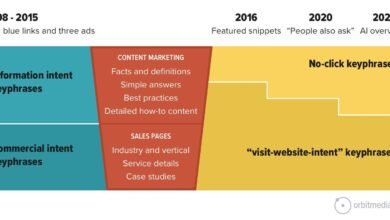
The game has changed. We are moving from a world of “10 blue links” to a world of AI-generated answers. This is known as Generative Engine Optimization (GEO) or Answer Engine Optimization (AEO). With Google’s AI Overviews appearing in over 50% of queries as of late 2025 , your content isn’t just being read by humans; it’s being ingested by Large Language Models (LLMs) to construct answers.
Here is how I view the difference and why my automation strategy had to adapt:
| Feature | Traditional SEO | GEO / AEO |
|---|---|---|
| Primary Goal | Rank #1 in search results list. | Be cited in the AI-generated snapshot/answer. |
| Content Format | Long-form, comprehensive guides. | Structured data, concise answer blocks, entities. |
| Optimization Focus | Keywords and backlinks. | Authority, citations, and content structure. |
| Measurement | Rank position, organic clicks. | Share of Voice in AI answers, citation frequency. |
| Risk | Algorithm updates (Core updates). | Being excluded from the “answer” entirely. |
If you automate content that is fluffy or unstructured, you lose in the GEO era. Automation must produce highly structured, factual content that machines can easily parse.
How GEO/AEO is different from traditional SEO (in plain English)
Traditional SEO was about proving relevance to a search engine so it would route a user to your site. GEO is about optimizing content so a generative AI engine (like ChatGPT or Google Gemini) can understand, retrieve, and summarize your information directly in the answer. To win here, I focus on structure: using clear definitions, bullet points, and data tables.
Examples where answer formats win:
- Definitions: “What is programmatic SEO?” (Needs a direct, bolded answer).
- Comparisons: “Mailchimp vs HubSpot” (Needs a feature table).
- Process steps: “How to install Python” (Needs a numbered code block).
Inside an AI SEO agent: the “autonomous optimizer” architecture I’d use

When I talk about an “Autonomous Optimizer,” I’m talking about a workflow, not magic. It’s like managing a team of virtual assistants where you are the project manager.
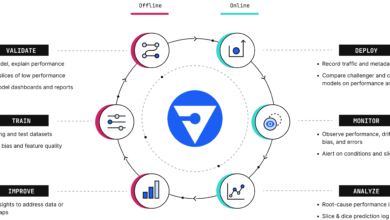
The architecture typically looks like a loop:
Input (Strategy/Topic) → Plan (Research Agent) → Execute (Writer Agent) → QA (Editor Agent) → Publish → Measure → Learn (Feedback Loop)
This works because of new technologies like the Model Context Protocol (MCP), which allows different AI tools to talk to each other standardly. For example, a research agent can pass data to a writer agent without copy-pasting. In the enterprise world, about 79% of organizations have adopted some form of AI agents , and they are budgeting heavily for it because it turns SEO into a scalable manufacturing process rather than a craft project.
The minimum viable stack (beginner edition)
You don’t need a $10,000 enterprise platform to start. Here is what a beginner stack looks like:
- Must-have: A CMS (WordPress/Webflow), Google Search Console (GSC), Google Analytics 4 (GA4).
- Must-have: An AI writing/agent tool (to handle the drafting and optimization).
- Nice-to-have: A specialized SEO data tool (Ahrefs/Semrush) for deeper data feeding into the agent.
- Nice-to-have: An automation connector (Zapier/Make) if your AI tool doesn’t publish directly.
Where RAG and vector stores fit (and why they reduce hallucinations)

This is the technical bit that saves your reputation. RAG (Retrieval-Augmented Generation) is a fancy way of saying “open book test.” Instead of letting the AI guess facts from its training data (which causes hallucinations), you give it a library of truth—a “vector store.”
What I put in my knowledge base:
- My brand style guide and tone of voice.
- Specific product features, pricing, and specs (so it never invents a price).
- A list of high-value internal URLs I want to promote.
How I automate SEO with AI: The Autonomous Optimizer workflow (step-by-step)

This is the exact loop I use. It moves from messy ideas to indexed pages with clear handoffs between the robot and the human.
Step 1: Set goals + guardrails before the agent writes anything
I decide the finish line first; otherwise, automation just creates noise. Before I launch an agent, I define the guardrails. This prevents the nightmare scenario of an agent publishing 100 pages of nonsense while I sleep.
My Guardrails Checklist:
- Sources: Must cite at least 2 external authorities per claim.
- Negative Constraints: Never mention competitors X, Y, or Z.
- Approvals: Any content related to pricing or legal terms requires manual sign-off.
- Velocity: Cap publishing at X posts per day to avoid looking like spam.
Step 2: Topic + keyword discovery (intent first, volume second)
Agents are great at processing data. I use them to analyze search intent. If the SERP is filled with YouTube videos and calculators, I don’t ask the agent to write a 3,000-word essay. It won’t rank.
- Informational Intent: Agent plans a “How-to” guide or definition.
- Commercial Intent: Agent plans a “Best X for Y” listicle.
- Transactional Intent: Agent flags this for a human copywriter (landing pages are too important).
Step 3: Build a newsroom-grade content brief (my reusable template)
I never let an AI write without a brief. The brief is the blueprint. If the blueprint is bad, the house falls down.
- Target Keyword: [Primary Keyword]
- User Persona: [Job Title / Pain Point]
- User Intent: [What problem are they solving?]
- Required Entities: [List of terms that must be included for topical authority]
- Angle/Hook: [Why is our take different?]
- Internal Links to Include: [URLs]
- Call to Action: [Specific next step]
Step 4: Draft + optimize on-page SEO (titles, headings, schema, internal links)
Once the brief is approved, the agent executes the draft. I use a specialized AI article generator to ensure the output isn’t just a wall of text but a structured piece of content. The AI scans the top results and structures the H2s and H3s to match or exceed the current standard.
My 30-Second Editor’s Scan (On-Page Checklist):
- Does the Title Tag contain the primary keyword near the front?
- Is the URL slug short and clean?
- Are there clear H2s that answer specific user questions?
- Is Schema markup (FAQ or HowTo) included?
- Are there at least 3 internal links to relevant pages?
- Is the “Quick Answer” paragraph (for GEO) right at the top?
Step 5: Publish + indexation checks (automation without losing control)
Publishing is where things get scary. I’ve been burned before by tools that auto-published empty drafts. Today, I use an Automated blog generator workflow that includes a “staging” step.
The Protocol:
- Pre-Publish: The agent pushes the draft to “Pending Review” in WordPress.
- Review: A human spends 5 minutes validating facts and tone.
- Post-Publish: The system pings Google Search Console for indexing.
- Safety Check: Ensure the canonical tag is self-referencing to avoid duplicate content issues.
Step 6: Measure, learn, and refresh (the feedback loop that makes agents valuable)
This is the most underrated step. In one experiment, an automated blog system posting daily grew from 3 clicks to over 450 clicks per day, achieving 407K impressions . But that didn’t happen by firing and forgetting. It happened because the system monitored performance.
I treat every win as a hypothesis until it repeats. If a page ranks on page 2, the agent should flag it for a “refresh”—adding a new section or better internal links to push it to page 1. If a page gets zero impressions after 60 days, we prune or rewrite it. Automating this reporting saves me hours every week.
Tools and platforms in the AI SEO agent ecosystem (what to look for)

The market is exploding, with the GEO market projected to reach billions by 2034 . But as a buyer, you need to be careful. Many tools are just wrappers around ChatGPT. You want a comprehensive AI SEO tool that understands data, not just text.
| Tool Category | Best For | Risks/Limitations |
|---|---|---|
| AI Writers (e.g., Writesonic) | Fast drafting and SEO scoring. | Can lack “agentic” planning; requires manual steering. |
| GEO Monitors (e.g., Evertune/Profound) | Tracking brand visibility in AI answers. | Measurement only; doesn’t fix the content for you. |
| Autonomous Agents (Custom/Platform) | End-to-end workflow (Plan > Write > Rank). | Higher complexity; requires strict governance. |
Before I commit to a tool, I ask: “Does it integrate with GSC?” and “Does it have an audit trail so I can see exactly what the AI changed?” If the answer is no, I walk away.
Risks, quality control, and what can go wrong when you automate SEO with AI
If you only remember one thing, let it be this: Speed is the enemy of quality. The biggest risk with AI automation is creating “thin content” at scale, which can lead to algorithmic penalties. I’ve seen businesses tank their rankings because they let an agent overwrite perfectly good human content with generic fluff.
Common Mistakes & Fixes:
- Publishing too fast: If you go from 1 post a month to 50 a day, Google gets suspicious. Fix: Ramp up velocity slowly.
- Ignoring the SERP: Writing an article when the user wants a calculator. Fix: Automate intent checks first.
- Fact Hallucinations: The AI inventing a statistic. Fix: Use RAG and mandatory citations.
- Orphaned Pages: Publishing pages with no internal links pointing to them. Fix: Automate internal linking during drafting.
- Tone Deafness: Using robotic phrases like “In the rapidly evolving landscape.” Fix: Add negative constraints to your style guide.
A simple human-in-the-loop policy I’d recommend
You need a policy that dictates when a human must intervene. Here is the SOP I use:
| Change Type | Agent Allowed? | Required Reviewer |
|---|---|---|
| Meta Data Updates | Yes (Auto-publish) | None (Audit monthly) |
| New Informational Blog Posts | Drafting Only | Editor (Final review) |
| Product/Service Pages | No | Senior Marketing Manager |
| Technical Fixes (404s) | Yes | None |
FAQs: AI SEO agents, GEO/AEO, and effectiveness (beginner questions)
What is Automate SEO with AI via AI agents?
This refers to using autonomous or semi-autonomous software systems that execute SEO tasks—keyword research, content generation, internal linking, and SERP analysis—with minimal human input. Unlike basic writing tools, these agents can plan workflows and iterate on data to improve results.
How is GEO/AEO different from traditional SEO?
Traditional SEO focuses on ranking blue links in search engines. GEO (Generative Engine Optimization) and AEO (Answer Engine Optimization) focus on optimizing content to be retrieved and summarized by AI, prioritizing structured data, direct answers, and topical authority.
Are AI SEO agents effective?
They can be highly effective for scaling content and handling repetitive technical tasks, often driving significant traffic growth. However, they can also damage rankings if they produce low-quality, generic content without human oversight.
What are common tools and platforms in this space?
Common examples include Writesonic for drafting, and newer platforms like Evertune and Profound for monitoring GEO performance. The ecosystem is also adopting standards like the Model Context Protocol (MCP) to help different AI tools work together.
What risks should users consider?
The primary risks are publishing low-value “thin” content, factual hallucinations, and potential algorithmic penalties for spammy behavior. Always maintain human oversight for quality control and factual accuracy.
Conclusion: My 3-point recap + next actions to start automating safely
Automating SEO with AI isn’t about cheating the system; it’s about building a better operating system for your content. We are moving toward a world where agents act as our autonomous optimizers, but they still need a captain.
Recap:
- Agents are workflows, not magic wands. Treat them like employees.
- SEO is becoming GEO—structure your content for machines to read.
- Quality control (Human-in-the-loop) is your primary growth lever.
Your Next Actions for This Week:
- Pick one low-risk task: Start by automating your content briefs or meta descriptions, not your whole blog.
- Create your “Truth” file: Build a simple document with your brand facts to feed the AI (RAG).
- Set your guardrails: Write down your “Never Do” list (e.g., no fake stats, no competitors).
- Run one refresh cycle: Use GSC data to find one decaying post and use AI to refresh it.
The future of SEO belongs to those who can balance the speed of AI with the trust of human verification. Start small, measure everything, and scale what works.