The Strategic Agent: How AI Agents Can Help You Plan Your AI for SEO Strategy
When I plan SEO today, I assume fewer clicks and more AI summaries. The old playbook—ranking blue links and hoping for the best—feels incomplete in a world where AI Overviews are taking up half the screen. The reality is that planning has become harder because the SERP is less predictable, and traditional metrics don’t tell the whole story anymore.
This isn’t another article hyping up ‘magic buttons.’ Instead, I want to share a practical, newsroom-grade playbook for integrating AI for SEO strategy into your daily operations. You will leave this guide with a clear understanding of what an AI agent actually is (versus a chatbot), exactly which tasks you can safely automate, and where you must maintain human control. Most importantly, I’ll walk you through the step-by-step framework I use to build a strategic plan that accounts for GEO, AEO, and traditional SEO—complete with the KPIs you need to track when rankings alone aren’t enough.
Why AI agents matter now: how they change AI for SEO strategy (without replacing you)

To be clear, an AI agent is not just a chatbot that writes text. A chatbot answers questions; an agent executes workflows. In my planning process, an agent is a system that takes a goal (like ‘audit these URLs for thin content’), understands constraints, and runs multi-step tasks to deliver a result I can act on.
The urgency to adopt this approach is driven by the data. As of August 2025, AI Overviews are appearing in over 50% of Google search results. Consequently, click-through rates on traditional ranked content have dropped by approximately 30–34.5%. This shift means we are fighting for fewer, albeit higher-intent, clicks. In this environment, precision in planning is everything.
Consider a realistic scenario: You have 10 hours a week for SEO and need to generate qualified leads within 90 days. You cannot afford to waste three of those hours manually collating keyword data. According to HubSpot, 76% of marketers are already using AI to automate repetitive tasks, and McKinsey estimates that up to 57% of routine SEO work can be automated. This allows you to focus on strategy while the agent handles the grind.
However, I draw a hard line on what I hand over. Here is how I divide the labor:
- Agent Tasks: Analyzing large datasets, technical audits, clustering keywords by intent, predictive trend analysis, and drafting structural outlines.
- My Decisions: Final topic selection, brand voice approval, sensitive editorial nuances, relationship-based link building, and interpreting ‘gray area’ data.
GEO vs AEO vs SEO: the new visibility map for an AI for SEO strategy

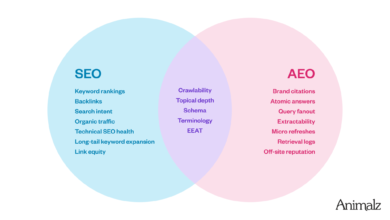
Before we build the plan, we need to define the playing field. Most beginners confuse these terms, but in my strategy, they are distinct targets that require an integrated approach.
- SEO (Search Engine Optimization): The traditional practice of optimizing for rankings and clicks from search engines.
- AEO (Answer Engine Optimization): Optimizing content to provide direct answers for voice assistants, chatbots, and conversational queries.
- GEO (Generative Engine Optimization): A newer discipline focused on influencing visibility in generative AI summaries and overviews.
The market for GEO is projected to explode, reaching over $33 billion by 2034. Ignoring it is not an option. Below is how I break down the differences for planning purposes:
| Feature | SEO (Traditional) | AEO (Answer Engines) | GEO (Generative AI) |
|---|---|---|---|
| Primary Goal | Rankings & Traffic Clicks | Being the “One True Answer” | Citations & Mentions in Summaries |
| Best Content Format | Comprehensive Articles | Concise, Structured Q&A | Authoritative, Data-Rich content |
| Key Signals | Backlinks, Keywords, Tech Health | Schema, FAQs, Natural Language | Brand Mentions, Entity Authority |
| Measurement | Rank Position, Organic Sessions | Voice Share, Featured Snippets | Share of AI Voice, Citation Count |
| Common Pitfall | Keyword Stuffing | Lack of Context/Nuance | Hallucinated/Generic Info |
The practical implication for your strategy is simple: You can’t just write a blog post anymore. You need to structure it with clear entities for GEO, conversational Q&A for AEO, and solid technical foundations for SEO. For example, if I’m targeting “CRM software,” my SEO strategy targets the head term, my AEO strategy ensures I have a clear definition in schema markup, and my GEO strategy focuses on getting cited in comparison tables.
The Strategic Agent Framework: a practical AI for SEO strategy workflow I actually use

This is the core of the playbook. I use a specific workflow that allows AI agents to assist heavily with the heavy lifting, while I keep strict editorial control. Think of it as a loop: Business Goals → Data Analysis → Prioritization → Content/Tech Plan → Publish → Measure.
Here is exactly how I execute this, including the specific inputs I use.
Step 1 — Set business intent, conversions, and constraints (so the agent doesn’t guess)
An AI agent is only as good as its brief. If you ask it to “find keywords for a shoe store,” you will get generic junk. I start by feeding the agent a Strategic Agent Brief. This includes:
- The Offer: What are we actually selling? (e.g., “Enterprise-grade CRM for small teams”).
- Target Audience (ICP): Specifically, who are they? (e.g., “US-based Marketing Managers at Series A startups”).
- Conversion Goals: What counts as a win? (e.g., “Demo requests,” not just “traffic”).
- Constraints: The reality check. (e.g., “Small dev team, 3 posts/week max”).
- Non-negotiables: Compliance and brand safety. (e.g., “No unverified claims about competitors”).
My goal here is to get a strategy “north star” output: a one-paragraph summary that aligns every subsequent SEO task with revenue goals, not just vanity metrics.
Step 2 — Build a seed topic map and keyword clusters (with human relevance checks)
Once the agent understands the business, I task it with expanding seed topics into clusters. I ask the agent to group keywords by search intent (Informational, Commercial, Transactional) rather than just volume.
What surprised me early on was how often the agent’s first cluster looked technically right but was commercially useless. It would suggest “free CRM templates” for a premium software client. Now, I run a manual relevance filter:
- Does this user actually have a budget?
- Is this a problem our product solves directly?
- Is the SERP dominated by giants we can’t beat yet?
I usually aim for 5–10 tight clusters. I spot-check the SERPs manually for intent before I accept any cluster into the roadmap. This prevents us from wasting months writing content that attracts users who will never convert.
Step 3 — Audit what I already have (content + technical) and prioritize fixes

Next, I need to know what’s broken. I don’t need a 100-page PDF; I need a prioritized backlog. I feed the agent exports from Google Search Console or a site crawler. I ask it to flag indexability issues, 404s, and thin content, and then score them based on an Impact vs. Effort rubric (1–5).
Reports indicate that AI-assisted audits can reduce crawl errors by up to 50% simply by catching patterns humans miss. However, here is the catch: If I don’t have clean data exports, the agent’s audit will be noisy. I treat the output as directional. If the agent says ‘fix these 50 meta descriptions,’ I check if those pages even have traffic potential first.
Step 4 — Design pages for SEO + AEO + GEO (structure, schema, and answer formats)

This step is where we future-proof the content. I use the agent to generate a page blueprint that satisfies all three visibility engines. My blueprint always includes:
- The TL;DR Answer: A direct, concise answer at the top (perfect for AEO/Snippets).
- Structured Definitions: Clear ‘What is X’ sections (great for GEO definitions).
- Schema Markup Plan: Specifically asking for FAQ schema and Speakable schema where relevant.
- Human Insight: A placeholder for unique data or personal experience that AI can’t hallucinate.
For example, instead of a wall of text, I’ll restructure a paragraph into a clear Q&A format. This simple formatting shift is often the difference between being ignored and being cited by an AI summary.
Step 5 — Produce briefs and drafts faster (while keeping editorial standards)
I use agents to draft detailed briefs and first drafts, but I never just hit ‘publish.’ I view tools like an AI article generator as a way to bypass the blank page syndrome, not as a replacement for editorial judgment.
Here is my editorial QA checklist that I enforce before any draft moves forward:
- Fact Check: Are statistics sourced and dated?
- Originality: Does it include a unique example or perspective?
- Voice: Does it sound like our brand, or like a robot?
- Formatting: Are there tables, lists, and visuals to break up text?
- Internal Links: Are we linking to our money pages logically?
I always rewrite introductions and conclusions myself. That is where the hook and the conversion happen, and AI tends to be too generic there.
Step 6 — Publish, interlink, and update on a schedule (so the plan actually compounds)
Finally, operations. A strategy is useless without a cadence. I use an Automated blog generator workflow to help manage the staging and scheduling of content, but governance is key. I have a rule: Weekly Publish, Monthly Refresh, Quarterly Audit.
I use the agent to suggest internal linking opportunities between new posts and established hubs. This helps build topical authority faster. If I’m short on time—say, I only have 2 hours this week—I prioritize refreshing old content over publishing new posts. It’s the boring part that pays off.
How I measure AI-driven SEO success: KPIs for rankings, answers, and citations

Measuring success in an AI-driven world is messy. With CTRs on the decline due to zero-click searches, we need a blended model. I don’t just look at rankings; I look for AI Visibility.
I track a set of 10–20 priority queries and manually sample them, or use emerging tools to track presence. Here is my KPI table for a modern strategy:
| Metric | What It Means | How to Measure | Decision It Drives |
|---|---|---|---|
| Traditional Traffic | Clicks to site | GA4 / Search Console | Content expansion |
| Share of AI Voice | Frequency in AI answers | Manual Sample / AI Tools | Brand authority optimization |
| AI Citation Freq | Linked as a source | referral traffic / Tools | PR and sourcing strategy |
| Assisted Conversions | Role in buyer journey | GA4 Attribution | Funnel optimization |
My baseline rule is consistency over perfection. I check these weekly. If I see ‘Share of AI Voice’ dropping, I know I need to update my definitions or structure data better.
What “good” looks like: realistic outcomes, timelines, and where AI agents move the needle most
If you are starting from zero authority, an AI agent won’t shortcut the trust-building process overnight. However, it accelerates the technical and content velocity required to get there.
Here is what you can realistically expect:
- Fast Wins (0-30 days): Dramatic reduction in crawl errors (often ~50%), faster content production cycles, and comprehensive keyword mapping.
- Compounding Wins (3-6 months): Improved topical authority, recovery of ranking drops (sometimes within a week of fixes), and steady growth in organic traffic (case studies have shown ~40% surges after agent-led optimization).
Just remember, correlation isn’t causation. A traffic bump might be seasonal, so I always look at the trend line, not just the spike.
Common mistakes with AI agents in SEO strategy (and how I fix them)
I’ve seen teams crash their rankings by misusing these tools. The biggest risk is flooding your site with low-quality, unsourced content. Here are the mistakes I avoid:
- The “Set and Forget” Error: Letting agents choose topics without a business fit.
Fix: Always approve the topic map manually against your conversion goals. - The Hallucination Trap: Publishing unverified stats or quotes.
Fix: Enforce a strict “link to source” rule in the brief. - Ignoring Intent: Clustering keywords that look similar but have different user intents.
Fix: Manually review the top 3 results for your seed keywords. - Neglecting Citations: Forgetting that 34% of AI citations come from PR coverage and 10% from social.
Fix: Integrate PR and social distribution into your SEO plan. - Schema Blindness: Producing content without the technical markup AI needs to understand it.
Fix: Make schema generation a mandatory step in the publishing workflow.
I learned the hard way that volume does not equal value. I once let a workflow publish 50 articles in a week, and traffic flatlined because the quality signals were weak. Now, I prioritize better briefs over more posts.
FAQs + my next-step checklist for using AI for SEO strategy
To wrap up, here are answers to the most common questions I get, followed by a checklist you can use this week. If you are looking for a tool that supports this kind of high-level strategy and execution, check out our AI SEO tool.
FAQ: What is the difference between GEO and AEO?
It comes down to the output format. GEO (Generative Engine Optimization) focuses on appearing in the generative summaries and AI overviews that aggregate information. AEO (Answer Engine Optimization) is about being the single best answer for conversational interfaces and voice assistants. While tactics like clear structure overlap, GEO relies heavily on authority and citations, while AEO relies on concise, speakable answers.
FAQ: Can AI agents fully automate my SEO workflow?
No, and you shouldn’t want them to. Agents can safely automate data analysis, auditing, drafting, and schema generation. However, strategy, governance, high-level creative direction, and final quality assurance must remain human. The differentiator in the future will be the quality of your oversight.
FAQ: How can I measure SEO success in AI-driven environments?
You need to look beyond rank tracking. Start sampling your ‘Share of AI Voice’ by manually checking priority queries in AI search tools. Combine this with traditional metrics like organic traffic and conversions. I recommend a weekly sampling cadence and a monthly comprehensive report.
FAQ: Should I invest in tools for AI visibility?
If you have a large content footprint and are in a competitive niche, yes. Tools like Semrush One, Writesonic, or Limy can provide data that is hard to get manually. However, if you are just starting, a manual approach—checking your top 20 keywords in different AI models—is a fine way to begin without spending budget.
FAQ: How do I optimize for voice and zero-click search?
Think in questions and answers. Use H2s and H3s as questions, and immediately follow them with a direct, concise answer (40–60 words). Implement FAQ schema and, if relevant, Speakable schema. This structure signals to engines that you have the precise answer they need for a zero-click result.
My Next-Step Checklist
Ready to start? Here is what I would do this week:
- Audit your top 10 pages: Are they structured for GEO/AEO?
- Create a Strategic Agent Brief: Define your audience and constraints clearly.
- Run a tech audit: Use an agent to find and prioritize your crawl errors.
- Update your schema: Ensure your core pages have FAQ markup.
- Set a governance rule: Decide who reviews content before it goes live.