Cross-Border Discovery: international SEO keyword research strategies for global markets
Introduction: Cross-border discovery starts with intent (not translation)

I’ve seen the same story play out a dozen times. A US-based team decides it’s time to conquer Europe. They take their high-performing English keyword list, hand it to a translation agency (or worse, run it through a basic LLM), and deploy the content on a fresh /de/ or /fr/ subdirectory. Three months later, traffic is flat, and everyone is blaming the technical setup.
But usually, the tech isn’t the problem. The problem is that they translated words, not intent. What works for “enterprise software” in New York might be searched as a specific compliance solution in Frankfurt. In 2026, with AI-first search behavior dominating, this gap is even more dangerous. If you don’t match the local intent signals, AI search engines simply won’t retrieve your content.
This article isn’t about theoretical globalization. It is a practical, step-by-step workflow for international SEO keyword research that I use to launch markets that actually convert. We will cover how to validate intent manually, avoid having your pages ignored by AI (semantic collapse), and exactly which artifacts—spreadsheets, clusters, and briefs—you need to build to get this right.
What international SEO keyword research is (and why translation-only fails in 2026)

International SEO keyword research is the process of identifying the specific queries real people use in a target market, and then mapping those queries to localized pages that possess the authority to rank. It sounds simple, but the mechanism of search has changed fundamentally.
In the past, if you had a German page with German keywords, you had a shot at ranking in Germany. Today, AI-mediated retrieval systems are far more sophisticated. They look for entity trust and local intent validity. If your translated page looks semantically identical to your US page—offering no new value, local context, or market-specific trust signals—AI models often merge them. They prioritize the version with the highest authority (usually your US site) and suppress the others. This is why translation-only strategies are failing.
The rise of zero-click search accelerates this. By mid-2025, AI Overviews appeared in over 50% of all Google search results , and more than 40% of U.S. searches were zero-click . In global markets, this means your content needs to be optimized for AI visibility—being cited and synthesized in answers—rather than just fighting for a blue link.
The new reality: semantic collapse and AI-first selection bias

Here is the concept that changed how I approach global SEO: Semantic Collapse. Large Language Models (LLMs) understand that “shipping insurance” (US) and “parcel cover” (UK) mean roughly the same thing. If your US page covers the topic comprehensively, and your UK page is just a light rewrite or direct translation without specific UK legal references or local entity signals, Google’s AI may treat them as duplicates.
The result? The search engine collapses them into one semantic entity. It serves the US page globally because it has more backlinks, effectively burying your UK effort. To avoid this, your research must identify unique local angles—like specific UK regulations or courier options—that force the AI to see the UK page as a distinct, necessary resource.
Technical signals you still need (but can’t rely on alone)
Before we dive into the research workflow, let’s acknowledge the table stakes. You cannot skip these, but they won’t save a bad content strategy:
- Hreflang tags: These tell Google, “This page is for German speakers in Austria.” It’s the envelope, not the letter.
- Canonicalization: Critical for preventing self-cannibalization, especially between same-language markets (e.g., US vs. UK vs. Australia).
- Geotargeting: Settings in Google Search Console that associate a subdirectory with a country.
I’ve seen launches break because a developer set the US page as the canonical for the whole world. Check this first, then focus on the keywords.
Table: Choosing a global URL strategy (ccTLD vs subdomain vs subdirectory)

This is often the first battle I fight with Ops teams. The SEO answer isn’t always the operational answer.
| Option | Structure Example | Best For | Pros | Cons |
|---|---|---|---|---|
| Subdirectories | domain.com/fr/ | Most US businesses starting out | Inherits root domain authority; easiest setup. | Risk of semantic collapse if content isn’t localized. |
| Subdomains | fr.domain.com | Large orgs with distinct tech stacks | Easier for different teams to manage separately. | Authority is split; harder to rank initially. |
| ccTLDs | domain.fr | Major brands with deep local presence | Strongest local signal; highest trust. | Expensive; starts with zero authority; heavy maintenance. |
| Recommendation | Start with Subdirectories (gTLD with folders). It centralizes your link equity. Only move to ccTLDs if you have a full legal/marketing team in that country. | |||
Step-by-step international SEO keyword research workflow (beginner-friendly)

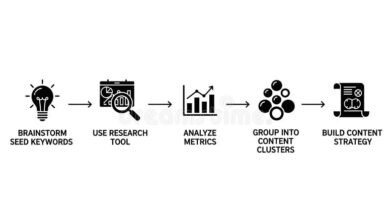
This is the workflow I run. It moves from business logic to granular data, ensuring we don’t just generate a list of words, but a plan for market entry.
Step 1: Pick the markets that actually deserve research (business + feasibility)
I’ve learned the hard way that targeting “Global” is a recipe for disaster. Pick 1–3 markets where you have actual demand signals. A demand signal isn’t just search volume; it’s business feasibility.
- Logistics: Can you actually ship there? Do you have a returns center?
- Compliance: Is your product legal? (e.g., GDPR in Europe, varying insurance laws).
- Existing Data: Check Google Analytics. Where is traffic coming from despite you not targeting them? If you see organic traffic from Brazil on your US English pages, that’s a signal.
Step 2: Build a seed list from real language (customers, sales calls, support tickets)
Don’t start with a tool. Start with your customer. I ask the sales team for logs or listen to support calls from the region if available. Even easier: check your internal site search logs filtered by location.
If you are entering France, what are users typing into your own help center? They might not be searching for “marketing software” (marketing jargon); they might be searching for “outil de facturation” (billing tool) if that’s the specific pain point your product solves there.
Step 3: Expand into conversational and long-tail queries (what’s growing fastest)
Long-tail keywords account for approximately 91% of search queries . In a new market where you lack domain authority, these are your entry point. They are also what triggers AI Overviews. I use templates like these to find them:
- “Best way to [action] in [Country]”
- “Is [Product] legal in [Country]?”
- “[Competitor] vs [Brand] pricing [Currency]”
- “How to calculate [tax/metric] in [Region]”
- “[Industry] regulations for [Year] [Country]”
For a US SaaS expanding to Germany, I wouldn’t just target “CRM Software.” I’d target “CRM software with DATEV integration” (a specific German accounting standard).
Step 4: Do a manual SERP intent audit in each country (the reality check)

This is the most critical step. Tools lie; SERPs don’t. I use a VPN to simulate being in the target country, open an incognito window, and run the query.
The 5-Point SERP Audit Checklist:
- Language: Is the SERP mixed English/Local or purely Local?
- Content Type: Are the top results product pages, blog posts, or government PDFs?
- SERP Features: Is there an AI Overview? A Local Pack? (If there’s a local pack and you don’t have an office, cross that keyword off).
- Competitors: Are you seeing global giants (Amazon, HubSpot) or local niche players?
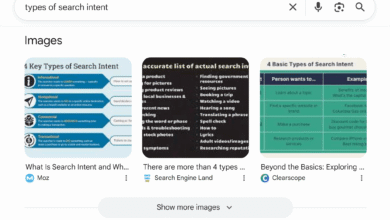
- Intent Mismatch: If I search for “payroll,” do I see software (Transactional) or definition guides (Informational)?
(My sanity check: If I can’t tell if a keyword is informational or transactional, I look at the “People Also Ask” box in that local language. It usually reveals what the user is actually trying to achieve.)
Step 5: Cluster keywords by intent + entity (so AI doesn’t treat pages as clones)
Once I have the raw list, I don’t just group them by topic. I group them by intent stage and local entity.
Example Cluster (Germany):
- Core Keyword: “Rechnungssoftware Kleinunternehmer” (Invoicing software for small businesses)
- Entity/Constraint: “GoBD konform” (Compliance standard)
- Intent: Compare/Buy
- Page Goal: Product page emphasizing GoBD compliance.
By clustering the “GoBD” entity with the software keyword, I ensure the page is differentiated from a generic US translation.
Step 6: Map clusters to pages (and decide: translate, localize, or create net-new)
Now, map the clusters to URLs. This is where you make the financial decision.
- Translate: Only for very low-competition, universal definitions (e.g., “What is a PDF?”).
- Localize: For most core product pages. Keep the structure, adapt the examples, currency, and trust signals.
- Net-New: When the market has a unique problem. If the UK has a specific tax deadline that the US doesn’t, you need a brand new article, not a translation.
If I’m debating it, I default to localize. Direct translation is rarely enough anymore.
Table template: Keyword-to-page mapping sheet (copy/paste structure)
I keep this sheet lightweight so it doesn’t become process for process’s sake. One tab per market.
| Locale | Cluster Name | Primary Keyword | Intent | Page Type | Localization Notes (Trust Signals) | Priority |
|---|---|---|---|---|---|---|
| DE (Germany) | Smbiz Invoicing | Rechnungsprogramm | Transactional | Product Page | Must mention VAT (MwSt) & GoBD compliance. Quote pricing in €. | P1 |
| DE (Germany) | Tax Guide | Kleinunternehmerregelung | Informational | Blog Guide | Cite official tax office (Finanzamt) sources. | P2 |
Tools + metrics: how I combine SEMrush/Ahrefs with AI visibility (GEO) tracking
You inevitably need tools to scale this. I still use traditional platforms like Ahrefs or Semrush to get baseline data, but I treat their volume numbers as “directional estimates,” not facts. In many international markets, their clickstream data is sparse.
For modern execution, I look at AI Visibility (Generative Engine Optimization or GEO). This measures how often your brand is cited in AI-generated answers. Since these answers often synthesize multiple sources, being a “cited authority” is more valuable than just ranking #4.
Once you have your clusters and data, the challenge is production. You need to turn those insights into briefed, drafted content that respects the local nuance you just researched. This is where AI article generator workflows come in—not to replace the strategist, but to turn your detailed brief into a structured draft that an editor can then polish.
Table: Tool metrics vs reality checks (where beginners get misled)

| Metric | What it tells you | What it hides | How I validate |
|---|---|---|---|
| Search Volume | Avg. monthly queries | Zero-click behavior | Check if AI Overviews answer the query directly. |
| Keyword Difficulty | Backlink competition | Topical authority requirements | Check if I have existing content on this topic. |
| CPC | Commercial intent | Local purchasing power | Check competitor pricing in-market. |
Practical KPI set: rankings + conversions + AI citations
Stop reporting just rankings to your VP. Here is a better dashboard for global growth:
- Localized Impressions/Clicks: (GSC) Filtered by Country. This is your true north.
- Conversion Rate by Locale: Does the German traffic actually buy? If not, you have an intent mismatch or a trust gap (e.g., missing payment methods).
- AI Citation Tracking: Are you appearing as a source in AI Overviews? This is the new “Share of Voice.”
Note: Early wins in new markets are often long-tail and pipeline quality, not huge traffic spikes. Don’t panic if volume looks low initially.
Differentiate each market: localization, entities, and trust signals that AI can’t ignore
We discussed semantic collapse earlier. The antidote is differentiation. You need to prove to the AI that your page is specifically relevant to this market. I call this “Minimum Viable Localization.” You don’t need a local office on day one, but you do need to signal that you understand the local reality.
Checklist: Market-specific localization signals (content + UX + policy)
Content & Trust
• Cite local laws, regulations, or industry standards (e.g., GDPR, local tax codes).
• Use local examples (e.g., mention “London to Manchester” not “New York to Boston”).
• Include FAQs specific to that region (e.g., “Do you ship to rural Japan?”).
UX & Logistics
• Currency and formats (Dates: DD/MM/YYYY vs MM/DD/YYYY).
• Units of measure (Metric vs Imperial).
• Localized Pricing (Purchasing power parity adjustments).
Technical
• Valid Hreflang implementation.
• Local server speed (CDN usage).
Common international SEO keyword research mistakes (and how I fix them)

- The “Copy-Paste” Translation Strategy
Assuming US keywords translate directly 1:1.
Fix: Use the clustering method above to map US concepts to Local Intent. - Ignoring SERP Intent Nuance
Creating a blog post when the local market wants a tool or calculator.
Fix: Always run the “Incognito Check” for your top 10 priority keywords. - Creating Near-Duplicate Pages
Publishing translated pages that offer no unique local value, leading to semantic collapse.
Fix: Add at least 3 unique local data points (laws, prices, examples) per page. - Chasing Volume Over Conversion
Targeting broad head terms that you have no authority to rank for in a new market.
Fix: Start with the “boring” long-tail questions (support queries) to build trust first.
Troubleshooting: when a localized page won’t rank (or won’t show in AI answers)
- Check Technicals: Is the hreflang reciprocal? Is the canonical tag self-referencing for that locale?
- Check Cannibalization: Is Google indexing your US page instead? (This implies your local page isn’t distinct enough).
- Check Trust: Do you have any local links? Even a few directory links or local partner citations can wake up the algorithm.
- Check AI Overview: Is the query dominated by a zero-click answer? If so, optimize for the snippet (definitions, lists) rather than just length.
FAQs about international keyword research for global markets
Why is translation-only keyword research no longer effective for international SEO?
Direct translation fails because it ignores local search behavior and cultural context. Furthermore, AI search engines often collapse translated content into a single global entity if it lacks unique market-specific value signals.
What makes AI visibility different from traditional keyword ranking?
Traditional ranking is about occupying a position on a list (blue links). AI visibility is about being cited, synthesized, or featured in the generated answer (AI Overviews), which requires high authority and clear, structured facts.
Should we still use tools like SEMrush or Ahrefs for international keyword research?
Yes, but use them for discovery and competitive analysis, not as the absolute truth for search volume. You must validate their data with manual SERP audits and local knowledge.
How do we differentiate content for each market effectively?
Beyond language, include local currency, units of measure, specific regulatory references (laws/standards), and culturally relevant examples. This prevents semantic collapse.
Which types of keywords are gaining priority in global SEO?
Conversational, question-based long-tail keywords are gaining priority. They align with voice search and are more likely to trigger AI Overviews.
Conclusion: my 3-point recap + next actions to run your first international SEO keyword research sprint
If you take nothing else from this guide, remember these three rules:
- Intent beats translation. Always map to what the user wants to do, not just the words they type.
- Differentiate to survive. If your German page is just a clone of your US page in a different language, AI will ignore it. Add local trust signals.
- Measure visibility, not just rank. In an AI-first world, being the cited source is the new #1 ranking.
Your Next Actions:
- Select one pilot market (don’t try to launch five at once).
- Run the manual SERP audit on your top 10 “money” keywords.
- Build your Keyword Mapping Sheet (use the template above).
- Create briefs that explicitly list the local entities (laws, prices, examples) required.
International SEO is a marathon, but the first sprint is the hardest. Once you have a valid map, the execution becomes repeatable. If you need to turn those keyword clusters into high-quality, structured drafts efficiently—while maintaining full editorial control—you can use tools like Kalema’s SEO content generator to scale your production without sacrificing quality.