Introduction

Last quarter, I stared at a Google Search Console report that didn’t make sense. My rankings were stable—position 1 for three major commercial terms—yet click-through rates had dropped by nearly 15%. A quick manual check revealed the culprit: a massive Google AI Overview was pushing my organic result below the fold, synthesizing the answer directly on the SERP without requiring a click.
It was a wake-up call. In the era of ChatGPT, Claude, and Gemini, traditional rankings are only half the story. The new battleground isn’t just about being on page one; it’s about being cited in the answer generated by an LLM.
This shift has birthed a confusing new category of software: AI SEO analysis tools. If you are an in-house SEO or content lead trying to figure out if you are visible in these AI responses—and how to fix it if you aren’t—this guide is for you. I’m going to cut through the hype to show you exactly what to measure, which tools actually work for tracking LLM citations, and a practical workflow to turn that data into traffic.
AI SEO analysis tools explained: what makes them different from traditional SEO tools

When I explain this shift to my colleagues in sales or operations, I use a simple analogy: Traditional SEO is like fighting for the best shelf placement in a library. You want your book at eye level so people grab it. AI SEO (often called GEO or AEO) is like convincing the librarian to personally recommend your book when someone asks a specific question.
Traditional tools like Ahrefs or Moz are built to track that shelf placement (rankings) and how many people cite your book (backlinks). AI SEO analysis tools are different. They attempt to reverse-engineer the ‘librarian’ (the LLM) to understand:
- Visibility: Is your brand mentioned in the answer?
- Sentiment: Is the mention positive, neutral, or negative?
- Citation: Does the AI provide a clickable link to your source?
- Consensus: How often do different models (ChatGPT vs. Gemini) agree on recommending you?
Where LLM answers show up (and why rankings don’t tell the full story)

The “zero-click” reality is here. Users are finding answers on surfaces where traditional rank trackers are often blind:
- Google AI Overviews (SGE): The box at the top of Google search results.
- ChatGPT & Claude: Conversational interfaces where users research products.
- Perplexity: An “answer engine” that cites sources heavily.
- Bing Chat / Copilot: Microsoft’s integrated AI search.
A quick glossary: LLM SEO, GEO, AEO, citations, and ‘prompt space’
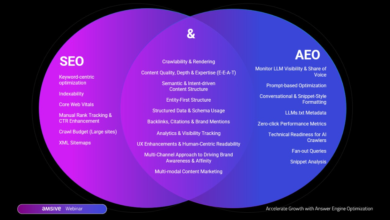
- LLM SEO: The practice of optimizing content to be understood and surfaced by Large Language Models.
- GEO (Generative Engine Optimization): Specifically optimizing for generative search results like Google AI Overviews.
- AEO (Answer Engine Optimization): Focusing on being the direct answer for voice search or chat-based queries.
- AI Citations: When an LLM explicitly links to your URL as the source of its information.
- Prompt Space: The variety of user inputs (questions) relevant to your brand; the modern equivalent of a keyword list.
What to measure: the LLM SEO metrics that actually map to business outcomes

It is easy to get lost in vanity metrics here. I’ve seen teams panic because ChatGPT didn’t mention them in one specific prompt. That is not a strategy. We need to look at trends, not anecdotes. According to industry data, AI-driven answer prevalence is nearing 86% on commercial queries by 2025 , and Semrush noted a doubling of AI Overviews in US search results in Q1 2025 .
If I only had 30 minutes a week to report on this, here are the metrics I would focus on.
Core metrics: citations, mention rate, share-of-voice, and prompt coverage
Citation Frequency is your new “position 1.” It measures how often your URL appears as a source in an AI answer. Mention Rate tracks how often your brand name appears in text, even if unlinked. Share of Voice in LLMs is calculated by running hundreds of related prompts (your “prompt cluster”) and seeing what percentage of answers recommend you versus your competitors. Finally, Prompt Coverage tells you if you even appear for the questions your customers are asking.
Traffic + pipeline: how to connect AI visibility to sessions and leads
Attribution is messy right now. GA4 lumps a lot of this into “Direct” or “Referral.” However, you can track AI-sourced sessions by looking for referrers like chatgpt.com or perplexity.ai. In B2B, we look for Assisted Conversions. A pilot study using Contently’s Blueprint found that 32% of SQLs originated from AI-generated search within six weeks of activation . Don’t expect perfect tracking; look for the directional lift.
Table: LLM SEO KPI cheat sheet (metric → tool signal → action)
| Metric | What it means | What I do next |
|---|---|---|
| AI Overview Presence | Google is showing an AI summary for your keyword. | Check if my content is the source. If not, structure my answer more clearly (definitions, lists). |
| Citation URL | You got the link! | Protect this page. Update it regularly to keep “freshness” signals high. |
| Brand Sentiment | The AI likes (or dislikes) you. | If negative, audit 3rd party reviews (G2, Trustpilot) as LLMs read those to form opinions. |
| AI Bot Crawl | AI crawlers are visiting your site. | Check server logs. If blocked, unblock GPTBot or Google-Extended unless you have legal reasons not to. |
Tool categories that matter (so I don’t buy the wrong platform)

The market is flooded with tools right now. To avoid burning budget on shelf-ware, I categorize them by the specific problem they solve.
Category 1: GEO/AEO visibility trackers (prompt-level, multi-model benchmarking)
These are the specialized “rank trackers” for the AI age. Tools like Evertune AI, Rank Prompt, Peec AI, and Eldil AI run thousands of queries (prompts) across ChatGPT, Gemini, and others to give you statistical data. For example, Evertune processes over one million AI-generated responses per brand monthly to achieve significance .
The Catch: They are great at surfacing gaps (telling you where you are invisible), but they don’t write the content to fix it.
Category 2: Traditional SEO suites adding AI modules (enterprise-friendly overlays)
If you already live in Semrush or BrightEdge, check their new modules first. Semrush added ai_overview_presence data, and BrightEdge’s AI Catalyst uses a Generative Parser to reveal how Google constructs answers .
The Catch: These are excellent for Google AI Overviews but can sometimes lag in tracking conversational platforms like Claude or Perplexity compared to specialized tools.
Category 3: Content authority + optimization tools (build topical coverage)
To win citations, you need deep topical authority. Tools like MarketMuse Optimize benchmark your content against top results to find subtopic gaps. If your page covers “project management software” but misses “Gantt charts,” LLMs may cite a competitor who covers both.
The Catch: They provide excellent briefs, but you still need a human (or a very smart AI workflow) to execute the writing with nuance.
Category 4: Pre-publish testing + technical AI crawler insight
This is like QA before you ship code. Otterly AI (partnered with Semrush in Jan 2025 ) and Cloudflare Radar AI Insights help you see if your content is technically accessible to AI bots and formatted in a way they trust.
The Catch: Technical accessibility is a prerequisite, not a guarantee of ranking. You can be crawlable but still irrelevant.
Best AI SEO analysis tools by use case (with a comparison table)
Which tool should you actually buy? It depends entirely on your maturity level and workflow. Once I know what to fix based on the analysis from these tools, I need an execution layer—a “content intelligence” system like Kalema helps operationalize those updates at scale without sacrificing quality.
Here is how the top analysis platforms compare:
Table: quick comparison of LLM visibility + optimization platforms
| Tool | Primary Job | Surfaces | Standout Feature | Ideal User |
|---|---|---|---|---|
| Semrush | Macro Monitoring | Google AI Overviews | Overlaying AI data on 20 years of keyword history | Enterprise / Agencies |
| Evertune AI | Pure Visibility | ChatGPT, Gemini, Perplexity | Statistical sampling of thousands of prompts | Brand Managers / Heads of SEO |
| Scalenut | Creation + Monitor | Google, General LLMs | Cruise Mode for fast first drafts | SMBs / Content Teams |
| MarketMuse | Topical Authority | Google / Semantic Analysis | Deep subtopic gap analysis | Editors / Strategists |
| Otterly AI | Pre-publish QA | LLM Simulators | Testing content trust signals before publishing | Technical SEOs |
Best picks by business stage: SMB, growing team, enterprise
- For the SMB (Solo or small team): Start with an integrated platform like Scalenut or Writesonic. You get monitoring and content creation in one subscription.
- For the Growing Team (Agency/Mid-market): Pair Semrush (for data) with MarketMuse (for authority). You need deeper insights than an all-in-one can provide.
- For the Enterprise: You need the “stack.” BrightEdge for dashboards, Evertune for specialized prompt tracking, and a custom reporting layer for stakeholders.
How I evaluate tools (a simple scorecard beginners can copy)
Before I get budget approval, I run a 2-week trial using this scorecard:
- Coverage: Does it track the models my customers actually use? (For B2B, LinkedIn/Google; for B2C, ChatGPT/Perplexity).
- Exportability: Can I get the data into a spreadsheet to merge with my GSC data?
- Time-to-Value: Did I find a content gap I can fix in the first hour?
- Workflow: Does it just give me a number, or does it tell me why I lost the citation?
My beginner workflow: analyze → fix → publish → monitor (a repeatable weekly routine)

You don’t need to overhaul your entire strategy overnight. I use a “Monday Morning Block”—90 minutes dedicated to AI visibility. Here is the routine.
Step 1: Build a ‘prompt cluster’ list (the new keyword list)
Stop thinking in keywords. Think in questions. If you sell HR software, your keywords might be “HRIS platform.” But your Prompt Cluster looks like this:
- “What is the best HRIS for a 50-person startup?”
- “Compare BambooHR vs [Your Brand] for ease of use.”
- “List HR tools that integrate with Slack.”
Create 10-15 of these conversational prompts for your top product.
Step 2: Run visibility checks and capture citations (what I screenshot/export)
Run these prompts through your chosen tool (or manually if you are scrappy). I keep a simple spreadsheet with these columns: Date, Prompt, Mentioned? (Y/N), Sentiment, Competitors Cited. Tip: Take screenshots. LLMs are non-deterministic; the answer might change tomorrow, and you’ll want proof of what you saw.
Step 3: Fix content like an LLM would read it (structure, clarity, trust)
If you aren’t cited, your content might be unstructured. LLMs love structure. Go to your target page and:
- Add a clear definition immediately following an H2 (e.g., “What is [Topic]? [Topic] is…”).
- Use bullet points for lists and comparison data.
- Add “Trust Signals”: Author bios, citations to external data, and clear “Last Updated” dates.
Step 4: Monitor results and decide what to do next week
After you update, force a re-crawl in Google Search Console. Then, wait. In my experience, AI Overview inclusion can happen in days, while general LLM training data updates take much longer. If you need to speed up the drafting and updating process, using an AI article generator can help you refresh content at scale while maintaining the structural standards LLMs prefer.
Common mistakes I see with AI SEO analysis tools (and how to fix them)

I learned some of these the hard way, spending weeks optimizing for things that didn’t move the needle.
Mistake list (5–8): symptoms → fix
- Chasing one-off prompts: You freak out because one specific phrasing didn’t show your brand. Fix: Look at the aggregate performance of your prompt cluster.
- Ignoring the “About Us” page: LLMs look at your About page to understand who you are and if you are credible. Fix: Treat your About page like a sales page for bots. detailed entity information is key.
- Over-optimizing for robots: Stuffing content with “AI-friendly” syntax until it reads poorly for humans. Fix: Readability is a ranking factor for LLMs too. Keep it natural.
- Blocking the crawlers: Your dev team blocked
GPTBotto “protect IP,” but now you have zero visibility. Fix: Allow specific bots on your public marketing pages. - Confusing ‘Mention’ with ‘Recommendation’: Being listed is good; being recommended is the goal. Fix: Add comparison tables that highlight your unique selling points so the AI has data to differentiate you.
FAQs + recap: how I’d choose AI SEO analysis tools this week

FAQ: What differentiates AI SEO analysis tools from traditional SEO tools?
Traditional tools track ranking position (where you are on the list). AI SEO tools track citations and sentiment (how you are described and recommended). They analyze text generation, not just list order.
FAQ: Which tool is best for integrated content creation and AI optimization?
If you want to write and rank in one place, platforms like Scalenut, Writesonic, and Jasper + Surfer are leading the pack. Scalenut users have reported up to 527% growth in AI-sourced sessions . These are best for teams that need speed.
FAQ: How do enterprises measure LLM visibility at scale?
Enterprises don’t run manual prompts. They use portfolio monitoring. Tools like BrightEdge and Evertune run thousands of automated checks to provide a “Share of Voice” percentage across the entire brand portfolio.
FAQ: What are GEO/AEO tools and why do they matter?
GEO (Generative Engine Optimization) and AEO (Answer Engine Optimization) tools help you optimize for the direct answer. This matters because if a user gets the answer without clicking, you want that answer to mention your brand so they search for you next.
FAQ: Can these tools help before publishing content?
Yes. Tools like Otterly AI act as a simulator, testing your draft against AI models to predict how they will interpret the tone and facts before you publish.
Recap & Next Steps:
If you take nothing else away from this, remember: Rankings are static; conversations are dynamic. To win in the AI era:
- Start small: Pick one category (like tracking AI Overviews in Semrush) to establish a baseline.
- Audit your brand: Google your brand + “review” or “competitors” to see what the knowledge graph currently thinks of you.
- Operationalize: Don’t just look at the data. Use a content intelligence workflow (like Kalema) to rapidly update your content with the structure and depth LLMs demand.
The tools are here. The data is available. The only missing piece is the routine to use them.