Introduction: How I choose the best AI SEO agencies (without falling for hype)

I still remember the specific week in late 2025 when my team noticed a disturbing trend: our impressions for non-branded terms were climbing, but our click-through rates (CTR) were softening. It wasn’t a technical error. It was the reality of AI Overviews taking up the top half of the screen on over 50% of our core queries. We weren’t losing rankings; we were losing visibility to an answer engine.
That moment changed how I evaluate SEO partners. In the past, I looked for agencies that could promise “page one rankings.” Today, that promise is a red flag. The search landscape in the US has shifted fundamentally toward Generative Engine Optimization (GEO) and Answer Engine Optimization (AEO). The goal is no longer just a blue link—it’s becoming the cited source in a ChatGPT summary or a Google AI Overview.
If you are a growth lead or founder looking for help, this isn’t another generic “top 10 agencies” listicle. Instead, I’m going to share the exact framework I use to vet partners: how to separate the technical experts from the snake oil salesmen, what questions to ask, and how to structure a pilot that protects your budget. I’ll define the jargon as we go, so you can make a decision based on logic, not fear.
Who this guide is for (and what I’m assuming)
I am writing this for the Growth or Content Lead at a B2B SaaS or tech-enabled service company. You likely have a small team (maybe it’s just you and a freelancer), and you are feeling the pressure of rising paid acquisition costs.
I am assuming you know your way around Google Search Console and understand the basics of content marketing, but terms like “entity chains” or “knowledge graph validation” might be new to you. That’s okay. When I started digging into this, I realized most agencies were just as confused as I was. This guide is designed to help you find the few who actually aren’t.
Quick answer: what “AI-first SEO” really means in 2026
Simply put, AI-first SEO (often called GEO or AEO) is the process of optimizing your content to be read, understood, and cited by Large Language Models (LLMs) like Gemini, ChatGPT, and Claude. Unlike traditional SEO, which focuses on keywords and backlinks to rank a link, AI SEO focuses on entities (facts and concepts) and structure to become part of the answer. It’s about influencing the summary, not just fighting for the click.
What an AI-focused SEO agency actually does: GEO vs AEO vs traditional SEO

The hardest part of hiring an agency right now is that everyone claims to be an “expert.” But when you peel back the layers, many are simply running standard 2020 playbooks and calling it “Generative Optimization.”
To hire effectively, we need to distinguish between three distinct disciplines. While they overlap, the deliverables look very different. In the US market specifically, where AI adoption is highest, ignoring the distinction is a recipe for wasted budget. Note that while adoption stats change fast, we are seeing AI Overviews appear in over 50% of queries , which means traditional tactics alone leave you invisible half the time.
| Feature | Traditional SEO | AEO (Answer Engine Opt) | GEO (Generative Engine Opt) |
|---|---|---|---|
| Primary Goal | Rank a URL in the top 10 Blue Links. | Provide a direct, single answer to a voice/chat query. | Be cited/synthesized in an AI-generated summary. |
| Primary Surface | Google/Bing SERP (Classic). | Siri, Alexa, Google Assistant. | Google AI Overviews, ChatGPT, Perplexity, Claude. |
| Core Tactics | Keywords, Backlinks, Technical Health. | FAQ Schema, concise definitions, Q&A formatting. | Entity modeling, authority verification, citation density, structured data. |
| Success Metric | Rankings, Organic Clicks. | “Position Zero” placement. | Share of Voice in summaries, Brand Mentions. |
For a small team, this means you can’t just hire someone to “write blogs.” You need a partner who understands how to structure data so a machine knows exactly who you are and why you are the authority.
Definition: What is an AI-focused SEO agency?
An AI-focused SEO agency is a service provider that prioritizes visibility within generative AI outputs. They don’t just optimize for a search engine spider; they optimize for the training data and retrieval-augmented generation (RAG) processes of LLMs. They do this through Generative Engine Optimization (GEO) and Answer Engine Optimization (AEO), alongside robust technical foundations.
Definition: How GEO is different from traditional SEO
Think of it this way: Traditional SEO is like fighting for the best shelf space in a library. You want your book (website) at eye level. GEO is like convincing the librarian (the AI) to quote your book when a patron asks a question. You might not get the patron to borrow the book (click the link), but your ideas—and your brand name—become part of the answer they trust.
Why this matters now in the US: visibility is rising while clicks may fall
Here is the uncomfortable truth: data from platforms like BrightEdge suggests that while impressions for AI Overviews have increased significantly year-over-year, click-through rates (CTR) on traditional results have declined by roughly 30% . If you are only measuring success by clicks to your website, you might fire an agency that is actually doing a great job of building your brand authority in the AI era. We have to measure differently.
What separates the best AI SEO agencies: capabilities, proof, and process

When I am vetting an agency, I ignore the logos on their homepage. I go straight to their methodology. The best agencies have moved beyond “best practices” and have developed specific engineering and editorial frameworks to tackle AI. Here is what I look for.
Technical AI-SEO readiness: entity coverage, schema, crawlability, and internal linking
Don’t worry if you aren’t technical—here is the litmus test. Ask them about “Entities.” An entity is simply a distinct thing (person, place, concept) that Google understands. If an agency focuses only on keywords strings, they are behind.
- Verification Step: Ask to see a sample Entity Map or a Schema Implementation Plan.
- Look for: A plan to use specific Schema types (Organization, Article, FAQ, HowTo) to explicitly tell Google what your content is about, rather than hoping it guesses correctly.
Editorial system: how they produce accurate, citation-worthy content
AI models prioritize content that appears authoritative and consensus-driven. This requires an editorial system that functions like a newsroom, not a content farm. “Good enough” content gets hallucinated or ignored; expert content gets cited.
- Verification Step: Ask for their Content QA Checklist.
- Look for: Fact-checking protocols, expert review steps (SME interviews), and strict sourcing rules. If they rely 100% on raw AI output without human editorial oversight, run.
Multi-channel integration: why PR, social, and paid influence AI visibility
This is often overlooked. LLMs learn from the entire web, not just your blog. A mention in a high-authority industry journal (PR) or a viral discussion on Reddit (Social) helps validate your entity’s authority. The best agencies integrate these signals.
- Verification Step: Ask, “How do you use off-page signals to support our entity authority?”
- Look for: Strategies involving Digital PR, founder profiles on external sites, or social distribution that drives brand search volume.
R&D and transparency: what “real experimentation” looks like (and what it doesn’t)
If an agency claims to know exactly how the algorithm works, they are lying. The best agencies admit they are testing. I would rather see a simple weekly change log of experiments than a confident lie.
- Verification Step: Ask to see an anonymized Experiment Log or a recent Change Log.
- Look for: Specific tests (e.g., “We changed the H2 structure on X pages to see if it triggered an AI snapshot”) and honest results, even if they were negative.
My step-by-step framework to shortlist and score the best AI SEO agencies

I learned the hard way that if you don’t have a scoring system, you’ll end up hiring the agency with the best sales deck. Now, I use a repeatable process to remove the emotion from the decision. You can copy this workflow.
We also need to talk about scale. A good agency provides strategy, but for execution, you need operational efficiency. This is where tools like Kalema’s AI article generator fit in—not to replace the strategy, but to help operationalize the briefs and drafts so your agency or internal editor can focus on the high-value polishing and fact-checking.
Step 1: Define outcomes and constraints (what I want, what I can invest, what I can’t)
Before you email anyone, define your constraints. If I’m a founder with no internal content team, I need a “Do It For Me” partner. If I have a team, I need a “Do It With Me” partner.
- Goal: Generate qualified leads (not just traffic).
- Constraint: Budget capped at $5k/mo; must use our existing CMS.
- KPI: Demo requests and “Assisted Conversions.”
Step 2: Baseline audit (so I know what the agency is improving)
You don’t need to be an analyst to do this. Spend 90 minutes capturing the basics so you aren’t flying blind.
- Traffic: Brand vs. Non-Brand splits (Search Console).
- Top Pages: Which 5 pages drive 80% of your leads?
- Technical Health: Any critical errors in Site Health tools?
- AI Presence: Manually search your top 10 keywords. Do AI Overviews appear? Are you in them?
Step 3: Ask for their GEO/AEO approach in plain English (no black boxes)
Here is the script I use during interviews. Listen for clarity, not buzzwords.
- “How do you track citations in AI answers vs standard rankings?” (Good answer: They admit it’s imperfect but use proxies like brand mentions and referral traffic).
- “Show me how you model entities for a client in our industry.”
- “What is your protocol when Google releases a core update?”
- “How do you validate the accuracy of content before it goes live?”
Step 4: Evaluate their content system (briefs, sources, editing, and updates)
Ask for a sample content brief. It should be detailed—listing target entities, internal linking requirements, and user intent. Ask about their update cadence. In the AI era, stale content is invisible content. A refresh strategy is just as important as net new content.
Step 5: Score and shortlist with a simple decision matrix (template)
I use a weighted scorecard. If you are a B2B SaaS, weight Editorial QA and Entity Strategy higher. If you are Local, weight GMB/Map Pack skills higher.
| Criteria | Weight (1-5) | Agency A Score | Agency B Score |
|---|---|---|---|
| GEO/Entity Strategy | 5 | ||
| Technical Competence (Schema) | 4 | ||
| Transparency / Reporting | 5 | ||
| Content QA Process | 4 | ||
| Culture / Communication | 3 |
Step 6: Run a 30–60 day pilot with measurable deliverables
Never sign a 12-month contract on day one. Propose a pilot. “Let’s do a 60-day sprint. We pay for a specific cluster of content and a technical audit. If we hit the deliverable targets, we discuss a retainer.” This reduces your risk significantly.
How I expect an AI SEO agency to measure results (from citations to revenue)

Measurement is where most relationships fail. In 2026, we have to look beyond the click. While tools like Kalema provide the content intelligence to execute, your agency needs to provide the strategic reporting that connects that execution to revenue.
| Funnel Stage | What to Measure | The “Good Look” |
|---|---|---|
| Awareness | Brand Impressions, AI Overview Citations (Share of Voice). | Rising branded search volume. |
| Consideration | Time on Page, Scroll Depth, Entity Association. | Users visiting >2 pages per session. |
| Conversion | Assisted Conversions, Demo Requests, Direct Traffic. | Pipeline growth despite flat organic clicks. |
The new KPI stack: visibility ≠ clicks (and what I do about it)
I track “Brand Lift” religiously now. If fewer people are clicking because AI answered their question, but more people are searching for our brand specifically, we are winning. I also look for “Zero-Click Attribution”—asking prospects on calls, “Where did you hear about us?” Often, they say, “I asked ChatGPT for the best tool for X.”
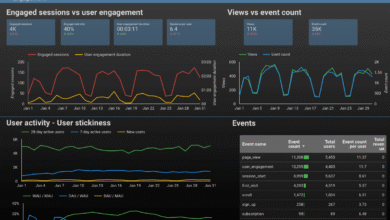
What a solid reporting dashboard includes (minimum viable transparency)
Don’t settle for a PDF exported from Semrush. A real dashboard includes:
- Change Log: “We updated X on this date.”
- Annotations: Notes on charts explaining why traffic spiked or dipped.
- Narrative: A human written summary of what the data means for the business.
Engagement models, pricing, and how I run a low-risk pilot (before a long contract)

Pricing is tricky. I’ve seen retainers range from $2,500 to $25,000 per month. The key is aligning the model with your needs. And remember, consistency matters—using an Automated blog generator for parts of your workflow can help you maintain volume without blowing the budget on agency hours for every single draft.
Pricing models (and what I ask so I’m comparing apples to apples)
- Project-Based: Best for audits or specific setups. “Fix my schema.”
- Retainer: Best for ongoing content growth. Watch out for “use it or lose it” hours.
- Performance: Rare in high-quality SEO. Be careful; this encourages spammy tactics.
Ask: “Does this price include implementation, or do I need my own developers?” That hidden cost bites hard.
A simple 30/60/90-day pilot plan (deliverables + decision gates)
- Days 1-30: Audit, technical fix plan, and first 3 content briefs approved.
- Days 31-60: Content publication, schema deployment, measurement setup.
- Day 60 Gate: Did they ship on time? Was the quality high? If yes, discuss Day 90+.
Common mistakes and red flags when hiring an AI-focused SEO agency

I’ll be honest: I have been burned before. Here are the red flags that now make me end the meeting immediately.
Red flag list: what I won’t sign off on
- Guaranteed Rankings: “We guarantee position #1 in AI Overviews.” Impossible. AI is probabilistic; no one controls it.
- The “Secret Sauce”: If they won’t explain their methods because it’s “proprietary,” they are hiding something basic.
- No Content QA: If they treat content as a commodity to be bulk-generated without review.
- Ignoring Schema: If they talk about AI but don’t mention structured data, they don’t know how machines read.
- Black Box Reporting: “Trust us, it’s working.” No. Show me the receipts.
FAQs + my next-steps checklist for choosing the best AI SEO agencies

FAQ: What is an AI-focused SEO agency?
An agency that optimizes your digital presence to be cited by Generative AI (like ChatGPT) and Answer Engines (like Google AI Overviews), ensuring your brand is the trusted source in automated summaries.
FAQ: How is GEO different from traditional SEO?
Traditional SEO targets blue links via keywords. GEO targets citations and mentions via entity authority and structured data. For example, GEO aims to get you mentioned in the paragraph answer, not just listed in the search results below it.
FAQ: What should businesses look for when choosing an AI SEO agency?
Look for three things: a clear R&D process (they test things), deep expertise in Entity Modeling/Schema, and a reporting structure that looks at full-funnel metrics, not just rankings.
FAQ: How important is multi-channel integration?
Critical. AI models validate facts by cross-referencing sources. If you are mentioned in the press, on social media, and on industry sites, the AI is more likely to trust you. You can’t just do SEO in a silo anymore.
FAQ: Are SEO guarantees for AI rankings realistic?
No. They are a scam. The landscape is too volatile. Instead of guarantees, ask for a clear pilot plan with defined deliverables and performance targets.
My wrap-up: 3 takeaways + the next 5 actions I’d take this week
The Takeaways:
- Process beats hype. Look for engineering rigor.
- Measurement must evolve beyond the click.
- Integration across channels is the new key to authority.
Your Next 5 Actions:
- Baseline: Check your current Brand vs. Non-Brand traffic.
- Define: Write down your constraints (budget/time).
- Shortlist: Find 3 agencies that mention “Entities” on their home page.
- Interview: Use the script in Step 3 to grill them.
- Pilot: Sign a 60-day SOW, not a 12-month retainer.
The future of search is exciting, but it demands a smarter approach. Choose a partner who treats it like a science, and use tools like Kalema to keep your content engine running efficiently alongside them.