Discovery for Answers: The Best answer engine optimization keyword research tools
Introduction: Why AEO is changing keyword research (and what I’ll help you do today)

When I audit content for AI visibility, I usually start by looking at pages that rank in the top three positions but—frustratingly—aren’t cited in the AI Overview or ChatGPT response. It’s a common wake-up call. You have the authority, you have the rankings, but you aren’t the “answer.”
Traditional SEO keyword research tells you what people type into a search bar. Answer engine optimization keyword research tools tell you what questions people ask AI, how those engines formulate answers, and why your content is (or isn’t) being cited as the source. It’s a shift from hunting for search volume to hunting for answer relevance.
In this guide, I’ll walk you through a prompt-first research workflow that goes beyond standard keyword lists. We’ll look at the best tools for the job—whether you’re a team of one or an enterprise operation—and I’ll share a practical framework to measure your success. This isn’t about chasing the next shiny object; it’s about ensuring your business remains visible as search behavior evolves.
What are answer engine optimization keyword research tools (and how AEO differs from SEO)?
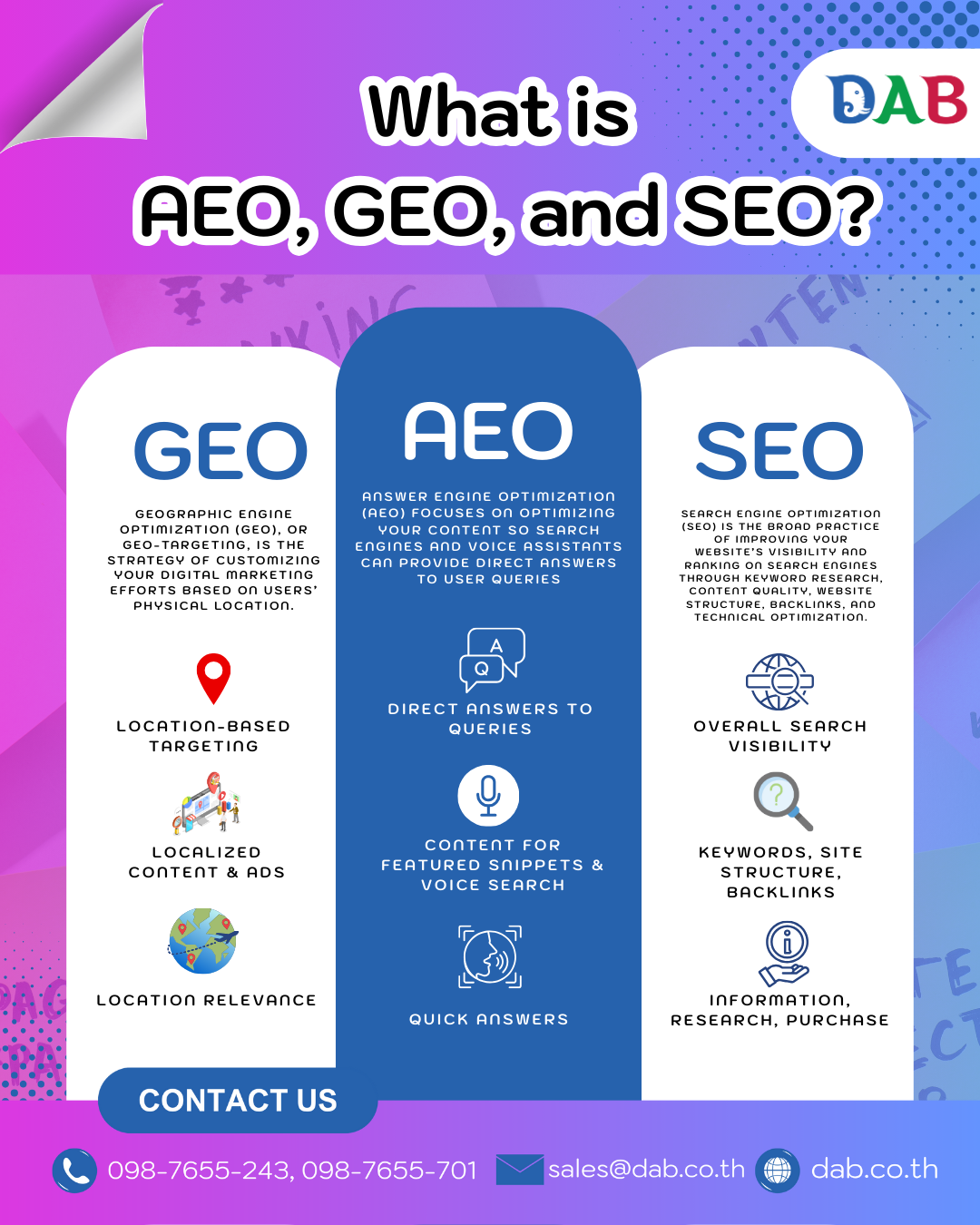
Before we dive into the tools, we need to clarify what we are actually researching. In traditional SEO, we optimize for a list of blue links. in AEO, we optimize for the single, synthesized answer provided by engines like Google’s AI Overviews (Gemini), ChatGPT, Perplexity, Claude, and Microsoft Copilot.
Answer engine optimization keyword research tools are platforms designed to help you discover the specific questions (prompts) users feed into these AI models, analyze the sentiment of the generated answers, and track whether your brand is being cited. Unlike standard SEO tools that focus on backlinks and rank tracking, AEO tools focus on “share of voice” within the answer itself.
Quick answer: AEO in one paragraph

Answer Engine Optimization (AEO) is the practice of structuring content to be directly sourced and cited by AI-powered answer engines. While SEO focuses on ranking a page in search results, AEO focuses on being the primary data source the AI uses to construct its answer. It prioritizes clarity, structure, and directness over length and keywords.
AEO vs SEO: what changes in research, content, and measurement
The distinction often trips people up. In practice, AEO doesn’t replace SEO; it changes how I structure and validate topics.
- Research Inputs: SEO looks for keywords (e.g., “best payroll software”). AEO looks for prompts and natural language questions (e.g., “compare payroll software for a 50-person company in California”).
- Content Outputs: SEO aims for comprehensive long-form pages. AEO demands “answer-ready” modules—concise definitions, tables, and steps—that an LLM can easily extract.
- Measurement: SEO tracks rankings and clicks. AEO tracks prompt presence, citation frequency, and sentiment analysis.
To navigate this, you need a vocabulary that matches the technology. Here are a few terms I’ll use frequently:
- Prompt: The specific input or question a user types into an AI engine.
- Citation: When an AI engine links to your content as a source for its answer.
- Share of Voice (SOV): The percentage of times your brand is mentioned or cited for a specific set of prompts.
- Entity: A distinct object or concept (like a brand, person, or product) that search engines understand as a unique thing, not just a keyword string.
My prompt-first workflow for AEO-focused keyword research (step by step)

When I’m building a strategy for AI visibility, I don’t start with a keyword volume tool. I start with the questions my customers are actually asking. This workflow is designed to turn those questions into high-performing content briefs that tools like Kalema can help you execute at scale.
Step 1: Pick your answer engines + audience intents (US examples)
You can’t optimize for everything at once. I recommend picking your battleground based on your audience. If you are in B2B SaaS, ChatGPT and Perplexity are critical. If you are a local service business, Google AI Overviews are your priority.
Next, map out the specific intents you want to capture. For a US-based SMB payroll software company, I would target:
- Informational: “What are the payroll tax requirements in Texas?”
- Comparison: “Gusto vs ADP for small startups.”
- Implementation (How-to): “How to set up direct deposit for contractors.”
- Troubleshooting: “Why is my payroll software calculating overtime wrong?”
- Commercial: “Best affordable payroll app for 10 employees.”
Step 2: Mine real questions and prompts (not just head terms)
This is where the “research” happens. I copy prompts exactly as written—typos included—because specific wording often triggers different AI responses.
Where I find the best questions:
- People Also Ask (PAA): The gold standard for Google’s understanding of follow-up questions.
- Sales Call Recordings: Listen for the objections and specific constraints prospects mention (e.g., “without switching banks”).
- Reddit & Forums: Look for threads where users say, “I tried X but it didn’t work.”
- Question Mining Tools: Tools like AlsoAsked are fantastic for visualizing the relationship between questions.
Step 3: Cluster by prompt intent and required answer format
In traditional SEO, we cluster by topic. In AEO, I cluster by answer format. If five different prompts all require a step-by-step list, they belong on the same page. If they require a comparison table, that’s a different module.
I organize my research in a spreadsheet with these columns:
| Prompt Group | Core Intent | Required Format | Target Entity |
|---|---|---|---|
| Payroll setup steps | How-to / Process | Ordered List (Step 1, Step 2…) | Payroll Software |
| Payroll software pricing | Comparison | Comparison Table | Brand Name |
| What is payroll tax? | Definition | Concise Paragraph (40-60 words) | Payroll Tax |
Step 4: Validate with classic SEO signals (volume, SERP intent, entities)
AEO doesn’t exist in a vacuum. You still need to know if a topic has demand. I use traditional tools to validate my clusters. Interestingly, Semrush’s keyword database includes over 26 billion keywords , which gives us a massive historical archive to check against.
However, be practical. Some specific prompts (e.g., “payroll software that integrates with X bank for under $50”) might show zero search volume in a classic tool. Do not discard them. These precise, long-tail queries are exactly what drive AI citations. If the intent is high-value, the volume doesn’t need to be massive.
Step 5: Turn clusters into an AEO content brief (template)
A list of keywords isn’t enough for a writer. You need a structured brief. Here is the template I use to ensure a piece of content is “answer-ready”:
AEO Brief Element: Mini-Example
- Primary Prompt: “How to set up payroll for a small business in 2025”
- Direct Answer Target: 50-word definition at the very top (bold the key concept).
- Sub-Questions (H2s/H3s):
- Do I need an EIN for payroll?
- How much does payroll software cost?
- Can I do payroll manually?
- Required Entities: EIN, W-4 form, Direct Deposit, Tax Withholding.
- Schema Plan: HowTo Schema, FAQ Schema.
- Internal Links: Link to “Best Payroll Software Guide” and “Tax Calculator.”
Step 6: Add on-page structure that answer engines can extract
Finally, the technical wrapper. LLMs are hungry for structure. If your content is a wall of text, it gets ignored. I explicitly plan for schema markup during the research phase, not just after publishing.
My Schema Quick-Pick:
- FAQ Schema: For Q&A sections (essential for PAA and voice search).
- HowTo Schema: For processes and tutorials.
- Product Schema: For software pages (include price, rating, availability).
- Organization Schema: To establish your brand entity clearly.
Field note: I only add schema I can support with visible on-page content. Don’t try to trick the engine; parity between code and text is critical.
Choosing the best answer engine optimization keyword research tools (by job-to-be-done)

The market for AEO tools has exploded. It can be overwhelming, with platforms ranging from free browser extensions to enterprise-grade analytics suites. To help you choose, I’ve categorized the top players based on what they actually do for your workflow.
Whether you are using an AI article generator or writing manually, you need accurate data to feed the process.
How I evaluate AEO tools: 7 criteria beginners can actually use
- Data Sources: Does it track Google AI Overviews, ChatGPT, or both?
- Prompt Coverage: Can I import my own custom prompts, or am I stuck with their database?
- Citation Diagnostics: Does it tell me why I wasn’t cited (e.g., negative sentiment, missing info)?
- Schema Guidance: Does it offer specific code recommendations?
- Workflow Integration: Can I export to Sheets or Jira?
- Alerts: Will it email me when I lose a citation?
- Learning Curve: Do I need a developer to set it up?
All-in-one SEO suites adding AI visibility (good starting point)
If you are already paying for a major SEO suite, check there first. Semrush, for instance, has been aggressive in this space. They labeled AEO as a critical transition in their trend report , and their toolset now includes features to track AI Overview visibility alongside traditional rankings.
Best for: Teams who want to keep everything in one place.
Not for you if: You need deep, real-time diagnostics on specific ChatGPT conversations.
Prompt monitoring + AI citation tools (where AEO gets real)
This is the new breed of tools designed specifically for the era of answers. Tools like Otterly.AI, Peec AI, and Goodie AI are excellent for SMBs. They act like rank trackers but for prompts—telling you exactly what the AI says about your brand.
For example, Peec AI raised €7 million recently, which is indicative of the strong demand for these dedicated dashboards. On the enterprise side, platforms like Profound and AthenaHQ offer robust sentiment tracking and crawler analysis, essentially serving as a reputation management system for AI.
Best for: Marketers who need to prove “Share of Voice” in AI.
Not for you if: You have zero budget; these are specialized SaaS products.
Question discovery tools to expand prompt clusters fast
To fill your content calendar, you need volume. AlsoAsked and AnswerThePublic remain my go-to tools for this. They visualize the “People Also Ask” data, showing you the semantic web of questions around your topic.
Mini Workflow: Seed query → Export PNG of questions → Group into 3 intents → Pick 1 page to publish first.
Technical + API options (when you need scale or monitoring)
For those with developer resources, tools like SerpApi provide direct access to AI Overview JSON feeds. This allows you to build your own custom monitoring dashboards. Similarly, Botify offers deep log analysis to understand how AI crawlers are interacting with your site.
Editorial workflow + content intelligence platforms (where teams win)
Finally, there are platforms that combine research with execution. Contently’s AEO Blueprint and Writesonic’s GEO suite attempt to bridge the gap. Contently, for example, reported a 42% lift in qualified AI traffic for clients using their framework. These tools focus on governance—ensuring every piece of content meets AEO standards before it goes live.
| Tool Category | Top Tools | Best For | Key Limitation |
|---|---|---|---|
| All-in-One Suite | Semrush | Generalists & existing users | Can lag behind niche AI updates |
| Prompt Monitoring | Otterly.AI, Peec AI, Goodie AI | SMBs & Mid-market | Specialized cost (add-on) |
| Enterprise AEO | Profound, AthenaHQ, Yext Scout | Large Brands & Reputation Mgmt | High price point & complexity |
| Question Discovery | AlsoAsked, AnswerThePublic | Content ideation & clustering | Doesn’t track performance |
If I were starting today with a limited budget: I would stick with my existing SEO suite for validation, use AlsoAsked for question mining, and pick one lightweight monitoring tool like Otterly.AI to track my top 20 most critical prompts.
How to measure AEO performance (metrics, dashboards, and what “good” looks like)

Measurement is usually where the anxiety sets in. “How do I report on this?” The key is to distinguish between vanity metrics and business outcomes.
Here is a simple framework for tracking AEO success:
| Metric | What it tells you | How to track |
|---|---|---|
| Prompt Presence | Are you showing up at all? | Manual check or AEO tool |
| Citation Rate | Is your link provided as a source? | AEO Monitoring Tool |
| Sentiment Score | Is the AI talking about you positively? | Sentiment Analysis / Manual Review |
| Qualified Traffic | Are users clicking through? | GA4 (Referral paths from AI engines) |
Baseline Plan:
Week 0: Document your visibility for your top 10 “money prompts.”
Week 4: Check for changes after optimizing content structure.
Quarterly: Refresh your prompt list as user behavior evolves.
The minimum viable AEO scorecard (for a small business)
Don’t overcomplicate it. If you are a team of one, this is all you need:
- Tracked Prompts: 15 core questions.
- Citation Count: How many times were we cited? (e.g., 8/15).
- Sentiment Check: Any negative hallucinations?
- Conversion: Did traffic from these pages lead to a demo or sale?
Common beginner mistakes with AEO keyword research (and how I fix them)

I’ve made plenty of mistakes trying to reverse-engineer these engines. Here are the most common pitfalls so you can avoid them.
- Chasing volume over intent: Focusing only on high-volume keywords and ignoring the zero-volume questions that AI answers prioritize. Fix: Trust the PAA data even if the volume is low.
- Ignoring prompt phrasing: Summarizing questions instead of using the user’s exact messy wording. Fix: Copy/paste verbatim inputs for your tracking.
- Thin answers: Writing fluff. AI engines need data, definitions, and facts to extract. Fix: Lead with the answer (BLUF – Bottom Line Up Front).
- Missing schema: Having great content but no code structure. Fix: Implement FAQ and HowTo schema on every core page.
- Set-and-forget: Assuming an answer stays static. AI models update frequently. Fix: Re-verify your top prompts monthly.
- Measurement blindness: Only looking at rank. You can rank #1 and not be the AI answer. Fix: Add “Citation Status” to your monthly report.
Mistake-to-fix checklist (copy/paste)
✅ AEO Audit Checklist
- Does the H1 match the primary user question?
- Is the direct answer provided in the first 100 words?
- Is the content structured with clear H2/H3 headers?
- Are lists formatted as HTML bullets (not just text)?
- Is valid Schema markup present and error-free?
- Are sources and statistics cited and fresh?
FAQs + my next-step checklist for getting started with answer engine optimization keyword research tools

FAQ: Which AEO tools should I consider first?
If you are already in the Semrush or Writesonic ecosystem, start there—they have integrated solid features. If you are a nimble SMB wanting dedicated insights, look at Otterly.AI or Peec AI. For enterprise needs, investigate Profound. Pick one lane to avoid tool fatigue.
FAQ: What practices boost AEO effectiveness?
- Cluster content by specific prompts/questions, not just broad topics.
- Implement structured data (FAQ, HowTo, Organization) religiously.
- Update cornerstone content frequently (e.g., pricing, requirements).
- Monitor your brand’s sentiment to catch AI “hallucinations” early.
Recap: What we learned
- AEO requires researching questions and formats, not just keywords.
- Tools range from all-in-one suites to specialized prompt monitors.
- Success is measured by citations and share of voice, not just rankings.
Your Next 3 Actions:
- Select 10 “Money Prompts”: The high-intent questions that lead to sales.
- Run a Baseline Audit: Check if you are currently cited in ChatGPT or Google AI Overviews for them.
- Build One Structured Brief: Use the template above to rewrite or create one key page.
If you need to turn this research into high-quality, structured drafts consistently, Kalema can help you operationalize your content strategy without the headache.