Automating Content at Scale in 2026: A Practical Guide to the Best Programmatic SEO Tools

Scaling content used to be a numbers game. You could publish 5,000 location pages, sit back, and watch the traffic roll in. But if you try that raw volume approach today, you won’t just get ignored—you’ll get silently deindexed.
I’ve learned the hard way that modern programmatic SEO (pSEO) isn’t about spamming the index; it’s about engineering structured value at scale. For growth marketers and operators in US startups, the challenge in 2026 is balancing automation with the strict quality thresholds demanded by AI-driven search engines.
In this guide, I’ll walk you through the tool stack that actually works right now—from data pipelines to template generation—and the exact workflow I use to build pages that rank. We’ll look at how to select the right software, how to optimize for AI Overviews, and the specific mistakes that kill projects before they launch.
What Programmatic SEO Means Now (and Why Thin Pages Get Silently Deindexed)
At its core, programmatic SEO hasn’t changed: it’s the practice of using a dataset and a template to create many pages at once, usually targeting long-tail keywords with a repeatable intent (like “Best CRM for [Industry]” or “Wedding Photographer in [City]”).
What has changed is the environment we’re publishing into.
Quick definition: templates + data + intent mapping

If you remember one thing, make it this: your output is only as good as your data model. Successful pSEO relies on three components working in harmony:
- The Dataset (Source of Truth): A structured database (like Airtable) containing the unique entities (places, products, integrations) you want to rank for.
- The Template: The code or page layout that dynamically pulls data from your database.
- Intent Mapping: Ensuring the template actually answers the specific question the user asked. A template for “Best X” needs comparison tables; a template for “How to integrate X” needs step-by-step code snippets.
What changed: AI Overviews + rising quality bar

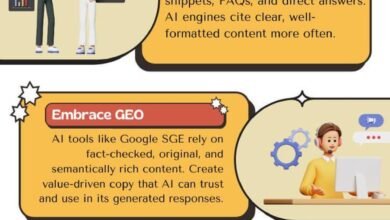
The stakes are significantly higher in 2026. With AI Overviews now appearing in over 50% of US search results , the goal isn’t just to get a blue link on page one. It is to be the authoritative source cited by the generative engine.
The Generative Engine Optimization (GEO) market is projected to explode—growing from roughly $848 million in 2025 to over $33 billion by 2034 . This means your competitors are actively investing in content structures that AI can easily read, verify, and summarize. If your programmatic pages are unstructured blobs of text, you are invisible to the algorithms that matter most.
The ‘silent deindexing’ pattern to watch for
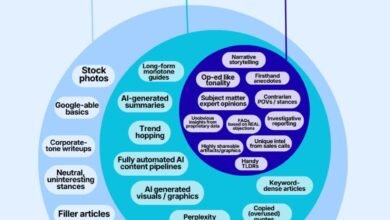
The most common failure mode I see today is silent deindexing. You publish 1,000 pages, Google crawls them, and then… nothing. They aren’t penalized, they just aren’t indexed.
This usually happens because the pages lack differentiation. To avoid this, your templates need unique signals:
- Unique Summary: A custom intro generated via logic, not a generic “Welcome to our page.”
- Unique Data Points: Specific stats, pricing, or coordinates for that specific entity.
- Internal Linking Ecosystem: Links to nearby locations or related categories, not just the footer.
How I Choose the Best Programmatic SEO Tools (Beginner-Friendly Checklist)

Before we jump into vendor names, you need a selection framework. The “best” tool depends entirely on your existing stack (are you on WordPress or Webflow?) and your technical comfort level.
When I’m building a stack for a client, I look for tools that allow me to act as an editor, not just a printer. If a tool doesn’t allow for granular control over the output, I walk away. Here is how I evaluate a potential SEO content generator or programmatic platform:
Non-negotiables: intent fit, variation, and editorial control
I avoid tools that lock me into rigid templates. To survive in 2026, you need conditional logic—the ability to say, “If this row has pricing data, show the pricing table; otherwise, show the ‘Call for Quote’ block.”
Without this, every page looks identical, and search engines treat them as duplicates. You also need a staging environment where a human can spot-check 50 pages before you push 5,000 live.
Must-have features checklist (for US business sites)
- Bulk Generation Capablity: Can it handle 100+ pages without crashing?
- CMS Integration: Does it sync natively to your platform (WordPress/Webflow) or do you need a middleware tool?
- Schema Support: Does it automatically inject JSON-LD schema (like
ProductorLocalBusiness) based on your data fields? - Internal Linking Automation: Can it dynamically insert links to related pages within the content body?
- Quality Assurance (QA): Does it flag empty fields or broken logic before publishing?
Mini decision table: tool category vs. best use case

I organize my toolkit by “job to be done.” Here is a quick breakdown to help you decide what to buy versus what to DIY.
| Category | Primary Job | Best For… |
|---|---|---|
| Database | Storing & cleaning data | The “Source of Truth” (Airtable, Google Sheets). |
| Keyword Research | Finding patterns | Identifying scalable intent clusters (Semrush, Ahrefs). |
| Page Generator | Turning rows into HTML | Creating the actual content drafts (PageFactory, Letterdrop). |
| Sync/CMS | Publishing to the web | Moving content from database to website (WhaleSync, WP All Import). |
| GEO/Visibility | Tracking AI presence | Monitoring if you appear in AI Overviews (Evertune). |
Best Programmatic SEO Tools by Category (What Each One Does, Pros/Cons, and Who It’s For)
There is no single “magic button” tool that does everything perfectly. The most successful operators build a stack. If I were starting a project today with a modest budget, I would likely combine a robust database with a dedicated sync tool.
Keyword research & intent clustering (Semrush, Ahrefs, etc.)
You can’t just guess at programmatic terms. You need to find keywords that follow a pattern, such as {Service} in {City} or {Software} vs {Competitor}.
Tools: Semrush and Ahrefs are the industry standards here. They allow you to export thousands of keywords and filter by intent.
Red Flag: Watch out for intent mismatches. If the top ranking results for “Payroll Software” are homepage aggregators, don’t try to rank a single blog post for it. You need to match the format Google expects.
Data management: Airtable/Sheets as the source of truth
If my data is messy, my pages will be messy. That’s why I treat the database as the most critical part of the stack.
Tools: Airtable is my go-to because it supports rich text fields, attachments, and relational data (linking a “City” record to a “State” record). Google Sheets works for smaller projects but breaks down when you need complex relationships.
Page generation: CSV-driven + template-based tools (Letterdrop, PageFactory)
This is where the magic happens—turning a row of data into a readable article.
Tools:
- PageFactory: Excellent for straightforward programmatic sites. It handles the template logic well and exports HTML ready for import.
- Letterdrop: Focuses heavily on workflow and CMS integration, often blurring the line between pSEO and editorial content management.
Key Feature: Look for tools that allow conditional logic. If a data cell is empty, the tool should know to hide that entire section of the article rather than printing a blank space.
CMS + syncing: Webflow/WordPress pipelines (WhaleSync and similar)
Once you have the content, you need to get it live. Manually copy-pasting 500 pages is a nightmare you want to avoid.
Tools:
- WhaleSync: A game changer for Webflow users. It syncs Airtable bases directly to Webflow CMS collections in real-time.
- WP All Import: The classic choice for WordPress. It’s technical and clunky, but powerful for mapping CSV columns to WordPress custom fields.
My advice: Start small. Sync 50 pages first. Check indexing and engagement. Only then should you sync the remaining 4,000.
AI drafting & editorial assistance (where automation helps vs. hurts)
Automation is great for structure, but AI is necessary for drafting unique prose. However, purely AI-generated content often lacks the nuance required for high rankings.
Tools: Specialized AI writing tools (often integrated into the platforms above) can draft intros and outros. But remember: a human must define the voice. I never publish AI output without a strict set of “stop-ship” rules regarding tone and accuracy.
GEO / AI visibility tools (why Evertune-type platforms are showing up)
This is a new category for 2026. These tools track how often your brand or content appears in generative answers.
Tools: Platforms like Evertune are emerging to help SEOs optimize for Large Language Models (LLMs). They measure “share of model”—essentially, how often ChatGPT or Gemini mentions you when asked about your niche. It’s early days, but worth watching.
My Step-by-Step Workflow to Automate Content at Scale (Without Sacrificing Quality)

Tools are useless without a process. Here is the exact workflow I use to launch programmatic campaigns that actually stick in the index.
Step 1: Find scalable patterns (not random keywords)
I start with a spreadsheet of modifiers. I look for patterns like:
- Locations:
in {City}, {State} - Comparisons:
{Product} vs {Competitor} - Integrations:
How to connect {App A} with {App B}
If the search volume exists across at least 50 variations, it’s a candidate for pSEO.
Step 2: Build the dataset (and enrich it so pages differ)
Next, I build the database. I don’t just put the city name; I enrich the data. I’ll add columns for “Population,” “Local Landmarks,” “Pricing Tiers,” and “Common Customer Reviews.”
Why? Because unique data prevents duplicate content issues. If every page has the same text with just the city name swapped, Google will ignore it.
Step 3: Design a defensible template (conditional blocks + intent sections)
I draft a template skeleton. It typically looks like this:
- H1: Dynamic Title
- Intro: Unique hook referencing the specific user pain point.
- Key Data Table: Hard facts from the dataset.
- Comparison/Analysis: Conditional text blocks based on the data.
- FAQs: Questions specific to the category.
- CTA: Contextual next step.
Step 4: Add internal linking rules that help crawl + discovery
If I publish 5,000 pages, I need Google to find them without me begging for crawls via Search Console. I set up dynamic linking rules: “Link to the 5 nearest cities” or “Link to the 3 closest competitors.”
Case studies have shown that dynamic internal linking can accelerate crawl rates by as much as 65% . It creates a spiderweb that bots can easily traverse.
Step 5: Generate drafts + run QA before publishing
This is where I might use an AI article generator to help draft the narrative sections of the template, but I strictly automate production, not judgment.
The QA Checklist:
- Stop-ship Rule 1: Are there empty fields showing up as blanks in the text?
- Stop-ship Rule 2: Is the internal linking actually working, or are the links broken?
- Stop-ship Rule 3: Does the page pass a uniqueness check (is at least 30-40% of the content unique to this URL)?
Optimizing Programmatic Pages for AI Overviews and GEO (Not Just Blue Links)
In 2026, we aren’t just writing for humans; we are writing for machines that summarize content for humans. Optimizing for Generative Engine Optimization (GEO) requires structure.
On-page structure that increases ‘extractability’
AI models love structured data. To increase the chances of your content being extracted for an AI Overview, I rely on specific formats:
- Definition Boxes: Clear, concise definitions of key terms near the top (e.g., "What is {Keyword}?").
- Comparison Tables: `<table>` tags are easily parsed by LLMs to extract feature comparisons.
- Pros/Cons Lists: Bulleted lists clearly labeled as advantages and disadvantages.
I try to simplify the layout. If a busy reader skimming on mobile can find the answer in 3 seconds, an AI bot can likely extract it efficiently too.
Trust signals at scale (the part automation can’t fake)
You cannot automate trust. To avoid being flagged as “thin content,” every programmatic page needs legitimacy markers:
- Methodology: A brief note explaining where the data came from.
- Last Updated Date: Showing the content is fresh.
- Author/Reviewer: Linking to a real human profile who oversees the content standards.
I would never put my name on a page that claimed to review a product I’ve never seen. Ensure your methodology block is honest about how the data was aggregated.
Common Programmatic SEO Mistakes (and the Fixes I Use)
I’ve seen entire projects sink because the operator got too excited about the volume and forgot about the user. Here are the friction points to watch out for, especially when using a Bulk article generator for publishing at scale.
Mistake 1–3: Strategy gaps (intent mismatch, no differentiation, wrong page types)
- The Mistake: Targeting informational keywords (e.g., “how to fix X”) with a transactional landing page template.
- The Fix: Check the SERP first. If the results are long-form guides, your programmatic page must be an informational guide, not a sales page.
- The Mistake: Zero differentiation. Every page reads exactly the same.
- The Fix: Introduce “conditional variability.” If the city population is over 1 million, show a paragraph about “big city challenges.” If under 50k, show a paragraph about “rural considerations.”
Mistake 4–6: Execution gaps (internal links, canonicals, QA, schema)
- The Mistake: Orphan pages. You publish 2,000 pages but no other page on your site links to them.
- The Fix: Build HTML sitemaps and “Hub” pages (e.g., “Locations in California”) that link down to the individual child pages.
- The Mistake: Ignoring Canonical tags.
- The Fix: Ensure every generated page has a self-referencing canonical tag so Google knows it’s the primary version.
FAQs + Recap: Do the Best Programmatic SEO Tools Still Work in 2026?
FAQ 1: Does programmatic SEO still work in 2026?
Yes, but the bar is higher. The days of ranking thin, 300-word spun content are over. It works today only when you provide deep, structured data and meaningful variation between pages. It is an iterative process, not a “set and forget” magic trick.
FAQ 2: How important is optimizing for AI-driven search (AI Overviews)?
It is critical. With AI Overviews appearing in over 50% of US search results , being “extractable” is the new SEO. Focus on tables, clear lists, and direct answers to win this visibility.
FAQ 3: Which tools support programmatic SEO effectively?
A solid starter stack includes Semrush/Ahrefs for research, Airtable for data management, PageFactory or Letterdrop for generation, and WhaleSync for CMS integration.
FAQ 4: Is automation enough, or do I need manual input?
Automation handles the production; humans handle the judgment. You need editorial oversight for your intent mapping, your template voice, and your final QA. I automate the repetitive tasks so I can spend my time on strategy.
Next Steps for Your Workflow
If you are ready to build a defensible programmatic strategy, start here:
- Pick one page type (e.g., “Integrations” or “Locations”).
- Build a clean dataset with at least 5 unique data points per row.
- Publish a pilot batch of 50 pages and measure indexation rates.
Don’t rush to 5,000. Get the quality right, then scale.