Introduction: Building rankings when AI answers replace clicks

Just this week, I searched for “best payroll software for small business” to double-check a client’s competitor. What I saw wasn’t a list of blue links—it was a massive, synthesized answer block from Google’s AI Overview. It gave me the top three options, their pricing models, and pros/cons before I ever scrolled down to the first organic result. For a user, it was efficient. For the businesses below the fold? It was a visibility crisis.
If you’re seeing impressions hold steady while click-through rates (CTR) slide, you aren’t alone. The shift to AI-driven search and AI Overviews means the old playbook of “rank #1 and wait for traffic” is breaking. But here is the good news: the fundamentals haven’t vanished; they’ve just evolved.
In this guide, I’ll walk you through the AI SEO best practices that act as the bedrock for this new era. We’ll cover exactly what needs to change in your content strategy, from structuring data for answer engines to proving E-E-A-T so robustly that AI models trust you enough to cite you. No hype, no futurism—just the operational steps I use to keep organic visibility alive.
What’s changing in search: AI Overviews, AI Mode, and the rise of zero-click behavior

To fix a traffic drop, we first have to diagnose it honestly. The introduction of AI Overviews (formerly SGE) and AI Mode has fundamentally altered the “search physics” for informational and commercial queries. Where users once clicked 3–5 links to gather information, AI now does the synthesis for them. This behavior shift has led to a surge in zero-click searches, where the user gets their answer without ever visiting a website.
For US-based businesses, the impact is measurable. We are seeing organic click-through rates for top positions decline by 30–60% on purely informational queries (like “how to fix a leaky faucet”). However, the traffic that does click through is often higher intent—they aren’t looking for a definition; they are looking for a deep dive or a specific solution.
Below is a breakdown of how the landscape has shifted:
| Feature | Traditional SERP | AI-First SERP (AI Overviews) |
|---|---|---|
| Primary Goal | Rank in top 3 blue links | Earn citations within the AI answer snapshot |
| User Behavior | Scan titles, click, read, go back (pogo-sticking) | Read summary, click only for verification or deep intent |
| Metric of Success | Organic Sessions & Rankings | Share of Voice & AI Citations |
The numbers beginners should know (without doomscrolling)
I don’t treat these stats as panic metrics; I treat them as planning constraints. Here is the reality we are operating in:
- CTR Decline: Click-through rates have dropped from around 29% in 2023 to approximately 19% in 2025 following the rollout of AI Overviews.
- Zero-Click Dominance: AI Overviews have resulted in zero-click searches making up around 65–70% of queries.
- The “Link” Problem: Users click traditional website links in AI-summary searches only about 8% of the time, versus 15% when no AI summary is shown.
Why “ranking #1” isn’t the only win anymore
If I run a local HVAC business in Austin, I’d rather be the sourced reference for “AC repair costs” in the AI summary than the #1 link that gets scrolled past. Winning now means optimizing for AI citations and brand mentions. We are trading raw volume for qualified visibility. If the AI trusts your content enough to build its answer on it, you capture the users who are actually ready to buy, not just browse.
AI SEO best practices: what AI SEO is (and how it differs from traditional SEO)

There is a lot of jargon floating around, so let’s clarify the vocabulary before we get into the tactics. AI SEO is the practice of optimizing content not just for a search index, but for the Large Language Models (LLMs) that power search engines. It blends traditional signals (backlinks, keywords) with new requirements for structure, clarity, and authority.
You will often hear two specific terms: Answer Engine Optimization (AEO) and Generative Engine Optimization (GEO). While they overlap, they have distinct goals.
| Discipline | Primary Goal | Key Optimization Tactic |
|---|---|---|
| Traditional SEO | Rank a URL in the blue links. | Keywords, Backlinks, Technical Health. |
| AEO (Answer Engine Opt.) | Provide a direct, extractable answer. | Q&A formatting, Schema, Concise definitions. |
| GEO (Generative Engine Opt.) | Be cited/synthesized by AI models. | Topical authority, E-E-A-T, Quotable stats. |
AEO vs GEO in plain English (and when each matters)
I use this simple rule of thumb when planning content:
- Focus on AEO when the query is a specific question (e.g., “how to tie a tie” or “what is AI SEO”). You want your content to be the direct answer card.
- Focus on GEO when the query is complex or comparative (e.g., “best email marketing tools for startups”). You want your brand to be part of the synthesized list or conversation.
The new “ranking factors”: trust signals, structure, and intent clarity
The algorithms have moved beyond simple keyword matching. Today, the bedrock elements are topical authority, impeccable structured data, and intent match. AI models are essentially prediction engines; they predict the next best word or answer. To be included in that prediction, your content must be the most logical, structured, and trustworthy source available.
E-E-A-T: why it matters more in AI-driven search
Experience, Expertise, Authority, and Trust (E-E-A-T) are no longer just quality guidelines; they are filters for AI safety. Models are trained to avoid hallucinating or giving dangerous advice. If your content lacks clear authorship or trusted sourcing, AI engines will often bypass it for a more verifiable source. In my experience, adding a clear author bio and citing primary data sources is the single fastest way to improve AI trust signals.
The AI SEO bedrock: essential elements I use to make content citation-worthy

This is where theory meets practice. If you want your content to be picked up by Gemini, ChatGPT, or Perplexity, you cannot just write a wall of text. You need to build “hooks” that AI can grab onto. Here are the five essential elements I check on every piece of content.
| Bedrock Element | What I Do | What AI/Google Infers |
|---|---|---|
| Intent Clarity | Answer the main question in the first 100 words. | This source is direct and relevant. |
| Entity Coverage | Include related concepts (e.g., cost, time, tools). | This source has high topical authority. |
| Structure | Use H2/H3s, lists, and comparison tables. | This data is structured and safe to extract. |
1) Nail the intent (and write the answer early)
When I audit a struggling page, the most common issue is burying the lead. If a user asks “what is schema markup,” don’t start with the history of the internet. Start with a definition. I follow a simple pattern: Definition + Who it’s for + Key Benefit. If I can’t summarize the page in one sentence, the AI likely can’t either.
2) Cover entities and subtopics (topical authority without fluff)
Keywords are strings of text; entities are concepts. To build topical authority, you need to map out the entities related to your subject. If I’m writing about “coffee,” I’m not just repeating the word “coffee”—I’m covering “roasting,” “beans,” “brewing methods,” and “grind size.” I often use customer support logs to find the real questions people ask, ensuring I cover the subtopics that matter to humans, not just tools.
3) Demonstrate E-E-A-T with visible proof
Don’t just say you are an expert; prove it. I always ensure articles have:
- Author Bylines: Real people with links to their LinkedIn or bio pages.
- Primary Sources: I link to original studies or official documentation, not third-party blogs.
- Experience Notes: Phrases like “In our testing…” or “When we deployed this…” signal first-hand experience (the ‘E’ in E-E-A-T).
4) Make it easy to parse: headings, lists, tables, and schema
AI models love structure. A wall of text is hard to process; a bulleted list is ready-made for an answer card. I ruthlessly break down complex paragraphs into lists. I also implement FAQ schema and HowTo schema where appropriate. Experience note: When I updated a legacy post by simply converting a dense paragraph into a comparison table, its impression share in AI overviews doubled within two weeks.
5) Earn citations: original insights + distribution beyond your site
To get cited, you must be cite-worthy. This doesn’t mean you need a massive research budget. It can be as simple as creating one original diagram or calculating a specific benchmark relevant to your niche. Earned citations come from being the “source of truth” for a specific data point. I often share these small charts on LinkedIn or industry forums to spark the initial signal that this is unique data.
A practical workflow to implement AI SEO best practices (from audit to publishing)

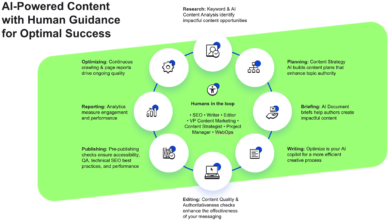
Knowing the best practices is one thing; implementing them at scale is another. When things get busy, editorial standards can slip. Here is the workflow I use to maintain quality without bottlenecking the entire marketing team. This is where tools like AI article generators can be powerful allies—not to replace the strategist, but to handle the heavy lifting of drafting and structuring.
Step 1: Audit what you already have (and what AI can summarize)
Don’t try to boil the ocean. I start by auditing pages that have high impressions but declining clicks. These are usually the ones losing to AI summaries. I check:
- Is the answer buried?
- Is the data outdated?
- Are there clear lists and tables?
Constraint note: I usually limit this to 5–10 pages a month to keep it manageable.
Step 2: Build an AI-first brief (intent, answer, entities, proof)
Before writing a single word, I need a brief. An AI-first brief explicitly lists the entities to cover and the primary question to answer. I explicitly tag statistics that need verification. Using a consistent content brief template ensures that whether I’m writing it or a freelancer is, the structure remains solid.
Step 3: Write for extraction (lists, tables, tight sections)
This is the drafting phase. I focus on “writing for extraction.” This means using clear H2s and immediately following them with the core answer. I use tables to compare features or prices because tables are high-signal formats for AEO. If a section feels fluffy, I cut it. The goal is information density.
Step 4: Publish consistently (and automate the boring parts)
Consistency beats sporadic brilliance. To maintain a steady cadence, I look for ways to automate the blog generation process for standard types of content. I set up workflows where the draft, formatting, and internal linking are handled by automation, leaving me to focus on the final “human polish”—checking the tone, verifying the sources, and adding those specific experience notes.
On-page + technical foundations that still matter in an AI-driven world

While we optimize for AI, we cannot ignore the machine that feeds it. Google’s crawlers still need to access and understand your page. I think of AI SEO tools and technical platforms not as magic buttons, but as infrastructure that ensures my content is actually readable by the engines.
| Element | What I Check | Common Beginner Mistake |
|---|---|---|
| H1-H6 Tags | Logical hierarchy. | Using headings for size, not structure. |
| Internal Links | Links to related entities. | Orphaned pages with no connections. |
| Page Speed | Core Web Vitals (CWV). | Ignoring mobile load times. |
Titles, headings, and snippets: optimize for humans first, extraction second
I avoid clever titles when the query is practical. If someone is searching for “AI SEO best practices,” my title needs to promise exactly that. Clear, descriptive headings help AI parse the document structure. If your H2 is “Let’s dive in,” the AI learns nothing. If it’s “5 Steps to Optimize for AI Overviews,” you’ve just given the engine a category label.
Schema and structured data: what to add (and what to avoid)
Schema markup is like handing the search engine a business card instead of making it guess your name. I stick to the basics: Article, FAQPage, and Organization schema. A quick lesson learned: Do not spam schema. If you mark up content that isn’t visible on the page, you risk manual penalties. It’s helpful, but it’s not a cheat code.
Voice and conversational search basics
With voice search optimization becoming critical as voice queries exceed 50% of mobile searches, our content must sound natural. People don’t speak in keywords; they speak in sentences. I test this by reading my headers aloud. If I sound like a robot, I rewrite them. Queries like “Where can I find an SEO consultant near me?” demand local context and conversational phrasing.
How I measure AI visibility: GEO metrics, reporting, and what “good” looks like

Measuring success in this new world is… tricky. We are moving from deterministic metrics (rankings) to probabilistic ones (visibility). I track trends rather than absolutes. The key metrics for GEO include Generative Appearance Score (how often you appear in AI answers) and AI Citation Frequency. While tools for these are still maturing, the ultimate truth lies in downstream metrics: are you getting qualified leads?
A simple monthly scorecard for beginners
I keep my reporting simple to avoid paralysis. My monthly scorecard includes:
- Pages Updated: Did we improve our bedrock content?
- AI Citations Observed: Manual spot checks on key terms.
- Branded Search Volume: Are people looking for us specifically?
- Conversions: The bottom line.
I encourage keeping a shared doc with short notes about what changed and why. It helps the team see progress even when the graph lines are messy.
Common mistakes in AI SEO (and how I fix them)

I’ve made plenty of mistakes trying to adapt to these changes. Here are the most common ones I see, so you can avoid them.
- Mistake: The “Wall of Text” Intro.
Why it hurts: AI (and humans) bounce if the answer isn’t immediate.
Fix: bold the core answer in the first paragraph. - Mistake: Ignoring Internal Links.
Why it hurts: AI struggles to understand the relationship between your topics.
Fix: Ensure every article links to at least 3 related entity pages. - Mistake: Generic “AI Voice” Content.
Why it hurts: It lacks E-E-A-T and specific examples.
Fix: Inject real-world data points and “I” statements.
Mistake-to-fix checklist (quick scan)
- Audit old content for answer clarity → Fix: Add summary boxes.
- Check for broken schema → Fix: Use a validator tool.
- Review author bios → Fix: Add LinkedIn links and expertise details.
FAQs + recap: the AI SEO bedrock I’d apply this week

If I were starting today, I wouldn’t try to change everything overnight. I’d pick my top 5 pages, structure them for answers, and verify my E-E-A-T signals. Progress beats perfection.
FAQ: What is AI SEO and how does it differ from traditional SEO?
AI SEO optimizes content for Answer Engines (like ChatGPT or Gemini) to cite you, whereas traditional SEO focuses on ranking blue links. The biggest difference is the shift from keywords to entities and conversational answers.
FAQ: Why are click-through rates falling, and should I be worried?
CTRs are falling because AI provides the answer directly on the result page. You shouldn’t panic, but you should pivot. Focus on the quality of traffic (conversions) rather than just the volume of clicks.
FAQ: What is E-E-A-T and why does it matter in AI SEO?
E-E-A-T stands for Experience, Expertise, Authoritativeness, and Trustworthiness. It matters because AI models use these signals to filter out low-quality or dangerous information. Proving your expertise is your ticket to being cited.
FAQ: How can I optimize for voice and conversational search?
Focus on natural language questions. Use FAQ sections that mimic real conversations. Ensure your content answers “who,” “what,” “where,” and “how” clearly and concisely.
FAQ: What metrics matter when optimizing for AI visibility?
Look at AI visibility share and citation frequency. But ultimately, keep your eyes on business impact: leads, conversions, and revenue. These are the metrics that pay the bills, regardless of how the search engine looks.