Keyword gap analysis: the “strategic void” I look for before I publish anything

Quick Answer: Keyword gap analysis is the process of identifying search terms your competitors rank for that your website is missing. It reveals specific opportunities to create new content or update existing pages to capture traffic you are currently conceding to rivals. Unlike generic keyword research, it starts with proven market demand.
I’ve shipped posts I was absolutely sure would rank. I did the keyword research, wrote 2,000 words, and optimized my headers. Then, three months later, the page was still stuck in positions 11–20, generating zero meaningful traffic. It wasn’t until I looked at the SERP through a different lens—what my competitors were doing that I wasn’t—that I realized I hadn’t just missed a keyword; I had missed an entire angle of the user’s problem.
It is easy to publish content that “feels” right but fails to perform. The solution isn’t just brainstorming better topics; it is systematically finding the voids in your current strategy compared to the market reality. In this guide, I’ll break down exactly how I run a keyword gap analysis, how to prioritize the opportunities that actually drive revenue (not just vanity traffic), and how the rise of AI search is changing what a “gap” looks like. Tools like SEO content generator platforms can speed up the research-to-draft workflow, but the strategic eye must come from you.
The goal isn’t to copy your competitors. It is to use their data to find proven demand, then outperform them with better experience, depth, and AI SEO tool insights.
What is keyword gap analysis (and what it isn’t)?

At its core, keyword gap analysis is a comparative audit. It identifies the delta between the keywords your competitors rank for and the keywords your domain ranks for. But if you treat it as a simple Excel exercise, you miss the point.
I like to think of it like walking down the aisles of a competitor’s store. You aren’t looking to stock the exact same products in the exact same way. You are looking for empty shelves in your own store where customers are already lining up at the competitor’s checkout. The mental model I use is simple:
Market Demand (Search Queries) + Competitor Proof (Rankings) + My Ability to Satisfy Intent = Opportunity.
It is important to clarify what this process is not:
- It is not a one-time export: Markets shift. I used to treat this as an annual audit; now it’s a quarterly pulse check.
- It is not blind copying: Just because a competitor ranks for “cheap SEO services” doesn’t mean you should, especially if you sell premium enterprise consulting.
- It is not a replacement for customer research: Gap analysis shows you what people type into Google, but it doesn’t always tell you why.
To succeed, we need to understand the definitions of the landscape we are operating in:
- SERP (Search Engine Results Page): The page users see after searching.
- Intent: What the user actually wants (to buy, to learn, to go somewhere).
- Topical Authority: Your site’s perceived expertise on a specific subject.
The three most common “gaps” I actually see on real sites

When I audit a site, the “gaps” usually fall into three distinct buckets. Most people only look for the first one, which is why they leave money on the table.
- Missing Content (The Void): You have zero pages targeting the term.
Example: A local plumber ranks for “emergency plumbing” but has no page for “tankless water heater installation,” while their main competitor dominates that term. - Intent Mismatch (The Wrong Angle): You have a page, but it answers the wrong question.
Example: For the query “HVAC maintenance plans,” your competitor has a pricing comparison page (Commercial intent), while you have a blog post titled “Why maintenance matters” (Informational intent). You will rarely outrank them because you aren’t satisfying the immediate need. - Underpowered Page (The Weak Link): You have the right intent, but your depth or authority is lacking.
Example: You have a product page for “CRM integration,” but the competitor ranking #1 has a detailed documentation hub, video walkthroughs, and schema markup that you lack.
Why keyword gaps beat “generic keyword research” for business outcomes
Generic keyword research often feels like guessing. You brainstorm topics, check volumes, and hope the traffic converts. Keyword gap analysis removes the guesswork because it relies on competitor proof. If a competitor is ranking for a term, you know two things immediately: Google believes the topic is relevant to your industry, and the keyword is capable of driving traffic.
Focusing on gaps allows you to prioritize high-ROI actions over creative experiments. In my experience, closing these gaps often leads to faster wins because you are building topical authority in areas Google already associates with your niche. While results always vary, the impact of systematic gap filling is well-documented. For instance, businesses conducting regular gap analysis have reported seeing substantial organic traffic growth—some seeing lifts around ~37% within six months . In more aggressive campaigns, filling hundreds of content gaps has led to massive visibility surges, with cases of 550% traffic increases reported .
Why does this approach work so well?
- Efficiency: You stop writing content nobody wants.
- Risk Reduction: You target terms with proven search volume.
- Conversion: You often uncover long-tail, commercial terms your competitors are capitalizing on.
- Speed: Low-competition gaps often rank faster than high-volume head terms.
I often tell my CFO (or client) that this isn’t about vanity metrics; it’s about defensive positioning. If we don’t fill these gaps, we are actively sending qualified leads to the competition.
Where keyword gap analysis fits in the funnel (TOFU → MOFU → BOFU)

Effective gap analysis doesn’t just dump keywords into a bucket; it maps them to the buyer’s journey. If you are just starting, pick one slice of the funnel to avoid overwhelm.
- TOFU (Top of Funnel – Awareness): Informational guides, “how-to” content, and definitions.
Example: “What is project management software?” - MOFU (Middle of Funnel – Consideration): Comparisons, best-of lists, and alternatives.
Example: “Asana vs. Trello for small teams.” - BOFU (Bottom of Funnel – Decision): Pricing pages, demos, coupon codes, and service pages.
Example: “Project management software for enterprise pricing.”
The modern “strategic void”: traditional keyword gaps vs AI citation gaps

Answer-First: A “citation gap” occurs when your content may rank in the classic results but fails to appear in AI-generated summaries (like AI Overviews), causing you to lose visibility in zero-click searches. Closing this gap requires structuring content for machine readability, not just keyword inclusion.
The landscape has shifted. It used to be that if you ranked #1, you won the click. Today, with generative engines and AI Overviews appearing on roughly 18.6% of commercial queries and 13.9% of transactional queries , you can rank highly and still get zero clicks if the AI summarizes your competitor’s answer instead of yours.
I treat this as a new layer of optimization. It’s no longer enough to just “have the content.” You must present it in a way that Large Language Models (LLMs) can easily parse and cite as a fact. This is the difference between a traditional keyword gap and an AI citation gap.
| Feature | Traditional Keyword Gap | AI Citation Gap |
|---|---|---|
| The Signal | Competitor ranks in top 10; you don’t. | Competitor is cited in AI Overview; you aren’t (even if you rank). |
| Detection | SEO tools (SEMrush, Ahrefs, Moz). | Manual checks, specialized AI tracking tools, visual inspection. |
| The Fix | Create or update page with better keywords/depth. | Reformat for structure: clear definitions, lists, schema, “answer-first” text. |
| Risk if Ignored | Loss of organic traffic to competitor pages. | Loss of brand authority and visibility in zero-click environments. |
Since search results are volatile, I treat AI visibility as ongoing monitoring rather than a one-time fix. If the AI can’t read your answer clearly, it won’t cite you.
Extra gap types beginners miss: local, voice, and video queries

We often forget that people don’t just type into a desktop bar. They speak to phones and watch videos.
- Voice Search Gaps: Spoken queries are longer and more conversational. A gap exists if you optimize for “best italian restaurant” but miss the voice query “where is the best italian place near me open right now?”
- Video Gaps: For queries like “how to tie a tie,” a video result is almost mandatory. If you only have text, you have a format gap.
- Local Gaps: Missing neighborhood-specific pages or “near me” optimization that competitors capitalize on.
You don’t need to become a video studio overnight. Start by embedding one helpful clip or adding a Q&A block that mimics natural conversation.
How I run keyword gap analysis step by step (beginner workflow)
I keep my workflow simple. If it gets too complex, I won’t do it every quarter. The goal is to produce an action list: pages to create, pages to refresh, and links to build.
Below is the exact decision matrix I use. You can copy this structure into Google Sheets.
| Keyword | Intent | Competitor URL | My URL (if exists) | Action | Notes |
|---|---|---|---|---|---|
| inventory software | Commercial | competitor.com/features | None | Create | High priority. Need feature page. |
| how to track inventory | Info | competitor.com/blog/guide | mysite.com/blog/tips | Update | We rank #14. Content is thin. |
| warehouse tools | Info | competitor.com/blog/tools | None | Park | Too broad for now. Low intent. |
Step 1: Choose the right competitors (SERP competitors, not just business competitors)
Here is a mistake I’ve made: selecting Wikipedia or Amazon as a competitor. You won’t outrank them by mimicking their gap strategy. You need SERP competitors—sites that are roughly your size or slightly larger that are ranking for the customers you want.
- Rule of thumb: Pick 3–5 domains.
- Check the country: Ensure you are checking the US database (or your target region).
- Relevance: Do they sell what you sell, or do they just blog about it? Prioritize direct business rivals first.
Step 2: Export keyword sets and normalize intent
Run the gap analysis in your SEO tool of choice. You will likely get a massive list of thousands of keywords. Don’t panic. Filter aggressively.
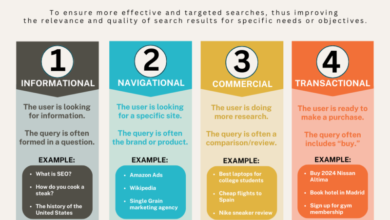
I start by filtering for terms containing words related to my core product categories. Then, I look at intent. If I can’t explain the searcher’s goal in one sentence, I don’t prioritize it yet. Label them clearly: Informational (blogs/guides), Commercial (best/vs/review), or Transactional (buy/price). If you try to rank a blog post for a Transactional keyword, you will fail.
Step 3: Map gaps to your site (new page vs update vs internal link)
Once you have the keywords, you have to decide where they live. This is critical to avoid cannibalization (where two of your pages fight for the same ranking).
- If a page exists but ranks 11–30: Refresh the content. Add depth, FAQs, or updated stats.
- If a page exists but ranks 50+: Check intent. You might have a blog post for a commercial term. You may need a new page entirely.
- If no page exists: Create a net-new URL tailored to the intent.
- If a page ranks well but has low CTR: Optimize the title tag and meta description.
Step 4: Build content that survives post‑2025 quality updates (E‑E‑A‑T)
Filling gaps with generic content is risky. Post-2025 algorithm updates have punished “scaled content abuse,” sometimes dropping visibility by up to ~71% for sites that churn out thin, unhelpful pages . To survive, you need E-E-A-T (Experience, Expertise, Authoritativeness, Trustworthiness).
Here is my mini-checklist for proof of experience:
- Originality: Did I include a unique example or case study?
- Visuals: Did I add a screenshot or photo I took myself, rather than a stock image?
- Expertise: Is the author clearly identified with credentials?
- Depth: Does this answer the “next” question the user will have?
Step 5: Optimize for AI summaries (so you’re easier to cite)
I write for humans first, but I format for machines. To increase your chances of being cited in an AI Overview:
- Answer-First: Place a 2-3 sentence direct answer immediately after your H2 headers.
- Structured Data: Use FAQ schema or HowTo schema where relevant.
- Lists and Tables: AI models love structured data comparisons.
- Jargon Breakers: Include a small glossary or plain-English definitions for complex terms.
Step 6: Produce and publish efficiently (without sacrificing quality)
Scaling content production is the hardest part of closing gaps. You might identify 50 missing keywords, but writing 50 high-quality articles takes time. This is where modern workflows help. Tools like Kalema’s AI article generator can help speed up the drafting process by providing structured outlines and initial copy based on your gap data. For larger sites needing to close many gaps at once, an Bulk article generator can assist in scaling the initial production.
However, my rule is strict: automation assists, it does not replace. I never publish without a human editorial review to verify intent, fact-check claims, and inject that unique brand voice. Speed matters, but accuracy builds trust.
How I prioritize keyword gaps (simple scoring model + dashboard)
You can’t do everything at once. Prioritization is the difference between being busy and being effective. I use a simple scoring model to decide what to work on first.
I look at five factors and assign a “gut check” score (1-5) or use data:
- Search Volume: Is there enough traffic to care?
- Keyword Difficulty (KD): Can I actually rank? (Favor low KD).
- Intent Match: Is this high-intent (Commercial/Transactional)?
- Current Position: Am I striking distance (page 2)?
- Effort: Is this a quick update or a massive new guide?
I often choose the less flashy keyword. I’d rather rank #1 for a low-volume, high-intent term like “inventory software pricing” than rank #50 for “business software.” The former pays the bills.
To track this, I build a “living dashboard.” It doesn’t have to be fancy. Just a simple tracker monitoring your target keywords, your rank, and your estimated Share of Voice. I also try to manually spot-check for AI summary presence on my top 10 money terms.
A quick template: my 5 filters before I greenlight a gap keyword
Before I assign a writer or open a doc, the keyword must pass these five gates:
- Relevance: Does this directly relate to a product/service we sell or support?
- Intent Clarity: Is it obvious what the user wants?
- Winability: Do we have the domain authority to compete with the top 3 results?
- Asset Match: Do we know what type of page to build (Blog vs. Landing Page)?
- Measurable: Can we track the success of this page (Rankings, Leads, Traffic)?
If it fails the “Relevance” test, I drop it immediately. No amount of traffic is worth distracting the user from our core value.
What to measure after publishing (so gap analysis becomes a system)
Publishing is just the starting line. I generally wait 4–8 weeks before making judgments on new content. Here is what I monitor in Google Search Console:
- Impressions: Is Google testing the page?
- Average Position: Are we climbing?
- Clicks/CTR: Is the title tag working?
- Query Variance: Are we ranking for the target keyword or something unexpected?
For AI visibility, since data is still scarce in standard tools, I perform manual spot checks. It’s imperfect, but it keeps me grounded in the user’s actual experience.
Common keyword gap analysis mistakes (and how I fix them)
I’ve made plenty of mistakes in this process. Most of them come from getting greedy with data or lazy with execution. Here are the most common pitfalls:
- Chasing Volume over Value: Ranking for a high-volume term that doesn’t convert is a vanity metric. Fix: Prioritize by intent, not just search volume.
- Ignoring Intent Mismatch: Trying to rank a product page for an informational query. Fix: Google the term first to see what ranks.
- Cannibalization: Creating a new page that competes with an existing one. Fix: Update the existing page first before building new.
- Blind Copying: Copying a competitor’s structure without adding value. Fix: Add unique data, better visuals, or E-E-A-T signals.
- Thin Content: Publishing 500 words just to “fill the gap.” This is a post-2025 risk. Fix: Ensure every page has substantial depth and original insight.
- Skipping Internal Links: Publishing a page and forgetting to link to it. Fix: Add 3–5 internal links from high-authority pages immediately.
Mistake-to-fix checklist (copy/paste)
- [ ] Did I check the SERP intent manually?
- [ ] Did I search my own site to ensure no duplicate page exists?
- [ ] Does the new content offer a unique angle or original example?
- [ ] Have I planned 3+ internal links to this new page?
- [ ] Is the primary keyword in the Title, H1, and URL?
FAQ + next actions: applying keyword gap analysis this week
To wrap this up, if I were starting today with a fresh site or a stale one, I wouldn’t try to boil the ocean. I would focus on the immediate wins.
Your 3-step plan for this week:
- Pick 3 Competitors: Real SERP rivals, not industry giants.
- Export & Score: Find the top 20 missing keywords that show high intent and low difficulty.
- Execute: Refresh one existing page and outline one new page based on these gaps.
FAQ: What exactly is keyword gap analysis?
Keyword gap analysis is the process of comparing your site’s rankings against competitors to find search terms they rank for but you don’t. It highlights missed opportunities to capture traffic and revenue across the sales funnel.
FAQ: Why focus on keyword gaps instead of general keyword research?
I’d rather bet on terms already ranking for competitors than brainstorm from scratch. Gap analysis provides “competitor proof” that a keyword has volume and relevance, reducing the guesswork in content planning.
FAQ: How has AI changed the nature of keyword gaps?
AI has introduced “citation gaps,” where you might rank in search but aren’t cited in AI summaries (like AI Overviews). Fixing this requires optimizing for structure, clarity, and authority, not just keywords.
FAQ: How do I prioritize keyword gaps?
Start small to avoid overwhelm. Prioritize keywords based on high commercial intent, lower difficulty scores, and relevance to your core product, rather than just chasing the highest search volume.
FAQ: How do recent algorithm updates affect gap analysis?
Google’s recent updates punish shallow content created just to fill gaps. To succeed, you must prioritize E-E-A-T (Experience, Expertise, Authoritativeness, and Trustworthiness) and ensure every piece of content offers genuine value, not just filler text.