How to start an SEO agency: AI-first playbook (2026)
When I started my first agency, I spent three weeks obsessing over my logo and another two weeks debating which $99/month SEO tool to buy. I thought I needed a perfect portfolio and a shiny tech stack to be taken seriously.
I was wrong. What I actually needed was a process.
If you are reading this, you are likely where I was: overwhelmed by advice, worried about wasting money, and terrified of that first discovery call where a client asks, “Who have you worked with?” This guide is the antidote to that anxiety. It is not a get-rich-quick scheme. It is a roadmap for building a service business that survives the AI shifts of 2026.
We will cover legally setting up your US-based agency, packaging your services so they actually sell, and navigating the new reality of Generative Engine Optimization (GEO). Let’s get to work.
Who this guide is for (and not for)
This playbook is for intermediate marketers, freelancers, or in-house SEOs ready to build a legitimate business. You understand the basics—you know what a canonical tag is and how to read Google Search Console—but you lack the business chassis to wrap around those skills.
This is not for you if you are looking for “passive income” or black-hat shortcuts. Building an agency requires consistent weekly effort, uncomfortable sales conversations, and rigorous operational discipline.
The outcome: a simple agency system (offer → delivery → proof → referrals)
Forget complex organizational charts. Your early-stage agency needs to function like a checklist-driven kitchen line:
- Offer: A specific promise to a specific market.
- Delivery: A repeatable way to fulfill that promise.
- Proof: Evidence that the delivery works.
- Referrals: Turning happy clients into new leads.
How to start an SEO agency: the 0–90 day launch plan (step-by-step)

Most beginners fail because they try to do everything at once. Here is exactly what I would do if I had to start over today with zero clients and a limited budget.
| Timeline | Focus | Key Deliverables |
|---|---|---|
| Weeks 1–2 | Foundation & Offer | Minimum Viable Offer (MVO), 1-page website, basic legal setup (LLC/Bank). |
| Weeks 3–4 | Proof & Process | 2 audit assets (mock or real), basic delivery checklist, outreach script. |
| Weeks 5–8 | Outreach & First Sale | List of 50 prospects, 10 discovery calls, first paid “sprint” client. |
| Weeks 9–12 | Delivery & Retainer | Deliver sprint results, convert to monthly retainer, gather testimonial. |
Step 1: Pick one measurable outcome (so clients understand what you sell)
I once lost a deal because I told a plumbing business owner I would “optimize his crawl budget.” He didn’t care. He wanted the phone to ring.
Don’t sell “SEO.” Sell an outcome. For a local business, that might be “more qualified calls from Google Maps.” For a SaaS company, it might be “demo requests from high-intent search terms.” Pick one niche and one outcome to start. It clarifies everything.
Step 2: Build a minimum viable offer (MVO) and a 1-page site
You do not need a 20-page website. You need a single landing page that answers four questions:
- Who do you help?
- What problem do you solve?
- How do you solve it (your methodology)?
- How do they contact you?
I would launch with this imperfect setup rather than wait three months for a perfect design. Speed of implementation is your best asset right now.
Step 3: Create 2 proof assets (even before you have clients)
Imposter syndrome usually stems from a lack of evidence. If you don’t have client results yet, create “permissionless proof.”
Find a local business that is struggling. Run a technical audit or a content gap analysis on their site. Document what is wrong and exactly how you would fix it. Anonymize the data if you publish it publicly, or use it as a private portfolio piece. This shows prospects you have a process, not just a promise.
Step 4: Outreach + discovery calls + first paid engagement
Treat sales like a science experiment. You aren’t “bothering” people; you are testing a hypothesis: “Does this business need my solution?” We will cover specific scripts later, but your goal here is simply to get a conversation started, not to close a $5,000 retainer on the first email.
How to start an SEO agency in 2026: positioning that survives AI Overviews (GEO/AEO included)

The elephant in the room is AI. With Google’s AI Overviews appearing in over 50% of search results as of mid-2025 , the way users click is changing. Traditional blue links are getting fewer clicks, but the traffic that remains is often higher intent.
To survive, you cannot just be an SEO agency. You must be an agency that understands visibility in the age of AI.
What is GEO (Generative Engine Optimization) and why it matters to new agencies
Generative Engine Optimization (GEO) is the practice of optimizing content so that Large Language Models (LLMs) and AI search engines prefer it as a source. In plain English: it’s optimizing to be cited, not just ranked.
For a new agency, this is an opportunity. You can offer “AI Visibility Audits”—checking if a brand is mentioned when you ask ChatGPT or Gemini about their industry. This is a service legacy agencies are slow to adopt.
AEO vs SEO: what changes (and what doesn’t)
- Same: You still need technical health, fast load times, and high-quality, authoritative content.
- Different: Answer Engine Optimization (AEO) focuses heavily on structure. You need clear, concise answers that an AI can easily parse and serve directly to a user. Schema markup becomes non-negotiable here.
A simple positioning formula I use
Differentiation is tough. Use this formula to stop sounding generic:
“I help [Niche] get [Outcome] by combining [SEO + GEO tactics], with [Unique Mechanism].”
Example: “I help boutique law firms get qualified case inquiries by combining local SEO with AI-ready content structures, using my 4-step Authority Sprint.”
Services and pricing: what to sell first (with beginner-friendly packages)

Pricing used to terrify me. I would stare at the screen, wondering if $1,000 was too much or too little. The cure is productization. Don’t sell hours; sell a defined scope.
| Tier | Best For | Typical Price Range (Monthly) | Includes |
|---|---|---|---|
| Starter (Maintenance) | Small local biz | $500 – $1,000 | GMB management, technical monitoring, 1 blog post, monthly report. |
| Growth (Aggressive) | Established biz | $1,500 – $3,000 | Everything in Starter + 4 blog posts, active link building/PR, schema updates. |
| Premium (Dominance) | Multi-location / SaaS | $4,000+ | Full content strategy, GEO optimization, CRO advice, bi-weekly consulting. |
My recommended ‘starter stack’ of offers (choose 1)
Don’t offer everything. Pick one of these to start:
- Local SEO Foundation: Perfect for trades (HVAC, plumbing). Focus on Google Business Profile, citations, and location pages.
- Content Strategy Sprint: Great for SaaS. A one-time project delivering a keyword map, topic clusters, and content briefs.
- Technical Fix: For e-commerce. Auditing and fixing crawl errors, speed issues, and broken links.
Retainer vs one-time project: when to use each
Retainers are the holy grail for cash flow, but they are hard to sell to a cold stranger. I recommend selling a Paid Starter Sprint (a fixed-price project for 30 days) first. It builds trust. Once you deliver results, moving them to a retainer is natural.
What I put in a scope of work (SOW) to prevent churn and confusion
Scope creep—doing work you aren’t getting paid for—will kill your margins. Here is what my SOW checklist always includes:
- Specific Deliverables: “4 articles per month,” not “Content creation.”
- Revision Limits: “Up to 2 rounds of edits per asset.” (I learned this the hard way after a client asked for a 7th revision on a blog post).
- Communication Cadence: “Bi-weekly email updates, monthly 30-min call.”
- Exclusions: explicitly state what you don’t do (e.g., web development, social media posting).
Business setup and costs in the US: legal, finance, and the minimum tools to begin

Disclaimer: I am an agency owner, not a lawyer or CPA. Consult a professional for your specific situation.
In the US, the barrier to entry is low, but you need “minimum viable compliance.”
| Category | Item | One-Time Cost (Est) | Monthly Cost (Est) |
|---|---|---|---|
| Legal | LLC Registration | $100 – $800 (State dependent) | $0 |
| Finance | Business Bank Acct | $0 | $10 – $30 |
| Web | Domain & Hosting | $20 | $20 – $50 |
| Tools | SEO & Ops Software | $0 | $150 – $300 |
The minimum viable ‘business hygiene’ checklist
You can set this up in a weekend:
- Register your LLC.
- Get an EIN (it’s free from the IRS).
- Open a dedicated business bank account. Never mix personal and business funds.
- Buy a professional email (yourname@youragency.com). Gmail addresses look amateur.
- Set up a simple invoicing tool (Stripe, Wave, or QuickBooks).
How much does it cost to start an SEO agency?
Realistically, you can start an SEO agency for $200 to $1,500 upfront, depending on your state’s filing fees. Your monthly burn rate can stay under $300 until you land clients. I’d rather you start small and scrappy than wait until you have $10k in the bank.
Delivering results: my repeatable SEO process (technical, content, links, and reporting)

Clients don’t pay for chaos; they pay for order. Here is the checklist I run every single time.
Client intake: access, goals, and a 30-minute onboarding script
The moment they sign, send an intake form asking for access to Google Analytics (GA4), Google Search Console (GSC), and their CMS (WordPress/Shopify).
Onboarding Call Script questions:
- “If we hit a home run in 6 months, what does that look like for your business revenue?”
- “Who exactly is your ideal customer, and who do you absolutely NOT want to talk to?”
- “Are there any other agencies or developers currently working on the site?”
Audit → plan: what I look for first (so I don’t drown in data)
It is easy to open a crawler and panic at 400 “warnings.” Ignore the noise. Look for the big levers:
- Indexation: Is Google even seeing the pages?
- Intent Mismatch: Are they trying to rank a blog post for a keyword where Google only shows product pages?
- Hidden Blockers: Noindex tags, blocked robots.txt, or broken canonicals.
Implementation: on-page basics that still move the needle
This sounds basic, but it works. I recently took a local dentist’s page /teeth-whitening-austin/ from page 3 to page 1 just by fixing the H1 (it was previously “Welcome”), adding an FAQ section marked up with Schema, and internally linking to it from three related blog posts.
My On-Page Checklist:
- Title Tag: Keyword at the front + compelling hook.
- H2/H3 Structure: Logical hierarchy.
- Internal Links: At least 3 links from other relevant pages on the site.
- Schema: FAQ, LocalBusiness, or Article schema where appropriate.
Content + authority: topic clusters, E-E-A-T, and safe link building
I never do gray-hat link building (buying PBN links). It’s a ticking time bomb. Instead, I build “Topic Clusters”—a pillar page supported by 5-10 supporting articles. This builds E-E-A-T (Experience, Expertise, Authoritativeness, Trustworthiness) naturally.
Reporting: the dashboard I use + how AI search changes KPIs
Don’t send a PDF with 50 pages of charts. Clients won’t read it. Send a 1-page summary:
- What we did: (3 bullet points)
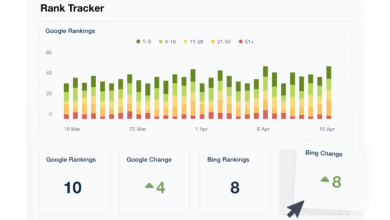
- The Results: Traffic, Conversions, Keyword movement.
- AI Visibility : Are we showing up in AI summaries? (I’m testing different ways to measure this, but manually checking brand queries in ChatGPT is a good start).
- What’s next: The plan for next month.
Tools and automation: build a lean stack without losing quality

Tool sprawl is real. I once had subscriptions to four different keyword tools. Now, I keep it lean.
| Category | Budget Pick | Pro Pick | Purpose |
|---|---|---|---|
| Research | Ubersuggest / Keysearch | Ahrefs / Semrush | Keywords & Backlinks |
| Technical | Screaming Frog (Free ver) | Sitebulb / Screaming Frog Paid | Auditing |
| Reporting | Google Looker Studio | AgencyAnalytics | Client Dashboards |
Content production at scale (without publishing fluff)
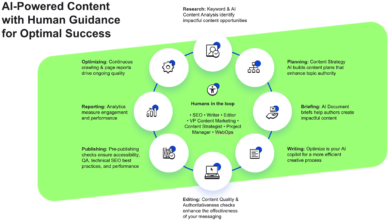
Speed matters, but generic content kills trust. I use an AI article generator to handle the heavy lifting of drafting—getting ideas onto the page fast. But here is my rule: a human editor must review every piece. If I can’t explain why a paragraph exists, I cut it. The AI accelerates the process; the human ensures the quality.
Automating publishing and consistency (especially for WordPress)
One of the biggest bottlenecks is simply getting content into the CMS. Using an Automated blog generator workflow can save hours of formatting, uploading images, and setting meta tags. This automation allows me to spend my time on strategy and client relationships rather than copy-pasting into WordPress.
Using a content intelligence workflow to plan, optimize, and refresh
Content isn’t “set it and forget it.” You need to plan based on what actually ranks. I use an SEO content generator that doesn’t just write words but understands intent mapping. This “content intelligence” approach ensures we aren’t just guessing at keywords but answering the specific questions users (and AI engines) are asking.
Getting your first clients: a realistic pipeline (30–60 days if you’re proactive)

The most common question I get is, “How do I find clients?” The answer is simple but uncomfortable: you have to talk to them.
Where I’d look first (fastest paths for beginners)
Forget Upwork for a moment. It is crowded. Go where your relationships are:
- Local Networking: Go to your local Chamber of Commerce. It sounds old school, but these business owners have money and are tired of being burned by spammy emails.
- Partnerships: Talk to 5 web designers this month. They build sites but often hate doing SEO. Ask them to refer clients to you for a commission.
- Niche Facebook Groups: Answer questions helpfully. Don’t pitch. Just be the expert.
My ‘paid starter sprint’ that converts into a retainer
When I get a prospect on a call, I say: “Look, I know hiring an agency is a big commitment. Let’s start with a 30-day sprint. I’ll fix your technical errors, optimize your main service pages, and set up your tracking. If you like the results, we can discuss a monthly partnership.” This lowers the risk for them and gets you paid immediately.
Common mistakes (and fixes) when I start an SEO agency from scratch + FAQs

I have made almost every mistake in the book. Here are the ones I want to save you from.
Mistake #1–#5: What goes wrong + how I fix it
- Underpricing: I used to charge $300/month. It wasn’t enough to do good work, so the client left. Fix: Minimum engagement is $1,000/month.
- Scope Creep: A client asked me to fix their printer. I said yes. Fix: Strict SOW boundaries.
- Selling “Rankings”: You don’t own Google. Fix: Sell deliverables and improved visibility, never guaranteed positions.
- Over-reporting: Weekly hour-long calls will drain your profit. Fix: Monthly reporting videos (Loom) + one call.
- Ignoring your own marketing: The cobbler’s children have no shoes. Fix: Dedicate 4 hours a week to your own agency’s growth.
FAQ: What is GEO and why does it matter?
GEO (Generative Engine Optimization) is optimizing content to appear in AI-generated answers (like ChatGPT or Google’s AI Overviews). It matters because user behavior is shifting from clicking links to reading summaries. It’s like optimizing to be quoted by an expert rather than just listed in a directory.
FAQ: How much does it cost to start an SEO agency?
As mentioned in the cost table, typically between $200 and $1,500 initially for legal and basic web setup. Monthly operating expenses can be as low as $150 if you are lean. Start where you are—you don’t need a fancy office.
FAQ: Do I need certifications to start?
No. Clients care about results, not certificates. While HubSpot or Google courses are great for learning, a case study showing you increased traffic for a real site is worth 100 certificates. Instead of studying more, audit three sites this week.
FAQ: How soon can I land my first client?
If you are proactive with outreach (sending personalized emails, networking), you can land a client in 30–60 days. If you rely solely on inbound content marketing (waiting for them to find you), it could take 6–12 months.
FAQ: How do I differentiate from other agencies?
Don’t try to be better; try to be different. Specializing in a niche (e.g., “SEO for Roofers”) or a specific methodology (e.g., “AI-First Content Workflows”) makes you an expert, not a commodity.
Conclusion: my 3-point recap + next actions to start this week

We have covered a lot. To recap, your success comes down to:
- Systemization: Building a repeatable loop of Offer → Delivery → Proof.
- Adaptation: Integrating GEO/AEO into your positioning early.
- Action: Choosing “imperfect action” over “perfect planning.”
If you do only one thing today, draft your Minimum Viable Offer. Decide who you help and what outcome you provide. Then, go find one person who needs it. The tools and the LLC can wait until Tuesday. The business starts when you decide to solve a problem.