Understanding the Void: What Keyword Gap Analysis Means for Your Strategy
Introduction: Finding the “void” in your SEO strategy (and why I care)

I still remember the frustration of my first major SEO plateau. I was publishing consistently, optimizing every meta tag, and following every best practice I knew. Yet, the traffic line on my analytics dashboard remained stubbornly flat. Worse, when I searched for core topics in my industry, I kept seeing competitor pages ranking for queries I hadn’t even considered targeting.
It wasn’t that my content was bad; it was that my map was incomplete.
This is the essence of keyword gap analysis. It isn’t just about finding more keywords to stuff into a spreadsheet. It is about identifying the “void”—the massive space between what your potential customers are searching for and what your site actually covers. In the US market, where competition is fierce and search behavior evolves weekly, missing these gaps means handing easy wins to your competitors.
In this guide, I’m going to walk you through a pragmatic, newsroom-grade workflow to close these gaps. We will move from raw data to a prioritized backlog, ensuring you stop guessing and start capturing the traffic you deserve.
What is keyword gap analysis? (Quick definition + what it’s not)

At its core, keyword gap analysis is the process of identifying search queries that your competitors rank for, but you do not. It serves as a diagnostic tool to reveal blind spots in your topic coverage and audience demand. But if SEO is a map, think of gaps as the entire neighborhoods you never drive through because you didn’t know they existed.
Here is the quick answer:
Quick answer: keyword gap analysis in one sentence
Keyword gap analysis is a strategic process that compares your site’s rankings against specific competitors to identify high-value search queries and topics you are currently missing or underperforming on.
What it is not:
- It is not blindly copying your competitor’s content strategy.
- It is not chasing high-volume keywords that have zero relevance to your bottom line.
- It is not a one-time audit you file away and forget.
When I explain this to non-SEO teammates, I put it this way: “Imagine our biggest competitor has a store across the street. Gap analysis is walking through their aisles to see what products are flying off their shelves that we don’t even stock.”
Keyword gap vs. content gap vs. topic gap (beginner-friendly distinctions)

It is easy to use these terms interchangeably, but distinguishing them helps clarify your work:
- Keyword Gap: Specific queries where you lack visibility (e.g., they rank for “best CRM for startups,” you don’t).
- Content Gap: Missing page types or angles. For example, a competitor might have a calculator or a comparison guide, while you only have a definition blog post.
- Topic Gap: Entire subject areas or entities you have ignored. If you sell coffee makers but have zero content on “bean grinding,” that is a topic gap affecting your topical authority.
Why keyword gap analysis matters (even if my site is already “doing fine”)

Data suggests that even sites that feel successful are leaving a staggering amount of money on the table. A study by Neil Patel found that websites with under 100k monthly visits typically miss around 60% of the keywords their competitors rank for. Even enterprise-level sites with over 1 million visits miss about 37%.
That is a third of your potential market visibility sitting in a blind spot.
Why does this matter for your bottom line?
- High-Intent Discovery: Analysis by SparkToro indicates that content addressing underserved, competitor-ignored queries can see nearly 1.8x higher click-through rates. These aren’t just random visitors; they are people looking for specific answers.
- Traffic Velocity: Addressing these voids works. In one documented case, targeting nearly 1,000 gap keywords led to a 550% traffic increase in just three months.
- Efficiency: It stops you from guessing. Instead of brainstorming random blog topics, you are executing against proven market demand.
I’ve seen small local service businesses in the US discover they were completely missing queries like “emergency repair financing”—a term their competitors dominated. Closing that single gap didn’t just bring traffic; it brought qualified leads ready to buy.
The size of the opportunity: how many keywords most sites miss
| Monthly Visits | Avg. % of Competitor Keywords Missed |
|---|---|
| < 100k | ~60% |
| 100k – 1M | ~49% |
| > 1M | ~37% |
How AI search changes the stakes (AI Overviews, zero-click, and citation competition)
The game is changing. With AI Overviews now appearing on 26% to 50%+ of SERPs depending on the niche, “ranking” is no longer just about getting a blue link. It is about being cited in the AI-generated answer.
This shifts the focus of gap analysis. We are now looking for Generative Engine Optimization (GEO) gaps. Are competitors being cited in AI summaries because they provide direct answers, data tables, or expert definitions that you lack? If you aren’t providing the structured information the AI needs to build its answer, you aren’t just missing a keyword; you are invisible in the zero-click future.
Understanding the different “gaps” I can find (and which ones to ignore)
Not every gap is worth filling. If your competitor ranks for “cheap DIY plumbing” and you are a premium luxury plumbing service, that is a gap you want to keep. Here is how I categorize the gaps worth paying attention to:
- The “Missing” Gap: You don’t rank at all (not in the top 100). This usually means you have no content for this topic.
- The “Underperforming” Gap: You rank on page 2 or 3, while your competitor is in the top 3. This is often an optimization or authority issue.
- The Format Gap: They rank with a video or a tool; you are trying to rank with a wall of text.
- The Freshness Gap: Their content was updated last month; yours is from 2021.
Ranking gap vs. authority gap vs. intent gap
To put it simply: An authority gap is about trust—do they have more backlinks and expert authors? A ranking gap is about visibility and on-page optimization. An intent gap is about relevance. If a user searches “CRM pricing” and you serve them a generic “What is a CRM” guide, you have an intent gap, regardless of how good your content is.
Modern gap surfaces: voice, video, local, and multilingual (when it matters for US businesses)
In 2025, gaps aren’t just text. If you run a local service business, you might find your competitors are winning on voice search queries (“near me” searches via Alexa/Siri) because their schema markup is better. Or perhaps they have a Spanish landing page for a high-density area, and you don’t. Only pursue these if your resources allow, but be aware: this is where the quiet wins often happen.
How to do keyword gap analysis (step-by-step workflow I use)

This is the exact workflow I use. It is designed to cut through the noise and leave you with a clear action plan. Imagine I am screen-sharing with you right now.
Step 1: Pick the right competitors (real-world vs. SERP competitors)
This is where beginners often trip up. Your business competitor might not be your SEO competitor. If you sell running shoes, Nike is a business competitor, but a marathon training blog might be your SEO competitor for informational queries.
My checklist for picking competitors:
- Identify 2 direct business competitors (similar product/service).
- Identify 1 SERP competitor (a publication or niche site that ranks for your core terms).
- Use Incognito mode to search your top 5 “money keywords” and see who consistently appears.
Step 2: Export keywords and normalize the data
Whether you use Semrush, Ahrefs, or another tool, run a “Keyword Gap” report. Select “Unique to Competitors” or “Missing.” Export this list to a CSV and open it in Google Sheets or Excel.
I keep it simple. I delete every column except: Keyword, Search Volume, Keyword Difficulty (KD), Intent (if available), and Competitor URL. Then, I create a column for “My Status” (Missing vs. Weak).
Step 3: Filter for realistic opportunities (what filters to apply)

You might start with 10,000 rows. Let’s get that down to a manageable 200.
- Filter by KD: If your site is new, cap KD at 30-40. Don’t waste time fighting giants yet.
- Filter by Commercial Intent: Prioritize keywords that signal a desire to buy or learn deeply.
- Exclude Branded Terms: Filter out rows containing competitor brand names. You don’t want to rank for their login page.
- Don’t ignore the long-tail: Volume isn’t everything. A term with 50 searches/month might convert at 20%.
Step 4: Match intent to the right page type (don’t force a blog post)
This is where judgment matters. Look at the keyword and decide the format.
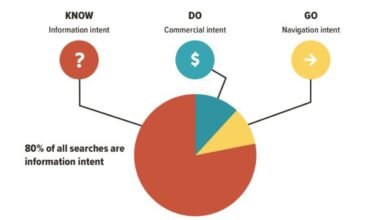
- Informational (“how to fix leak”): Blog post or Video.
- Commercial (“best leak sealant”): Comparison guide or “Best of” list.
- Transactional (“buy sealant near me”): Product page or Service page.
Trap I fell into: I used to try to rank product pages for informational queries. It never worked. If the SERP shows blog posts, write a blog post.
Step 5: Build a prioritized backlog and assign owners
Don’t just leave the data in a spreadsheet. Move it to your project management tool. Create cards with: Target Keyword, Required Page Type, Estimated Effort, and Business Value. If you don’t assign an owner and a due date, the gap will never close.
Prioritizing gap keywords: a simple scoring model (with a table I can copy)
Scoring isn’t truth—it is a decision aid. It helps you justify to your boss why you are writing about X instead of Y. I use a simple 1-5 scale to calculate a “Priority Score.”
The filters that matter most (difficulty, intent, volume, relevance)
I usually overweight Intent and Relevance over pure Volume. I would rather rank for a keyword with 100 searches that brings in qualified leads than a 5,000-volume keyword that results in bounces.
Table template: Gap keyword scoring sheet (copy/paste)
You can copy this structure into Excel or Google Sheets to automate your prioritization.
| Criteria | Description | Score (1-5) |
|---|---|---|
| Business Value (Intent) | How likely is this user to convert? | 1 (Info) to 5 (Ready to buy) |
| Keyword Difficulty | How easy is it for us to rank? | 1 (Impossible) to 5 (Easy) |
| Volume | Is the traffic potential worth the effort? | 1 (Low) to 5 (High) |
| Topic Cluster Fit | Does this support our core expertise? | 1 (Unrelated) to 5 (Core topic) |
| TOTAL SCORE | Sum of above | Max 20 |
Example: A keyword with High Intent (5), Medium Difficulty (3), Low Volume (2), but High Cluster Fit (5) gets a 15/20. That is a priority over a high-volume vanity metric.
Turning keyword gaps into publishable content (clusters, on-page SEO, and measurement)
Once you have your prioritized list, the real work begins. You need to bridge the gap with content that is better than what is currently ranking. This means building robust content briefs that outline headers, entities, and internal linking structures. To scale this, especially when tackling large topic clusters, many teams use an AI SEO tool to accelerate the research phase. A good SEO content generator doesn’t replace the human editor; rather, it handles the heavy lifting of structural analysis.
For example, if you identify 50 missing keywords in a specific niche, an AI article generator can draft the initial framework for these supporting pages, ensuring you cover all semantic bases efficiently. This allows you to deploy an Automated blog generator strategy for the supporting content while your human experts focus on the high-value pillar pages. This hybrid approach—automation for scale, humans for judgment—is how modern SEOs close gaps fast.
From gap keyword → topic cluster (pillar + supporting pages)
Don’t just write isolated articles. Group your gap keywords. If you found gaps for “benefits of CRM,” “CRM implementation,” and “CRM pricing,” these belong in a cluster. Create a main “Ultimate Guide to CRM” pillar page, and link out to these new supporting articles. This builds the topical authority that Google (and users) crave.
On-page SEO placements that actually move rankings (where each element belongs)
When executing on these gaps, precision matters:
- Title Tag: Place the primary gap keyword as close to the front as possible.
- H1: Match the user’s intent immediately.
- H2s: Use these for secondary gap keywords and “People Also Ask” questions.
- Schema: Add FAQ schema to capture more SERP real estate and feed AI Overviews.
How I track results: rankings, clicks, conversions, and refresh cycles
I typically review these campaigns every 3-6 months. In Google Search Console, I filter by the new pages to check if impressions are growing. Remember, some pages pop fast, but others—especially competitive commercial terms—might need 8-12 weeks to mature. If a page ranks but doesn’t get clicks, revisit your meta description and title.
Common keyword gap analysis mistakes (and how I fix them)

I have made plenty of mistakes in this process. Here are the most common ones so you can avoid them.
Mistake-to-fix checklist (5–8 items)
- Mistake: Targeting broad keywords dominated by Wikipedia.
Fix: Filter by KD and focus on long-tail variations specific to your niche. - Mistake: Ignoring search intent (writing a blog when users want a tool).
Fix: Google the keyword first. If the top 3 results are calculators, build a calculator. - Mistake: Failing to remove branded competitor terms.
Fix: Add a “does not contain” filter for competitor names in your export. - Mistake: Creating content but forgetting internal links.
Fix: Immediately update 3-5 older related posts to link to your new content. - Mistake: Treating it as a one-time project.
Fix: Schedule a gap analysis refresh every quarter.
FAQs + recap: keyword gap analysis questions I hear most (and my next steps)
What exactly is keyword gap analysis?
It is the process of identifying valuable search terms that your competitors rank for, but you do not. It highlights missed opportunities to capture traffic and potential customers.
Why should established sites do keyword gap analysis?
Even large sites miss roughly 37% of their competitors’ keywords. As markets evolve, new terms emerge. If you aren’t looking for them, you are slowly losing market share to agile competitors.
How has AI search changed gap analysis?
AI search prioritizes direct answers and authority. Gap analysis now includes checking if you are answering the questions AI engines generate summaries for (AEO), not just ranking for a list of links.
What filters should be applied when selecting gap keywords?
Focus on Keyword Difficulty (KD) relative to your site’s strength, Commercial Intent, relevance to your business goals, and remove branded terms.
How frequently should businesses perform gap analysis?
I recommend a deep dive every quarter (3-6 months) with lighter spot checks monthly if you operate in a fast-moving industry.
Recap + next actions
Recap:
- Gap analysis finds the “void” between your content and market demand.
- It is essential for discovering high-intent queries you didn’t know existed.
- Success comes from prioritization (scoring), not just volume.
Your Next Steps for this week:
- Run one gap report against your top 2 competitors.
- Filter the list down to 10 high-intent keywords you are missing.
- Map those 10 keywords to specific page types (blog vs. product).
- Assign them to your content calendar or backlog.
- Start writing (or updating) the first one today.