Defining the Role: SEO writer vs journalist—What’s different?
Introduction: Why I’m comparing an SEO writer and a journalist (and who this is for)

I once watched a founder hire a brilliant magazine writer to run their company blog. The writing was impeccable—narrative, emotive, and grammatically perfect. But six months later, the founder was frustrated. The traffic was flat, and leads were nonexistent. Why? Because while the stories were great, nobody was searching for them.
This is the classic confusion I see in marketing teams, agencies, and startups across the U.S. We often use “writer” as a catch-all term, but the difference between an SEO writer vs journalist is fundamental to your business outcomes. One optimizes for discovery and conversion; the other prioritizes reporting and narrative integrity.
In this guide, I’m cutting through the noise. I won’t give you generic definitions. Instead, I’ll walk you through the specific responsibilities, a side-by-side salary and role comparison, and a practical workflow you can use today. We’ll also look at how AI—specifically Answer Engine Optimization (AEO) and Generative Engine Optimization (GEO)—is forcing these two worlds to merge.
What you’ll get from this guide
- Clear definitions that separate business goals from editorial goals.
- A structured comparison table covering metrics, sourcing, and ownership.
- Salary snapshots based on current U.S. market trends .
- A hybrid workflow checklist to help you ship content that ranks and builds trust.
- Common mistakes I see hiring managers make (and how to fix them).
- Actionable FAQs on managing E-E-A-T and AI tools.
Quick answer: SEO writer vs journalist in one paragraph
Here is the bottom line: An SEO writer creates content designed to be found by search engines and helpful to users with a specific intent. Their primary goal is organic traffic, ranking visibility, and conversion. They rely heavily on keyword research, structured formatting, and on-page optimization (like meta descriptions and internal linking). A journalist, by contrast, focuses on gathering original information, verifying facts through primary sources, and telling stories that serve the public interest or a specific audience, regardless of search volume. While their methods differ, the best modern content strategy often requires a hybrid approach: the discoverability of SEO combined with the credibility of journalism.
Where the roles overlap (and why people confuse them)
It’s easy to mix them up because the foundational skills look identical on a resume:
- Strong writing mechanics: Both must command grammar, tone, and flow.
- Research skills: Both dig for information, though one digs into data/keywords and the other into human sources/documents.
- Headlines: Both know how to write a hook—but an SEO writer hooks the searcher’s problem, while a journalist hooks the reader’s curiosity.
- Clarity: Both strive to make complex topics easy to understand.
What an SEO writer actually does (in a business context)

When I’m writing for SEO, I’m not just “writing.” I’m building a product. The job of an SEO writer is to create the best possible answer to a specific question a user is typing into Google. Since 75% of users never scroll past the first page of search results , my job is to ensure the content is structurally sound enough to earn that placement.
In a business context, I am measured by performance. Did the traffic grow? Did the user stay on the page? Did they click the “Sign Up” button? It requires a blend of creativity and technical discipline.
Primary goal: match search intent and earn visibility
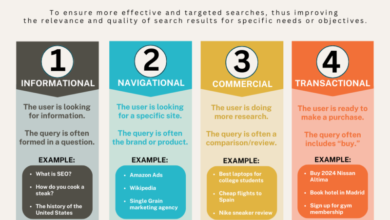
Understanding search intent is the difference between page one and page ten. Here is how I map it mentally:
- Informational Intent: The user wants to learn (e.g., “what is SEO”). Angle: Comprehensive guide.
- Commercial Intent: The user is comparing options (e.g., “best SEO writing tools”). Angle: Comparison list.
- Transactional Intent: The user is ready to buy (e.g., “hire SEO writer”). Angle: Service page with clear CTA.
Typical SEO writer deliverables (what I’m expected to ship)
If you hire an SEO writer, don’t just expect a Google Doc of text. A professional delivers:
- Content Briefs: Roadmaps detailing keywords and structure before writing begins.
- Optimized Drafts: Content structured with H2/H3 tags containing keywords naturally.
- Meta Tags: The title tag and meta description for the search result preview.
- Internal Link Suggestions: Specific links to other pages on your site to boost authority.
- Image Alt Text: Descriptions for images so search engines understand them.
- Content Refreshes: Updating old articles to maintain rankings (a huge part of the job).
On-page SEO checklist I use while writing (beginner-friendly)
This is my personal pre-flight checklist. I don’t hit publish until these boxes are ticked.
Title tag + meta description (what they are and how I approach them)
The title tag is your headline in Google; the meta description is the sales pitch below it. They must include the primary keyword and a hook.
Example for this article:
Title: SEO Writer vs Journalist: Key Differences & Salary Guide (2025)
Meta: Confused by SEO writer vs journalist roles? We compare salaries, workflows, and skills to help you hire the right expert for your business goals.
Headings, internal links, and schema (how I make pages easy to scan and extract)
I use H1 and H2 headings to create a skeleton that Google can read. If I strip away the paragraphs, the headings alone should tell the story. I also ensure internal linking connects to relevant revenue pages—but I do it for the user, not just the bot. Finally, I might add FAQ schema to help the page take up more real estate in search results. The goal is machine readability without sacrificing human readability.
What a journalist does differently (and why that still matters for SEO)

Journalism is rooted in verification. When I put on my “journalist hat,” my loyalty shifts from the algorithm to the truth. Journalists are trained to question assumptions, verify claims with primary sources, and adhere to strict editorial standards. In the age of AI, this approach is becoming the gold standard for E-E-A-T (Experience, Expertise, Authoritativeness, Trustworthiness).
The journalist’s workflow: investigate → verify → publish → correct
The workflow is rigorous because credibility is the currency:
- Investigate: Find the story, often through interviews or deep document analysis.
- Verify: Confirm facts with at least two independent sources.
- Publish: Release the story, prioritizing narrative flow and impact.
- Correct: If a mistake happens, issue a transparent correction. (This honesty actually builds trust).
Digital-first journalism: SEO tactics used responsibly
Modern journalists aren’t ignoring SEO. They use SEO-friendly headlines and ensure their stories are discoverable. The difference is in the “Don’ts”:
Do: Use keywords to clarify what the story is about.
Don’t: Alter a quote or a fact just to fit a keyword.
SEO writer vs journalist: responsibilities, success metrics, and pay (side-by-side)

If you are trying to decide who to hire, you need to look at the scoreboard. The metrics for success are completely different.
Comparison table: what changes between an SEO writer and a journalist
| Feature | SEO Writer | Journalist | Why it matters for business |
|---|---|---|---|
| Primary Goal | Discovery, Traffic, Conversion | Truth, Storytelling, Public Interest | Determines ROI timeline. |
| Source Material | Keyword data, existing content, subject matter experts (SMEs) | Interviews, primary documents, original observation | Impacts “Uniqueness” of content. |
| Structure | Scannable, H2/H3 heavy, bullet points | Narrative flow, paragraphs, emotional arc | Affects “Time on Page” vs. Readability. |
| Success Metric | Rankings, CTR, Organic Leads | Shares, Citations, Impact, Subscriptions | Defines your KPIs. |
| Update Cadence | Regular refreshes to maintain rank | Static (unless a correction is needed) | Long-term maintenance costs. |
Salary and market demand in the U.S. (approximate ranges)
Market demand has shifted significantly. Job postings for content roles have increased roughly 2.5× recently , often blurring these lines. Here is a snapshot of current compensation:
| Role | Typical U.S. Salary Range | Market Context |
|---|---|---|
| Journalist | $45,000 – $65,000 | Highly competitive; traditional media shrinking. |
| Content/SEO Writer | $60,000 – $90,000 | High demand in tech, SaaS, and agency sectors. |
| Brand Journalist | $70,000 – $110,000 | Hybrid role; enterprise companies paying for prestige. |
Note: These figures vary wildly by location and experience. Always check the Bureau of Labor Statistics or recent industry surveys for real-time data.
When I’d hire which: quick decision rules for beginners
- Hire a Journalist IF: You need original reporting, you are covering a sensitive/news topic, or you want to build high-level brand prestige through thought leadership.
- Hire an SEO Writer IF: You need evergreen traffic, you want to rank for specific buyer keywords (e.g., “best CRM software”), or you need to scale content production.
- Hire a Hybrid IF: You are in a “Your Money or Your Life” (YMYL) industry like finance or health, where you need both high rankings and impeccable accuracy.
My practical framework: turning a topic into a publish-ready SEO page (with journalistic standards)
I’ve found that the best results come from stealing the best habits of both professions. Here is the exact workflow I use to turn a keyword into a ranking article that humans actually want to read.
Step 1: Clarify the business goal and the reader’s question
Before I type a word, I ask: “What is the job to be done here?”
- Goal: Brand Awareness -> CTA: “Read more related posts.”
- Goal: Lead Gen -> CTA: “Download the checklist.”
- Goal: Sales -> CTA: “Book a demo.”
Step 2: Build a lightweight keyword + intent map (no fancy tools required)
You don’t need a $1,000/month tool stack to do this. I simply Google the topic and look at the “People Also Ask” box. I capture:
- Primary Keyword: The main topic (e.g., “content marketing strategy”).
- User Intent: Are they learning or buying?
- Must-Answer Questions: The specific questions users are asking.
- LSI/Long-tail Keywords: Related terms to ensure topic coverage.
Step 3: Outline for scanability (headings, FAQs, and internal links)
I sketch the skeleton first. A messy outline leads to a messy draft. I map out my H2s and H3s to ensure logical flow. I also decide right now where my internal links will go. If I wait until the end, I’ll force them in, and they will look spammy.
Step 4: Draft fast, then edit like a journalist (where AI can help)
This is where I embrace modern tools. I often use an AI article generator to help create the initial draft or flesh out the structure. It acts like a very fast junior assistant—getting the blank page out of the way. But then, the “journalist” in me takes over. I verify every claim. I check the tone. I remove fluff. I ensure the voice sounds like me, not a robot. AI is for drafting; humans are for judgment.
Step 5: Optimize and publish (title/meta, images, schema, and a refresh plan)
I used to skip the “refresh plan,” but it always came back to bite me. Now, before I publish, I set a reminder to check the article in 6 months.
| Element | What I Check | Common Mistake |
|---|---|---|
| Title Tag | Is it under 60 characters? Is the keyword first? | Too clever/vague. |
| Images | Do they have descriptive alt text? | Filename is “IMG_5502.jpg” |
| Schema | Is FAQ schema added for visibility? | Adding schema for content that isn’t there. |
The AI era: E‑E‑A‑T, AEO, and GEO change what “good writing” means

The game is changing. We are moving from just “Search Engine Optimization” to “Answer Engine Optimization.” AI tools like ChatGPT or Google’s AI Overviews don’t just want keywords; they want facts and entities. This brings us back to E-E-A-T. If you want to rank, you need to demonstrate Experience and Expertise.
For high-volume production, an SEO content generator can help you build the structure that machines love—clear hierarchies, definition blocks, and comprehensive coverage. However, simply generating content isn’t enough. An AI content writer tool is best used to ensure you haven’t missed any entities or sub-topics that legitimate authorities cover, but the final layer of trust must be human.
Are AI tools replacing SEO writers or journalists? (my practical take)
They are replacing the average ones. AI creates “C+” content instantly. To survive, writers must become “A” players: adding original insights, personal experience, and ethical judgment that machines cannot simulate. It is not about Human vs. AI; it is about the Hybrid Workflow.
AEO basics: how I structure pages for direct answers
Answer Engine Optimization (AEO) means writing so a bot can extract the answer. My rules:
- Q&A Format: Use a heading as a question, and the immediate paragraph as the direct answer.
- Definitions: Define terms clearly in the first sentence of a section.
- Lists: Use bullet points for processes (AI loves lists).
GEO basics: how I write so AI systems trust and cite the content
Generative Engine Optimization (GEO) is about being the authority. I make sure to:
- Cover the entity (topic) completely.
- Cite reputable external sources.
- Maintain internal coherence (don’t contradict myself).
Common mistakes beginners make (and the fixes I recommend) + FAQs + next steps

I’ve made plenty of mistakes in my career. Here are the ones I see most often so you can avoid them.
Mistakes & fixes checklist (5–8 items)
- Mistake: Hiring a journalist and expecting SEO results without a brief.
Fix: Provide a detailed content brief with keywords and structure. - Mistake: Keyword stuffing (writing “best shoes” 50 times).
Fix: Write for humans first; use synonyms and LSI keywords naturally. - Mistake: ignoring the Meta Description.
Fix: Treat it as ad copy. It impacts your Click-Through Rate (CTR). - Mistake: No internal links.
Fix: Link to at least 3-5 relevant pages on your site to pass authority. - Mistake: Blindly trusting AI facts.
Fix: Fact-check every statistic and claim. Human verification is non-negotiable.
FAQs
What is the main difference between an SEO writer and a journalist?
An SEO writer optimizes for search engines and user intent (discovery), while a journalist optimizes for factual reporting and storytelling (truth).
Can a journalist be an effective SEO writer?
Absolutely. Journalists have the hardest skill to teach: research and writing. With training on keywords and HTML structure, they often become the best SEO writers.
Are AI tools replacing writers?
No, they are evolving the role. Writers who use AI for speed and structure—while maintaining quality and ethics—are in high demand.
What are AEO and GEO?
AEO (Answer Engine Optimization) focuses on providing direct answers for chatbots. GEO (Generative Engine Optimization) focuses on becoming a trusted source for AI training data.
How do I demonstrate E-E-A-T?
Show your work. Use author bios, cite primary sources, update content regularly, and maintain a transparent privacy and corrections policy.
Recap + what I’d do next (if I were starting from zero)
We’ve covered a lot, but here is the gist:
- SEO Writers bring the traffic; Journalists bring the trust.
- Hybrid workflows that use AI for structure and humans for nuance are the future.
- Intent is your north star. If you don’t answer the user’s question, you lose.
Your Next Steps:
- Define the goal for your next piece of content: Traffic or Trust?
- Create a simple keyword map using the “People Also Ask” method.
- Draft your content using the 5-step workflow above.
- Review your draft against the “Mistakes & Fixes” checklist before publishing.