Choosing the Best SEO Audit Agency in France for High-End Growth
I recently put myself in the shoes of a U.S. marketing lead looking to expand into Europe. I typed "best SEO audit agency in France" into Google, and the results were frustratingly predictable. I found ten different "top agency" lists that looked identical, clearly curated based on sponsorship fees rather than merit. None of them explained methodology, deliverables, or how a French agency handles a U.S. client’s specific needs.
If you are a Growth Marketing Lead or Head of SEO at a scaling U.S. brand, you don’t need a listicle. You need a way to de-risk a significant vendor decision. You need to know if they understand U.S. growth targets, if they can handle bilingual technical stacks, and if they will deliver a prioritized roadmap or just a generic PDF that gathers dust.
This guide is the framework I use to evaluate partners. It covers accurate pricing benchmarks, the "red flags" that signal a templated audit, and a future-ready look at AI and Generative Engine Optimization (GEO). Simply put, an SEO audit is a comprehensive health check of your website’s ability to rank—but for high-end growth, it must be a business plan, not just a bug list.
Why I’d consider a French SEO audit agency (and when I wouldn’t)

When I advise U.S. companies targeting the European market, the default instinct is often to stick with a U.S. agency. However, France has a surprisingly mature SEO ecosystem—supporting nearly 200,000 digital jobs as of 2023 —that offers distinct advantages for cross-border growth.
French agencies often possess a "technico-marketing" culture that is rigorous on server-side analysis (log files are a religion there) while being natively fluent in the cultural nuances required for conversion in France, Belgium, and Switzerland. If your goal is strictly local U.S. visibility, hiring in Paris makes no sense. But if you have a European SEO expansion roadmap, the calculation changes.
Here is my quick rule of thumb: If your projected revenue from Francophone markets exceeds 15% of your total growth target, you need local eyes on the audit.
- Good fit if: You are launching a French/European subfolder (/fr/), need strict GDPR compliance guidance, or have complex technical issues requiring log file analysis and mobile SEO expertise specific to EU networks.
- Not a fit if: You are a local U.S. brick-and-mortar business, have a budget under $1k, or require daily on-site collaboration in Pacific Standard Time.
What French agencies often do well for U.S. teams
From my experience analyzing the market, top French shops excel at the intersection of technical rigor and compliance. Because the French market is heavily regulated, they don’t treat GDPR as an afterthought; they bake privacy-first analytics and cookie consent into the audit, saving U.S. companies from massive fines later.
Furthermore, their bilingual SEO capabilities go beyond translation. They understand that a keyword like "logiciel" has different intent in Quebec vs. Paris. For a U.S. team, this means fewer localization surprises post-launch and a technical remediation plan that accounts for complex hreflang setups right out of the gate.
When a U.S.-based auditor is the smarter choice
Honesty is critical in vendor selection. If your legal team requires contracts solely under U.S. jurisdiction without cross-border clauses, or if your engineering team operates strictly in PST and requires stakeholder alignment workshops at 2 PM San Francisco time (11 PM Paris time), a French agency might struggle.
I’ve seen projects fail over small mismatches. For example, I once saw a release window missed because the French auditor sent critical ticket feedback at 3 AM EST, and by the time the U.S. dev team saw it, the sprint had closed. If time zone collaboration is your biggest bottleneck, stick to a domestic partner.
What a “high-end” SEO audit should include (deliverables, tools, and proof)

I have a strict rule: I am trying to avoid buying a generic PDF. A "high-end" audit isn’t defined by page count; it’s defined by prioritization. I expect a prioritized backlog sorted by Impact × Effort, clear evidence for every claim, and a strategy that connects technical fixes to revenue.
When vetting a technical SEO audit, here are the 10 specific deliverables I ask for before signing:
- Executive Summary Slide Deck: For my CMO/VP (business impact only).
- Prioritized Ticket Backlog: Jira/Asana-ready CSV with acceptance criteria.
- Crawl & Indexation Analysis: Not just "errors," but a logic check of what is allowed in.
- Log File Analysis Report: Proof of how Googlebot actually hits the server.
- Content Pruning/Gap Map: What to kill, keep, or create.
- Internal Linking Visualization: Current state vs. ideal architecture.
- Core Web Vitals Assessment: Field data analysis, not just Lab data.
- Off-Page Risk Assessment: Toxic link check and anchor text ratios.
- Competitor Benchmark: Where we lose and why.
- Implementation Roadmap: A Gantt chart of when to fix things.
Technical audit basics (beginner-friendly)
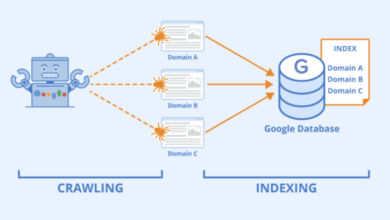
Think of technical SEO like a retail store. Indexation is your shelf space—if your product isn’t on the shelf, nobody can buy it. Crawl budget is the delivery truck; if the truck gets lost or stuck in traffic (bad robots.txt or loops), the shelves stay empty. A good audit checks the foundation: canonical tags to prevent duplicate inventory, structured data (schema) to help Google understand the product, and server logs to verify the delivery trucks are actually showing up.
Content + intent audit (what I expect beyond “keyword research”)
Many agencies just dump a list of high-volume keywords. That is useless. I expect an audit to analyze search intent. For example, if we are trying to rank a "Sign Up" page for a query where users want a "Comparison Guide," we will fail.
The audit must identify content gaps where we are missing topics our competitors cover, flag keyword cannibalization where two of our own pages fight for the same spot, and propose topic clusters. The output should be a content roadmap: "Update these 5 pages, merge these 3, and write these 10 new articles."
Off-page and brand trust checks (without link-spam)
I am very cautious here. A reputable backlink audit doesn’t promise you 1,000 new links next month. Instead, it reviews link risk (are we about to get penalized?), analyzes our anchor text profile for unnatural patterns, and identifies digital PR opportunities to build E-E-A-T (Experience, Expertise, Authoritativeness, Trustworthiness). If an auditor promises overnight ranking jumps via link building, I walk away.
Future-ready: GEO (Generative Engine Optimization) and AI visibility
If my leadership team asks about AI search, I want my auditor to have an answer. GEO (Generative Engine Optimization) is the practice of optimizing for visibility in AI search responses (like ChatGPT or Google’s AI Overviews) rather than just blue links. While this is new, French agencies like Archipel AI are reportedly positioning themselves as leaders in this niche .
I don’t expect a guaranteed "AI ranking," but I do expect an audit to check for entity SEO consistency—ensuring our brand facts are clear enough for an LLM to understand and cite.
How I choose the best SEO audit agency in France: a step-by-step framework

Buying services is harder than buying software. To avoid buyer’s remorse, I use a structured vendor evaluation framework. I treat it like a funnel: Define Needs → Scope → Shortlist → Interview → Pilot.
Here is how I execute this SEO audit process to find the best SEO audit agency in France.
Step 1: Set business goals and audit scope (so you don’t buy a PDF)
Before I talk to a single vendor, I write a scope statement. If you don’t define your KPIs, the agency will define them for you—usually in a way that is easy for them to hit but meaningless for your revenue.
Example Scope: "We need a technical and content audit for our US and FR subfolders. Goal: Increase qualified demo requests from France by 20% in Q3. Constraints: We use Shopify, and dev bandwidth is limited to 10 hours/month. Output must include a prioritized backlog."
Step 2: Build a shortlist using credible signals (not “top 10” lists)
I ignore 90% of "Top SEO Agency" articles because pay-to-play SEO rankings are rampant. Instead, I look for signals that are harder to fake.
- Signals I trust: Detailed SEO case studies that show the "how," client reviews on third-party platforms like Trustfolio (where agencies like Spark or Foxglove Partner often see high ratings ), and peer referrals.
- Signals I ignore: "Best Agency" badges on their own website, generic logos without testimonials, and guarantees of "#1 rankings."
Step 3: Interview questions I use to validate audit quality
When I get them on a call, I ask specific SEO audit questions to test their audit methodology.
- "How do you prioritize your findings? Can I see an example of a prioritization matrix?"
- "Do you perform log file analysis? How do you get the logs from a client like us?"
- "Who will actually be doing the work—you or a junior associate I haven’t met?"
- "How do you handle hreflang validation for multi-regional sites?"
- "Can you show me an example of a recommendation you made that failed? Why did it fail?" (The deal-breaker question).
- "What is your process for technical SEO QA after our developers implement a fix?"
Step 4: Check they can operationalize recommendations (content + technical execution)
The biggest tragedy in SEO is a brilliant 60-page audit that never ships because no one owned the tickets. Execution is everything. I need to know the agency can help us operationalize the findings.
For the content side, this means translating audit gaps into usable content briefs. Tools can assist here; for instance, some teams use an AI SEO tool to analyze competitors at scale. However, the agency must have a human workflow to turn that data into a strategy. If they suggest creating 50 new pages, ask them how. Do they use an SEO content generator to create first drafts for editors, or do they write from scratch?
I prefer partners who understand modern content operations—using an AI content writer to handle the heavy lifting of drafting while humans focus on the internal linking strategy and editorial nuance. If they don’t have an SEO implementation plan, the audit is just expensive paper.
Step 5: Run a small paid discovery/pilot before a full engagement
I rarely sign a 12-month contract immediately. I prefer a paid discovery or SEO pilot project. I might pay €1,500 for an audit of a single page template or a specific competitor benchmark. This minimizes vendor risk reduction. If their communication is poor or their insights are generic during the pilot, I cut ties before spending the main budget.
Budgeting: what U.S. companies should expect to pay (and how I judge ROI)

Budgeting for France can be tricky. You want to pay enough to get senior talent but avoid the "American tax" where agencies inflate prices just because you are a U.S. brand. Based on typical 2025 benchmarks , here is what I expect to see for SEO audit cost France.
| Service Type | Price Range (EUR) | What is usually included |
|---|---|---|
| One-off Audit (SMB) | €1,000 – €2,500 | Technical crawl, basic keyword research, list of errors. |
| Comprehensive Audit (Scale-up) | €3,000 – €5,000 | Deep technical (logs), content strategy, competitor gap, roadmap. |
| Enterprise Audit | €5,000 – €15,000+ | Multi-site/language, custom JS rendering analysis, stakeholder workshops. |
| Monthly Support (Retainer) | €800 – €10,000/mo | Range depends heavily on hours; €3k+ usually gets senior attention. |
When calculating SEO ROI, I look at risk reduction (avoiding a 20% traffic drop from a bad migration) and technical debt paydown. If the SEO retainer France cost is €4k/month but saves my engineering team 20 hours of investigation, it pays for itself.
What usually drives the cost up (and what isn’t worth paying for)
Expect to pay more for international SEO cost (more markets = more complexity), complex JavaScript SEO auditing, and access to log analysis pricing tools. However, never pay extra for "proprietary scores" that nobody else uses, or vague SEO guarantees. If an agency charges a premium just to "guarantee" a ranking, keep your wallet closed.
Shortlist view: agencies, boutique shops, and standout consultants in France (how to compare)

The French market is split between large agencies and high-level consultants. Recent lists in 2025 often cite French SEO agencies like Daware.io, Search Foresight, Yumens, and Eskimoz . While these are established names, I treat lists as a discovery tool, not a verdict.
There are also highly respected SEO audit consultants France like Laurent Bourrelly (known for the semantic cocoon concept) or Olivier Duffez (technical depth) . These experts often provide deeper strategy than a mid-level agency account manager.
Agency vs individual consultant: how I decide
I use a simple decision tree. If I need a high volume of execution (writing 50 briefs, fixing 200 meta tags), I hire an agency for the manpower. If I have a complex, singular problem (e.g., "Why did our crawl budget crash in May?") and I have an internal team to execute the fix, I hire a specialized technical SEO expert consultant.
A practical comparison table I use (criteria that actually matter)
Use this table to evaluate your shortlist. It cuts through the sales fluff.
| Evaluation Criteria | Agency A | Agency B | Why it matters |
|---|---|---|---|
| Methodology Evidence | Do they show how they audit, or just list tools? | ||
| Who does the work? | Access to seniors vs. delegated to juniors. | ||
| Int’l Experience | Proven cases of scaling US brands in EU. | ||
| Report Format | PDF dump vs. ticket-ready backlog. | ||
| Failure Discussion | Willingness to share lessons learned (Trust signal). |
Common mistakes (and red flags) when hiring an SEO audit agency abroad

I’ve learned some of these the hard way. Here are the SEO audit red flags that make me walk away immediately.
- Guaranteed Rankings: "We promise #1 for this keyword." Impossible. No one controls Google. Red flag.
- The "Black Box" Audit: Refusing to explain their methods or show SEO due diligence data sources. Fix: Demand transparency in the contract.
- Ignoring GDPR: A French agency that doesn’t mention privacy compliance is a liability. Fix: Ask for their data handling policy.
- No Implementation Plan: Delivering a list of errors without prioritizing them. Fix: require an "Impact/Effort" matrix.
- Relying on Pay-to-Play Rankings: Choosing a partner solely because they were #1 on a "Top Agencies" list. Fix: Validate with case studies and calls.
My due-diligence checklist (before I sign anything)
Before the ink hits the paper, I run this final check:
- Checked 3 independent references (asked about delays and communication).
- Validated their GDPR vendor review status with legal.
- Received a sample of a "ticket-ready" deliverable (not just a screenshot).
- Confirmed the names of the consultants assigned to my account.
- Agreed on a communication cadence (e.g., Weekly Sprint sync).
FAQs + recap: picking the best SEO audit agency in France and what to do next

Why consider a French SEO audit agency for U.S. businesses?
French agencies bring critical cross-cultural expertise and deep GDPR knowledge that U.S. agencies often lack. They ensure your bilingual SEO strategy resonates with local users, preventing costly localization mistakes during your expansion.
What budget should U.S. companies expect when outsourcing to France?
For a high-quality audit, expect to pay between €3,000 and €5,000. SEO retainer cost for ongoing support typically ranges from €2,000 to €10,000 per month depending on complexity. It’s generally more affordable than NYC/SF rates for comparable technical depth.
How can I avoid pay-to-play ranking lists?
Ignore lists that don’t disclose their methodology. Focus on SEO case studies that show clear before/after data, and check authentic client reviews on platforms like Trustfolio. If they can’t introduce you to a happy client, run.
Should I hire an agency or an expert consultant in France?
Hire a consultant for deep, specific strategic problems (like a migration disaster). Hire an SEO agency if you need a team to execute ongoing content and technical fixes at scale.
What is GEO and why is it emerging?
GEO (Generative Engine Optimization) is the practice of optimizing content to be cited in AI-generated answers. It’s emerging because users are increasingly asking complex questions to AI rather than just searching keywords.
Recap:
- Don’t settle for generic lists; use a structured framework to vet agencies for U.S.-specific needs.
- Prioritize agencies that offer "technico-marketing" depth and GDPR compliance.
- Always demand a prioritized implementation backlog, not just a list of errors.
Next Actions:
- Draft your scope statement clearly defining your markets and KPIs.
- Create a shortlist using peer reviews and case studies, ignoring sponsored lists.
- Interview top candidates using the "deal-breaker" questions above.
- Run a small paid discovery project to test the waters.
- Use an AI article generator to help scale the content recommendations once your audit is complete.