Finding Quality: How I’d Choose the best SEO audit agency in Germany (as a US business)

I once received an SEO audit that was 80 pages long. It was beautifully designed, full of colorful charts, and cost the company about $15,000. But when I handed it to our engineering lead, she laughed and closed the tab. Why? Because it was 80 pages of screenshots with zero prioritization, no effort estimates, and no clear ownership.
Finding the best SEO audit agency in Germany is difficult because the market is flooded with slick sales decks that hide generic advice. If you are a US-based Marketing Lead or Growth Manager, you have additional layers of complexity: time zones, GDPR compliance, and a very different business culture regarding contracts.
Germany is known for technical rigor. When you hire correctly, you don’t just get a list of errors; you get an engineered roadmap that respects your infrastructure. But hire poorly, and you get trapped in a 24-month contract for a black-box service you can’t verify.
This guide is the framework I use to vet agencies. It skips the marketing fluff and focuses on what actually matters in 2026: AI workflows, verifiable transparency, and a roadmap that your developers will actually respect.
Search intent + what you’ll get from this guide
You aren’t looking for a list of logos. You are looking for a risk-reduction mechanism. By the end of this article, you will have:
- A specific SEO audit checklist for 2026 standards (including AI and GEO).
- A rigorous agency selection framework to score proposals apples-to-apples.
- The specific questions to ask to expose sales bluffs before you sign.
What “best SEO audit agency in Germany” should actually mean (for my business goals)

When I’m buying an audit, I’m not paying for PDFs—I’m paying for clarity and a plan my team can execute. The “best” agency isn’t the one with the biggest booth at a conference; it’s the one that understands your specific constraints (like engineering bandwidth or CMS limitations) and prioritizes accordingly.
A true technical SEO audit should function like a product roadmap. It needs to identify blockers, estimate the “t-shirt size” of the fix (S, M, L, XL), and predict the business impact. If an agency tells you to “fix all 404 errors” without asking if those pages have backlinks or traffic, they are wasting your time.
Within the first 30 to 90 days, a high-quality audit should deliver:
- A prioritized backlog: Tickets ready for Jira or Linear.
- Quick wins: Changes that require minimal dev time but yield indexation improvements.
- Strategic clarity: A definitive answer on whether your traffic drop was technical, content-based, or algorithmic.
Quick definitions (in plain English): SEO audit, technical SEO, on-page, content, links
To ensure we are speaking the same language during procurement:
- Technical SEO: Ensuring search engines can access, crawl, and index your site (like making sure the library doors are unlocked and the books are shelved correctly).
- On-page SEO: Optimizing individual pages (headers, schema, intent) so users and bots understand the topic.
- Link audit: analyzing who references you (to remove toxic associations) and identifying where you lack authority compared to competitors.
- Content audit: A qualitative review of your library to see what should be kept, updated, consolidated, or deleted (pruning).
What I expect the audit to change (KPIs and decision points)
I don’t just want to see “green scores” in a tool. I want to see movement in business metrics. While SEO is a long game, a good audit sets the baseline for:
- Organic Growth Metrics: Specifically non-branded clicks and impressions.
- Index Coverage: Reducing the number of valid pages excluded by Google.
- Conversion Efficiency: Are we attracting traffic that actually converts?
If an agency refuses to discuss how their audit ties to revenue or pipeline because “SEO is unpredictable,” I typically end the call.
Why German SEO audit agencies stand out (and when that matters)

If you are used to US agencies, the German SEO agency experience can be a culture shock—usually in a good way, but sometimes frustratingly rigid. German agencies generally lean heavily into engineering precision. They are less likely to “hack” growth and more likely to build a fortress.
This matters if you are an enterprise, a large eCommerce brand, or a SaaS company dealing with complex international structures (href-lang tags, subfolders vs. subdomains). If you run a small local blog, a rigorous enterprise SEO audit from a top-tier German firm might be overkill.
The “engineering” mindset: documentation, reproducibility, and measurable ROI
The biggest differentiator I see is documentation. US audits often focus on narrative; German audits often focus on reproducibility. I expect a German SEO agency to provide:
- Hypothesis-driven testing: “We believe changing X will result in Y. Here is how we measure it.”
- Change Logs: Detailed records of exactly what was changed and when, which is critical for correlation with traffic shifts.
- Measurable ROI: Connecting technical fixes to crawl budget efficiency and revenue protection.
Approximately 93% of organizations acknowledge the positive impact of SEO on business objectives , but that impact is only visible if the reporting is precise.
Compliance expectations (GDPR) that can affect the audit process
GDPR is not a suggestion in Germany; it is the law. This impacts how an agency handles your data. When I hire in Germany, I expect stricter protocols around GA4 access and Google Search Console access.
- They will likely require a Data Processing Agreement (DPA) before touching your analytics.
- They may refuse to use certain “black hat” scrapping tools that violate IP laws.
- Log file analysis requires scrubbing PII (IP addresses) before transfer.
Don’t be annoyed by this friction. It’s a sign of a mature, compliant partner that won’t get your brand sued.
What a modern SEO audit from Germany should include in 2026 (AI workflows, GEO, and E‑E‑A‑T 2.0)

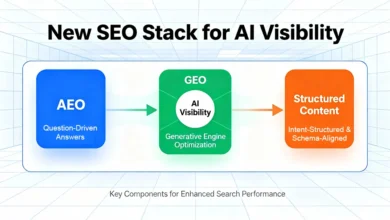
The definition of an audit has shifted. If an agency delivers a spreadsheet that looks like it was made in 2022, they are already behind. The modern landscape demands AI-powered SEO audit workflows and optimization for generative engines, not just 10 blue links.
Automation isn’t about being lazy; it’s about scope. I want human experts making strategy decisions, not manually categorizing 10,000 keywords in Excel. Here is the modern stack I look for:
| Audit Area | What to Check | Evidence/Artifacts I Expect |
|---|---|---|
| AI Workflows | Clustering, intent mapping, entity extraction | Automated content briefs, topic clusters |
| GEO (Generative Engine Optimization) | Citations, structured data, answer clarity | Schema validation, entity coverage report |
| E-E-A-T 2.0 | Author credibility, experience proof | Author bio audits, “about” page analysis |
For example, scaling content audits often requires an AI SEO tool like Kalema to map entities and maintain consistent quality at scale, ensuring your content intelligence is actually actionable rather than abstract.
AI-supported workflows: where automation helps (and where I still want humans)
I ask agencies specifically: “Which parts of this audit are automated?” I want SEO automation for:
- Crawl analysis: Spotting 404s, redirect chains, and canonical loops.
- Keyword Clustering: Grouping thousands of queries by intent.
- Anomaly Detection: Alerting me when a metric spikes or dips.
However, I demand AI SEO workflows stop when it comes to strategy. If the prioritization of the roadmap is automated, that’s a red flag. A human needs to understand that fixing the checkout page is more important than fixing a blog post from 2018.
GEO (Generative Engine Optimization): auditing for visibility in AI answers
No one can guarantee inclusion in ChatGPT or Perplexity answers. However, a GEO audit assesses the signals that make citation more likely. I look for a mini-checklist that covers:
- Factuality & Citations: Are claims backed by cited statistics?
- Direct Answers: Does the content answer the “who, what, where” immediately?
- Schema Markup: Is the data structured so machines can read it without guessing (Organization, Person, FAQPage)?
E‑E‑A‑T 2.0 checks: expertise you can prove, not just claim
E-E-A-T 2.0 (Experience, Expertise, Authoritativeness, Trustworthiness) places a massive emphasis on the “Experience” component. An audit today must evaluate your content credibility and author experience.
I expect the agency to review our author bios and “About Us” pages. Are we proving that our writers have actually used the products they are reviewing? An audit should flag vague content like “experts say” and replace it with “our testing showed.”
My beginner-friendly framework to select the best SEO audit agency in Germany (step-by-step)

Stop sending generic “Contact Us” form fills. If you want the best SEO audit agency in Germany, you need to run a disciplined procurement process. This saves you from getting dazzled by sales reps who have never logged into Google Search Console.
Step 1: Get my house in order (goals, scope, and constraints)
Before I email anyone, I define the SEO audit scope. If I am vague here, I will pay for it later in change orders. I prepare a simple one-page brief containing:
- Markets: Are we targeting DACH (Germany, Austria, Switzerland) or just Germany?
- CMS Tech Stack: Shopify, WordPress, Headless, Custom?
- Goals: “Recover from traffic drop” vs. “Expand to new market.”
- Constraints: “We only have 10 hours of dev time per month available.”
Step 2: Build a shortlist (specialization beats popularity)
I look for agencies that specialize in my business model. A generic “full service” agency is rarely the master of technical nuance.
- eCommerce SEO audit: Look for agencies with proven history in large-scale faceting and canonicalization.
- International SEO: Critical if you are a US company entering Germany. You need technical SEO specialists who understand
hreflangimplementation deeply. - B2B SaaS: Look for agencies that understand lead quality over vanity traffic metrics.
Step 3: First call screening (10 questions I ask every agency)
When I get on the first call, I skip the pleasantries and ask specific SEO agency interview questions to test their SEO audit methodology:
- “Who exactly will be doing the work? A senior strategist or a junior associate?”
- “Can you show me a redacted example of a roadmap you delivered last month?”
- “How do you prioritize recommendations? By effort/impact or just a list of errors?”
- “Do you use automated content generation? If so, what is your QA process?”
- “How do you handle transparency regarding link building?”
- “What is your approach to assessing E-E-A-T 2.0 signals?”
- “Do you retain rights to any data or content created during the audit?”
- “How do you format tickets for developers?”
- “Will I have direct access to the person doing the audit, or just an account manager?”
- “What happens if we disagree with a recommendation?”
Step 4: Proof, not promises (what evidence I request)
I never trust a logo wall. I ask for artifacts. A good agency will happily show you an anonymized SEO roadmap example or a SEO case study that includes the “messy middle”—the problems they faced, not just the victory lap. I look for baselines, clear actions taken, and timelines that feel realistic, not instant.
Step 5: Align on implementation (the audit is only valuable if it ships)
The number one reason audits fail is that they never get implemented. I ask for 5 example tickets so my engineering lead can estimate the effort. If the agency provides technical SEO fixes that are vague (e.g., “Improve page speed”), I walk away. I need specifics: “Compress image X by 40%” or “Remove unused JS from file Y.” This applies to on-page SEO and internal linking strategies as well—they must be actionable tasks.
Comparing agencies: my proposal scorecard + what a good audit deliverable looks like

Once the proposals come in, it’s easy to get overwhelmed. I use a simple weighted scorecard to remove emotion from the decision. I also verify the SEO audit deliverables against a strict checklist.
Table: Weighted agency scorecard (example weights for beginners)
Copy this into a spreadsheet to compare your options objectively.
| Criteria | Weight | What I Look For |
|---|---|---|
| Technical Depth | 30% | Do they understand my specific tech stack (e.g., JS rendering)? |
| Prioritization Method | 25% | Is the roadmap scored by Effort vs. Impact? |
| Transparency (Rights/Links) | 20% | Are their methods white-hat and fully disclosed? |
| Communication | 15% | Did they ask smart questions about my business goals? |
| Price/Value | 10% | Is the scope clear relative to the cost? |
Table: Audit deliverables checklist (what I want in writing)
In the contract, I ensure these items are listed as deliverables:
| Deliverable | Why I Need It |
|---|---|
| Crawl Findings & Fixes | The foundational technical health check. |
| Prioritized Roadmap | The actual project plan for the next 3-6 months. |
| Content Inventory | Mapping what to keep, update, or prune. |
| Assumptions & Limitations | Transparency on what they couldn’t check (e.g., server logs). |
| Dev-Ready Tickets | So my engineers don’t have to translate “SEO speak.” |
Budget, timelines, and contracts: what I expect when hiring in Germany
Let’s talk money. German SEO agency pricing is often higher than the EU average. This is usually due to the overhead of GDPR compliance, extensive documentation, and the seniority of the staff. You are paying for engineering hours, not just marketing advice.
Typical price ranges and what they usually include
Based on market intelligence, here is what I expect to see:
- SMB / Specific Audits: €2,500 – €6,000 one-off. Usually a technical health check and basic roadmap.
- Mid-Market Retainer: €4,000 – €8,000 / month. Includes ongoing monitoring, content briefings, and implementation support.
- Enterprise Retainer: €6,000 – €40,000+ / month. Full-scale SEO retainer scope including international SEO, migration support, and custom tooling.
If I see an “Enterprise Audit” for €500, I know it’s an automated PDF export I could have done myself.
Why 18–36 month contracts happen—and when I’d negotiate
German business culture favors stability. SEO contract length often spans 18 to 36 months because real SEO results take time to compound. Agencies want to ensure they are around to see the results of their work.
However, as a buyer, I negotiate. I typically say: “I’m open to a longer term if we define milestones and reporting transparency upfront. Let’s start with a 3-month pilot focused on the audit and initial implementation.” This reduces my risk while showing commitment.
Common mistakes, red flags, and next steps (plus FAQs I hear from US teams)

I’ve seen too many US companies get burned by ignoring SEO agency red flags. The biggest one in Germany? Ethical link building and content rights. In Germany, legal compliance regarding advertising and links is strict. If an agency proposes buying links on sketchy networks without labeling them, run. You could be liable.
Mistakes & fixes checklist (5–8 items)
- Mistake: Not clarifying content ownership rights.
Fix: Ensure the contract states that all content and data belong to you, even if you leave. - Mistake: Accepting “black box” reporting.
Fix: Demand access to the raw data and tools used. - Mistake: No implementation plan.
Fix: Require 20% of the budget be allocated to “implementation support” or “dev consulting.” - Mistake: Ignoring SEO transparency regarding links.
Fix: Ask for a list of all built links and the methodology used to acquire them. - Mistake: Falling for “Guaranteed Rankings.”
Fix: Accept that no one can guarantee a #1 spot; focus on traffic and ROI growth instead.
FAQs (from the research, answered plainly)
Q: Why are German agencies so expensive?
A: High labor costs, strict data compliance (GDPR), and a focus on senior-level engineering talent rather than junior offshore teams.
Q: Do I really need a GEO audit now?
A: If you want to be visible in AI search (ChatGPT, Perplexity), yes. A standard audit misses the entity and citation signals these engines rely on.
Q: Is E-E-A-T 2.0 just a buzzword?
A: No. Google is aggressively filtering unverified content. Proving the “Experience” of your authors is now a technical requirement for ranking.
Wrap-up: my 3-bullet recap + next actions
To summarize, finding the right partner comes down to:
- Evidence over claims: Demand artifacts like ticket examples and redacted roadmaps.
- Modern scope: Ensure the audit covers AI workflows, GEO, and E-E-A-T 2.0.
- Business alignment: The audit must prioritize based on your resources and revenue goals.
If you do only one thing this week: Draft your one-page scope document (Step 1) and request a redacted roadmap from your top 3 choices. If they can’t show you a good plan they built for someone else, they won’t build one for you.