Introduction: Why I use competitor roadmaps to win traffic (without guesswork)

I still remember the frustration of my early days in SEO. I was publishing three high-quality articles a week, doing everything “right” regarding on-page optimization, yet my traffic line remained stubbornly flat. Meanwhile, a competitor with a lower Domain Authority was outranking me on topics I hadn’t even considered covering.
The problem wasn’t the quality of my writing; it was my roadmap. I was publishing blindly, guessing what my audience wanted, while my competitors were effectively showing me exactly what Google was already rewarding. That’s when I shifted my strategy from “creating content” to “filling gaps.”
Competitor analysis isn’t about copying. It is about building a data-backed SEO roadmap that tells you exactly where the demand is. In this guide, I’m going to walk you through the exact process I use to steal traffic ethically using content gap analysis. We will move beyond basic definitions into a repeatable workflow that identifies missing keywords, prioritizes them by business value, and turns those gaps into high-performing pages.
What is keyword gap analysis (and what it’s not)

At its core, keyword gap analysis is the process of comparing your site’s keyword profile against your top competitors to identify valuable search queries they rank for, but you don’t. It’s like walking into a competitor’s store, comparing their best-selling aisle to your empty shelf, and realizing exactly what product lines you’re missing out on.
However, it is crucial to understand what this process is not. It is not permission to scrape and rewrite competitor articles. It is not a strategy to chase every single keyword regardless of relevance. It is a method to uncover proven intent.
In my experience, you will typically find gap opportunities categorized into these buckets:
- Missing keywords: Terms where competitors rank, but your site has no visibility.
- Weak keywords: Terms where you rank, but significantly lower than your competitors (often positions 11+).
- Shared keywords: Common ground where you both rank; these are battles for click-share.
- Unique keywords: Terms you rank for that competitors don’t (your moat).
Used correctly, this analysis allows you to:
- Stop guessing topics and start targeting validated search demand.
- Identify “low-hanging fruit” where you can make quick gains.
- Build a content calendar tied directly to business outcomes like leads and demos.
Quick mental model: rankings are a map, gaps are routes competitors already proved

Think of the search results as a map of the territory. Your competitors have already sent out scouts (their content) to find the safe, profitable routes. Your job isn’t to re-survey the entire land; it’s to look at their map, see which routes lead to gold (revenue), and then build a better, faster highway along that same path to capture the search intent and ranking opportunities.
The competitor roadmap: my keyword gap analysis workflow (step-by-step)
When I run a keyword gap analysis workflow, I treat it as a mini-campaign. It’s easy to get overwhelmed by thousands of keyword rows in a spreadsheet. To avoid analysis paralysis, I follow a strict five-step process: Select, Pull, Bucket, Filter, and Map.
This approach ensures I’m not just hoarding data but building a prioritized list of actions. Here is how I execute competitor keyword research, SERP analysis, and content mapping to turn data into traffic.
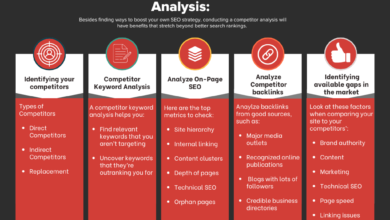
Step 1: Choose 3–5 “true” competitors (not just business rivals)
One mistake I made early on was only analyzing my direct business rivals. The problem? Sometimes your biggest business rival has terrible SEO. You want to analyze SERP competitors—the sites that are actually ranking for the topics you want to own.
I recommend selecting 3–5 domains. Include one direct business competitor, one “aspirational” competitor (high domain strength), and one niche publisher or blog. Niche blogs are often goldmines because they rank high with lower authority, proving that topical overlap and content quality are winning the SERP.
| Competitor Type | Why select them? | Evidence to look for | Decision |
|---|---|---|---|
| Direct Business Rival | Comparable product/service offering. | Ranks for your bottom-of-funnel terms. | Keep |
| SEO Leader (Publisher) | High volume of content; shows what Google rewards. | Dominates informational ”how-to” queries. | Keep |
| Niche Blog | Shows “weak” SERPs you can beat easily. | Outranks big brands despite low DR/DA. | Priority |
Step 2: Pull your keyword footprint + competitor footprints
Next, you need the raw data. If you have access to paid tools, this is a one-click export. If you are on a budget, you can use a Google Search Console export for your data and manual checks for competitors (more on tools later).
I make sure to collect these minimum data points for both my site and the competitors:
- Keyword: The actual search query.
- Position: Where they rank vs. where I rank.
- Volume: Monthly search estimates.
- URL: The specific page ranking (critical for understanding intent).
Note: Don’t panic if the data isn’t perfect. Keyword volume is always an estimate. I use it as a directional signal rather than an absolute truth. The ranking URLs are actually more important than the volume because they show you how the competitor is winning.
Step 3: Bucket the gaps (Missing vs Weak vs Shared) and decide the action
Once I have the data in a spreadsheet, I categorize every opportunity. This is where the strategy happens. I don’t treat a keyword where I rank #12 the same as one where I don’t rank at all.
Missing keywords generally require new content. However, my favorite bucket is Weak keywords—specifically those in positions 8–20. These are pages that Google already likes enough to put on page 1 or 2. They usually just need a content refresh, better structure, or a few internal links to jump into the top 3. That is your fastest path to ROI.
| Bucket | Definition | Best Action | Typical Effort |
|---|---|---|---|
| Missing | Competitor ranks, you don’t. | Create new page or cluster. | High (L) |
| Weak | You rank #8 – #20. | Update, optimize headers, add depth. | Medium (M) |
| Shared | You both rank top 10. | Improve CTR, win snippets. | Low (S) |
Step 4: Validate intent with a fast SERP inspection (the 5-minute check)
Before I write a single word, I do a “5-minute check” for search intent validation. I literally search the keyword in an Incognito window and scan the results. I’m looking for patterns:
- Format: Is the SERP dominated by listicles, product pages, or long-form guides? If everyone ranking is a product page and I write a blog post, I will lose.
- Angle: Are they targeting beginners or experts?
- Features: Do I see video carousels? People Also Ask boxes? Calculators?
If I cannot explain the user’s goal in one simple sentence based on the SERP inspection, I don’t target it yet. Misunderstanding content format is the number one reason gap campaigns fail.
Step 5: Map each gap to the right page type (new page vs update vs cluster)
Finally, I decide the vehicle for the keyword. Not every keyword needs a new article. In fact, cannibalization is a real risk if you just spin up new pages for everything.
- New Guide: If the topic is informational and I have zero coverage.
- Refresh: If I have an older post on the topic ranking on page 2.
- Cluster: If I see 5–10 related long-tail keywords or question keywords, I might plan a “pillar” page and 3 supporting articles.
I remember once debating whether to write a new post for a “VS” keyword. I realized I already had a review of one of the products. Instead of a new page, I added a comparison section to the existing review. It ranked #1 in two weeks because the URL already had authority. Content clustering and consolidation often beat fresh URLs.
Worked example: turning a single gap into estimated clicks (CTR math)
Let’s look at the math to justify this work. Suppose a competitor ranks #3 for a keyword with 3,000 monthly searches. You rank #9. Using rough industry standards, position #3 might get ~12% CTR, while position #9 gets ~2%.
Current State (You at #9): 3,000 × 2% = 60 visits/month.
Future State (You at #3): 3,000 × 12% = 360 visits/month.
That is a traffic estimate gain of 300 highly qualified visitors just by optimizing one page to close a ranking uplift gap. I do this quick calculation before I prioritize any task. If the upside is tiny, I move on.
Tools for keyword gap analysis: paid platforms vs free workflows
You will hear endless debates about which tool is “best.” The truth is, paid tools buy you speed, while free tools cost you time. Here is how I break down the options, including when to bring in an AI article generator to accelerate the actual writing once your strategy is set.
| Method | Best For | Data Quality | Cost |
|---|---|---|---|
| Semrush/Ahrefs | Speed, bulk analysis, filtering. | High (clean buckets). | $$$ |
| GSC + Manual | Budget teams, finding “Weak” gaps. | High (actual user data). | Free |
| Keyword Planner | Validating search volume. | Medium (broad ranges). | Free |
Paid tools (Semrush/Ahrefs): fastest path to clean gap buckets
Tools like Semrush keyword gap or Ahrefs content gap are industry standards for a reason. They do the heavy lifting of mapping competitor keywords against yours. My workflow here is simple:
- Enter my domain and 3 competitors.
- Filter for keywords where “All competitors rank” but I don’t (Missing).
- Filter by keyword difficulty (KD) < 40 to find realistic wins.
Free stack: GSC + Keyword Planner + manual SERP checks (good enough if you’re disciplined)
If you don’t have budget for premium tools, you can still win with a free keyword gap analysis tools stack. It just requires discipline.
I rely heavily on Google Search Console to find “Weak” keywords. I export my performance data and filter for queries with high impressions but low clicks (average position 10–20). These are your GSC near wins. To find what you are missing entirely, you will have to manually inspect competitor sites or use Google Keyword Planner to discover related terms they cover. I usually set a filter for at least ~10 impressions a month to weed out the noise in my spreadsheet workflow.
How I prioritize keyword gaps (so I don’t chase everything)
Finding gaps is easy; prioritizing them is hard. I have seen strategies fail because the team tried to publish 50 articles in a month without vetting them. I use a simple scoring system to decide how to prioritize keyword gaps.
| Metric | Why it matters | Score (1-5) |
|---|---|---|
| Intent Match | Can this lead to revenue/leads? | 5 (Critical) |
| Volume x CPC | Traffic potential & commercial value. | 4 |
| Feasibility | Low KD% or weak competitors ranking. | 3 |
| Feature Potential | Can I steal a snippet? | 2 |
Intent first: the “can this keyword lead to revenue?” test
I always prioritize by business value. If a keyword has 10,000 searches but the intent is purely entertainment, I skip it. I look for:
- Commercial Intent (BOFU): “Best tool for X”, “Service Y pricing”. (High Priority)
- Informational (TOFU/MOFU): “How to solve X”. Good for building lists, but lower immediate conversion.
If the intent is transactional keywords or commercial intent, I will tackle it even if the volume is lower.
Feasibility next: position gaps, difficulty, and “outdated SERP” signals
I love finding “green flag” SERPs. These are search results where the competitors are weak. If I see forum threads (Reddit/Quora), outdated articles from 2019, or thin content ranking in the top 5, I know I can win. I also look specifically for positions 8–20 gaps; improving content freshness on an existing URL is always easier than ranking a new one.
Turn gaps into traffic: content plans, on-page SEO, and internal linking

Once I have my prioritized list, I move to execution. This is where I brief the content. I create a detailed brief for every single gap. If you are looking to scale this part, a SEO content generator can help draft the initial content based on your brief, but the strategy must come from you.
| Element | Requirement |
|---|---|
| Target Keyword | Primary term + 2-3 variations. |
| User Intent | What is the problem they are solving? |
| Structure (H2s) | Must mirror PAA questions. |
| Internal Links | Link to product page + 2 related guides. |
Build a mini-campaign (not a single post): primary page + 2–3 long-tail supports
I rarely publish a single lonely page. I build mini-campaigns. If I find a gap for “cloud storage security,” I will write the main guide, but I will also write two supporting articles targeting long-tail keywords like “cloud storage risks for small business” and “cloud encryption types.” This creates a tight topic cluster that establishes authority much faster.
On-page checklist for gap pages (what I do every time)
Here is my personal on-page checklist. I don’t hit publish unless these are done:
- Definition First: I define the core concept in the first 100 words (great for snippets).
- PAA Headings: I use PAA headings (People Also Ask) as my H2s.
- Schema Markup: I add FAQ schema if the format allows.
- Internal Linking: I ensure the new page is linked from at least three older, authoritative pages on my site.
The “gap-to-feature” play: steal visibility from snippets, PAA, and AI overviews

Here is where we get advanced. Most people stop at ranking in the blue links. But modern SEO is about SERP features. I look for gaps where competitors have a Featured Snippet, a People Also Ask box, or appear in AI overviews.
If a competitor has the snippet, I analyze why. Is it a list? A table? A concise paragraph? I then format my content to beat theirs structurally.
| Feature | What Wins | Structure Pattern |
|---|---|---|
| Definition Snippet | Clarity & Conciseness. | Bold the term, followed by 40-60 word definition. |
| List Snippet | Scannability. | <h2> followed immediately by <ul> or <ol>. |
| Table Snippet | Data comparison. | Clean HTML table with headers. |
How I spot feature gaps quickly (without overcomplicating it)
I time-box this to 10 minutes per keyword. I search the term, see if there is a snippet, and if the current winner is “weak” (e.g., the answer is vague or the list is buried deep in the text). If so, I write a better version—cleaner, bolder, and higher up on my page. This simple formatting adjustment often increases chances of stealing the position zero spot.
Monitor, repeat, and scale keyword gap analysis (quarterly rhythm + automation)
The search landscape changes constantly. A gap you fill today might reopen tomorrow if a competitor updates their content. That is why I recommend a quarterly SEO audit. To scale this, once you have your process down, you might use a Bulk article generator to help you produce the content for your mapped clusters efficiently, provided you maintain strict editorial oversight.
What I track (simple dashboard): rankings, clicks, and feature ownership
I keep my dashboard simple. I don’t obsess over daily movements. I look at monthly trends for:
- GSC Clicks & Impressions: Is the new content gaining traction?
- Average Position: Are my “Weak” keywords moving from page 2 to page 1?
- SERP Feature Tracking: Did I win the snippet I targeted?
FAQs: keyword gap analysis tools, prioritization, and how often to run it
What are the best tools for keyword gap analysis?
Semrush and Ahrefs are the industry leaders for depth and speed. However, Google Search Console paired with manual SERP analysis is a powerful free alternative for finding performance gaps on your own site.
How do you prioritize keyword gaps?
Always prioritize by intent first. Ask: “Will this traffic convert?” Then look at feasibility (Keyword Difficulty and your current authority) and volume. A low-volume, high-intent keyword is often more valuable than a high-volume, low-intent one.
How often should I do keyword gap analysis?
I recommend a full analysis quarterly. This gives enough time for your new content to rank and for competitors to make moves that you need to counter.
Wrap-up: my 3-point recap + next actions checklist
If I were starting today, I wouldn’t try to boil the ocean. I would focus on these three things:
- Focus on “True” Competitors: Look at who ranks, not just who you sell against.
- Prioritize by Intent: Don’t chase volume; chase revenue.
- Target Features: Format your content to win snippets, not just clicks.
Your Next Steps:
- Pick 3 competitors (1 business, 1 publisher, 1 niche).
- Export their keywords and filter for your “Weak” spots (positions 8-20).
- Score your top 10 opportunities.
- Ship 1 update and 1 new page this week.
- Set a calendar reminder to review in 90 days.
The data is there. The roadmap is clear. Now you just have to drive.