The Great Shift: Understanding the Core Differences Between AEO vs SEO

Introduction: The Great Shift (and my quick take on AEO vs SEO)

In the last few months, I’ve watched queries I used to rely on for consistent traffic get answered right on the results page. It’s a frustrating moment for any marketer: you rank #1, you did the work, but the click-through rate (CTR) dips because Google’s AI Overview handled the user’s question without them ever visiting your site.
This isn’t just a trend; it’s a fundamental change in how search engines function. We are moving from a world of pure discovery to a world of direct answers. However, panic isn’t a strategy. The goal of this guide is to strip away the hype and give you a practical, newsroom-grade breakdown of AEO vs SEO—what is actually changing, why it matters to your business bottom line, and exactly how to adapt your content workflow to win visibility in this new landscape.
Search intent + who this guide is for (beginners, business owners, and new marketers)
If you are looking for a complex engineering document on training Large Language Models (LLMs), this isn’t it. This guide is for the intermediate marketer, business owner, or content lead who needs to understand how to operate today. I’m going to explain the shift in plain English.
We will cover the basics of schema (don’t worry, I’ll explain what that means simply), how to format your content so machines can read it, and how to measure success when “traffic” isn’t the only metric that matters anymore. You won’t need to learn to code, but you will need to rethink how you structure your articles.
Quick answer: what’s the difference between AEO and SEO?

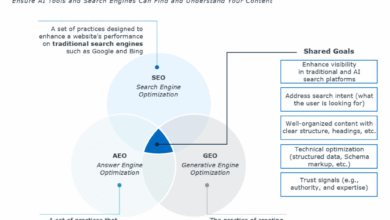
SEO (Search Engine Optimization) focuses on ranking your website in search results to drive traffic and clicks. AEO (Answer Engine Optimization) focuses on structuring content so AI systems can directly quote or summarize it as the best answer. In practice, SEO gets you discovered; AEO gets you mentioned.
What I’ll cover (a simple roadmap)
- Definitions: Clear, jargon-free explanations of the core concepts.
- The Data: Why this shift is happening now (2025–2026 trends).
- Comparison Table: Side-by-side breakdown of goals, formats, and actions.
- Hybrid Workflow: My step-by-step checklist for optimizing one page for both.
- Measurement: How to track success when clicks disappear.
- Common Mistakes: The errors I see most often in audits.
AEO vs SEO fundamentals: clear definitions (without the jargon)

Before we dive into tactics, we need a shared language. The industry loves acronyms, but they often obscure what’s actually happening. Here is the mental model I use to explain this shift to clients and stakeholders.
Think of SEO as trying to get an invitation to a crowded networking event. You need to dress right (technical health), know the right people (backlinks), and have interesting things to say (keywords) just to get in the room. AEO, on the other hand, is about ensuring that when someone asks a specific question in that room, you are the one quoted by the host. You don’t just want to be present; you want to be the source of truth.
What SEO is trying to do (rankings, clicks, and trust signals)
SEO remains the foundation. If search engines can’t crawl, index, or understand your site, nothing else matters. The primary goal of traditional SEO is to rank blue links that users click on to visit your specific platform.
It relies on pillars you likely already know:
- Technical SEO: Ensuring the site loads fast and is readable by bots.
- On-page SEO: Using keywords naturally in titles and headers.
- Backlinks: Proving authority through votes from other sites.
If you only remember one thing: SEO is about bringing people to your digital property.
What AEO is trying to do (be the selected answer in AI and voice interfaces)
Answer Engine Optimization (AEO) is different. Its goal is to provide content that is so structured, concise, and semantically clear that an AI (like Google’s Gemini or ChatGPT) or a voice assistant can easily extract it. These systems don’t want to send users away; they want to satisfy the user immediately.
For example, if a user asks, “What is the return window for X?”, AEO ensures your return policy page has a clear, 30-word summary that says, “The return window for X is 30 days from purchase.” It uses things like schema markup (structured labels for code) to hand-feed this information to the machine.
Does AEO replace SEO? (No—here’s the practical relationship)
I get asked this constantly: “Is SEO dead?” No. In fact, AEO relies entirely on SEO. If your page isn’t indexed and authoritative (SEO), the AI won’t trust it enough to use it as an answer (AEO).
I look at it like this: SEO builds the library; AEO organizes the best books on the shelf for quick reading. You need a hybrid strategy. You can’t optimize for answers if you aren’t discoverable in the first place.
Why AEO matters now (2025–2026): what changed in US search behavior

We are seeing a massive behavioral shift. It’s not just that the technology changed; it’s that users changed. People expect immediate answers without navigating through three different websites. Below is a snapshot of the current landscape based on recent market intelligence.
| Metric | Latest Stat | What it means for marketers |
|---|---|---|
| AI Overview Prevalence | ~13% of queries | Your top ranking might be pushed down by an AI box. |
| Zero-Click Searches | Over 60% of searches | Traffic reports won’t show the full value of your content. |
| Voice Devices | ~8.4 Billion globally | Conversational, spoken queries are dominating input methods. |
AI Overviews are appearing more often—and they change what “ranking #1” means
In early 2025, data suggests AI Overviews are appearing in roughly 13% of Google queries . That might sound small, but it’s concentrated on the most valuable, informational searches. Before, ranking #1 meant capturing ~30% of clicks. Now, if an AI Overview sits above you, that CTR can drop by approximately 34% . The “top spot” is no longer a blue link; it’s the AI summary.
Zero-click searches: visibility without visits is now common
More than 60% of Google searches now end without a click . I know it’s annoying when analytics don’t show the whole story, but this is the reality. If a user sees your brand name and your answer in the AI summary, that is a brand touchpoint. It builds trust, even if it doesn’t build session duration. In a zero-click world, visibility is the new traffic.
Voice and conversational search: why concise, direct answers win
With over 8 billion voice assistant devices in circulation , the way people search has become conversational. We don’t type keywords like “weather NY”; we ask, “Do I need an umbrella in New York today?” AEO optimizes for these natural language questions. If your content is buried in dense paragraphs, a voice assistant can’t read it out loud. Concise, direct answers win here.
AEO vs SEO: the core differences that actually affect your content (with a comparison table)

So, what do you actually do differently? While the philosophies overlap, the execution has distinct differences. If you are a beginner, this table is your cheat sheet for decision-making.
Comparison table: goals, formats, signals, and success metrics
| Dimension | SEO (Traditional) | AEO (Modern) | Practical Action |
|---|---|---|---|
| Primary Goal | Ranking & Traffic | Citations & Answers | Optimize for both: Rank high, but be quotable. |
| Best Format | Comprehensive guides, long-form | Q&A, Bullet points, Data tables | Add concise summaries to long guides. |
| Technical Key | Meta tags, H1s, Site Speed | Schema Markup, Entity Clarity | Implement FAQ or Article schema. |
| Success Metric | Sessions, Clicks, Bounce Rate | Brand Mentions, Share of Voice | Monitor impressions vs. clicks in GSC. |
Where they overlap (and why most businesses should do both)
In my experience, you don’t pick one—you allocate effort by page type. Both strategies require E-E-A-T (Experience, Expertise, Authoritativeness, and Trustworthiness). An AI won’t cite a site it thinks is spam, and Google won’t rank it either. Both require fast load times and mobile friendliness. A hybrid approach ensures you are covering all bases.
When to prioritize SEO vs AEO (a simple decision guide)
Not every page needs intense AEO focus. Here is a quick rule of thumb I use:
- High Intent / Commercial (e.g., “Buy running shoes”): Prioritize SEO. Users want to browse and shop, not just read a summary.
- Informational / Definitions (e.g., “What is pronation?”): Prioritize AEO. Users want a quick definition. If you don’t give it, the AI will get it from someone else.
- Support / Troubleshooting: Pure AEO. Users want the fix immediately.
My hybrid workflow: how I optimize one page for SEO + AEO (step-by-step checklist)

Theory is great, but execution pays the bills. Here is the exact workflow I use when creating or updating content to ensure it captures both search traffic and AI visibility. It’s a checklist you can hand to any writer.
Step 1: Start with intent and pick the ‘answer format’ before you write
Before typing a single word, I ask: “What is the shape of the answer?”
- Is it a definition? (Needs a short paragraph)
- Is it a process? (Needs a numbered list)
- Is it a comparison? (Needs a table)
A mistake I see in audits often is writing a 2,000-word essay when the user just wanted a 5-step checklist. Match the format to the intent immediately.
Step 2: Write an ‘answer-first’ block (40–60 words) and then expand
This is the most critical tactical step for AEO. Place a concise summary of the main topic immediately after your H1 or the first H2. I call this the “Quick Answer Box.”
Template:
“[Topic] is [definition]. It functions by [mechanism] and is primarily used for [benefit]. Unlike [competitor/alternative], it offers [unique differentiator].”
Example:
“AEO is a digital marketing strategy focused on optimizing content for AI-driven search results. It functions by using structured data and concise formatting to allow AI systems to extract direct answers. Unlike traditional SEO, which prioritizes clicks, AEO prioritizes citations and zero-click visibility.”
Step 3: Structure headings for humans first, machines second (H2s, H3s, and scannability)
Headings are the skeleton of your article. AI systems use them to understand the hierarchy of information. I try to make my headings descriptive and, where possible, question-based. If I only read the headings, I should still understand the story. If your H2 is clever but vague (e.g., “The Secret Sauce”), change it to something descriptive (e.g., “The 3 Ingredients of Successful Ranking”).
Step 4: Use ‘AEO-friendly’ formats: FAQs, bullet lists, and comparison tables
AI models love structure. Large blocks of text are hard to parse. I always try to include:
- Bullet Lists: For features, benefits, or ingredients.
- Tables: For pricing, comparisons, or data.
- FAQs: A dedicated section at the bottom of the article answering “People Also Ask” questions using real customer language.
Step 5: Add schema markup only where it matches visible content (the beginner version)
Schema sounds scary, but it’s just a labeling system. I only add schema when the page genuinely contains that element. Don’t try to trick the system.
- FAQPage Schema: Use this on pages where you have a visible list of questions and answers.
- Article Schema: Standard for blog posts.
- BreadcrumbList: Helps AI understand site structure.
Quick schema decision rules (what I use to avoid mistakes)
- Rule 1: If the text isn’t visible to a human, don’t mark it up for a robot.
- Rule 2: Don’t mark up promotional sales copy as an “FAQ answer.”
- Rule 3: Validate everything using Google’s Rich Results Test before publishing.
Step 6: Don’t skip SEO fundamentals (titles, internal links, and technical hygiene)
You don’t need perfection, but you must remove blockers. Ensure your Title Tag is optimized for clicks (since humans still see it), your meta description is compelling, and you have internal links connecting this page to other relevant topics. AEO can’t work if the page is an orphan that Google never finds.
Building pages faster without lowering the quality bar (content intelligence + editorial checks)
Consistency is the hardest part of this workflow. It’s easy to do one page perfectly; it’s hard to do 100. This is where modern content intelligence tools become part of the team. I use tools like Kalema not to just “generate text,” but to ensure structure. By using intelligent briefs, I can ensure every article has the right H2s, the right intent matching, and the right keywords before a writer even starts.
From draft to publish: turning a good outline into a reliable article at scale
Even with great tools, the human editor is essential. When using AI article writers, I view the output as a strong first draft. My job—and yours—is to verify the facts, tighten the tone, and ensure those “answer blocks” are truly helpful. Speed is helpful, but I still won’t publish without verifying claims and cleaning up structure.
Optional ops upgrade: automate publishing without losing control
For teams managing high-volume blogs, manual uploading is a bottleneck. Using automated blog generation features can handle the formatting and posting logistics. However, I always recommend a “staging” workflow: let the automation handle the heavy lifting, but keep a human in the loop for a final quality check before the post goes live to the world.
Examples: where AEO vs SEO shows up on real business pages (mini case-style scenarios)
Let’s look at how this plays out in the wild. Here are three example scenarios of how I would apply these hybrid principles to different page types.
Scenario 1: B2B SaaS glossary page (winning citations without relying on clicks)
The Goal: Brand authority for a specific industry term (e.g., “Data Orchestration”).
The Strategy: I would start the page with a clear, 50-word definition of the term (AEO). I would follow it with a “Key Differences” table comparing it to similar terms (AEO). I would use internal links to our product pages (SEO).
The Result: Even if users read the definition on Google and don’t click, our brand is cited as the source, building topical authority.
Scenario 2: Service page + FAQ section (capturing voice-style questions)
The Goal: Convert visitors looking for “Emergency Plumbing.”
The Strategy: The main body copy is persuasive and sales-focused (SEO/CRO). However, at the bottom, I add an FAQ section addressing voice queries like “How fast can a plumber get to [City]?” or “Do plumbers charge for travel time?”
The Result: The page ranks for high-intent keywords but also captures conversational voice searches from people in a hurry.
Scenario 3: Help center article (AEO-first formatting that also improves retention)
The Goal: Reduce support tickets.
The Strategy: Use HowTo schema. Break the solution into numbered steps: “Step 1: Go to Settings.” Use bold text for buttons and menu items. Add a “Troubleshooting” bullet list at the end.
The Result: Users get the answer instantly in the search results (AEO), reducing frustration, while the structured content helps the page rank for “How to fix X” queries (SEO).
How to measure AEO success (and prove it to a business team)

This is the hardest part. SEO has clear metrics (clicks). AEO is fuzzier. But you can’t improve what you don’t measure. Here is a simple framework for tracking AEO impact.
Baseline SEO metrics to keep (they still explain most outcomes)
Don’t throw away your current dashboard. You still need to track Impressions, Clicks, CTR, and Average Position in Google Search Console (GSC). These are your foundation. If impressions are high but clicks are dropping, it might mean you are winning the answer (AEO) but losing the visit.
AEO-specific signals: citations, AI Overview presence, and brand mentions
To track AEO specifically, I look for proxy metrics:
- AI Overview Impressions: Some tools (like SEMrush or Ahrefs) are beginning to track this.
- Brand Mentions: Set up alerts for your brand name. Are you appearing in the text of answers?
- Assisted Conversions: Are people searching for your brand after doing a generic search? This suggests they saw you in an answer and came back later.
A simple monthly reporting template (what I’d show a stakeholder)
| Section | What to Include |
|---|---|
| Wins | “We increased impressions by 20% and appeared in AI summaries for [Topic].” |
| Risks | “Zero-click rate increased on [Page X], suggesting users are satisfied by the summary.” |
| Next Actions | “Optimizing 5 glossary pages with schema to capture more citations.” |
Common mistakes with AEO vs SEO (and how I fix them)
I’ve audited enough sites to see the same patterns repeat. Here are the top mistakes teams make when rushing to “do AEO.”
- Mistake 1: Treating AEO like a hack.
Why it hurts: Tricks stop working when the algorithm updates. Clarity is future-proof.
The Fix: If a human can’t skim it, an AI probably won’t quote it reliably either. Focus on being the best answer, not the trickiest code. - Mistake 2: Adding FAQ schema without visible FAQs.
Why it hurts: Google considers this spam and may penalize you.
The Fix: Always ensure the text in your schema matches the text on the page perfectly. - Mistake 3: Skipping the one thing AEO needs most—an obvious, direct answer.
Why it hurts: Burying the answer in paragraph 6 forces the AI to guess.
The Fix: Can I highlight the answer in one breath? If not, rewrite the intro. - Mistake 4: Forgetting SEO fundamentals.
Why it hurts: You can have the best answer in the world, but if the page loads in 10 seconds, no one sees it.
The Fix: Treat technical SEO as the foundation of your house. - Mistake 5: Not updating content.
Why it hurts: AI models prioritize accuracy and freshness. Stale data gets ignored.
The Fix: Set a quarterly review cadence for your most important “money pages.”
FAQs: quick answers beginners ask about AEO vs SEO
What exactly is AEO and how does it differ from SEO?
AEO (Answer Engine Optimization) is the practice of optimizing content so AI systems can extract direct answers. SEO (Search Engine Optimization) is about ranking pages to drive traffic. AEO targets the AI; SEO targets the index.
Is AEO replacing traditional SEO?
No. They are complementary. SEO provides the authority and discoverability required for AEO to work. A hybrid strategy is the best approach for modern search visibility.
Which content formats work best for AEO?
Structured formats work best. Specifically:
- FAQ sections (Questions and Answers)
- Bullet points (Lists and steps)
- Summary blocks (Concise definitions)
- Comparison tables (Data sets)
How can we measure AEO success?
Measurement is evolving. Currently, success is measured by monitoring AI Overview impressions (where tools allow), tracking brand mentions/citations in AI answers, and observing brand search volume uplifts.
Conclusion: how I’d act on AEO vs SEO this week (recap + next steps)
We’ve covered a lot, but don’t let the details paralyze you. The shift to AEO isn’t about throwing away your SEO playbook; it’s about upgrading it. If I were starting from zero today, here is what I would focus on.
3-bullet recap (what to remember)
- SEO is the foundation: It gets you into the library.
- AEO is the label: It helps the librarian (AI) find your book and quote it instantly.
- Hybrid wins: You need both traffic (clicks) and visibility (citations) to grow a modern brand.
Next actions checklist (3–5 steps you can implement immediately)
- Pick 2 high-traffic pages: Choose one informational page and one product page.
- Add an Answer Block: Write a 40-60 word summary at the top of each.
- Add an FAQ section: Include 3–5 real questions users ask, marked up with FAQ schema.
- Check GSC: Note your baseline impressions and CTR today. Check again in 28 days to see if visibility improves.