Introduction: Forecasting success (without hype) for SEO goals in 2026

I still remember the first time a VP of Marketing asked me for a concrete number. “If we give you this budget,” she asked, “exactly how much revenue will we see in Q3?” I froze. I used to set generic “+30% traffic” goals with no model to back them up, usually based on gut feeling and a prayer. Then I got burned in a quarterly review when an algorithm update hit, and I had no way to explain why we missed the mark.
Here is the reality for anyone managing organic growth today: forecasting is not about predicting the future with crystal-ball accuracy; it is about building a defensible business case. In this guide, I will walk you through a practical framework for SEO forecasting that holds up to scrutiny. We will cover how to move beyond simple keyword volume, how to factor in the new reality of AI visibility (AEO and GEO), and how to use SEO forecasting tools to set realistic, data-backed goals that you can actually hit.
Quick answer: What SEO forecasting tools do (and what they don’t)

If you are looking for a tool that guarantees rankings, stop now—that tool doesn’t exist. SEO forecasting tools are designed to model potential outcomes based on data you already have. They replace “best guesses” with mathematical scenarios.
Specifically, a good forecasting workflow helps me:
- Prioritize resources: Decide which keyword clusters deserve budget based on revenue potential, not just search volume.
- Estimate traffic ranges: Move from single numbers to confident ranges (e.g., “2,500 to 4,000 visits”).
- Plan content velocity: Determine how many pieces of content we need to ship to hit a target.
- Communicate ROI: Translate technical metrics like “rankings” into business metrics like “pipeline generated.”
It is crucial to understand the boundary: forecasting creates a map, not the terrain. It provides a structured estimate to help you make tradeoffs, but it requires you to actively manage assumptions. Today, newer tools are also beginning to model visibility in AI Overviews and chat assistants, adding a layer of complexity—and opportunity—to our projections.
Why realistic SEO goals changed: from rankings to AI visibility (AEO/GEO)

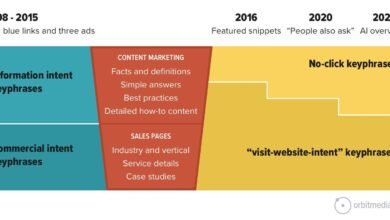
Traditional SEO used to be a simple game of “rank in the top 3, get the clicks.” That game is changing fast. With the rise of AI-first search, we are seeing a shift where users get answers directly on the SERP (Search Engine Results Page) via AI Overviews or within chatbots like ChatGPT and Perplexity.
Consider this: industry projections suggest that by 2026, brands relying solely on traditional SEO links could experience a significant drop in organic traffic—some estimates suggest 20–40% . Furthermore, search behavior is evolving; reports indicate that 86–90% of SEO professionals are already integrating AI tools into their workflows to keep up .
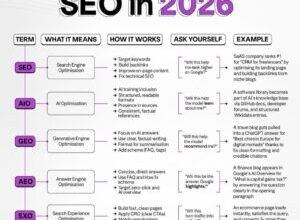
This brings us to Answer Engine Optimization (AEO) and Generative Engine Optimization (GEO). Unlike traditional SEO, which fights for a blue link, AEO aims to position your brand as the cited source in an AI-generated answer. If an AI summarizes the answer directly, your ranking position #1 might yield fewer clicks than it used to, unless you are optimized for that zero-click citation.
When I report to stakeholders now, I don’t just promise traffic. I explain that our goal is comprehensive visibility: capturing clicks where we can, and securing brand mentions in AI answers where clicks are harder to get. (If AI answers the query directly, high rankings alone won’t predict clicks accurately anymore, so our models must adapt.)
What I forecast: inputs, baselines, and KPIs (traditional SEO + AI-first metrics)

Before I open any software, I gather my ingredients. You cannot cook a gourmet meal with bad groceries, and you cannot build a reliable forecast with dirty data. I look for a mix of traditional performance metrics and emerging AI signals.
(If you only have GA4 and Google Search Console, you can still do this—don’t let a lack of enterprise tools stop you. Start with the basics.)
Forecasting Inputs & Metrics Table
| KPI / Input | Where to Get It | Why It Matters | Common Pitfall |
|---|---|---|---|
| Baseline Traffic | GA4 / GSC | Your starting point. If you grow 0%, this is what you get. | Using a holiday spike month as your average baseline. |
| Non-Branded CTR | GSC (Filtered) | Determines how many searchers actually click. | Applying branded CTR (often 50%+) to non-branded terms. |
| Keyword Difficulty | SEO Tools (e.g., Ahrefs/Semrush) | Estimates time/effort to rank. | Ignoring it and forecasting top 3 rankings for impossible terms. |
| Search Volume Trend | Google Trends / Planner | Predicts market demand. | Assuming volume is flat year-round (ignoring seasonality). |
| Conversion Rate | GA4 / CRM | Turns traffic into money. | Forecasting revenue using an inflated global conversion rate. |
| Content Velocity | Internal Resource Plan | How fast you can ship pages. | Planning 50 articles when you only have budget for 5. |
| AI Brand Mentions | Specialized Tools (e.g., Evertune) | Measures AEO success. | Ignoring "share of voice" in AI summaries completely. |
| Schema Coverage | Site Audit / Screaming Frog | Critical for AI understanding. | Forgetting that structured data often powers AI citations. |
I also keep a close eye on Topic Relevance. In the world of Large Language Models (LLMs), being semantically associated with a topic is often more valuable than ranking for a single keyword.
My step-by-step framework to set realistic goals with SEO forecasting tools

This is the exact workflow I use. It moves from the “messy middle” of data gathering to a polished presentation. It usually takes me about a half-day to do this thoroughly for a quarterly plan.
Step 1–2: Define the forecast scope and choose the business outcome first
I never start with “we need more traffic.” That is vanity. I start with the business goal. Are we trying to drive leads for a specific product line? Are we trying to increase ad revenue? Or are we trying to build awareness in a new region?
My Goal Template:
“In the next [90 days], we aim to grow [Metric: e.g., Qualified Leads] for the [Scope: e.g., Enterprise CRM Cluster] by [Target Range], driven by [Strategy: e.g., new content + schema updates].”
Defining the scope early prevents scope creep. If I am forecasting for a local service business, I only look at local intent keywords. If it is a B2B SaaS, I focus on high-intent “software” terms.
Step 3–4: Build a clean baseline (what’s already working)
Next, I export my data. I grab the last 12 months of performance from GSC and GA4. I clean this data ruthlessly:
- Remove bot traffic: If you see a spike of 10k visits from a single city in one day with 0 seconds duration, cut it.
- Segment Brand vs. Non-Brand: This is the biggest rookie mistake I’ve made. If you forecast growth based on “Brand” keywords, you are just forecasting that more people will type your name. That is brand awareness, not SEO. Isolate the non-branded generic terms.
- Note Seasonality: If you are in retail, Q4 is an outlier. Don't project Q4 traffic into Q1.
Step 5: Pick assumptions you can defend (CTR, rankings, conversion rate)
This is where art meets science. A forecasting tool is just a calculator; you have to tell it what to assume. I never use a single number for Click-Through Rate (CTR) anymore because the SERP is too volatile.
My Assumption Tiers:
- Conservative: CTR remains flat or drops (due to AI Overviews). Rankings improve slightly (e.g., Pos 10 → Pos 7).
- Expected: CTR follows standard industry curves . Rankings hit page 1 average.
- Aggressive: We capture "Position 0" or rich snippets. Rankings hit Top 3.
Step 6: Model scenarios (base, upside, downside) instead of one forecast
When I present to leadership, I show three lines on the chart. This protects me. If we hit the “Base” case, we are good. If we hit “Upside,” we are heroes. If we hit “Downside,” we have already discussed the risks (e.g., "if engineering doesn’t fix the site speed issue, we land here").
- Scenario Triggers:
- Content Velocity: Publishing 4 vs. 8 vs. 12 articles/month.
- Technical Fixes: Whether Core Web Vitals are fixed in month 1 or month 3.
- Link Acquisition: Whether we run a digital PR campaign or not.
Step 7–8: Turn the forecast into an execution plan (content + on-page + schema)
A spreadsheet won’t rank. Content will. Once I have the numbers, I map them to a production schedule. This is where tools like an AI article generator can accelerate the process—not by replacing strategy, but by speeding up the drafting of high-quality, structured briefs that align with our model.
My Execution Checklist:
- Content Formats: Use lists, tables, and short paragraphs. (These formats are easier for AI models to parse and cite).
- Schema Markup: Implement FAQ schema and Article schema on every new page. This is non-negotiable for AI visibility.
- Internal Linking: Plan the cluster links before writing a single word.
- Optimization: Ensure titles and headers match the intent we modeled.
I always remind my team: “We can draft faster, but we must edit slower.” Every piece needs a human review to ensure it meets the quality standards we promised in the forecast.
Step 9–10: Set reporting cadence and update the model monthly
The forecast is a living document. I check “Forecast vs. Actual” every month. If we are off by more than 10%, I investigate. Did we publish enough? Did a competitor outrank us? Did a new SERP feature steal clicks?
For high-volume publishing, using an Automated blog generator can help maintain consistency—a key variable in any forecast—but only if you maintain strict quality gates. I look for leading indicators first: are impressions growing? Are we getting indexed? Traffic and leads are lagging indicators; they come later.
A worked example: a simple forecast model you can copy (with a table)

Let’s get concrete. Imagine I am forecasting for a mid-sized US B2B company selling “HR Software.” We want to target the “Employee Onboarding” topic cluster. We plan to publish 10 high-quality articles over Q1.
Scenario: “Employee Onboarding” Cluster Forecast (90 Days)
| Scenario | Articles Published | Assumed Avg. Pos | Projected Clicks/Mo | Conv. Rate (Lead) | Est. Leads/Mo | Confidence Note |
|---|---|---|---|---|---|---|
| Conservative (Downside) | 10 | Page 2 (Pos 12-15) | ~450 | 1.5% | ~7 | Assumes competitive SERP & low authority. |
| Base Case (Target) | 10 | Bottom Pg 1 (Pos 8-10) | ~1,200 | 2.0% | ~24 | Assumes standard growth & good intent match. |
| Aggressive (Upside) | 10 | Top 5 (Pos 3-5) | ~3,500 | 2.8% | ~98 | Requires capturing Featured Snippet/AI Answer. |
Note: These numbers are illustrative. Your actual search volumes and conversion rates will differ.
When I show this to a stakeholder, I say: “We are aiming for the Base Case of 24 leads. We need to ship these 10 articles to get there. If we get lucky with snippets, we might hit 98, but let’s budget for 24.” (I always do a quick sanity check: does 3,500 clicks exceed the total search volume for the topic? If yes, the model is broken. Always check against reality.)
How to choose SEO forecasting tools (and what to look for)

You don’t need a $10,000 enterprise platform to start. I’ve built decent forecasts in Google Sheets. However, as your data grows, specialized tools save you hours of manual entry. Modern AI SEO tool suites are evolving to include predictive features that analyze historical data for you.
Tool Category Comparison
| Category | Best For | Key Limitations | Typical Cost |
|---|---|---|---|
| Spreadsheets (Excel/Sheets) | Total customization & transparency. | Manual data entry; prone to formula errors. | Free |
| Traditional SEO Suites | Quick traffic estimates based on current rankings. | Often ignore seasonality; simplistic CTR models. | $$ |
| Forecasting-Specific Tools | Complex scenario modeling & algorithm impact. | Steep learning curve; requires clean historical data. | $$$ |
| AI/GEO Analytics | Measuring share of voice in AI answers (ChatGPT, SGE). | New technology; metrics are still standardizing. | $$-$$$ |
If I had zero budget, I would start with GSC data in a spreadsheet. If I had $200/month, I’d add a tool that helps me group keywords and track rank history accurately. If I were enterprise, I’d invest in a GEO analytics platform to track AI visibility.
Evaluation checklist: questions I ask before committing to a forecasting stack
- Does it allow me to create multiple scenarios (Best/Worst case)?
- Can I segment data by country (e.g., US only) to avoid global inflation?
- Does it integrate directly with GSC/GA4 to pull baselines?
- Does it offer any visibility metrics for AI Overviews or Answer Engines?
- Can I export the raw data to CSV for my own analysis?
- Does it allow me to adjust the CTR curve assumptions manually?
- Is the reporting visual enough for a C-level executive to understand in 30 seconds?
- Does the support team understand the difference between “ranking” and “visibility”?
Don't get distracted by shiny features. If a tool makes it harder to answer "how many leads will we get?", it's not the right tool.
Common SEO forecasting mistakes (and how I fix them)
I have learned these the hard way, usually while sweating in a boardroom. Here is how to avoid my past failures:
- Mistake: Forecasting off rankings only.
Why it happens: Rankings are easy to see.
The Fix: Forecast traffic and conversions. A #1 ranking on a keyword nobody searches for is worthless. Always multiply by search volume and CTR. - Mistake: Ignoring SERP features and AI answers.
Why it happens: Traditional tools often ignore that 50% of the screen is ads or AI summaries.
The Fix: Apply a "CTR Tax" to your assumptions for informational queries. Assume fewer clicks for "What is X" questions because AI answers them directly. - Mistake: Using linear growth models.
Why it happens: It’s easy to drag a formula cell to the right.
The Fix: SEO growth is usually a step-function (flat, flat, JUMP, flat). Build in a "ramp-up" period (e.g., 3-6 months) for new content to mature. - Mistake: Forgetting technical debt.
Why it happens: Content teams often ignore site health.
The Fix: If your site has critical indexing issues, apply a penalty discount to your forecast until they are fixed. - Mistake: Not updating assumptions.
Why it happens: Set it and forget it mentality.
The Fix: Re-calibrate monthly. If your assumed 2% conversion rate is actually 0.5%, update the model immediately or you will miss your year-end target massively.
FAQs: SEO forecasting tools, AEO/GEO, and AI visibility (beginner-friendly)

What are SEO forecasting tools?
SEO forecasting tools are software or models that use historical data (like search volume, current traffic, and seasonality) to predict future SEO performance. They help marketers estimate how much traffic, revenue, or visibility a specific strategy could generate over time, replacing guesswork with data-backed scenarios.
How is AEO/GEO different from traditional SEO?
Traditional SEO focuses on ranking blue links on a search page to get clicks to your website. AEO (Answer Engine Optimization) and GEO (Generative Engine Optimization) focus on optimizing content so that AI models (like ChatGPT or Google's AI Overviews) understand and cite your brand in their direct answers. Think of SEO as winning shelf space, while AEO is getting the store clerk to recommend your product directly.
What content formats work best for AI visibility?
AI models prefer structured, easy-to-digest information. The best formats include:
- Concise definition lists (e.g., "X is…").
- Bullet points and numbered steps.
- FAQ sections using proper Schema markup.
- One-sentence summaries at the start of complex sections.
(Pro tip: If I can't summarize a section in one simple sentence, I rewrite it. Complexity kills AI citation.)
How can businesses forecast SEO performance in this new landscape?
Businesses should use a hybrid approach. Continue forecasting traditional clicks for transactional queries (where users still click to buy). For informational queries, start tracking "share of voice" or brand mentions in AI responses. Combine these into a holistic view: "We expect X clicks and Y brand citations in AI answers." Start simple, then add sophistication as tools improve.
What makes for a realistic SEO goal today?
A realistic goal is measurable, time-bound, and tied to inputs you control. Instead of "Get #1 rankings," try: "Publish 10 optimized guides to achieve a 15-20% increase in non-branded organic traffic and 50+ monthly leads by Q3." Be transparent about the assumptions (CTR, conversion rate) that support that number.
Conclusion: My 3-point recap + next actions to forecast smarter

Forecasting isn’t about being right 100% of the time—it’s about being less wrong than your competitors and having a plan you can adapt. We have covered a lot, but here are the three things I want you to take away:
- Tools are guides, not gods: Use them to model scenarios (Base/Upside/Downside), not to promise miracles.
- Visibility > Rankings: In 2026, you must optimize for AI citations (AEO) and structured data, not just ten blue links.
- Inputs matter most: Your forecast is only as good as your baseline data and your assumptions about CTR and conversion rates.
Ready to start? Here are your next 3 steps:
- Export your baseline: Go to GSC, filter for non-branded traffic, and export the last 12 months.
- Pick one pilot cluster: Don’t forecast the whole site yet. Choose one product or topic area to model.
- Build your scenarios: Create a simple spreadsheet with Conservative, Expected, and Aggressive outcomes based on the content you plan to ship.
Get your data into a spreadsheet, take a deep breath, and start planning. You’ve got this.