SEO topic clustering: Why topic clusters beat standalone keywords in 2026
I’ve seen this scenario play out dozens of times: A marketing manager publishes 20 blog posts targeting specific high-volume keywords. For the first two months, traffic ticks up. Then, it stalls. New posts don’t rank, older posts start swapping positions in the SERPs, and the “up and to the right” growth chart flattens out.
The problem isn’t usually the writing quality or even the technical SEO. The problem is the architecture. In 2026, search engines don’t just look for keywords on a page; they look for topical authority across a domain. If you are still relying on a “one keyword, one post” strategy, you are likely building a library of scattered pamphlets rather than an authoritative encyclopedia.
This guide explains exactly how I fix that plateau using SEO topic clustering. It’s not a magic trick, but a structured framework that helps search engines understand your expertise and helps users navigate your content without hitting a dead end.
What you’ll learn (and what you can implement today)

- The core difference: Why keyword-targeted pages often cannibalize each other while clusters compound value.
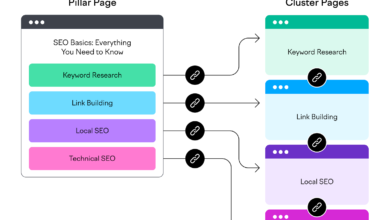
- The architecture: How to structure pillars, clusters, and internal links (with a visual explanation).
- The workflow: A 10-step process I use to build clusters from scratch—or retroactively fix messy blogs.
- The business case: Real-world data on why this approach stabilizes traffic and improves conversion.
- Common pitfalls: The mistakes I see most often, like building “orphan” clusters or misjudging SERP intent.
What is SEO topic clustering (and what a topic cluster looks like)

At its simplest, SEO topic clustering is a method of organizing content so that a single broad “pillar” page links out to multiple detailed “cluster” pages, which all link back to the pillar and to each other. Instead of casting a wide net with unconnected articles, you are building a dense web of related content.
Think of it like a grocery store. If you want “fruit,” you go to the produce section (the Pillar). Inside that section, you have specific bins for apples, bananas, and oranges (the Clusters). If the apples were scattered in Aisle 4, Aisle 9, and by the checkout, you’d leave frustrated. Search engines—and your customers—feel the same way about disorganized content.
The 3 building blocks: pillar page, cluster pages, and internal links
When I audit a site, I look for these three distinct components. If one is missing, the cluster fails.
- The Pillar Page (The Hub): A broad, high-level guide covering the core topic (e.g., “The Ultimate Guide to Email Marketing”). It touches on every aspect briefly but links out for details.
- Cluster Pages (The Spokes): Specific, deep-dive articles targeting long-tail keywords and sub-topics (e.g., “Email Marketing Metrics to Track,” “Best Time to Send Emails”). These answer specific user questions.
- Internal Links (The Glue): Hyperlinks that connect the pillar to the clusters and the clusters to each other. This is how authority flows from one page to the entire group.
Mini example cluster (template you can copy)

Here is a concrete example for a B2B SaaS context. Notice how the intent shifts for each page.
Core Topic: Customer Onboarding
- Pillar Page: Complete Guide to SaaS Customer Onboarding (Overview)
- Cluster Page 1 (Process): A 10-Step Customer Onboarding Checklist
- Cluster Page 2 (Definition/Strategy): What is Time-to-Value and Why It Matters?
- Cluster Page 3 (Tools): Top 5 Customer Onboarding Software Tools Compared
- Cluster Page 4 (Tactical): How to Write a Welcome Email Series (Templates)
- Cluster Page 5 (Metrics): Onboarding KPIs: How to Measure Success
- Cluster Page 6 (Troubleshooting): Why Users Churn During the First 30 Days
Topical vs. keyword SEO: what changed in search (intent, entities, and AI summaries)

Why did we stop focusing solely on keywords? Because search engines got smarter. With updates like BERT, MUM, and the integration of AI models (Gemini, SGE), Google no longer just matches character strings. It tries to understand entities—concepts and how they relate to one another.
If I search for “how to build a content calendar,” Google knows that “templates,” “tools,” and “social media planning” are semantically related entities. If your website only has one narrow post about the calendar but nothing about the tools or planning process, Google views your coverage as thin. Topical authority is gained when you cover the entity from multiple angles, proving to the algorithm that you are a subject matter expert.
Why keyword-first content breaks: thin coverage, cannibalization, and mismatched intent
When I see a site plateau, it usually shows these symptoms of a keyword-first approach:
- Keyword Cannibalization: You have three different posts targeting “best SEO tips,” “SEO advice,” and “SEO strategy.” They fight for the same spot, and often none of them rank well.
- Intent Mismatch: You wrote a blog post for a keyword where users actually want a software tool or a video tutorial.
- Orphan Pages: Great content exists, but it has no internal links pointing to it, so crawlers rarely visit.
What the data suggests about topic clusters (traffic, stability, engagement)

While every site is different, the shift to clustering generally produces measurable improvements in stability and engagement. Based on industry observations and case studies from 2025, here is the impact often seen when restructuring a flat blog into clusters:
| Metric | Observed Trend | Business Context |
|---|---|---|
| Organic Traffic | ~30% increase | Comprehensive coverage captures more long-tail variations. |
| Ranking Stability | 2.5x longer duration | Broad authority protects against minor algorithm tremors. |
| Bounce Rate | ~45% reduction | Relevant internal links keep users reading. |
| Conversion Rate | ~25% lift | Users trust the brand more after reading deep content. |
Why businesses win with SEO topic clustering (and when it’s worth the effort)
For US-based businesses, especially in B2B or service industries, clustering is more than just SEO—it’s user experience. It mirrors the buyer’s journey. A potential client might enter your site via a specific “how-to” question (Cluster Page), realize they have a bigger problem (Internal Link to Pillar), and then evaluate your solution (Link to Product Page).
However, it requires resources. If you are a local coffee shop with a five-page website, you don’t need a massive topic cluster. But if you are selling software, consulting, or e-commerce goods, the investment pays off in scalability.
Quick comparison table: keyword-first vs cluster-first content planning
| Feature | Keyword-First Approach | Topic Cluster Approach |
|---|---|---|
| Primary Goal | Rank for a specific phrase | Own an entire subject area |
| Planning Unit | Single URL | Group of 5-20 URLs |
| Link Structure | Random or chronological | Structured (Hub & Spoke) |
| Cannibalization Risk | High | Low (Distinct intents) |
| Best Use Case | News, Viral Trends | Evergreen Educational Content |
A realistic timeline and resourcing for beginners

Don’t try to boil the ocean. If you are a solo marketer or small team, here is a feasible 90-day rollout:
- Month 1 (Research & Map): Audit existing content, choose one core topic, and map out the pillar + 6 cluster pages.
- Month 2 (Execution): Update relevant old posts to fit the cluster and write the missing cluster pages.
- Month 3 (Pillar & Link): Write the comprehensive pillar page, implement all internal links, and publish.
How I build an SEO topic clustering strategy: a step-by-step workflow you can reuse
This is the exact workflow I use. It moves from business value to technical execution. Before you write a single word, I recommend having a “Workflow at a glance” checklist: Audit → Map → Draft Clusters → Draft Pillar → Link → Refresh.
Step 1: Pick the core topic (start from business value, not volume)
Start with what pays the bills. Don’t pick a topic just because it has high search volume. Pick a topic that is adjacent to your revenue. If you sell HR software, “Employee Onboarding” is a revenue-driving topic; “Office Decor Ideas” might get traffic, but it won’t convert. Choose topics where you have genuine expertise and can sustain 10+ articles.
Step 2: Do keyword + intent research (keywords become inputs, not the plan)
I still do keyword research, but I treat the list as raw ingredients, not the menu. I dump all relevant keywords for a topic into a spreadsheet and tag them with intent labels:
- (I) Informational: “How to…”, “What is…” (Blog content)
- (C) Commercial Investigation: “Best tools…”, “Review…” (Comparison pages)
- (T) Transactional: “Buy…”, “Pricing…” (Product pages)
Step 3: Validate intent with the SERP (so you don’t build the wrong page)
Here is where many fail: they guess the intent. Before finalizing a cluster page, I Google the main keyword. If the top 5 results are YouTube videos, I shouldn’t write a 2,000-word essay. If they are product pages, a blog post won’t rank. The SERP tells you the format Google wants. I learned this the hard way after writing a “guide” for a query where users just wanted a simple calculator tool.
Step 4: Build your cluster map (pillar + 6–12 clusters)
Create a simple plan before drafting. This prevents overlap.
| Page Type | Target Topic/Keyword | Primary Intent | Internal Link Rule |
|---|---|---|---|
| Pillar | Ultimate Guide to X | Broad Info | Links to all clusters below |
| Cluster 1 | How to do X step-by-step | How-to | Links up to Pillar |
| Cluster 2 | Best Tools for X | Commercial | Links up to Pillar |
| Cluster 3 | X Templates | Resource | Links up to Pillar |
Step 5: Choose a build order (cluster-first vs pillar-first)
There are two schools of thought here. I usually prefer the Cluster-First approach. Why? Because it’s easier to write a summary (the pillar) when you have the detailed chapters (the clusters) already finished. However, if you need a “doorway” page immediately for sales enablement or ads, writing the Pillar-First is acceptable. Just remember to go back and add the links later.
Step 6: Write cluster pages to win long-tail queries (depth + clarity)
Each cluster page has one job: answer a specific question better than anyone else. This is where you go deep. Include examples, screenshots, and specific steps. To maintain consistency across 10 or 20 cluster pages, I often use an AI article generator to build the initial structural drafts. This speeds up the process significantly, but I always review manually to ensure the unique business angle is present. A tool can handle the structure; the human adds the insight.
Step 7: Write the pillar page last (make it the best doorway into the topic)
The pillar page is your “Table of Contents” on steroids. It shouldn’t be a wall of text. Use a clickable Table of Contents at the top. Write short summaries for each sub-topic and use a clear “Read more about [Topic]” link to send users to your cluster pages. The goal of a pillar is navigation, not exhaustion.
Step 8: Internal linking that actually compounds authority (rules I follow)
Linking is where the magic happens. Here are my rules:
- Pillar links to every cluster: Usually in the body text where the sub-topic is introduced.
- Clusters link back to the pillar: Usually in the first 100 words (e.g., “Part of our larger guide on [Topic]”).
- Clusters link to neighbors: If Cluster A mentions a concept detailed in Cluster B, link them.
- Consistent Anchor Text: Don’t use “click here.” Use descriptive text like “email marketing metrics.”
Step 9: On-page SEO inside a cluster (titles, headings, schema, and refresh cadence)
Don’t overcomplicate this. Ensure your H1 matches the user intent. Use H2s for major steps. If it’s a Q&A style page, I add FAQ Schema to help capture more real estate in the SERPs. The most important “on-page” factor for clusters is freshness—I aim to update high-priority clusters every 6-9 months to keep the “Last Updated” date current.
Step 10: Measure and iterate (what I track in Search Console + analytics)
Results aren’t instant. I track progress in Google Search Console using a simple heuristic:
| Metric | What it indicates | What I do next |
|---|---|---|
| Impressions rising | Google is testing your content. | Wait. Do not change major elements yet. |
| High Impressions, Low Clicks | Title/Desc isn’t enticing. | Optimize Meta Title and H1. |
| High Bounce Rate | Content doesn’t match intent. | Rewrite the intro or add better visuals. |
Optional: Tools that speed up clustering (without lowering editorial standards)
Building a massive content library by hand is slow. I use tools to handle the heavy lifting of keyword grouping and outlining. A dedicated SEO content generator like Kalema can analyze the SERP to group keywords by intent automatically and draft content that aligns with those clusters. However, remember the “Newsroom” rule: tools provide the draft, but you provide the editorial verification. I never ship content without a human reviewing the facts and tone.
Optional: Optimizing clusters for AI answer engines (SGE/Gemini/Perplexity-style results)
AI search engines crave structure. To improve your chances of being cited in an AI summary, format your cluster pages with:
- Direct, concise answers immediately after headings.
- Bullet points and numbered lists for steps.
- Data tables (AI loves extracting data from tables).
- Clear, authoritative definitions of key terms.
Where keywords still fit: how I turn keyword lists into cluster pages (without going backward)
I know it feels scary to abandon the “keyword list” you spent weeks building. The good news is you don’t have to. Keywords are still vital for discovery. I still start with keywords, but I don’t let them dictate the architecture.
I use keyword research to find the sub-questions people ask. If my cluster is “Remote Work,” keyword research tells me people are searching for “zoom fatigue,” “async communication,” and “home office setup.” Those become my cluster pages. I use the long-tail keywords (e.g., “best ergonomic chair for small spaces”) as H2s within those pages.
A simple anti-cannibalization rule: one page = one primary job
To avoid overlap, ask yourself: “Does this new page have a distinct job?”
- Job: Definition. URL:
/what-is-customer-churn - Job: Calculation. URL:
/how-to-calculate-churn-rate(Distinct enough? Maybe not. Check SERP. If results are the same, merge them.) - Job: Strategy. URL:
/reduce-customer-churn-strategies(Distinct job.) - Job: Tooling. URL:
/best-churn-reduction-software(Distinct job.)
Common SEO topic clustering mistakes (and how I fix them)
I’ve made plenty of mistakes rolling this out. Here are the ones you can avoid:
- The “Everything is a Pillar” Mistake: Trying to make every blog post 3,000 words. Fix: Let cluster pages be specific and concise. Only the pillar needs to be broad.
- The “Orphan Cluster” Mistake: Writing great cluster pages but forgetting to link them back to the pillar. Fix: Run a site crawl to find pages with 0 in-links.
- The “Mixed Intent” Mistake: Writing a pillar page that tries to sell a product too aggressively. Fix: Keep pillars informational. Use the internal links to guide users to commercial pages when they are ready.
- The “Set and Forget” Mistake: Publishing a cluster and never updating it. Fix: Set a calendar reminder to review your top pillars every quarter.
Mistake-to-fix checklist (5–8 items)
- Check URL structure: Ensure slugs are clean (e.g.,
/topic/subtopicis optional, but clarity is mandatory). - Verify links: Click through your pillar page. Are any links broken?
- Audit Anchors: Are you using varied anchor text, or is every link just “read more”?
- Review SERPs: Has Google’s intent changed for your main keywords?
- Check Cannibalization: Are two pages ranking for the same term on page 2? Merge them.
FAQs + next steps: start your first topic cluster this week
FAQ: What exactly is a topic cluster in SEO?
A topic cluster is a group of interlinked web pages built around one broad central topic (pillar) and multiple specific sub-topics (clusters). It’s like a folder system for your website that helps search engines understand the relationship between your articles.
FAQ: Why is topic clustering more effective than traditional keyword targeting?
It’s more resilient. Traditional keyword targeting relies on a single page ranking for a single phrase. Clustering builds a network of authority; if one page drops slightly, the others prop it up. It also aligns better with how modern semantic search engines understand content.
FAQ: Do keywords still matter when using topic clusters?
Absolutely. I still start with keywords to understand what people are searching for. However, I map those keywords to specific user intents and group them, rather than writing a separate post for every single keyword variation.
FAQ: What’s SERP-based clustering, and why is it important?
SERP-based clustering means looking at the search results to see if Google ranks the same pages for two different keywords. If the results are identical, those two keywords belong on the same page. If the results are different, you need two separate pages.
FAQ: How do I start building topic clusters effectively?
Start small. Don’t try to restructure your whole site at once. Pick one core topic where you already have some content. Audit what you have, identify the gaps (missing sub-topics), write the missing pieces, and create a pillar page to tie them all together.
Conclusion: 3-bullet recap + 3–5 next actions
If you take nothing else away from this guide, remember these three things:
- Structure signals authority. Search engines trust organized libraries, not scattered papers.
- Intent beats volume. Focus on answering the user’s specific question (intent) rather than stuffing keywords.
- Links are the nervous system. Without internal linking, your cluster is just a pile of pages.
Your Next Actions (Start this week):
- Pick one topic central to your business revenue.
- Map out 6 cluster pages based on questions your customers ask.
- Check the SERPs for each topic to ensure you know the right format (guide vs. list vs. tool).
- Publish two cluster pages per week and link them together.
- Check Google Search Console in 30 days to see impressions grow.