Introduction: I built this keyword research checklist so beginners can go from “ideas” to a real strategy

I used to start every new project with a spreadsheet containing 500 keywords, sorted by search volume. It looked impressive, but it was practically useless. I’d stare at the rows, paralyzed, asking myself: “Okay, but which one actually makes money?”
The problem wasn't a lack of data; it was a lack of process. Beginners often chase vanity metrics (high volume), ignore search intent, and end up writing content that ranks on page 3 for the wrong queries. I learned the hard way that 100 high-intent visitors are worth more than 10,000 random scanners.
This 20-point keyword research checklist is the exact workflow I use today. It’s designed to take you from a seed idea to a prioritized content calendar. It focuses on business value first, validates intent via the SERP (Search Engine Results Page), and structures keywords into clusters so you don't cannibalize your own rankings.
Whether you are an in-house marketer or a founder doing it all, this is a newsroom-grade approach: minimal hype, maximum rigor, and practical outputs you can actually use.
The 20-Point Keyword Research Checklist (at-a-glance) + what “good” looks like

Before we dive into the details, here is the full map. I treat this like a Standard Operating Procedure (SOP). When I hand this to a teammate, I expect them to follow these steps linearly.
Time Expectation: If you are doing a “lite” version for a single blog post, this takes about 2 hours. If you are mapping a whole site strategy, budget 2–3 focused days.
The Rule of Thumb: If I can’t describe the person searching for a keyword in one simple sentence (e.g., “A small business owner looking for cheaper accounting software”), I don’t target the keyword yet.
| Phase | Checklist Point | Why it matters | Output Artifact |
|---|---|---|---|
| 1. Seeds | Define goals & audience | Prevents targeting irrelevant traffic. | User Persona Doc |
| Internal mining (Support/Sales) | Finds words customers actually use. | Seed List A | |
| External mining (Competitors) | Reveals market gaps. | Seed List B | |
| 2. Expansion | Tool-based variations | Finds standard long-tail terms. | Raw Keyword Dump |
| Zero-volume/Forum mining | Captures hidden, high-intent demand. | “Hidden Gems” List | |
| Voice/Question formats | Aligns with natural language search. | FAQ List | |
| 3. Validation | Label Intent (Info/Comm/Trans) | Ensures you write the right format. | Intent Labels |
| 3-Second SERP Test | Confirms what Google wants to show. | Pass/Fail Score | |
| Difficulty & Prioritization | Balances effort vs. reward. | Prioritized Shortlist | |
| 4. Strategy | Competitor Gap Analysis | Finds low-hanging fruit. | Gap Opportunities |
| Clustering (Topic Pillars) | Prevents cannibalization. | Topical Map | |
| 5. Execution | Funnel Mapping | Matches content to buyer journey. | Content Calendar |
| Brief Creation | Guides the writer (or AI). | Content Briefs |
Points 1–5: Start with seed keywords and business context (so you don’t chase the wrong traffic)

Most beginners skip this and go straight to a keyword tool. That is a mistake. Tools give you data, not strategy. To build a list that drives revenue, you need to start with your business reality.
FAQ: What is a seed keyword?
A seed keyword is a broad, core term that defines your product or topic. It’s the root. For an online shoe store, seeds are “running shoes,” “leather boots,” or “sneaker care.” You won't necessarily rank for these, but you grow your strategy from them.
Point 1: Define the goal (leads, trials, sales, or education) and the audience
I always ask: “What action do we want the user to take?” If the goal is software trials, I focus on “bottom of funnel” (BOFU) comparisons. If the goal is brand awareness, I look for “top of funnel” (TOFU) educational questions.
Beginner Trap: Trying to sell a product on an informational keyword. If someone searches “how to tie shoes,” they aren't looking to buy laces yet.
Point 2: Write a one-line positioning statement
This filters out bad ideas instantly. Fill in this blank:
“We create content for [Target Audience] who want to [Solve Problem] unlike competitors who [Competitor Weakness].”
If a keyword doesn't fit that sentence, delete it.
Point 3: Collect seed keywords from internal sources
Your best keywords often live in your customer support inbox, not in a tool. I recently dug through a client's support tickets and found users kept asking about “audit trail compliance.” The marketing team was calling it “activity logs.” We switched the terminology and traffic spiked because we matched the customer's vocabulary.
Sources to mine:
- Sales call recordings
- Support ticket subject lines
- Site search data (what are they typing in your search bar?)
Point 4: Collect seed keywords from external sources
I don’t copy competitors, but I do study their vocabulary. Look at their navigation menu. The labels they use for categories (e.g., “Men’s Performance Gear” vs. “Gym Clothes”) are often well-researched seed keywords.
Point 5: Set your initial boundaries (what you will NOT target yet)
Create a “Stop-Doing” list. This saves hours of debate later.
- Too Broad: e.g., “Shoes” (Impossible difficulty).
- Wrong Intent: e.g., “Free XYZ” (If you are a premium service).
- Wrong Geo: e.g., Terms that imply UK spelling if you only ship to the US.
Points 6–10: Expand into long-tail, hidden, and voice-search keywords (without inflating your list)

Now that we have seeds, we expand. In the old days, we just used a standard tool. Today, I use a mix of tools, AI, and social listening. AI is particularly good here—you can use an AI SEO tool to brainstorm lateral concepts you might miss, but remember: AI generates ideas, not facts. My job is to verify everything it suggests.
The “Hidden Gems” Comparison Table
| Source | Best For | My Example Prompt / Action |
|---|---|---|
| Traditional Tool | Standard volume data | “Show me keywords with min. 100 volume.” |
| Reddit / Quora | Pain points & natural language | site:reddit.com "my back hurts" chair |
| Google PAA | FAQ section headers | Click the PAA dropdowns until 10 more appear. |
Point 6: Expand with a keyword tool (variants, questions, modifiers)
I look for specific modifiers that signal intent. A beginner searches “CRM software.” A buyer searches “CRM software for real estate agents pricing.”
Money Modifiers to add: Best, Top, Vs, Alternatives, For Small Business, Pricing, Review.
Point 7: Use “People also ask” + autocomplete to capture real phrasing
Google tells you exactly what related questions people have. I type my seed keyword into Google and don't hit enter—I just read the autocomplete suggestions. Then, I search it and scrape the “People Also Ask” (PAA) box. These questions often make perfect H2 headings in your blog posts.
Point 8: Mine forums and communities for zero-volume opportunities
Tools often show “0 volume” for new or very specific problems. This is where you can win big. If 50 people are discussing a specific error code on Reddit, that's 50 high-intent searchers that Ahrefs or Semrush might miss.
Action: Search site:reddit.com "seed keyword" and look for thread titles. Capture the exact phrasing used by the community.
Point 9: Add social listening inputs (TikTok, YouTube)
Social platforms are search engines now. I’ve noticed TikTok users often use problem-based phrasing (e.g., “acne safe makeup”) before it trends on Google. If you spot a term taking off on social, add it to your list to test.
Point 10: Capture voice-search and full-question formats
With the rise of voice assistants, natural language queries are exploding. Some data suggests nearly 72% of voice searches use conversational phrasing .
Mini Checklist: Does the keyword sound like something you’d yell at a smart speaker while cooking? (e.g., “How long do I boil an egg for soft center?”). If yes, target the full question, not just “boil egg time.”
Points 11–14: Validate keyword intent and competitiveness with a quick SERP workflow

Ideas are cheap. Validation is where the work happens. You must check if you can actually rank.
The Validation Scorecard
| Query | Intent | SERP Features | Decision |
|---|---|---|---|
| "best crm" | Commercial | Listicles, Comparison tables | Keep (Need listicle) |
| "crm login" | Navigational | Login pages | Discard (Can't rank) |
Point 11: Label intent (and don’t fight it)
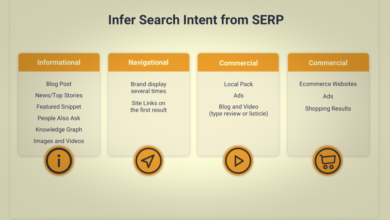
There are four main types of intent:
- Informational: “What is SEO?” (Wants a guide)
- Commercial: “Best SEO tools” (Wants reviews/comparisons)
- Transactional: “Buy Ahrefs subscription” (Wants to buy)
- Navigational: “Ahrefs login” (Wants a specific page)
My Hard Lesson: I once wrote a 2,000-word guide for a keyword that was purely transactional. Google only wanted to show product pages. I ranked #50. Don't fight the SERP.
Point 12: Run the 3-second SERP test
Before I open any tool, I open the SERP (Incognito mode). I scan the top 3 results. Are they blog posts? Product pages? Calculators? YouTube videos? Your content must match the format of the winners. If the top 3 results are all YouTube videos, you probably need a video, not a blog post.
Point 13: Check difficulty signals without over-trusting a single metric
“Keyword Difficulty” (KD) scores in tools are estimates, not gospel. I look for cracks in the armor:
- Are there forums (Reddit/Quora) on page 1? (Huge opportunity)
- Is the content outdated (from 2019)?
- Are the titles poorly written or irrelevant?
If I see these signs, I’ll target the keyword even if the “Difficulty” score says Hard.
Point 14: Prioritize by business value + confidence
I use a simple formula: Business Value (1-5) × Ability to Rank (1-5).
- High Value, High Ability = Do First.
- High Value, Low Ability = Long-term Project.
- Low Value, High Ability = Traffic builder (good for links).
Points 15–17: Do competitor gap analysis, then cluster keywords into topics that won’t cannibalize

FAQ: Why cluster keywords?
Clustering means grouping related keywords that share the same intent into a single page. This prevents “cannibalization,” where you have five weak pages fighting each other instead of one strong page that ranks for everything.
Point 15: Choose 3–5 true competitors
Your business competitors aren't always your SEO competitors. If you sell coffee, Starbucks might be a business competitor, but a coffee blog is your SEO competitor. Identify who is ranking for your seed keywords.
Point 16: Extract gaps and “under-optimized” terms
I look for keywords where my competitors have “thin” content. Maybe they wrote 300 words on a topic that deserves 1,500. Or they missed the recent updates in the industry. These are your best opportunities to overtake them.
Point 17: Cluster by intent and assign a single primary target per page
The Workflow:
- Dump your validated keywords into a list.
- Group them by topic (e.g., “Cold Brew” group).
- Check intent: Does “how to make cold brew” show different results than “cold brew recipe”? If the results are the same, merge them into one page.
- Pick one Primary Keyword (usually the highest volume) and list the rest as Secondary Keywords.
Points 18–20: Turn keyword clusters into a publishable content strategy

Research is useless if it doesn't turn into content. This phase is about bridging the gap between data and drafting. This is where tools help scale—once you have a validated plan, you can use an SEO content generator to draft briefs and outlines quickly, ensuring you hit all the secondary keywords without missing a beat.
Point 18: Map clusters to the funnel (TOFU/MOFU/BOFU)
I map every cluster to a stage:
- TOFU (Awareness): “What is cold brew?” → Blog Guide.
- MOFU (Consideration): “French press vs drip coffee” → Comparison Article.
- BOFU (Decision): “Buy coarse ground coffee” → Product Category Page.
Point 19: Draft an intent-matched outline + on-page elements
Before writing a single word, I create a brief. It includes:
- H1 Title: Must include the primary keyword.
- H2s: Should target secondary keywords and PAA questions.
- Angle: What is unique? (e.g., “The only guide tested by baristas”).
Quality Check: I always ask, “Does this outline actually answer the user's question faster than the current #1 result?”
Point 20: Measure outcomes and feed learnings back
SEO is iterative. Once published, I watch Google Search Console (GSC). I look for keywords with high impressions but low clicks (CTR)—this usually means my title tag isn't compelling enough, or I missed the search intent. I tweak, re-index, and watch again.
Common keyword research mistakes (and the fixes I rely on)

I’ve made all of these mistakes, so hopefully, you don’t have to.
- Mistake: Chasing Volume (Vanity Metrics).
Symptom: Lots of traffic, zero conversions.
Fix: Prioritize intent. I’d rather rank #1 for “emergency plumber near me” (10 searches) than “history of plumbing” (1,000 searches). - Mistake: Trusting AI blindly.
Symptom: Targeting keywords that don't actually exist or have zero intent.
Fix: Trust but verify. Always run the 3-second SERP test on AI suggestions. - Mistake: Cannibalization (Self-Competition).
Symptom: Two of your pages flip-flop in rankings for the same term.
Fix: Cluster strictly. Map one primary keyword to one URL. Merge similar pages. - Mistake: No Documentation.
Symptom: You forget what you targeted 6 months ago.
Fix: Use a simple spreadsheet. Columns: Keyword, URL, Status, Date Published.
FAQs + conclusion: how I refresh a keyword research checklist every 3–6 months

How often should a keyword research checklist be revisited?
I do a deep refresh every 3–6 months. However, I have three “trigger events” that make me look earlier: a sudden drop in traffic, a new product launch, or a major competitor entering the market.
How can I find low-competition or hidden keywords?
Go where the tools don't go. Read Reddit threads, check blog comments, and look at site search data. If people are asking about it, and no one has written about it, it's a goldmine.
Conclusion recap + next actions
Keyword research isn't about finding the “perfect” word; it's about understanding your user better than anyone else.
Recap:
- Start with business goals, not tools.
- Validate every keyword against the SERP (intent is king).
- Cluster topics to build authority and prevent cannibalization.
Your Next Moves:
- List your top 5 products/services (Seeds).
- Spend 30 minutes on Reddit finding the “real” problems users have with them.
- Validate a shortlist of 10 keywords and group them into one topic cluster.
Once you have your validated list and briefs ready, you can speed up the actual writing process using an AI article generator to get your first draft done. But remember—the magic is in the research you just did.