How to Resell On-Page SEO Services Profitably (A Beginner-Friendly Scaling Guide)
There is a specific moment in every agency owner’s life where the celebration stops and the panic sets in. You just closed three new SEO retainers in one week. The revenue looks great on paper, but then reality hits: who is actually going to do the work?
I have been there. I was juggling sales calls in the morning, optimizing title tags at midnight, and praying I didn’t miss a technical audit deadline. The bottleneck wasn’t leads; it was delivery capacity. That is usually when we start looking at reselling (or white-labeling) on-page SEO services.
But reselling isn’t just about finding someone cheaper to do the work. It is an operational strategy that either scales your business or destroys your reputation. If I put my brand on the work, I own the quality—period.
In this guide, I will walk you through the economics of reselling (wholesale vs. retail pricing), how to package deliverables so they don’t spiral out of scope, and the exact fulfillment workflow I use to ensure quality. We will look at how to secure 35–55% margins without sacrificing the trust you have built with your clients.
What it means to resell (white-label) on-page SEO—and why it can be profitable

Let’s strip away the jargon. Reselling, or white-labeling, simply means I sell the SEO service to the client, a partner (agency or specialized contractor) fulfills the work, and I present it under my agency’s brand. I own the strategy and the client relationship; they own the execution.
Why does this work financially? It shifts your business model from fixed costs to variable costs. When you hire full-time in-house staff, you are paying salaries, benefits, and tool subscriptions whether you have 5 clients or 50. With a white-label model, you only pay for fulfillment when you have a paying client.
Industry data suggests that white-labeling can reduce the number of clients needed to break even from typically 5–7 (with in-house staff) to just 1–2. You aren’t carrying the overhead of office rent or idle staff. You are simply marking up a service.
However, it only works if you understand the deliverables. Typically, we are reselling:
- Audits: Technical and content analysis.
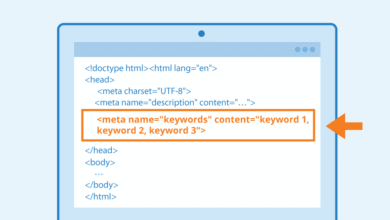
- On-page optimization: Updating titles, metas, H1s, internal links, and schema.
- Content updates: Refreshing old articles or creating new landing pages.
- Technical fixes: Solving indexation bloat or Core Web Vitals issues.
I’ve learned the hard way that if you don’t define these clearly, “on-page SEO” quickly becomes “fix everything on my website forever,” which is the fastest way to kill your margin.
Reselling vs hiring in-house vs freelancers: what changes operationally

Here is how I view the trade-offs when trying to scale:
- In-house Team: Maximum control and culture alignment, but high fixed cost and risk. If a client churns, you still make payroll.
- Freelancers: Flexible and often affordable, but management-heavy. If your writer gets sick or ghosts you, your pipeline stalls.
- White-label Partner: Lower control than in-house, but high stability. A good partner has a “bench” of talent, so if one person is out, the work still ships. It offers the best predictability for scaling revenue without scaling headaches.
The profitability triangle: pricing discipline, scope control, and proof

Before we get into the math, keep this framework in mind. I only stay profitable when three things happen simultaneously:
- Scope Control: The deliverables are finite and defined.
- Pricing Discipline: The price covers the vendor cost plus my project management (PM) time plus margin.
- Proof: The reporting proves value so the client keeps paying.
Build a resellable on-page SEO offer: packages, scope, and deliverables clients understand

One of the biggest mistakes beginners make is selling “custom SEO” to everyone. Custom is hard to resell because it is hard to spec. To scale, you need packages. I generally group them into tiers that are easy for clients to say “yes” to.
| Package Tier | Deliverables | Ideal Client | Fulfillment Effort |
|---|---|---|---|
| Starter Audit | Technical Audit, Keyword Map, Roadmap | New client, DIY budget | Low (One-time) |
| Optimization Sprint | Fixing top 20 pages (Titles, Meta, Content tweaks) | Site launch or cleanup | Medium (Project) |
| Monthly Retainer | 4 new articles, 10 page refreshes, reporting | Growth-focused SMBs | High (Recurring) |
| Local SEO | GMB management, location page optimization | Service area businesses | Medium (Recurring) |
Notice I use units like “top 20 pages.” I require written approval on the URL inventory before pricing becomes final. If a client adds 10 pages later, that is a change order, not a favor.
Minimum viable deliverables for on-page SEO (what I won’t sell without)
If I can’t measure it or defend it, I won’t sell it. Every package must include these essentials:
- Baseline Audit: To catch technical blockers before we start.
- Keyword Mapping: Assigning specific intent to specific URLs so we aren’t cannibalizing traffic.
- Meta & Header Optimization: The bread and butter of on-page relevance.
- Internal Linking Strategy: Because orphaned pages don’t rank.
- Reporting Cadence: A monthly PDF or dashboard link.
Scope guardrails that protect margin (and prevent client churn)
Scope creep is the silent killer of agency margins. Here are snippets I actually use in my proposals to protect the profitability triangle:
- Revision Limit: “Includes two rounds of revisions per content piece. Additional rounds billed at $X/hour.”
- Definition of Done: “Implementation is considered complete upon client sign-off or 5 business days without feedback.”
- Technical Boundaries: “Includes recommendations for dev implementation. Code changes to the theme/CMS are out of scope unless specified.”
Pricing math: how to resell on-page SEO services profitably (without guessing)

Let’s do the math. Agencies typically aim for a gross margin of 35–55%. Any lower, and you aren’t covering your administrative time. Any higher, and you might be under-servicing the account, risking churn.
The Formula:
(Wholesale Cost + Internal PM/QA Cost) ÷ (1 – Desired Margin %) = Retail Price
Example (Monthly Retainer):
Let’s say my white-label partner charges me $1,200/month for a package (4 blogs + on-page fixes).
I estimate it takes me 2 hours a month to manage the client and QA the work. If my internal cost is $125/hr, that’s $250.
Total Cost: $1,450.
Desired Margin: 42%.
Retail Price: $1,450 ÷ 0.58 = ~$2,500.
In this scenario, I pay $1,450 (cash + time) and bill $2,500, leaving me with $1,050 in gross profit per client. If I didn’t account for my PM time, my real margin would be much lower.
Wholesale vs retail benchmarks (table)
Note: These ranges vary significantly by niche, site size, and complexity.
| Deliverable | Typical Wholesale Range | Typical Retail Range | Notes |
|---|---|---|---|
| Per-URL Optimization | $80 – $250 per page | $150 – $400 per page | Depends on word count & intent depth |
| Technical Audit | $600 – $2,500 | $1,500 – $5,000+ | SMB vs Enterprise sites |
| Local SEO (Monthly) | $350 – $1,200 per location | $600 – $2,000 per location | Includes GMB + citations |
| Content Article | $100 – $300 | $250 – $600 | Varies by word count & expertise |
Pricing models that scale: retainer, per-deliverable, tiered, hybrid
I use different models depending on the client’s maturity:
- Retainers: The holy grail for valuation. I use this for clients who need consistent growth (content + link maintenance).
- Per-deliverable: Good for “cleanup” projects or audits. It’s flexible but makes cash flow lumpy.
- Tiered Packages: This is the easiest to sell. “Silver, Gold, Platinum” options help clients self-select based on budget.
- Hybrid: A base retainer plus a performance bonus. I only do this if I have full control over the site, because attribution is messy.
Margin discipline checklist (35–55% target)
- Provider Cost: Did I get a fixed quote?
- PM Hours: Did I factor in 2–4 hours of my time for comms?
- QA Buffer: Did I budget time for reviewing the work?
- Tool Costs: Am I paying for Ahrefs/Semrush seats for this client?
- Payment Terms: Do I get paid by the client before I have to pay the vendor? (Cash flow is king).
How to resell on-page SEO services profitably: a step-by-step fulfillment workflow

Profitability isn’t just about pricing; it’s about efficiency. If you are reinventing the wheel for every client, you are losing money. Here is the workflow I use to move a client from “Sold” to “Live” without losing my mind.
Step 1: Sales handoff → define goals, KPIs, and the page list
Before a partner touches the account, I need clarity. I use a simple onboarding checklist:
- Business Goals: Are we driving leads, ecommerce sales, or just brand awareness?
- KPIs: Define success. I once had a client angry about low traffic despite record high leads because we hadn’t clarified that leads were the priority.
- The Inventory: I export the sitemap and get the client to approve exactly which URLs are in scope for optimization.
Step 2: Audit and prioritize by impact (not by what’s easy)
Most white-label providers will give you a giant list of errors. Do not send that to the client. It’s overwhelming.
I take the audit and prioritize using a simple Impact/Effort score. We tackle high-impact items first: indexation issues, broken high-value links, and metadata on money pages. Core Web Vitals only get priority if they are truly in the red and hurting user experience; otherwise, they wait for round two.
Step 3: On-page implementation checklist (titles, meta, headings, schema, internal links)
This is the “meat” of the service. I give my team or partner a checklist of what “good” looks like so I don’t have to rewrite everything:
- Title Tags: Must match search intent and include the primary keyword near the front. Keep it under 60 chars (guidance, not law).
- Meta Descriptions: Written for CTR, not just ranking. Must include a call to action.
- Headings (H1-H3): Must follow a logical hierarchy. No H3s before H2s.
- Internal Linking: Every optimized page must link to at least 2 other priority pages.
- Schema: Valid JSON-LD markup. I focus on FAQ, Article, and LocalBusiness schema where it moves the needle.
Step 4: Content refresh + topical authority (including generative search readiness)
Modern SEO isn’t just about fixing tags; it’s about content depth. Generative search engines look for “topical authority”—groups of related content that cover a subject exhaustively. When reselling, I often use an AI article generator to accelerate the creation of briefs and first drafts for these topic clusters. However, I have a strict rule: no AI content goes live without human editorial review and fact-checking. This allows us to build supportive content (like “HVAC maintenance tips”) to boost the ranking of money pages (like “AC Repair Services”) efficiently.
Step 5: Reporting clients trust (branded, consistent, and honest)
The report is the only tangible product the client sees. It must be branded (your logo, not the vendor’s) and consistent.
- Executive Summary: 3 bullets on what we did, what happened, and what’s next.
- KPI Dashboard: Traffic, Conversions, Rankings.
- Work Log: A list of exactly what was optimized.
- Blockers: “We are still waiting on dev approval for X.”
Be honest. If traffic is down due to seasonality, say so. Clients respect accountability more than constant “everything is great” fluff.
Scale fulfillment without quality dips: partners, SLAs, SOPs, and smart automation

To scale beyond 10 clients, you need systems. I rely on a mix of human oversight and smart tools. For example, I use an SEO content generator to handle the heavy lifting of content outlines and internal linking suggestions, but I pair it with a rigorous human QA process. Similarly, when we need to build out large topical clusters quickly, a Bulk article generator can help populate the site structure, provided we have editors ready to polish the output.
But tools don’t replace trust. Vetting your white-label partner is critical. I once lost a client because a partner used a spinner tool to rewrite content that read like garbage. I learned to vet harder.
Vetting a white-label provider: a scorecard I actually use (table)
When interviewing a potential fulfillment partner, I score them on a 1–5 scale. If they won’t do a paid pilot or show samples, I move on.
| Criteria | Weight | What I Look For |
|---|---|---|
| Expertise | High | Do they understand semantic SEO and intent? |
| Communication | High | Do they reply within 24 hours? English proficiency? |
| QA Process | Critical | Do they have their own editor, or do I have to do it? |
| Tools | Medium | Do they use standard tools (Ahrefs, Surfer, etc.)? |
| Flexibility | Medium | Can they adapt to my SOPs? |
SLA essentials: what I put in writing
Service Level Agreements (SLAs) aren’t just for enterprise lawyers; they are for your sanity. I specify:
- Turnaround Time: “Standard requests completed in 5 business days.”
- Revision Policy: “Errors fixed free of charge; preference changes capped at 2 rounds.”
- Deliverable Format: “All work submitted in Google Docs/Sheets before CMS upload.”
- Escalation: “Who do I call if the site goes down?”
Quality control loop: QA checks before anything touches the client site
I have a rule: nothing goes live without a “pre-flight check.” This takes 15 minutes but saves hours of apologies.
- Intent Check: Does the title tag actually match what the user is looking for?
- Broken Links: Did we accidentally break a link during the update?
- Staging vs Live: Did we remove the ‘noindex’ tag from the new page?
- Brand Basics: Is the client’s name spelled correctly? (You’d be surprised).
Common mistakes when reselling on-page SEO services (and how I fix them)
I have made almost every mistake in the book. Here is how to avoid the painful ones:
- Mistake: Vague SOW.
Why it hurts: Client asks for “just one more tweak” ten times.
Fix: Explicitly list included URLs and revision rounds in the contract. - Mistake: Skipping the markup.
Why it hurts: You charge $500 for a $400 service and forget your own time costs.
Fix: Always aim for 50% margin to cover the inevitable friction. - Mistake: Selling “Rankings”.
Why it hurts: You can’t control Google. If rankings drop, you get fired.
Fix: Sell “Deliverables” and “Process improvement.” - Mistake: Weak Reporting.
Why it hurts: Clients think you did nothing.
Fix: Send a branded report every month, even if results are flat, explaining the work done. - Mistake: Ignoring Dev Queues.
Why it hurts: You recommend fixes that never get implemented.
Fix: Get access to the CMS or a direct line to their dev team during onboarding.
FAQs + next steps: what to charge, how fast results show, and what I’d do this week
How do I set profitable pricing?
I recommend a “Cost-Plus” model. Take your vendor cost, add 20–30% for your oversight time, then divide by (1 – desired margin). Aim for 35–55% gross margin.
What are typical wholesale costs?
Expect to pay $80–$250 per URL for optimization and $350–$1,200 per month for local SEO management. Audits range widely based on site size.
How quickly do results appear?
Typically, we see early leading indicators (impressions) in 60–90 days. Meaningful traffic or revenue gains usually take 6–12 months. Be transparent about this upfront.
What are the risks?
The biggest risk is quality fade. If you stop checking your partner’s work, quality will slip. Maintain your QA process religiously.
If I were starting from zero today, here is what I would do this week:
- Pick one package to define (e.g., “Monthly Blog + On-Page Retainer”).
- Build a simple vendor scorecard.
- Run a small paid pilot with a potential partner on one of my own sites.
- Create a branded report template so I’m ready to sell.
Reselling on-page SEO is the bridge from being a busy freelancer to running a scalable agency. It requires discipline, but the freedom it buys you is worth every penny.