Knowledge Graph SEO Strategy — How to Find Entities and Build Semantic Authority
Introduction: Why entity clarity is now the fastest path to durable SEO trust

When I audit content strategies that “rank for a week then drop,” I almost always find the same root cause. The team did excellent keyword research. They wrote compelling copy. But underneath the surface, the search engine—and now the AI model—didn’t actually understand who was speaking or what exactly they were speaking about.
I recently looked at a US-based HVAC website that used “AC repair,” “cooling services,” and “air conditioning fix” interchangeably across fifty pages without ever defining a single “service entity” in their schema or site structure. To Google, it looked like noise. To the business owner, it looked like wasted budget.
The game changed significantly in mid-2025. With Google’s massive Knowledge Graph purge, the era of “throw it at the wall and see what sticks” ended. Today, visibility in AI Overviews and standard search depends on entity clarity: defining who you are, what you offer, and how those concepts connect, using a language machines can parse.
Here is what we are going to cover:
- What actually changed in the 2025 Knowledge Graph cleanup (and why it’s good news for focused brands).
- A practical 4-step workflow to find and map your entities.
- The “Minimum Viable Graph” template for small teams.
- How to implement schema and internal links that prove you know your stuff.
Quick answer: What is knowledge graph SEO (entity-first SEO)?

Knowledge graph SEO is the process of structuring your content around distinct concepts (entities) rather than just strings of text (keywords). It involves mapping the relationships between these entities and reinforcing them through site architecture, structured data (schema), and consistent external references.
If you only remember one thing about this strategy:
- Entities are things, not strings. A keyword is what a user types; an entity is the real-world object or concept that keyword refers to.
- Ambiguity is the enemy. If your brand name is generic, you must work harder to distinguish it using specific identifiers (like
sameAsattributes). - Relationships provide context. A standalone page is weak; a page connected to a parent topic and a specific service is strong.
- Schema is the translator. It turns your human-readable text into machine-readable facts.
Entities vs. keywords (beginner-friendly translation)
Think of it this way: Keywords are labels; entities are the boxes those labels go on.
If I search for “Apple,” I am typing a keyword. But I could be looking for the fruit, the technology company, or perhaps a record label. Search engines use entities to figure out which “Apple” I mean based on context. If the content mentions “iPhone,” “Tim Cook,” and “Cupertino,” the engine resolves the entity to Apple Inc.
In the past, we stuffed pages with the keyword “Apple.” Now, we build context around the entity so that even if a user searches for “MacBook maker,” the engine knows exactly who we are talking about.
The relationship layer: how meaning is constructed (attributes + connections)
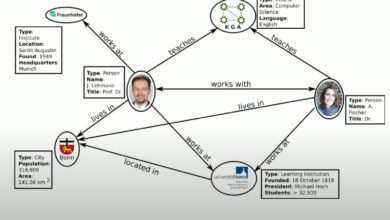
An entity doesn’t exist in a vacuum. Its meaning comes from its connections. When I build a strategy, I look for the “triples” that define reality: Subject → Predicate → Object.
For example:
- Kalema (Entity A) offers SEO Tools (Entity B).
- Jason (Entity C) founded Kalema (Entity A).
By explicitly stating these relationships in your content and code, you create a web of meaning—a knowledge graph—that is much harder for competitors to replicate than a simple blog post.
What changed in 2025: Google’s Knowledge Graph cleanup and why it matters for beginners

In June 2025, the SEO world saw a significant shift. Google executed a massive contraction of its Knowledge Graph, removing approximately 6.26% of its entities—over 3 billion items .
This wasn’t an accident. It was a clarity cleanup. For years, the graph had become bloated with ephemeral, ambiguous, or low-confidence entities. As Google shifted toward AI-driven results (like AI Overviews and Google Learn About), it needed a cleaner, more reliable “truth layer” to reduce hallucinations.
What this means for you: The bar for being “known” has gone up. Being vaguely mentioned on the web is no longer enough to trigger a Knowledge Panel or entity recognition. However, if you are a small business, this is actually good news. The noise has been reduced. If you provide clear, consistent signals, you have a better chance of standing out than you did when the graph was cluttered with junk data.
Key takeaway: clarity beats breadth (why fewer, stronger entities win)
I’d rather be clearly known for one thing than vaguely associated with fifty. To survive the purge and thrive in AI search, your strategy should focus on:
- Consistency: Using the exact same name, address, and description everywhere.
- Corroboration: Ensuring third-party sources (like Crunchbase, LinkedIn, or BBB) match your site exactly.
- Focus: Defining your core entities (Brand, Product, Founder) perfectly before trying to map the entire industry.
Why knowledge graph SEO builds semantic authority (and how to spot it in real SERPs)

Semantic authority is the trust a search engine places in your site’s understanding of a topic. It’s why Wikipedia ranks for almost everything—not because they do keyword research, but because their entity map is flawless.
When you get this right, the metrics follow. We’ve seen pages optimized for entity relationships see estimated increases of over 60% in organic click-through rates and a 78% boost in visibility within AI-generated answers . Why? Because AI models prefer citing sources that structure data in a way they can easily process.
Table: Keyword-first SEO vs entity-first SEO (what I change in practice)
| Feature | Old Way (Keyword-First) | New Way (Entity-First) |
|---|---|---|
| Goal | Rank for a specific string of text. | Establish identity and topical expertise. |
| Content Structure | Pages targeting synonymous keywords. | One page per entity (topic) covering all synonyms. |
| Internal Linking | “Click here” or exact match keywords. | Links connecting related concepts (parent/child). |
| Schema | Basic Article or WebPage markup. | Detailed JSON-LD with @id, sameAs, and about. |
| Measurement | Keyword ranking position. | Entity coverage, CTR, and AI citations. |
| Outcome | Traffic fluctuates with algo updates. | Durable authority that survives updates. |
Note: If you are new to this, start by focusing on the “Content Structure” and “Schema” rows first.
Where semantic authority shows up: panels, rich results, and AI citations
How do you know if you have semantic authority? I look for these visual cues in the US search results:
- Knowledge Panels: The information box on the right side of desktop search.
- “People Also Ask”: Your content appears as the definitive answer for definitional questions.
- Rich Snippets: Star ratings, pricing, and event details that populate correctly.
- AI Overview Citations: Your brand is linked in the generative summary at the top of the SERP.
A step-by-step knowledge graph SEO workflow to find entities (with a repeatable template)

This is the part where theory meets production. You don’t need a data science degree to do this; you just need a spreadsheet and a bit of patience. This workflow usually takes me about 30 minutes for an initial audit of a small client.
Step 1: Define your “entity home” (the page that represents the thing)
Every entity needs a home address on the web. For your business, this is usually the About Us page or the Home page. For a product, it’s the specific product landing page.
If I had to clean up only one page on a site, it would be the entity home. It must contain:
- The official name of the entity (e.g., “Acme Corp” not just “Home”).
- A clear description of what it is.
- Unambiguous identifiers (address, tax ID if relevant/safe, founding date).
- Links to official social profiles (this helps validation).
Step 2: Extract entities from what already works (SERPs + competitor pages)
Next, we need to find out what Google already associates with your topic. I play detective here. I search for the main topic (e.g., “commercial roofing Dallas”) and analyze the top 3 results.
I look for concepts that appear repeatedly. In 2025, top-ranking pages contain an average of 8.2 related entities, up from just 3.1 in 2023 .
What to look for:
- Brands: Competitors or partners mentioned.
- Standards: ISO certifications, industry codes.
- People: Recognized experts or authors.
- Sub-topics: “TPO roofing,” “membrane,” “insulation rating.”
Step 3: Expand with structured sources (Wikidata, official databases, industry standards)
You want to validate your list against a source of truth. I often check Wikidata or Wikipedia, but for many SMBs, those are out of reach. That’s okay.
Use industry-specific vertical databases. If you are a doctor, your NPI registry profile is a structured source. If you are a general contractor, your state license board entry is a structured source. Building a list of these “proof” URLs is critical for disambiguation.
Step 4: Turn the list into a publishing plan (clusters built around entities, not just keywords)
Once you have your list of entities, you stop writing random blog posts and start building clusters. Each major entity gets a pillar page. Related entities get supporting articles.
For example, if “Roof Coating” is a core entity, you create a main service page for it. Then, based on your research, you create supporting content for “Acrylic vs Silicone” (related attribute) and “Energy Star Ratings” (related standard).
To scale this efficiently, I recommend using an SEO content generator that can take these entity inputs and structure briefs that cover the necessary depth without fluff. This ensures that the “relationship” between topics is baked into the content outline from day one.
Model your entity map: relationships, attributes, and the content architecture that supports them

Discovery is done. Now we model. This sounds technical, but it’s really just drawing lines between boxes. An entity map is your source of truth—it dictates your internal linking and your schema markup.
If you are managing a large site, you might want to automate parts of this drafting process with an AI article generator, but the map itself requires human judgment.
Minimum viable entity graph (what I build first for a small business)
Don’t try to map the universe. Start with what you can defend. Here is my go-to list for a standard US business:
- The Organization: The company itself.
- The Founder/CEO: A Person entity connected to the Organization.
- The Core Service/Product: The main thing you sell.
- The Location: A LocalBusiness or Place entity.
- 1-2 Proof Entities: A certification body or industry association you belong to.
Table template: Entity map + URL ownership (copy/paste-ready)
I use a spreadsheet like this to keep my team aligned. It prevents “semantic drift,” where three different writers call the same product by three different names.
| Entity Name | Type | Primary URL (The Home) | Related To | Evidence/Source (sameAs) |
|---|---|---|---|---|
| Acme HVAC | Organization / LocalBusiness | /about-us | Founder: Jane Doe | LinkedIn Profile, BBB Listing |
| Jane Doe | Person | /our-team/jane-doe | WorksFor: Acme HVAC | LinkedIn, Personal Site |
| AC Repair | Service | /services/ac-repair | Provider: Acme HVAC | (Internal service definition) |
| NATE Certification | Thing / Credential | (External link to NATE) | HeldBy: Jane Doe | NATE.org verification URL |
Pro tip: If you are stuck, just fill out the “Entity Name,” “Primary URL,” and “sameAs” columns. That covers 80% of the value.
Implementation: on-page signals + schema markup that reinforce entities (without overdoing it)

Having a map is useless if you don’t publish it. Implementation happens on two layers: the text humans read, and the code machines read.
I once saw a client implement beautiful JSON-LD schema claiming they were a “Dental Implant Specialist,” but their visible page copy only talked about “general dentistry.” Google ignored the schema because it conflicted with the visible text. Don’t lie in your schema.
On-page entity signals I write into the copy (names, definitions, and constraints)
I edit copy to be explicit. I look for places where a human reader might ask, “Wait—what is that?” and I clarify it immediately.
- Before (Ambiguous): “We offer the best integration for it.”
- After (Explicit): “Kalema offers a native API integration for WordPress.”
By using the full noun (WordPress) instead of the pronoun (it), you reinforce the relationship between your tool and the platform.
Schema checklist (beginner-friendly): Organization/LocalBusiness, WebSite, WebPage, Article
Here is the conservative schema stack I recommend. Validate everything using the Rich Results Test.
| Page Type | Recommended Schema | Key Properties to Include |
|---|---|---|
| Home / About | Organization or LocalBusiness |
name, url, logo, sameAs (socials), contactPoint. |
| Blog Post | Article or BlogPosting |
headline, author (linked to Person entity), about (linked to topic entity). |
| Service Page | Service |
provider (linked to Org), areaServed, serviceType. |
If you only implement one thing: Get your Organization or LocalBusiness schema right on your homepage, and ensure the sameAs array lists your Wikipedia (if you have one), LinkedIn, Crunchbase, and Facebook profiles.
Internal linking that mirrors your entity relationships (hub-and-spoke that makes sense)
Internal linking isn’t just for navigation; it’s for definition. If I land on a blog post about “AC Maintenance,” I should be able to click a link that takes me to the “AC Repair Service” page (the parent entity).
- The Rule: Link from the specific to the general (Article → Category/Service).
- The Anchor Text: Use the entity name (e.g., “our AC Repair Service”) rather than “click here.”
Measuring semantic authority and connecting it to GEO/AEO (so I know it’s working)

How do we measure this? It’s admittedly fuzzy. Google Search Console doesn’t have a report for “Semantic Trust.” But we can infer it. With the rise of Generative Engine Optimization (GEO) and Answer Engine Optimization (AEO), the goal is citation, not just clicks.
Content optimized for GEO has shown up to 40% higher visibility in AI-generated summaries . To track this, I suggest a 30-day and 90-day check-in cadence.
Mini table: Metrics that reflect entity understanding (not just keyword rankings)
| Signal | How to Check | What Improvement Looks Like |
|---|---|---|
| Brand + Attribute | GSC Performance Report | Rankings for “Brand + Pricing” or “Brand + Service” queries. |
| Knowledge Panel | Google Search (Incognito) | Panel appears, or information inside it becomes richer/accurate. |
| AI Citations | Manual checks / Third-party tools | Your brand is linked in the AI Overview summary. |
| CTR | GSC | Higher click-through rate on non-branded terms (implies trust). |
Remember: Look for trends, not day-to-day noise. Semantic authority builds slowly.
Common mistakes (and fixes) when doing knowledge graph SEO for the first time + FAQs
I’ve made plenty of mistakes implementing this. Here is how to avoid the messiest ones, followed by answers to the questions I hear most often.
Mistake #1–#4: What goes wrong and the clean fix (quick-hit list)
- The Mistake: Inconsistent Naming. (e.g., “Acme Inc.” on the site, “Acme Co.” on LinkedIn).
The Fix: Choose one legal name and use it everywhere. Audit your footer, contact page, and social bios. - The Mistake: Conflicting Schema.
The Fix: Don’t mark up a page as anArticleand aProductunless it really is both. Stick to one primary type per page. - The Mistake: Ignoring
sameAs.
The Fix: This is your digital ID card. Always populate thesameAsfield in your Organization schema with your verified social profiles. - The Mistake: Multiple “Entity Homes.”
The Fix: Don’t have an “About” page and a “Company Profile” page that say the same thing. Canonicalize or merge them.
FAQ: Why did Google remove so many entities in mid‑2025?
Google needed to improve the reliability of its AI results. The Knowledge Graph had become crowded with low-quality or ambiguous entities, leading to “hallucinations” in AI answers. By purging over 3 billion entities , they prioritized quality and clarity. If you remain in the graph now, you are in a much more exclusive club.
FAQ: What is GEO/AEO and how is it different from classic SEO?
Classic SEO is about ranking a blue link to get a click. GEO (Generative Engine Optimization) and AEO (Answer Engine Optimization) are about providing structured facts so that an AI engine can confidently quote you in its direct answer. Think of it as optimizing for being cited as an expert, rather than just being listed in a directory.
FAQ: How do I make my brand an entity recognized by AI systems?
You cannot force it, but you can build the case. Ensure you have a clear Entity Home, consistent NAP (Name, Address, Phone) data, valid Organization schema with sameAs links, and—crucially—mentions from other authoritative entities (industry press, partners, certifications). You don’t need a Wikipedia page to start; you just need consistent proof.
Conclusion: My 3-part recap + next actions (30 minutes, 30 days, 90 days)
We’ve covered a lot of ground. If you take nothing else away, remember my three core rules: Define your entities clearly, connect them logically, and reinforce them technically.
Here is your battle plan to put this into practice:
- Next 30 Minutes (Quick Win): Audit your “Entity Home” (usually your About page). ensure your business name, address, and description are clear, and add links to your active social profiles.
- Next 30 Days (The Sprint): Build your Entity Map spreadsheet. Identify your top 5 entities and update the schema on those 5 pages to include
@idandsameAsproperties. - Next 90 Days ( The Build): restructure your content clusters. Create briefs that focus on covering related entities and attributes, not just keywords.
The post-2025 search landscape isn’t about gaming the system. It’s about organizing your information so well that Google and AI engines have no choice but to trust you.