The Weekly LLM Brief: How Large Language Models Changed Search This Month
Introduction: The Weekly LLM Brief (what changed in search, and why I’m paying attention)

I distinctly remember the moment search felt different for me this month. I typed “best time to post on Instagram” into Google—a query that, for the last decade, would have forced me to click through three different marketing blogs to compare conflicting charts. This time, I didn’t click anything. An AI Overview gave me the specific days and times, broken down by industry, right at the top of the page. I got the answer, closed the tab, and went back to work.
For users, this is magic. For those of us running business websites, it’s a wake-up call. How LLMs changed search isn’t just a philosophical debate anymore; it’s a measurable shift in our traffic logs. We are moving from a “search engine” era—where Google was a librarian pointing you to books—to an “answer engine” era, where the machine reads the book and summarizes it for you.
This brief is my attempt to cut through the noise. As an editor watching these trends daily, I’m skipping the hype about the “death of SEO” and focusing on what’s actually happening in US search results as of early 2026. Below, I’ll break down the new Gemini 3 updates, the real data on zero-click behavior, and a practical workflow you can use to adapt your content strategy immediately.
What this brief is (and isn’t)
Let’s set expectations early: this is an operational update for growth marketers and SEO generalists, not a tech review. I won’t be predicting the singularity. Instead, I’m defining “LLM-powered search” simply as any search experience where a Large Language Model generates a direct answer or summary rather than just listing links. My goal is to help you measure the impact and adjust your content plan for next Monday.
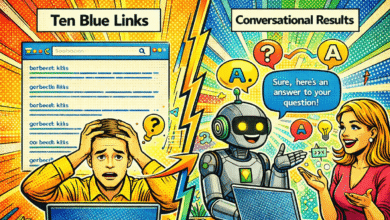
This month’s shift: how LLMs changed search from “results” to “conversations”

The biggest change I’ve tracked recently is the shift from static results to interactive conversations. With the global rollout of Google’s Gemini 3 model powering AI Overviews, the search results page (SERP) is no longer a dead end—it’s the start of a chat. Specifically, mobile users can now ask follow-up questions directly from the results page without starting over.
I saw this in the wild just last week. I searched for “project management software for small teams.” The AI Overview gave me a list. Instead of refining my query like I used to (typing “…with free tier”), I just tapped the follow-up button and typed “which ones have a free tier?” The results rearranged themselves instantly. That seamlessness is what we are competing with.
What exactly changed in Google (Gemini 3 + follow-ups inside search)

Here is the technical reality of what hit the market:
- Gemini 3 Integration: Google’s latest model now powers AI Overviews globally, improving the accuracy and complexity of the summaries we see.
- AI Mode Follow-ups: Users can now launch a conversational interface (AI Mode) directly from a standard search result, effectively blending the boundaries between a chatbot and a search engine.
Why this matters for businesses (visibility happens earlier than the click)

If you rely on organic traffic, this shift changes the funnel:
- Awareness is now zero-click: Users might learn about your brand inside the summary without ever visiting your site.
- Consideration happens in the SERP: Comparison queries are often answered immediately, meaning your product needs to be in the summary to even be considered.
- Lead quality vs. volume: You will likely see fewer clicks, but the visitors who do click are deeper in the funnel and ready to buy.
The numbers behind the shift (AI Overviews, zero-click, and CTR impact)

It’s easy to get anxious about these changes, but data provides clarity. The most recent figures circulating in the SEO industry paint a picture of a channel that is evolving, not dying. However, the metrics we used to rely on—specifically raw traffic volume—are becoming less reliable indicators of success.
As of early 2026, AI Overviews percentage has climbed significantly. When these summaries appear, user behavior changes drastically. The “zero-click” phenomenon is real, but it’s important to understand it isn’t universal—it hits informational queries hardest. If I’m reporting to stakeholders right now, I’m honest about the drop in Click-Through Rate (CTR), but I’m pivoting the conversation to visibility and influence.
Data table: what changed (and what I watch weekly)
Here is the data breakdown based on recent market intelligence. I keep this table handy when explaining traffic variances to clients or leadership.
| Metric | The Stat | What it means | Editor’s Note |
| AI Overview Trigger Rate | ~13% of searches | The frequency at which Google shows an AI summary. | Doubled since 2025. It’s not everything, but it’s significant. |
| Zero-Click Rate | 58–60% (when AI is present) | Percentage of users who see an AI summary and don’t click anything. | This is where stakeholders panic—set expectations that impressions matter here. |
| Organic CTR Drop | 20–40% decline | The drop in clicks for standard blue links when an AI summary pushes them down. | Don’t optimize for clicks alone anymore; optimize for being cited. |
| AI Search Growth | 721% YoY | Traffic growth to AI chat/search platforms. | This is a new channel entirely, distinct from traditional SEO. |
What to measure if you’re a beginner (simple KPI set)
If I only had 30 minutes a week to check my dashboard, I’d stop obsessing over raw sessions and focus on this simple KPI set to track how LLMs changed search for my specific site:
- Branded vs. Non-Branded Impressions: Are you still showing up for your core topics, even if clicks are down?
- CTR on Informational Pages: Segment your blog posts. Are the “what is” pages tanking while “how to” pages survive?
- Conversion Rate: Often, traffic drops but leads stay steady because only serious buyers are clicking.
- New Referring Sources: Watch for traffic coming directly from AI tools or “referral” buckets that might be disguised AI browsers.
How people are actually searching now: adoption, trust, and “double-check” behavior

Here is the nuance that pure data misses: human psychology. Even though LLM adoption is skyrocketing, trust hasn’t caught up. I catch myself doing this all the time—I’ll ask ChatGPT for a meal plan, but I’ll Google the specific recipe to make sure it doesn’t taste terrible. This “trust but verify” behavior is your biggest opportunity.
- Where LLM search wins: Complex, multi-step planning (e.g., “plan a 3-day itinerary for Tokyo”).
- Where classic search still wins: Fact-checking, live data, and high-stakes purchases (e.g., “current mortgage rates” or “medical symptoms”).
Research indicates that roughly 58% of U.S. consumers still prefer traditional search for factual queries, and about 25% actively distrust AI outputs. This gap is where your content needs to live.
LLM search isn’t replacing Google yet (but it’s changing the funnel)
While the 721% YoY growth in AI traffic is massive, it’s growing from a small base. Traditional search still dominates volume. However, LLMs are taking over the “top of funnel”—the initial research phase. By the time a user clicks to your site, they are often more educated and closer to a decision.
Trust is the bottleneck (and that’s an opportunity)
The biggest hurdle for AI search is hallucinations. Users know that AI lies. If your content is the source of truth—backed by data, clear citations, and human expertise—you become the “verification” step. You want to be the source the AI cites to prove it isn’t making things up.
What this means for SEO: from ranking pages to earning citations inside AI answers

So, what do we do about it? The definition of SEO is expanding. It used to be about ranking ten blue links; now it’s about optimizing for the machine’s understanding. We need to create content that is easy for an LLM to digest, summarize, and attribute.
I like to think of this as creating “assist” content. These pages might not drive direct traffic, but they ensure your brand is mentioned when a user asks, “what is the best tool for X?” To achieve this at scale, many teams are turning to an SEO content generator that can help structure intent-matched articles efficiently. But remember, tools are just leverage—the strategy comes from you.
The new goal hierarchy: be the best answer, then make the click worth it
You have two jobs now:
- Job 1 (The Assist): Provide a clear, structured answer that AI can scrape and show in the summary (Brand Visibility).
- Job 2 (The Click): Offer something the summary can’t provide, so the user has to visit your site.
Beginner on-page essentials that help LLMs (and humans)
Don’t overthink this. The same things that help humans read your content help Gemini 3 understand it:
- Clear Headings: Use H2s that ask questions and H3s that answer them directly.
- TL;DR Blocks: Put a summary at the top of your post. AI loves this.
- Definition Boxes: Clearly define jargon early in the content.
- Schema Markup: Use basic FAQ or Article schema to label your content for the crawler.
My implementation workflow: how to structure content for AI Overviews (and still generate leads)

If you are staring at a blank page wondering how to write for this new reality, here is the workflow I use. It’s designed to maximize your chances of appearing in AI Overviews while protecting your lead generation.
| Step | What to do | Example | My Note |
| 1. Target | Pick “How-to” or “What is” queries. | “How to calculate ROI for SEO” | Don’t target generic keywords; target questions. |
| 2. Structure | Write a direct answer (40-60 words) immediately after the H1. | “SEO ROI is calculated by…” | This is your “snippet bait.” |
| 3. Deepen | Add unique data, templates, or expert quotes. | A downloadable ROI calculator excel sheet. | This earns the click. |
| 4. Verify | Add citation links and “last updated” dates. | “According to 2026 data from…” | Builds trust (E-E-A-T). |
Step 1: Pick the right query targets (where AI summaries show up)
Not every search triggers an AI Overview. I look for queries that imply complexity or multiple steps. Common patterns include:
- “How does X work?”
- “Difference between X and Y”
- “Best practices for X”
- “Checklist for X”
Step 2: Write for “summarize-ability” (without dumbing it down)
This is the hardest part for writers who love flowery prose. You need to write for the skimmer. If I had to rewrite a messy paragraph, I’d turn it into a list. Use a “Question > Direct Answer > Context” format.
- H2: What is [Concept]?
- Paragraph 1: Direct definition in plain English.
- Paragraph 2: Why it matters.
- Bullets: Key components.
Step 3: On-page SEO placement (title, meta, headings, schema, internal links)
Before I hit publish, I check the basics. Your Title Tag should clearly state the value. Your H2s should be descriptive (not just “Introduction”). I also ensure internal links connect this page to other authoritative pages on my site, which helps the AI understand topical authority.
Step 4: Build trust signals that AI (and people) can verify
If you make a claim, back it up. I try to include at least two external citations to non-competitor authorities (like government sites or major industry reports) per article. Also, explicitly stating “Last updated: January 2026” signals freshness, which Gemini prioritizes.
Step 5: Scale responsibly (quality control + publishing cadence)
Here is the reality: you probably need more content than you have time to write manually if you want to cover all the conversational angles your customers are searching for. This is where automation helps, but you have to be careful. You can use an AI article generator to handle the heavy lifting of drafting, or an Automated blog generator to maintain consistency. However, my rule is simple: never publish without a human review. Use the tools to scale your output, but use your brain to ensure the facts are right.
How monetization is shifting: conversational commerce, commissions, and what to do about it

We are seeing a move away from the traditional “10 blue links with ads” model toward conversational commerce. This means users are looking to buy directly through the advice they receive.
- Affiliate/Commission Models: AI platforms are exploring ways to get paid when they recommend a product.
- Product Feeds: Ensuring your product data (price, stock, specs) is structured allows AI to pull it into comparison tables.
- Reviews & Comparisons: AI relies heavily on third-party reviews to verify quality.
What publishers and brands can do now (even with limited resources)
If you sell products, audit your product detail pages. Do you have clear, distinct specs? Do you have a comparison chart against competitors? If you’re a service business, do you have a clear pricing page? Clarity is currency.
Common mistakes I see (and fixes) when adapting to LLM-driven search
I’ve made plenty of mistakes trying to adjust to this new world. Here are the most common ones I see others making, so you can avoid them.
- Mistake: Ignoring structure for style.
The Fix: Stop burying the lead. Put the answer first, then explain the nuance. - Mistake: Hiding pricing or key details.
The Fix: If an AI can’t find your price, it will recommend a competitor who is transparent. Be explicit. - Mistake: Over-automating without QA.
The Fix: Hallucinations happen. If you publish AI content that lies, you destroy your brand trust instantly. Always edit. - Mistake: Measuring only clicks.
The Fix: Start reporting on impressions and rank for target keywords, even if clicks drop. It proves you are part of the conversation.
Mistake patterns: structure, trust, measurement, and over-automation
The theme here is simple: don’t fight the machine, but don’t trust it blindly either. Structure your content for machines, but write your value proposition for humans.
FAQs + wrap-up: what I’d do next (recap + action checklist)

FAQ: How have LLMs changed the nature of search this month?
Search has moved from a directory of links to an interactive conversation. With features like Gemini 3 and mobile follow-up questions, users can refine their search without leaving the results page, making the experience faster and more fluid.
FAQ: Are users still clicking through to websites after using search?
Yes, but less often for simple questions. While zero-click rates in AI-powered searches are hovering around 58–60%, users still click through for deep dives, complex data, and verified purchasing decisions.
FAQ: Is LLM-powered search overtaking traditional search traffic?
Not yet, but it is growing fast. While traditional search still dominates the majority of volume, AI-powered interactions grew by over 721% year-over-year. It’s a rapidly expanding slice of the pie.
FAQ: Do users trust AI-generated search results?
It’s mixed. About 25% of users actively distrust AI results, and nearly 60% prefer traditional search for important factual queries. This “trust gap” is why authoritative human content is still vital.
FAQ: How are search companies monetizing LLM-driven experiences?
They are shifting toward conversational commerce—taking a commission on purchases made via recommendations—and integrating shopping features directly into the chat interface, rather than relying solely on ad clicks.
FAQ: What are the risks tied to LLM-powered search?
The main risks are hallucinations (AI giving wrong answers) and traffic declines for publishers. For businesses, the risk is being excluded from the AI summary due to poor content structure.
3-bullet recap + my next actions checklist
Recap:
- Search is now conversational; visibility happens before the click.
- Zero-click is the new normal for basic info; accept it and adapt.
- Trust is your currency; be the verified source the AI cites.
My checklist for this week:
- [ ] Audit my top 10 traffic pages: Do they have a clear summary block at the top?
- [ ] Check Search Console: Identify queries with high impressions but low clicks (potential AI Overview targets).
- [ ] Update one key article: Add fresh data and citations to improve trust signals.
- [ ] Test mobile search for my brand: See what follow-up questions Google suggests and write content to answer them.