AI SEO Tools & The Feedback Loop: How to Predict and Improve SERP Position

I remember staring at a dashboard a few years ago, watching a core money page bleed traffic. It had sat comfortably at position #3 for months, and then—almost overnight—it dropped to the bottom of page one. There was no penalty, no technical outage, and no obvious link spam attack. The SERP layout had simply changed, and a competitor had tweaked their intent targeting just enough to displace me.
In the past, my reaction would have been a mix of panic and guesswork. Today, that scenario triggers a specific workflow. This is where AI SEO tools and the concept of a “feedback loop” come into play. It’s not about magic buttons or letting an algorithm blindly write your content; it’s about using intelligence to see the storm before it hits and adjusting your sails immediately.
In this guide, I’m going to walk you through exactly how to build a repeatable SEO feedback loop. We’ll look at how AI predicts volatility, how to interpret those signals without freaking out, and how to set up a weekly workflow that keeps your content competitive. This isn’t theoretical—it’s the exact system I use to turn volatility into opportunity.
What a Feedback Loop Means in AI SEO tools (and why it’s not “set-and-forget”)

If you treat SEO as a “set-and-forget” task, you are playing a losing game. The modern search landscape is too fluid. A feedback loop, in business terms, is simply a system where outputs are circled back as inputs. In SEO, it means we don’t just publish and hope; we publish, measure specific signals, and immediately feed those insights back into the content to improve it.
Why does this matter now more than ever? Because SERP volatility is at an all-time high. Between Google’s AI Overviews (formerly SGE), shifting intent signals, and competitors who iterate faster than you, the “shelf life” of a static article is shrinking. In fact, 72% of global SEOs now use at least one AI-powered tool daily (2025) , largely to keep up with this pace.
Here is what makes a loop a loop:
- Inputs: Data from GSC, rank trackers, and intent analysis.
- Decision Rules: If X happens (e.g., CTR drops), do Y (e.g., check title tag/SERP features).
- Actions: The actual update (rewrite, schema addition, internal link adjustment).
- Measurement: Verifying if the action moved the needle.
- Cadence: How often you run this cycle (weekly is usually best for most businesses).
Think of it like weekly sales reporting. You don’t set your sales strategy in January and ignore the numbers until December. You adjust based on what sold last week. That is exactly how we need to treat content.
Quick glossary: the 6 terms I’ll use throughout this guide
- SERP (Search Engine Results Page): The page Google shows users, now often cluttered with ads, maps, and AI answers.
- Search Intent: The reason a user searches (e.g., to learn, to buy, or to find a specific website), which AI is getting very good at detecting.
- Volatility: How much rankings are fluctuating day-to-day; high volatility often signals an algorithm update or testing.
- Topic Cluster: A group of interlinked pages covering a broad subject (pillar) and specific sub-topics.
- Schema Markup: Code you add to your site to help search engines understand your content (like marking up FAQs or Reviews).
- AEO / GEO (Answer/Generative Engine Optimization): Optimizing content to be cited in AI-generated answers (like ChatGPT or Google’s AI Overviews).
How AI SEO tools Predict SERP Movement (what they watch, model, and alert you to)

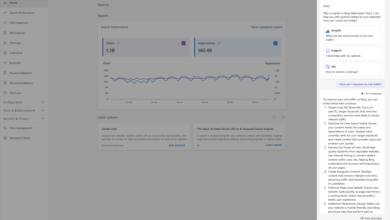
Predictive SEO sounds futuristic, but for most AI SEO tools, it’s just advanced pattern recognition. These tools digest massive amounts of SERP data to tell you two things: what is happening right now, and what is likely to happen next based on historical trends.
Tools like SEMrush have introduced real-time volatility alerts and generative tracking , while platforms like BrightEdge GenAI claim to achieve 85–90% accuracy in short-term ranking forecasts . But as a practitioner, I don’t take these predictions as gospel—I take them as probabilities. They are weather forecasts. If the forecast says 90% rain, I bring an umbrella. I don’t rebuild my house.
Here is a breakdown of prediction signals and how I interpret them:
| Prediction Signal | What it Implies | What I Do Next |
|---|---|---|
| High Volatility Alert | Google is testing rankings or rolling out an update. Results are unstable. | Wait. Do not panic-edit. Check again in 48 hours to see if dust settles. |
| Intent Shift Detected | The top-ranking pages have changed format (e.g., from blogs to product pages). | Auditing. Compare my page type to the new top 3. I may need to reformat. |
| Competitor Content Score Jump | A rival updated their page with more depth or entities. | Review. Check what sub-topics they added that I am missing. |
| SERP Feature Loss | My featured snippet or FAQ block disappeared. | Re-optimize. Check schema validation and answer formatting immediately. |
The inputs: ranking data, SERP features, intent patterns, and competitor deltas
The machine is only as good as its fuel. The primary inputs for these predictive models include:
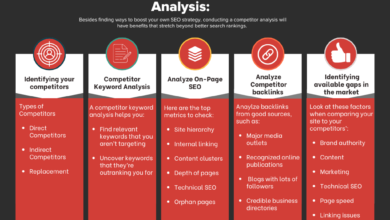
- Competitor Deltas: Simply put, what changed on the page that just passed you? Did they add a video? Did they update their year in the title?
- SERP Feature Flux: Sometimes you lose traffic not because your rank dropped, but because an AI Overview or “People Also Ask” box pushed you down the screen.
- Intent Patterns: AI tools analyze the language of top results. If the top 10 results shift from “Best X” lists to “How to X” guides, the intent has shifted from commercial to informational.
The models: what “forecasting” really means for beginners
When a tool says you have a “High Probability to Rank,” it is looking at the gap between your content’s metrics (authority, depth, structure) and the current leaders. However, correlation isn’t causation.
My rules of thumb for forecasting:
- Don’t rewrite based on a 48-hour swing. Google tests things constantly. If I see a drop on Tuesday, I wait until Thursday to act.
- Look for trend confirmation. I trust a 14-day downward trend; I ignore a 1-day spike.
- Change one variable at a time. If the tool predicts I need more keywords and more backlinks, I start with the content update first. If I do everything at once, I won’t know what worked.
The AI SEO Feedback Loop Playbook (a beginner-friendly workflow I can run weekly)

This is the core of the strategy. You don’t need a data science degree; you need a process. I run this loop weekly for my most critical pages. It takes about 2 hours once you get the hang of it.
The Loop Map:
Baseline → Intent Check → Brief/Update → Publish → Monitor → Iterate
- Does the H1 match the primary keyword intent?
- Have I answered the “People Also Ask” questions directly?
- Is the content structured with clear H2s and H3s?
- Is the schema markup valid (no red errors)?
- Did a human verify the facts and stats?
Step 1: Set a baseline (what I measure before changing anything)
I have been burned by skipping this step. I once optimized a page that was actually performing well for a secondary keyword I hadn’t noticed, and my updates killed that traffic. Always check:
- Current Rank Range: Not just one spot, but the average over 28 days.
- Impressions vs. CTR: High impressions with low clicks usually means your title tag is weak or the answer is visible on the SERP without clicking.
- Top Queries: What are people actually typing to find this page? It might surprise you.
Step 2: Map intent + build a semantic cluster (so the loop knows what ‘good’ looks like)
Google wants to know you are an authority, not just a lucky guesser. That means building a cluster. If I want to rank for “small business payroll,” I can’t just write one article.
Cluster Map Template:
| Page Role | Primary Query | Intent | Schema Type |
|---|---|---|---|
| Pillar Page | Best Payroll Software | Commercial (Comparison) | Product / Review |
| Support Article 1 | How to set up payroll | Informational (How-to) | HowTo |
| Support Article 2 | Payroll tax compliance | Informational (Guide) | FAQ |
Step 3: Create or refresh content with an editorial QA layer (where Kalema fits)
Once I have my brief, I need to execute. This is where I lean on technology to scale without sacrificing quality. I use an AI SEO tool to generate the initial structure, draft sections, and ensure I’m hitting semantic entities.
However, I treat this output as a “smart draft,” not a final product. My personal rule is that I own the judgment call. Tools like Kalema are fantastic for content intelligence—suggesting what to cover and how to structure it—but I always apply a human layer.
My QA Checklist for Drafts:
- Fact Check: Are the stats from the last 2 years?
- Unique Insight: Did I add a personal example or brand perspective the AI couldn’t know?
- Tone Check: Does it sound like us, or like a robot?
Using a robust SEO content generator speeds up the 80% of the work that is research and formatting, leaving me energy for the 20% that requires creativity.
Step 4: On-page execution (titles, headings, internal links, and schema—done in the right order)
I do this in a specific order to ensure flow:
- Title Tag & Meta Description: Write these first to lock in the angle/hook.
- H1-H6 Structure: Ensure the hierarchy is logical. H2s are main points; H3s are details.
- Body Content: Fill in the sections.
- Internal Linking: Link from the pillar page to the support pages, and vice versa.
- Schema Markup: Apply the JSON-LD code last, once the content is finalized, so the data matches exactly.
Step 5: Publish fast and consistently (automation without losing control)
Consistency beats intensity. It is better to publish two great updates a week than ten mediocre ones. This is where workflow automation saves lives. I use systems that allow me to push from draft to CMS seamlessly.
If you are managing a large site, consider tools like Kalema’s Automated blog generator. It handles the formatting, image placement, and meta data injection. But remember: automation is for publishing ops, not for bypassing your editorial standards. I always have a “staging” step where I can glance at the final preview before it goes live.
Step 6: Measure, learn, and iterate (the ‘feedback’ part)
The content is live. Now we watch. Relixir’s autonomous loops operate on a 6-hour cycle , which is incredibly fast. For most of us, checking weekly is sufficient.
Simple Decision Tree for Next Week:
- Impressions UP, CTR DOWN? → Your title tag or meta description isn’t compelling enough. Rewrite the “hook.”
- CTR UP, Position FLAT? → You are engaging users, but Google hasn’t moved you yet. Check your topical coverage—add an FAQ section or more internal links.
- Impressions & Rank DOWN? → Re-check intent. You might be answering a question nobody is asking anymore.
Metrics That Actually Tell Me If the Loop Is Working (rankings + AI visibility)
If you only look at rankings, you are driving by looking in the rearview mirror. Rankings are a lagging indicator—they change after Google has re-evaluated you. I prefer to look at leading indicators.
Also, with the rise of AI search, we need to track GEO (Generative Engine Optimization) metrics. Are you being cited in the AI answer? Some sources suggest brands ignoring AEO could see a 20–40% traffic decline by 2026 . While I treat doom-and-gloom stats cautiously, the trend is clear: visibility is more than just “blue links.”
| Metric | Where to Measure | What “Good” Looks Like | Common Mistake |
|---|---|---|---|
| Query Count | GSC | Page ranks for more keywords over time. | Ignoring “long-tail” growth because the main keyword is flat. |
| Engagement Rate | GA4 | Users stay longer / scroll deeper. | Confusing “Bounce Rate” with bad content (sometimes they get the answer and leave). |
| AI Citation | Manual / AI Tools | Brand mentioned in AI Overviews/ChatGPT. | Assuming rank #1 equals AI citation (not always true). |
Rankings are a lagging indicator—here are the leading indicators I watch
- Rising Impressions for New Queries: This means Google is testing your page for broader relevance. This often precedes a rank jump.
- Keyword Cannibalization Shifts: If the wrong page stops ranking and the right page starts appearing, your cluster is working.
- Indexed Pages Count: Are your new support articles getting indexed quickly? If yes, your site health is good.
GEO/AEO visibility: how to think about ‘being cited’ in AI answers
I view GEO (Generative Engine Optimization) simply as “Digital PR for robots.” To be cited in an AI answer, your content needs to be factually dense and clearly structured. I don’t try to “game” ChatGPT. Instead, I focus on being the clearest, most authoritative source. If an AI summarizes the topic, my structured definition list is the easiest thing for it to grab. That is the goal.
Why Semantic SEO + Schema Make AI SEO tools Smarter Over Time
I used to ignore schema markup. It felt like extra coding work for little reward. Then I realized that AI engines—both Google’s algorithms and LLMs—crave structure. They don’t “read” like humans; they parse data. Semantic SEO and schema are how we translate our content into their native language.
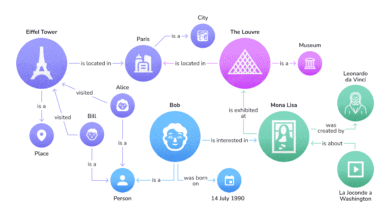
By organizing content into entities (people, places, concepts) and marking them up, we reduce ambiguity. This improves the feedback loop because the AI tool can more accurately assess what your page is about versus competitors.
The structure-first approach: write for humans, format for machines
You can write beautifully for humans while formatting for bots. It’s not mutually exclusive.
- Before: A dense 300-word paragraph explaining how to reset a router.
- After: A 50-word intro, followed by a bulleted list of steps, wrapped in
HowToschema.
The “After” version is easier for a human to scan and easier for an AI to cite.
Schema do’s and don’ts (so I don’t accidentally create spam signals)
DO:
- Use FAQ schema for genuine questions answered on the page.
- Use Organization schema on your homepage to establish brand entity.
- Validate your code using Google’s Rich Results Test tool.
DON’T:
- Mark up content that is hidden from users (cloaking).
- Use Review schema on a category page (it belongs on specific items).
- Copy-paste schema from another site without updating the IDs and URLs.
Choosing AI SEO tools for Each Stage of the Loop (beginner stack, not a tech maze)
If you are new to this, the sheer number of tools is overwhelming. I recommend starting small. You need one tool to watch the weather (monitor), one to help you build the house (creation), and one to check the foundation (technical).
Here is a simple framework for choosing your stack:
| Stage | What to Look For | Risk to Watch |
|---|---|---|
| Monitoring | Accurate rank tracking + volatility alerts. | Getting obsessed with daily fluctuations. |
| Creation | AI article generator with semantic guidance. | Generic, repetitive output if unedited. |
| Optimization | Content scoring (TF-IDF or entity gaps). | Keyword stuffing (forcing words in naturally). |
Minimum viable stack (what I’d start with in month 1)
If I had to keep costs tight and complexity low, here is my Month 1 stack:
- Google Search Console (Free): The ultimate source of truth for performance.
- A basic Rank Tracker: To watch competitors and receive alerts.
- A Content Intelligence Tool: To generate briefs and drafts efficiently.
Common Mistakes That Break the Feedback Loop (and how I fix them)
I have made plenty of mistakes implementing these loops. Here are the big ones so you can avoid them.
- Over-Automation without QA:
Mistake: Letting an AI tool publish directly without review.
The Fix: Always have a human “Editor in Chief” step. Even 10 minutes of review protects your brand reputation. - Chasing Volatility:
Mistake: Rewriting a page because it dropped 3 spots on Tuesday.
The Fix: Wait 7-14 days to confirm the trend. Volatility is often just noise. - Ignoring Intent Mismatch:
Mistake: Adding more keywords to a blog post when the user actually wants a product page.
The Fix: Check the top 3 results manually. If they are all product pages, you can’t rank a blog there. - Measuring the Wrong KPI:
Mistake: Celebrating high traffic from a keyword that never converts.
The Fix: Track conversions or “money page” views, not just raw vanity traffic. - Neglecting Internal Links:
Mistake: Publishing a great new page but forgetting to link to it from older, high-authority pages.
The Fix: Every time you publish, find 3 older posts to link to the new one. - Skipping Schema Validation:
Mistake: Adding code that has syntax errors.
The Fix: Always run the URL through a validator before signing off.
FAQs: AI SEO tools, prediction, and GEO/AEO (quick, clear answers)
What is a feedback loop in AI SEO tools?
It is an ongoing cycle of Observing data, Optimizing content, Measuring results, and repeating. Unlike old-school SEO where you optimized a page once and left it, a feedback loop constantly adjusts to new data and volatility.
How do AI SEO tools predict SERP movements?
They monitor massive datasets of SERP history, volatility, and intent shifts to model probabilities. They don’t predict the future perfectly, but they can forecast likely outcomes based on patterns—like a 60% chance of ranking dropping if you don’t update content age.
What is Generative Engine Optimization (GEO)?
GEO is the practice of optimizing content specifically to appear in AI-generated responses (like AI Overviews or chatbots). It focuses on citation frequency, clear entity definitions, and structured data rather than just keyword density.
Why is semantic SEO and schema important in AI feedback loops?
AI systems understand concepts (semantics) better than just keywords. Schema markup gives them a structured map of your content (e.g., “This is a Question,” “This is the Answer”), making it easier for them to parse, rank, and cite you correctly.
Can AI SEO truly accelerate ranking outcomes?
Yes, by reducing the time between “insight” and “action.” Faster feedback loops mean you fix issues in days rather than months. However, simply using AI tools isn’t a silver bullet; disciplined iteration is what drives the results .
Conclusion: My 7-Day Next Steps to Start a Feedback Loop with AI SEO tools

We’ve covered a lot, but don’t let the complexity paralyze you. The goal is simple: stop guessing and start measuring.
- The Loop: Observe, Act, Measure, Repeat.
- The Prediction: Use volatility and intent signals to prioritize work.
- The Tracking: Watch leading indicators like impressions and query count.
Your Action Plan for the Next 7 Days:
- Day 1: Pick 3 important pages that have stalled. Set your baseline metrics (Avg Position, CTR).
- Day 2: Map the intent. Check the SERPs—are you the right content type?
- Day 3: Use an intelligence tool to identify content gaps and draft updates.
- Day 4: Add FAQ schema and valid internal links.
- Day 5: Publish the updates.
- Day 7+: Check GSC for impression changes. Do not touch the content again for 14 days.
SEO is no longer about who writes the most words; it’s about who learns the fastest. Start your loop today.