Top Tier Tracking: best rank tracking tools 2026 (and how I compare accuracy as a beginner)

I still remember the first time I had to explain a ‘ranking divergence’ to a client. Their leads had dipped significantly over two weeks, yet my monthly report showed green arrows and stable rankings for their main keywords. It was a panic-inducing moment. I realized then that what I saw on my screen wasn’t necessarily what their customers were seeing in the wild.
Rank tracking is simply the practice of monitoring where your website appears in search engine results for specific queries over time. But in 2026, it has become much more complex than just checking if you are Number 1.
If you are an intermediate SEO or a marketing manager at an SMB, you need more than vanity metrics. You need to know if your local service page appears in the map pack for users in Phoenix, or if your brand is being cited when someone asks ChatGPT for recommendations. In this guide, I will walk you through the criteria that matter, the best rank tracking tools 2026 has to offer, and the workflow I use to ensure data leads to action, not just anxiety.
Quick orientation: what this guide covers (and what it doesn’t)

We are going to focus strictly on accuracy and utility. I won’t be diving into full-scale technical audits or backlink campaigns here. Instead, we will cover:
- Traditional Rank Tracking: Monitoring positions on Google and Bing across desktop and mobile.
- Multi-Location Tracking: Why ‘national’ rankings often lie about local performance.
- AI Visibility Tracking: The new necessity of tracking brand mentions in ChatGPT, Gemini, and AI Overviews.
- Workflow: A weekly routine to interpret the data.
What changed for rank tracking in 2026 (and why ‘accuracy’ is tricky)

Here is the reality check: ‘100% accurate’ rank tracking doesn’t exist. If you search for ‘best project management software’ from a laptop in New York City, and I search for it on a phone in Dallas, we will see different results. Google’s personalization, based on search history and location, ensures that.
Think of a rank tracker like a weather forecast, while a manual search is the weather right outside your window. The forecast (tracker) gives you the reliable, broad trend using standardized data, whereas your window (manual search) is just one specific, hyper-local viewpoint.
In 2026, we face two major shifts. First, the removal of the #100 parameter by Google has made deep tracking (checking positions 50-100+) much harder and more expensive for tools to execute. Second, the ‘SERP’ (Search Engine Results Page) is now cluttered with AI Overviews and ‘Zero Click’ snippets, pushing traditional blue links further down.
Traditional rank tracking vs AI-driven search experiences
For two decades, we tracked positions 1 through 10. Today, we have a split ecosystem. On one side, you have traditional rankings—your standard blue links. On the other, you have AI Overviews and generative search. A tool might tell you that you rank #3, but if an AI Overview block pushes you below the fold, your traffic might not reflect that ranking. This is why modern tracking requires looking at both traditional positions and pixel height (visibility).
Why incognito is a bad ‘accuracy test’
I know the temptation. You see a tool report a drop, so you open an Incognito window to ‘verify’ it. When you see yourself still at #1, you assume the tool is broken. This is a mistake.
Incognito mode removes cookies, but it doesn’t remove your IP address, device type, or precise location signals. Rank trackers simulate a ‘clean’ environment to give you a consistent baseline. I care about the directional trend of that baseline far more than I care about a single snapshot matching my personal browser.
The post–#100 world: why deep rank tracking is harder
Google recently stopped supporting the #100 parameter, which allowed tools to easily scrape up to 100 results per page. Now, seeing beyond page 1 or 2 is technically difficult. Some tools like Ahrefs and SE Ranking are adapting with workarounds, but generally, deep tracking is becoming less granular. My advice? Don’t stress about moving from position 73 to 65. Focus your budget on tracking your ‘striking distance’ keywords (positions 11–20) where movement actually impacts revenue.
My accuracy-first checklist: how I evaluate rank trackers (criteria + mini testing method)

If you are evaluating tools right now, don’t just buy the one with the nicest dashboard. I use a specific checklist to ensure the data is defensible when stakeholders ask questions.
- Consistency over ‘Reality’: Does the tool report the same result if I check it three days in a row with no SERP changes?
- Granularity: Can I track by Zip Code (critical for local SEO) and by Mobile specifically?
- Update Frequency: Do I need daily updates, or is weekly enough? (Reference: AccuRanker offers on-demand updates, which is rare).
- SERP Features: Does it tell me if I own the Featured Snippet or the ‘People Also Ask’ box?
The 7-Day Mini Test:
Before committing to a subscription, I run this test. I take 10 keywords. I enter them into the trial tool and set the location explicitly to my city. Then, I check the reports daily for 7 days. I am looking for wild, unexplained volatility. If the tool shows me jumping from pos 5 to 50 and back to 5 in three days, and I confirm the SERP didn’t actually change that much, I know their data source is unstable.
Accuracy signals that actually matter (for beginners)
Look for SERP Snapshots. This is a feature where the tool saves a visual image of the search results page at the moment it checked your ranking. This is the ultimate ‘proof of life.’ If a client says ‘I don’t see it,’ you can show them the snapshot. Also, prioritize tools that allow keyword tagging. Grouping keywords by intent (e.g., ‘buying intent’ vs. ‘informational’) is the only way to make sense of large data sets.
Update cadence: daily vs on-demand vs real-time-ish
For most SMBs, daily tracking is the gold standard. Weekly is too slow to react to an algorithm update. However, if you are an agency launching a new site or managing a crisis, you might need on-demand rank updates. Tools like AccuRanker specialize in this, letting you refresh data instantly rather than waiting for the nightly crawl.
Data you’ll want to export (so rankings lead to decisions)
Ranking data dies in the dashboard if you don’t share it. You want a tool that connects to Looker Studio (formerly Google Data Studio) or has a robust Google Search Console integration. This lets you overlay your rankings with actual click data, proving that rank increases are actually driving traffic.
Comparison table: best rank tracking tools 2026 (traditional + modern features)
Here is how the top players stack up. I have selected these based on their specific strengths in the market today.
At-a-glance comparison table (what to include)
| Tool | Best For | Update Freq | Pricing Est. | Standout Feature |
|---|---|---|---|---|
| Ubersuggest | SMBs / Beginners | Daily | Affordable | Balance of cost vs. accuracy |
| Ahrefs | Competitive Intel | Varies by plan | Premium | Massive 110B+ keyword database |
| Semrush | All-in-One Power | Daily | Premium | Deep reporting & Share of Voice |
| SE Ranking | Hybrid Tracking | Daily | Mid-range | Tracks AI Visibility (ChatGPT, etc.) |
| AccuRanker | Speed / Agencies | On-demand | Volume-based | Instant updates (not just daily) |
| Nightwatch | Local SEO | Daily | Mid-range | 65,000+ locations supported |
| Wincher | Simplicity | Daily | $25–$52/mo | Clean UI & cost-effective |
| Mangools | Design-focus | Daily | $49–$129/mo | Great UI (SERPWatcher) |
Note: I’d start by picking just 2 tools to trial. Don’t overwhelm yourself with ten different trials at once.
Ubersuggest: best blend of accuracy, features, and value in 2026
If you want a straightforward answer to ‘which rank tracker offers the best blend of price and performance,’ it’s often Ubersuggest. It leads general-purpose tracking because it doesn’t overcomplicate the dashboard. You get daily desktop and mobile updates without the enterprise price tag. Caveat: It’s less granular for hyper-advanced technical SEOs compared to a dedicated tool like AccuRanker.
Ahrefs: competitive intelligence + massive keyword coverage
Ahrefs is a beast. Their keyword database spans over 110 billion keywords across more than 200 countries. If you are doing international SEO or heavy competitor research, this is the industry standard. I use Ahrefs when I need to see what my competitors are ranking for that I haven’t even thought of yet. They have also integrated AI visibility metrics to show brand presence in tools like Copilot. Caveat: The rank tracker is part of a larger, more expensive suite.
Semrush: all-in-one platform for teams that want deeper reporting
Semrush is usually the go-to for mid-sized marketing teams. Their Share of Voice metric is excellent for executive reporting because it condenses all your rankings into one percentage of market dominance. They also provide comprehensive AI overviews. Caveat: It can feel like overkill if you just want to track keywords; you pay for a lot of features you might not use.
SE Ranking: budget-friendly tracking plus AI visibility (ChatGPT, Gemini, AI Overviews)
SE Ranking has emerged as a top contender for the modern SEO. They uniquely track visibility across traditional search engines and AI platforms like ChatGPT, Gemini, and Google Overviews. They use daily refresh schedules for both. This is critical because you might rank #1 on Google but be invisible in ChatGPT. Caveat: The interface is slightly denser than Wincher or Ubersuggest.
AccuRanker: fast, on-demand updates for agencies and launches
Most tools update once every 24 hours. AccuRanker provides on-demand ranking updates. Imagine you just pushed a massive update to a client’s homepage and you want to see the impact immediately—AccuRanker lets you hit refresh. It’s a favorite for agencies who need to report fast. Caveat: It is a specialized tool; it doesn’t do backlink analysis or site audits like Ahrefs.
Nightwatch, Wincher, Mangools: strong options when you need simplicity or location depth
If you have specific needs, look at these challengers:
- Nightwatch: Supports tracking for 65,000+ global locations. If you are a franchise with locations in obscure towns, this is your tool.
- Wincher: Focuses purely on rank tracking with a beautiful interface. Pricing ranges approximately $25 to $52 USD monthly, making it very accessible.
- Mangools (SERPWatcher): Known for the best design in the industry. Pricing ranges from $49 to $129 per month depending on volume. Great for freelancers who want pretty reports.
AI visibility tracking in 2026: what it is, when it matters, and which tools to watch

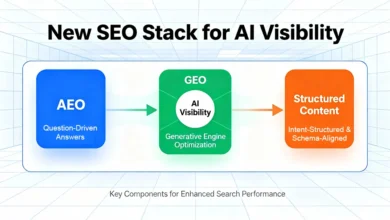
You might be asking, ‘Why do I need to track AI visibility?’ Here is the thing: a high ranking on Google does not guarantee you will be recommended by an AI. Verified facts show that brand mentions in AI answers often diverge from SERP positions because LLMs (Large Language Models) prioritize authority citations and clear structural data over backlinks.
Traditional rank vs AI visibility: the simplest mental model
Think of traditional rankings as a directory—you are listed because you matched the keywords. Think of AI visibility as a referral—the AI recommends you because it ‘understands’ your solution is the best fit. If a user asks, ‘What is the best CRM for a small plumbing business?’, you want the AI to mention your brand name.
Tools that track AI visibility specifically (and what they measure)
While SE Ranking offers a hybrid approach, there are newer, specialized tools focusing solely on this. Tools like GPT RankIQ, RankPulse.AI, and Peec AI are emerging to track prompt-level visibility. They measure how often your brand is cited in response to specific questions on ChatGPT, Perplexity, or Claude. Peec AI, for example, tracks across multiple models. Note: These metrics are newer and can be more volatile than Google rankings.
How I choose the right rank tracker (by business size, goals, and budget)
Choosing a tool shouldn’t be a guessing game. Depending on your scenario, here is how I would spend my budget.
- Solo Founder / Small Local Business: You need affordability and local accuracy. Wincher or Ubersuggest are your best bets. You likely don’t need API access or historical data from 2018.
- Growing Agency: You need reporting speed and white-label options. AccuRanker (for speed) or SE Ranking (for the price-to-feature ratio) are ideal.
- Enterprise / National Brand: You need competitive intelligence and scale. Ahrefs or Semrush are non-negotiable here due to the database size.
- AI-Forward Tech Company: If your audience is developers or early adopters, you must track AI visibility. Use SE Ranking or add a specialized tool like RankPulse.AI.
Beginner decision checklist (5–8 questions)
- How many keywords do I realistically need to track? (Start small: 50 is often enough).
- Do I need to track specific cities or zip codes?
- Does my boss/client need a PDF report emailed automatically?
- Is mobile traffic my primary source? (If so, mobile tracking must be accurate).
- Do I need to track my brand’s presence in ChatGPT?
Implementation workflow: from tracking setup to content actions (the practical weekly routine I use)

Buying the tool is the easy part. Building a routine is where you actually win. I see too many marketers check their rankings daily, panic over small drops, and then do nothing. Here is the workflow I use to turn data into traffic.
Step-by-step setup (first 30 minutes)
Don’t overthink this. Just get the baseline data flowing.
- Load your ‘Money Keywords’: These are the high-intent terms that drive revenue (e.g., ‘buy leather boots’).
- Load your ‘Brand Keywords’: Variations of your company name.
- Set Locations: Be specific. If you are in the US, set it to your main target cities or ‘United States’ broadly if you are national.
- Tag Everything: This is crucial. Tag keywords by cluster (e.g., ‘Blog’, ‘Service Pages’, ‘Competitor’).
Template: weekly rank review that leads to action
Every Monday morning, I spend 15 minutes reviewing the tracker. I don’t look at every keyword. I look for patterns.
- Big Wins: Did a cluster move into the top 3? (Action: Add internal links to solidify it).
- The ‘Striking Distance’: Filter for keywords in positions 11–20. (Action: These are your priority updates for the week).
- Intent Shifts: Did a page drop from #1 to #8? Check the SERP snapshot. Did Google start showing video results above you?
This is where I use an AI SEO tool to execute on these insights. Instead of just staring at the drop, I use the intelligence to understand what content structure is now winning the top spots.
Turning rank insights into articles (efficiently, without publishing fluff)
Once you identify a keyword opportunity—say, a term stuck at position 12—you need to refresh the content or create a supporting article. This used to take me hours of outlining. Now, I speed this up by using an AI article generator to draft based on the updated intent I see in the SERPs. I still review every word, but it gets me from ‘insight’ to ‘draft’ in minutes, ensuring the headers and schema match what the rank tracker tells me is working.
Common mistakes, FAQs, and next steps (so you get reliable rankings in 2026)

To wrap this up, let’s cover the pitfalls that trip up almost everyone when they start.
Mistakes & fixes (5–8)
- Mistake: Tracking generic keywords globally. Fix: Always set a specific location (e.g., US, UK, or specific State).
- Mistake: Ignoring Mobile ranks. Fix: In 2026, mobile is often the primary index. Track both if you can.
- Mistake: Reacting to daily noise. Fix: Never make changes based on one day of movement. Look for 7-day trends.
- Mistake: Validating with Incognito. Fix: Trust the tool’s consistent environment over your personalized browser.
FAQs (from 2026 search behavior)
Why doesn’t my rank tracker match what I see on Google?
Personalization. Google changes results based on your history and precise GPS location. Trackers use a clean, neutral simulation.
Does ranking #1 on Google mean I’m visible in AI Overviews?
No. High Google rankings do not guarantee AI citations. You need to track AI visibility separately using tools like SE Ranking or Peec AI.
Can I track keywords beyond position 100?
It is much harder now due to Google removing the #100 parameter. Most accurate data is found within the top 50 positions.
Recap + next actions
Rank tracking in 2026 is about blending traditional SERP data with new AI visibility metrics. It requires looking at trends, not just snapshots.
- Pick one tool from the list above (start with Ubersuggest or Wincher if you are new).
- Input your top 20 ‘money’ keywords and let them run for 7 days to establish a baseline.
- Schedule a weekly 15-minute review to identify ‘striking distance’ opportunities (positions 11–20).