Introduction: Are premium SEO tools actually worth it for a beginner-led agency team?

I’ve watched agencies buy five different tools before they even have a solid reporting rhythm. It’s a common trap: you land a new client, panic about delivering results, and swipe the credit card for the most expensive suite you can find, hoping it does the work for you. Three months later, you’re only using the rank tracker, and your margins are bleeding out through subscription fees.
The reality in 2025–2026 is that tool bills add up faster than ever. Between legacy platforms increasing prices and new AI-driven specialized tools entering the market, knowing what is “must-have” versus “nice-to-have” is critical for survival. This isn’t just about picking software; it’s about building an operating system for your agency.
In this guide, I’m cutting through the hype. I’ll compare the industry heavyweights like Semrush and Ahrefs against the new wave of GEO/AEO (Generative Engine Optimization) platforms. I’ll show you exactly how I evaluate tools based on agency size, service models, and actual workflow needs—so you can build a stack that pays for itself.
What I mean by “premium” SEO tools (and when paying more makes sense)

When I talk about “premium” tools, I’m not just talking about a higher price tag. I’m referring to enterprise-grade data accuracy, multi-client management capabilities, and the ability to scale without breaking your processes. Free tools are fine for a freelancer with one hobby site, but they fall apart when you need to manage ten different client accounts with distinct reporting needs.
Premium tools offer specific value drivers that agencies need:
- Depth of Data: Access to massive historical backlink indices and clickstream keyword data.
- Workflow Integration: Features like white-label reporting, API access, and team seats.
- Reliability: Uptime guarantees and support teams that actually respond when a crawl fails before a client meeting.
However, the hidden costs are often what kill agency margins. It’s rarely just the base subscription. It’s the extra user seats, the API credit limits, the add-on credits for mobile rankings, and—most importantly—the training time required to get your junior staff proficient. If I can’t explain the ROI of a tool upgrade in one sentence to my partner, I don’t upgrade yet. If you are struggling to deliver consistent reports or your current crawler crashes on sites larger than 500 pages, you are ready for premium. If you just want a new toy, stay lean.
How I evaluate the best SEO tools for agencies: a simple decision framework

Choosing a tool stack is a strategic business decision, not a shopping spree. Over the years, I’ve developed a simple scoring framework to remove emotion from the purchase. I evaluate every potential tool against specific criteria weighted by my agency’s current focus.
Here is the scorecard I use. I rank each factor from 1 to 5:
| Criteria | Why it matters | Weight (1-5) |
|---|---|---|
| Data Quality | Can I trust this data in a client dispute? | 5 |
| Reporting/White-label | Does this save me hours on monthly reports? | 4 |
| Technical Depth | Can it crawl JS-heavy or large enterprise sites? | 4 |
| Multi-client Logic | Is switching between client projects seamless? | 5 |
| Support/Training | How fast can a new hire learn this? | 3 |
The weighting changes based on your model. If you are a Local SEO agency, rank tracking accuracy and reporting matter most. If you are a technical shop, crawling capabilities are your priority.
My 30-Day Pilot Rule: I never commit to an annual plan immediately. I run a 30-day pilot with one or two specific clients. I define success metrics upfront: “If this tool saves us 4 hours of audit time this month, we keep it.” Speaking of time, industry data suggests that AI-driven processes can save SEO teams up to 12 hours a week. I measure this relentlessly during the pilot phase.
The non-negotiables: what I require before I pay premium prices
I used to ignore these operational requirements, and it cost me dozens of hours in manual workarounds later. Now, these are my deal-breakers:
- Clean Exports: If I can’t export data to CSV/Excel in a usable format instantly, I won’t buy it.
- Multi-Client Organization: I need folder structures or project tagging. I can’t have Client A’s keywords mixed with Client B’s.
- Repeatable Audits: I need to be able to re-run an audit with the exact same settings to show progress over time.
- Shareable Reporting: A link I can send to a client that updates dynamically is worth its weight in gold.
- User Permissions: I need to control who sees what, especially if I’m bringing in contractors.
A quick ROI worksheet: time saved, errors avoided, and revenue protected
To justify the cost, I calculate the estimated savings. It’s not just about the tool price; it’s about the labor.
- Hours Saved: (Hours spent manually vs. automated) × (Blended Hourly Rate). Recall that AI tools can save up to 12 hours/week.
- Risk Reduction: What is the cost of a missed technical error that causes a client to churn? If a tool catches one critical canonical error a year, it often pays for itself.
- Revenue Protected: Better reporting leads to higher retention. If a tool helps me prove value and renew a contract, the ROI is infinite.
Best SEO tools for agencies: premium all-in-one platforms compared (Semrush, Ahrefs, Moz, SE Ranking)

In the US market, the “big four” still dominate the agency landscape. However, the landscape is shifting. Adobe is set to complete its acquisition of Semrush in the first half of 2026 for $1.9 billion—a 77.5% premium. While we watch for how that integration unfolds, here is how the platforms stack up right now for agency operations.
| Platform | Best For | Standout Feature | Agency Fit |
|---|---|---|---|
| Semrush | All-in-one Management | Agency Growth Kit & CRM | Best for full-service agencies needing client management. |
| Ahrefs | Backlinks & Content | Site Explorer & Link Index | Essential for link building and competitor research. |
| SE Ranking | Scalable Operations | Generous Seats & Rank Tracking | Best value for scaling agencies with many clients. |
| Moz Pro | Simplicity | Proprietary Metrics (DA/PA) | Great for beginners or sales-focused teams. |
In my experience, no single tool does everything perfectly. Most agencies end up with a hybrid stack. What surprised me most when I first scaled was that expensive tools don’t fix bad processes—they just make them faster.
Semrush for agencies: breadth, reporting, and the Agency Growth Kit
Semrush is often the default choice for a reason. Its suite covers everything from keyword research and audits to PPC and social media. For agencies, the Agency Growth Kit is the differentiator. It offers a dedicated CRM, white-label reporting that actually looks professional, and a client portal.
I lean on Semrush when I need to manage the entire client lifecycle in one place. The ability to generate a monthly report and then pivot immediately into a quarterly competitive landscape review without leaving the tab is a massive workflow efficiency. Just watch out for the complexity; onboarding a new junior analyst here takes time.
Ahrefs for agencies: backlink intelligence and competitive research depth
Ahrefs remains the gold standard for backlink data. Their index is industry-leading, and the speed at which they discover new links is critical for link-building campaigns. For me, Site Explorer and Content Gap analysis are daily drivers.
While their reporting features have improved, I often find myself exporting Ahrefs data into other visualization tools for client presentations. I use Ahrefs primarily for the “doing” of SEO—finding opportunities, vetting link prospects, and deep-diving into competitor strategies—rather than the “reporting” of it.
Moz and SE Ranking: when simpler UX or better seat economics wins
If I’m running a lean agency with a lot of local clients, I often lean toward SE Ranking. Their pricing model is flexible, allowing for more user seats without an exponential cost hike, which is huge when you are growing a team. Their rank tracker is solid and cost-effective.
Moz is where many of us started. It’s approachable and less intimidating for clients who want to log in themselves. If I’m pitching to a client who already knows what “Domain Authority” is, keeping Moz in the stack can simplify communication, even if I use other tools for the heavy lifting.
Where Screaming Frog still fits in a premium stack
Even if you buy an all-in-one suite, you still need Screaming Frog. It is the Swiss Army knife of technical SEO. Cloud-based crawlers are great for monitoring, but for a deep-dive audit on a new client, I fire up the Frog.
My first crawl on a new client always checks these five things immediately: status codes (finding those hidden 404s), indexability settings, canonical tags, title/meta mismatches, and internal link architecture. It’s a one-time license fee that delivers more value than almost any monthly subscription.
GEO/AEO tools vs traditional SEO tools: what changes for agencies in 2025–2026

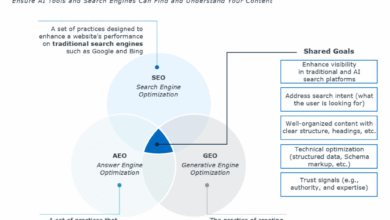
We are entering a new era. Traditional SEO tools focus on the SERP (Search Engine Results Page). GEO (Generative Engine Optimization) and AEO (Answer Engine Optimization) tools focus on AI-generated responses—what ChatGPT, Gemini, or Claude say about your brand.
This matters because search behavior is shifting. With nearly 90% of SEO professionals adopting AI workflows, agencies must now track visibility in AI answers, not just blue links. Evertune AI, for example, processes over one million AI responses monthly per brand to measure this new kind of visibility. If you aren’t watching this, you’re flying blind.
How I explain GEO/AEO to clients without confusing them
Clients don’t need to know the technical mechanics of Large Language Models. I use a simple analogy on calls:
- Traditional SEO is like fighting for the best shelf space in a supermarket. We want to be at eye level (Page 1).
- GEO/AEO is like getting recommended by the store clerk. When a customer asks, “What’s the best pasta?”, we want the clerk (the AI) to mention our brand by name.
I set expectations early: this is a branding and authority play. We measure success by “citations” and “mentions,” not just clicks.
Tool spotlight: Evertune AI (AI visibility measurement at scale)
Evertune is leading the pack here. Since it analyzes over one million AI-generated responses per brand per month, it gives you a real “Share of Voice” metric for AI models. This allows you to tell a client, “You are the recommended solution in 40% of ChatGPT queries for ‘best CRM for small business’, but only 10% in Gemini.”
I’d pilot this with a tech-forward client first. Run it for 30 days, establish a baseline, and use it to justify investments in digital PR and entity-based content strategy.
Tool spotlight: Writesonic and AI agents (where automation meets strategy)
Writesonic has evolved beyond just writing. In 2024, they released an AI agent that automates audits, keyword research, and strategy across platforms. This is where automation meets strategy. It can pull data, synthesize findings, and suggest a content plan.
However, my rule is simple: Verify everything. AI agents are incredibly fast assistants, but they can hallucinate. I use them to get to the 80% mark, then my senior strategists take it the final 20%.
My recommended agency stacks (small, growing, and enterprise) + real workflow examples

You don’t need every tool. You need the right tools for your stage. Here are the stacks I recommend based on agency maturity.
- The Starter Stack (1-5 Clients): SE Ranking (All-in-one) + Screaming Frog (Technical) + Google Search Console. Focus: Low overhead, high manual control.
- The Growth Stack (5-20 Clients): Semrush (Suite) + Evertune (GEO pilot) + Automated Reporting Tool. Focus: Efficiency and scalability.
- The Enterprise Stack (20+ Clients): Ahrefs (Data) + Semrush (Reporting) + Custom Data Warehousing. Focus: specialized roles and deep data.
Real Workflow Example: The Monthly Cycle
1. Week 1 (Audit): Auto-crawl with Screaming Frog. 45 minutes for manual review of critical errors.
2. Week 2 (Content): Keyword research and brief creation. Hand off to writers.
3. Week 3 (Links): Competitor gap analysis using Ahrefs. Outreach starts.
4. Week 4 (Report): Compile metrics. 30 minutes for “Executive Summary” writing (the part the client actually reads).
Content production that scales (with an AI SEO tool as an assistant, not a replacement)
Content bottlenecks are the number one reason agencies fail to deliver value. I use an AI SEO tool not to replace my writers, but to empower them. By using content intelligence to generate detailed briefs—covering headings, intent, and semantic terms—I cut the research time in half.
I still manually review every brief for tone and client nuance. The AI suggests the structure; I ensure it sounds like the brand.
Drafting blog posts faster: where an AI article generator fits (and the review checklist I use)
Once the brief is solid, drafting is the next hurdle. An AI article generator fits into the workflow after the research phase. It handles the heavy lifting of getting words on the page.
But I don’t publish raw AI outputs. My checklist before publishing includes:
- Fact Check: Are the stats real and recent?
- Intent Match: Does this actually answer the user’s question?
- Internal Links: Are we linking to our money pages?
- Tone Check: Does it sound robotic or human?
Publishing at scale: when an Automated blog generator is worth it
For agencies managing networks of sites or large content hubs, the logistics of uploading, formatting, and scheduling posts can be a nightmare. An Automated blog generator that connects to WordPress can solve the “copy-paste” fatigue. This automation allows my team to focus on strategy and quality assurance rather than fighting with the CMS editor.
The operational pain this solves is massive—no more missed schedules or formatting errors. But the risk is publishing the wrong version, so we always keep an approval gate in the process.
Budgeting and ROI: how I decide what to buy now vs later (without overspending)

Budgeting for tools is an exercise in restraint. I allocate budget in tiers:
- Tier 1 (Essentials): 10-15% of revenue. This includes your core suite (Semrush/Ahrefs) and project management.
- Tier 2 (Efficiency): 5% of revenue. Automation tools and AI assistants that save time.
- Tier 3 (Experimental): 2-3% of revenue. Testing new tech like GEO tools.
Remember the stat: AI tools save up to 12 hours a week. If your blended billable rate is $150/hr, that’s $1,800 a week in saved labor. That easily justifies a $200/month subscription—but only if your team actually uses the tool to save that time.
A simple rule: pay for data accuracy first, then pay for automation
I learned this the hard way: automating bad data just helps you make mistakes faster. Always prioritize budget for the tools that give you accurate, clean data (Tier 1). Once you trust your inputs, then you can spend on automating the outputs (Tier 2).
Common mistakes I see when agencies buy premium SEO tools (and how I avoid them)
Here are the pitfalls I see most often, and the fixes I implement:
- Mistake: Buying before defining deliverables.
Fix: Map out exactly what your monthly report looks like before you demo a tool. If the tool can’t generate that report, walk away. - Mistake: Overpaying for seats.
Fix: Use shared logins where security allows, or choose tools like SE Ranking that offer better seat pricing. Don’t pay $500/mo for a junior intern to just check rankings. - Mistake: Ignoring onboarding.
Fix: Make it a policy that no new tool is purchased unless a “Champion” is assigned to learn it and train the team within 14 days. - Mistake: Trusting AI blindly.
Fix: Implement a mandatory “Human QA” step in every workflow involving AI. Never let code push to production or reports go to clients without eyes on it.
FAQs + summary: best SEO tools for agencies (quick answers) and what I’d do next
To wrap up, here are the quick answers to the questions I hear most often.
FAQ: What differentiates GEO/AEO tools from traditional SEO tools?
Traditional SEO tools measure your rank on a list of blue links. GEO/AEO tools measure how often an AI (like ChatGPT) cites or mentions your brand in a conversational answer. Think of it like this: SEO is shelf placement; GEO is being personally recommended by the shop assistant.
FAQ: Is it necessary for agencies to adopt GEO/AEO tools now?
Yes, but start small. There is a first-mover advantage to understanding how your brand appears in AI results. Start a pilot program. Don’t overhaul your entire service offering yet, but don’t ignore it either.
FAQ: Do AI enhancements really save time for agencies?
Absolutely. The data shows up to 12 hours saved per week. In my agency, this comes from automating first drafts of reports, technical audit categorization, and content brief generation. It frees up senior minds for strategy.
FAQ: Will Adobe’s acquisition of Semrush affect agencies?
With Adobe acquiring Semrush for $1.9 billion in a deal expected to close in H1 2026, we are likely to see deeper integrations with the Adobe Marketing Cloud. This is generally good news for enterprise workflows, but smaller agencies should keep an eye on pricing structures. I recommend keeping your tool stack flexible—never be 100% dependent on one platform if you can avoid it.
What I’d do next:
- Audit your current subscriptions. Cancel anything you haven’t logged into in 30 days.
- Run the scorecard. Evaluate your main suite against your current needs.
- Pilot one AI workflow. Whether it’s for content briefs or reporting, try to reclaim those 12 hours a week starting now.