Integrated Search: Best SEO and PPC Tools for Growth
Introduction: Integrated Search for Beginners (SEO + PPC) Without the Overwhelm

I used to keep my SEO keywords in one massive spreadsheet and my Google Ads search terms in another. The result? I was bidding on terms I already ranked #1 for organically, and my ad copy promised things my landing pages didn’t deliver. It was a mess of wasted budget and conflicting signals.
If you’re reading this, you’re likely in the same boat: managing marketing for a small-to-mid-sized business, trying to make sense of fragmented data, and feeling the pressure to show results fast. You don’t need another list of 50 features; you need a workflow that connects paid learnings to organic growth.
In this guide, I’m going to break down Integrated Search: The Best Tools to Manage Both SEO and PPC (Best SEO and PPC Tools). I’ll share the exact evaluation rubric I use, compare the top tools on the market, and give you a weekly workflow that actually works.
Integrated Search 101: SEO, PPC, and the Shift to AEO/GEO (What’s Changing in Google)

Integrated search simply means managing organic and paid search as one cohesive system rather than two competing departments. It’s about having one keyword universe, one consistent message, and one measurement model. When you get this right, you stop burning cash on ads that don’t convert and start building organic content that actually answers user questions.
But the landscape is shifting under our feet. We aren’t just optimizing for blue links anymore; we are optimizing for AI answers. With AI Overviews appearing in over 50% of Google search results by mid-2025 , the game has changed from “ranking” to “being cited.”
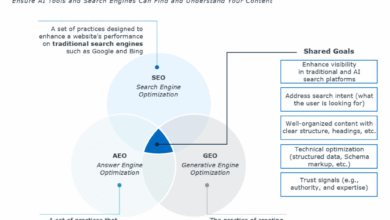
What’s the difference between SEO, PPC, AEO, and GEO?

Think of it like this:
- SEO (Search Engine Optimization): Earning your placement. You build a house (content) and hope Google maps sends people there.
- PPC (Pay-Per-Click): Buying your placement. You pay a toll to get traffic immediately.
- AEO (Answer Engine Optimization): Optimizing content so AI assistants (like ChatGPT or Gemini) can read it and use it to answer questions directly.
- GEO (Generative Engine Optimization): The specific tactics to track and improve your brand’s visibility in those AI-generated summaries, measured by metrics like “AI citation rate” and “share of AI voice.”
What I mean by “integrated”: one keyword universe, one message, one measurement model
To stop the chaos, I operate with a unified system:
- Shared Keyword Map: I don’t have “SEO words” and “PPC words.” I have customer intent queries, and I decide which channel attacks them best.
- Shared Landing Page Strategy: If an ad works, that landing page logic should inform my organic content structure.
- Shared Reporting: I look at total search visibility—paid clicks, organic traffic, and now, AI visibility signals—in one view.
Why Integrate SEO and PPC? The Business Case (Clicks, Profitability, and Better Decisions)

Combining these efforts isn’t just about being organized; it’s about profitability. Advertisers who combine SEO and PPC tactics have reported a 25% increase in clicks and a 27% boost in profitability .
Here is what happens when you stop treating them as silos:
- You stop guessing: PPC data reveals which keywords actually convert, so you don’t waste six months writing SEO articles that drive traffic but no sales.
- You improve Quality Score: When your organic landing pages are optimized for the same intent as your ads, your ad relevance scores go up, often lowering your CPC.
- You dominate the SERP: appearing in the ad pack, the organic listing, and the AI overview simultaneously creates a trust signal that’s hard to beat.
What to measure when you run SEO + PPC together
Don’t overcomplicate your dashboard. Here is my starter KPI list:
- Conversions & CPA: Are we making money efficiently?
- Blended CAC: What is the total cost to acquire a customer across both channels?
- Impression Share: How much of the available market are we seeing?
- Quality Score: A health check on our keyword-to-landing-page relevance.
- AI Visibility Metrics: Are we being cited in AI overviews? (This is the new frontier).
How I Evaluate the Best SEO and PPC Tools (A Simple Checklist + Scoring Rubric)

I’ve learned the hard way that buying the most expensive tool usually just leads to expensive shelfware. Beginners should prioritize a small stack with strong integrations over a tool that does everything mediocrally.
When I evaluate software, I use this simple scoring rubric:
| Criteria | Weight | What I Look For |
|---|---|---|
| Keyword & Competitor Intel | 30% | Does it show paid vs. organic overlap clearly? |
| PPC Optimization | 25% | Can it automate negative keywords and budget pacing? |
| Reporting & Integrations | 20% | Does it play nice with GA4 and Google Ads natively? |
| Technical SEO | 15% | Does it catch basic crawl errors and schema issues? |
| AI/Automation | 10% | Is it ready for AEO tracking? |
Beginner-friendly must-haves vs nice-to-haves
If you have a limited budget, focus on the left column:
- Must-Haves:
- Accurate keyword volume & difficulty data
- Competitor ad history (see their copy)
- Google Ads & GA4 integration
- Basic site audit capabilities
- Nice-to-Haves:
- Custom white-label dashboards
- Complex script automation
- Multi-location rank tracking (unless you are a local biz)
- Predictive AI forecasting
Where AI matters most (and where it’s just marketing)
I love AI for smart bidding and anomaly detection—tools that tell me, “Hey, your spend just spiked 400% on a keyword that doesn’t convert.” That saves my budget. Generative AI is also great for drafting ad copy variants quickly.
However, be careful with tools promising “fully autonomous growth.” I never let an AI turn off campaigns or completely rewrite landing pages without my approval. You need to validate the machine’s suggestions with your own experiments.
Comparison: The Best SEO and PPC Tools for Integrated Search (What Each One Is Best At)

There is no single “magic button” tool. You are looking for the best combination for your specific workflow. Here is how the top players stack up.
| Tool | Best For | SEO Strength | PPC Strength | Learning Curve |
|---|---|---|---|---|
| SEMrush PPC Toolkit | All-in-one Intelligence | High (Industry Leader) | High (Great comp intel) | Intermediate |
| SpyFu | Competitor Research | Medium | High (Ad history) | Beginner |
| Optmyzr | PPC Automation | Low | Very High | Advanced |
| Ahrefs | Link & Content Data | High | Medium (Ads tool is newer) | Intermediate |
| Google Ads/GSC | Native Data | Essential | Essential | High (Complexity) |
All-in-one suites (great for unified keyword + competitor insights)
SEMrush is my go-to recommendation if you can afford one paid tool. Their Keyword Gap tool is invaluable—it literally shows you “Competitor A bids on this, ranks for that, and you are missing both.” I use the Position Tracking tool to monitor my target keywords across both paid and organic visibility side-by-side.
Competitor intel tools (fast way to align SEO pages with ad messaging)
SpyFu punches above its weight for PPC research. If I’m entering a new niche, I use it to download a competitor’s entire keyword history. If they’ve been bidding on a term for five years, it converts. I take that term and immediately prioritize it for an SEO content piece. The limitation? It’s not a full site auditor, so don’t rely on it for technical SEO fixes.
PPC optimization & automation tools (where time savings really happen)
Optmyzr is a powerhouse for managing spend. It uses rule-based automations to pause bleeding keywords or adjust bids based on weather, inventory, or ROAS targets. For beginners, it might be overkill, but if you manage spend over $5k/month, it pays for itself by catching wasted clicks. Just remember: start with alerts, not auto-changes.
Native platforms and free essentials (don’t skip these)
Before you spend a dime, you must master Google Search Console (GSC) and Google Ads native interface. Linking GSC to Google Ads is a day-one task. It allows you to run the “Paid & Organic Report,” which is the most underrated free report in digital marketing. It shows you exactly where you have coverage gaps.
Recommended Tool Stacks for Beginners (Pick a Setup Based on Budget and Complexity)

You don’t need to buy everything at once. Here are the stacks I recommend depending on where you are in your journey.
| Stack Name | Budget Range | Included Tools | Best For |
|---|---|---|---|
| Starter | $0 – $100/mo | Google Ads, GSC, GA4, Looker Studio | Solo founders & tight budgets |
| Growth | $200 – $500/mo | SEMrush or Ahrefs + Starter Stack | Small teams needing intel |
| Advanced | $500+/mo | Optmyzr + SpyFu + Content Intelligence + Growth Stack | Scaling & high ad spend |
If your bottleneck is publishing at scale—taking those keyword insights and turning them into high-quality, intent-matched pages—you might consider an AI SEO tool like Kalema. It acts as a content intelligence layer, helping you produce articles that align with the keyword map you’ve built without spending weeks in the drafting phase.
Starter stack (lowest cost, highest fundamentals)
Stick to the Google ecosystem. Master the Keyword Planner for volume data and Search Console for organic reality checks. It’s manual work, but it teaches you the fundamentals of search intent without relying on a tool’s proprietary metrics.
Growth stack (keyword intelligence + light automation)
Once you have revenue coming in, add an intelligence suite like SEMrush. This is where my “integrated search review” meeting becomes efficient. Instead of 10 tabs, I look at one dashboard to see where we are winning and losing across the board.
My Step-by-Step Integrated Search Workflow (From Keywords to Landing Pages to Reporting)

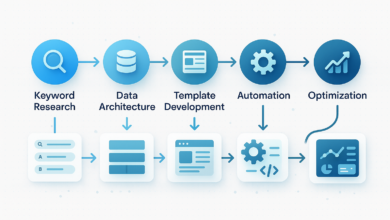
Tools are useless without a routine. Here is the 5-step workflow I use to keep SEO and PPC aligned.
Step 1: Build one shared keyword map (SEO pages + PPC ad groups)
I create a master spreadsheet. Column A is the Keyword. Column B is “Funnel Stage” (Awareness, Consideration, Decision). Column C is “Target Page.” Column D is “Ad Group.” If I see a keyword that has an Ad Group but no Target Page (or vice versa), I know I have a gap. This simple document prevents the “left hand doesn’t know what the right hand is doing” problem.
Step 2: Use PPC for fast learning, SEO for compounding wins
I never guess with SEO content anymore. I test topics with PPC first. If I run ads to a landing page for “emergency furnace repair” and it converts at 15%, I know that topic is a winner. I then prioritize building a robust, long-form SEO asset for that term. PPC buys you data; SEO builds you equity.
Step 3: Align landing pages with ad intent + on-page SEO basics
When you build that page, ensure the H1 tag matches the ad copy headline. If your ad says “24/7 HVAC Repair” and your page says “Welcome to Bob’s Heating,” you will lose the user. I check my AI article generator outputs to ensure the H1, title tag, and meta description all align perfectly with the search intent I validated in Step 2.
Step 4: Optimize for AEO/GEO while you write (structured answers, citations, schema)
This is the part most people skip. To rank in AI overviews, you need to structure your content so machines can parse it. I use clear H2s and H3s framed as questions. I include direct, 40-word definitions immediately after the heading. I add FAQ schema.
Example:
Bad: “Many people wonder about the price…”
Good (AEO optimized): “How much does AC repair cost? The average cost of AC repair in the US is between $150 and $450…”
Step 5: Launch, then run a weekly ‘search terms → content → ads’ loop
Every Monday, I pull the “Search Terms” report in Google Ads. I look for two things:
- Irrelevant terms: Add as negative keywords to save money.
- New specific questions: If I see people asking “how to fix X without tools,” and I don’t have a page for that, I use an Automated blog generator to quickly spin up a draft covering that specific long-tail topic. This keeps my content calendar fueled by real data.
Common Mistakes I See in Integrated SEO + PPC (and How to Fix Them)
I’ve made plenty of mistakes, so you don’t have to. Here are the most common pitfalls in integrated search.
Mistakes checklist (5–8 items)
- Siloed Keyword Lists: Keeping separate lists for paid and organic means you are likely bidding on your own brand terms unnecessarily or missing huge gaps. Fix: Merge them into one master map.
- Ignoring Negatives: Not sharing negative keyword lists between campaigns. If it’s bad for PPC, it’s probably bad for SEO too. Fix: Review search terms weekly.
- Mismatched Landing Pages: Sending specific ads to a generic home page. Fix: Build specific pages for specific ad groups.
- Vanity Metrics: Optimizing for CTR (Click Through Rate) instead of Conversions. High traffic with no sales is just a vanity metric. Fix: Track conversion value, not just clicks.
- Over-Automation: Letting “Smart Campaigns” run wild without human oversight. Fix: Set strict budget caps and review regularly.
- Ignoring Attribution: Thinking PPC got all the credit when SEO did the education work. Fix: Check “Assisted Conversions” in GA4.
FAQs + Summary: Choosing the Best SEO and PPC Tools and What I’d Do Next
FAQ: Why integrate SEO and PPC efforts?
Because your customers don’t care which channel they click on; they just want an answer. Integration improves your profitability by reducing wasted ad spend and boosting your Quality Score, which lowers your cost per click.
FAQ: Which tools support both SEO and PPC integration?
I recommend SEMrush for the best all-in-one data, SpyFu for deep competitor ad history, and Optmyzr if you need heavy-duty PPC automation. For free tools, Google Search Console + Google Ads is your baseline.
FAQ: How are AI and automation transforming PPC?
AI is taking over bidding and creative testing. Tools like Performance Max use AI to find customers across channels. However, this means you need to be even more vigilant about the creative assets and data inputs you feed the system.
FAQ: How should content be optimized for AI answer engines?
Focus on authoritative citations, clear Q&A formatting, and schema markup. Answer the user’s question directly and succinctly at the top of your section, then expand on the details.
Final Thoughts & Next Steps
If I were starting from scratch today, I wouldn’t let the tool options paralyze me. Strategy beats software every time.
Here is what I would do this week:
- Day 1: Link your Google Search Console to your Google Ads account.
- Day 2: Download your “Search Terms” report from Google Ads and compare it to your organic rankings.
- Day 3: Pick one “Growth Stack” tool (like SEMrush or SpyFu) and run a trial to see your competitor’s paid keywords.
Integrated search is the future. The sooner you stop treating SEO and PPC as enemies and start running them as partners, the sooner you’ll see the real growth you’re looking for.