AI SEO strategies: Adapting to AI so I stay visible in generative results

I recently searched for a niche SaaS solution I was researching. In the past, I would have clicked on the top three results, scanned their pricing pages, and maybe read a comparison blog. This time? Google’s AI Overview gave me a synthesized answer—pricing tiers, pros, cons, and a “best for” recommendation—right at the top. I got everything I needed without clicking a single link.
That moment was a wake-up call. As marketers and business owners, we aren’t just fighting for rankings anymore; we are fighting for citations. If AI summarizes the answer, I need to ensure my brand is the source it quotes.
This guide isn’t about chasing the latest hype cycle. It is a practical, ground-level look at AI SEO strategies for US businesses. I’ll walk you through what is actually changing, the difference between AEO and GEO, and a step-by-step workflow to structure your content so machines can understand—and cite—it. Whether you are a solo marketer or running a team, you can implement these steps this week.
What changed (and why rankings alone aren’t the whole game anymore)

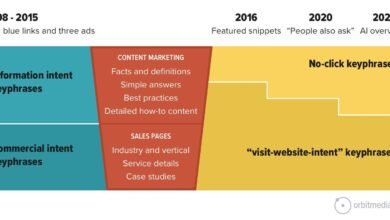
We are witnessing a fundamental shift in user behavior. It’s not just that Google is changing; how people search is changing. With tools like ChatGPT, Claude, and Perplexity entering the mix, the search engine results page (SERP) is rapidly becoming an “answer engine.”
The data backs this up. Recent industry insights suggest that up to 60% of AI-driven searches do not result in a website visit. When AI Overviews appear, organic click-through rates (CTR) can drop by over 50%. Users are getting the “what” and the “how” directly from the interface.
Does this mean SEO is dead? Absolutely not. But the game has a new layer. Traditional SEO gets you indexed; AI SEO gets you mentioned. Here is the practical difference for your business:
| Feature | Traditional SEO Result | Generative (AI) Result |
|---|---|---|
| Primary Goal | Ranking #1–3 for a keyword | Being cited as a trusted source |
| User Action | Click to read | Read answer, click only for deep dive |
| Metric | Traffic & CTR | Share of Answer (Visibility) |
| Implication | Optimize for the click | Optimize for the snippet/summary |
The new visibility metric: being cited, not just clicked
In this new environment, visibility relies on “source selection.” When an AI constructs an answer, it looks for content that is structured, authoritative, and linguistically clear. It wants facts it can easily extract.
For example, if I sell payroll software, I don’t just want to rank for “best payroll software.” I want the AI summary to say, “According to [My Brand], features like automated tax filing are critical for compliance.” Even if the user doesn’t click, that brand impression—that AI citation—builds authority and trust. It signals to the user that you are a market leader worth investigating later.
A quick reality check for US businesses
If you are operating in the US market, the pressure is higher. The adoption of AI tools here is rapid—71% of users now leverage AI tools for search in some capacity. Furthermore, we are already seeing signs of AI monetization.
Sponsored citations and ads within AI responses are inevitable . My default assumption is that the AI layer will eventually become pay-to-play for competitive queries. Building organic citation equity now is the best defense. If you establish your content as the “ground truth” today, you secure your spot before the ad inventory takes over.
AI SEO strategies basics: AEO vs GEO vs “traditional SEO” (in plain English)

Let’s cut through the jargon. You will hear terms like AEO and GEO thrown around. Here is how I define them when planning a strategy:
- Traditional SEO is about helping search engines find and index your page.
- AEO (Answer Engine Optimization) is about formatting that content so an AI can read it and turn it into a direct answer (think conversational, Q&A style).
- GEO (Generative Engine Optimization) is about influencing the synthesized output—ensuring your brand, data, and unique angles are included in the AI’s composite response.
Here is a breakdown of how they compare:
| Strategy | Primary Goal | Best Content Formats | Success Metric |
|---|---|---|---|
| Traditional SEO | Rankings & Traffic | Long-form guides, category pages | Organic Sessions, CTR |
| AEO | Direct Answers | FAQ blocks, concise definitions | Featured Snippets, Voice Answers |
| GEO | Citations & Influence | Data studies, expert quotes, structured lists | Mentions in AI Overviews |
When I’m doing SEO now, I’m optimizing for two audiences: humans (who need engagement) and the models (which need structure).
What “good” looks like now: signals AI systems can reuse
If you want to be cited, you need to be “citable.” AI models are essentially prediction engines—they prefer content that follows logical patterns. Here is a quick audit you can run on your key pages right now:
- Clear Headings: Are H2s and H3s descriptive questions or statements?
- Definitive Answers: Do you define the core topic in the first 100 words?
- Key Takeaways: Is there a summary box at the top?
- Structured Lists: Do you use bullet points for steps or features?
- Schema Markup: Is the code behind the page telling the same story as the text?
- Author Authority: Is there a real person associated with the content?
My step-by-step AI SEO strategies workflow (from topic to citation)

The biggest mistake I see is people trying to “trick” the AI. You can’t. Instead, you need a workflow that produces high-quality, structured information consistently. Here is how I approach it, treating content creation as a supply chain for AI answers.
Step 1: Map the intent (what the AI answer is trying to deliver)
Before I write a word, I check what the AI is currently trying to solve. If I search for “how to choose accounting software,” the AI Overview likely provides a checklist of features and a comparison of pricing models.
This tells me the intent is informational and comparative. If my article is just a sales pitch, it won’t get cited. I need to match that format. I ask myself: “When someone asks X, what is the specific artifact (list, table, definition) they want?” That becomes the centerpiece of my content.
Step 2: Choose an angle AI can cite (unique data, clear guidance, or strong expertise)
If my post says the exact same thing as the top 10 results, I’m unlikely to be cited. AI systems seem to prioritize “information gain”—what is new or unique here?
I try to add one of these to every piece:
- Proprietary Data: “We analyzed 500 small businesses…”
- Expert Opinion: “Contrary to popular belief, I recommend…”
- Specific Constraints: “For companies under $1M revenue…”
This gives the AI a reason to attribute the insight to you specifically.
Step 3: Build a page structure that’s easy to quote
Structure is your best friend. I never publish a wall of text. I use a AI SEO tool like Kalema to help outline and structure the content effectively, ensuring I’m hitting the right semantic notes.
My standard structure for citation eligibility looks like this:
- H1: Direct, intent-matched title.
- Intro: 80 words max, ending with a “What you will learn” summary.
- Definition/Direct Answer: Immediate value for the busy user (and the bot).
- H2s/H3s: Logical flow (What, Why, How).
- Visuals/Tables: Data presented in grids.
Step 4: Publish + refresh with a cadence (so I keep my citation eligibility)
Freshness is a major signal. An AI model is less likely to cite a statistic from 2019 if a 2024 source exists. I aim for a consistent publishing schedule—usually updating core “money pages” quarterly.
For many teams, keeping up this volume is impossible manually. This is where I leverage tools. I use an Automated blog generator to handle the heavy lifting of drafting and formatting. This allows me to focus my energy on the human review—checking facts, adding personal anecdotes, and ensuring the voice is right—rather than staring at a blank cursor.
Technical foundations: make sure AI systems can access and understand my site

You can write the best content in the world, but if the AI crawler is blocked, you don’t exist. If this feels technical, don’t worry—I start with just a few basic checks.
| Task | Why it matters | How to check | Common fix |
|---|---|---|---|
| Check Robots.txt | Tells crawlers if they are allowed in. | Go to yoursite.com/robots.txt | Remove “Disallow: /” for GPTBot if appropriate. |
| Verify Indexing | If Google can’t see it, their AI can’t either. | Google Search Console | Request indexing for unlisted pages. |
| Schema Markup | Translates content for machines. | Rich Results Test | Use a plugin to add Article/FAQ schema. |
Note: Always consult your legal or privacy team before opening up your site to AI bots like GPTBot or CCBot, as this involves data usage considerations.
Crawl & index basics (the non-negotiables)
At a minimum, ensure your robots.txt file isn’t blocking the crawlers you want. I specifically look for GPTBot (OpenAI), GoogleOther, and CCBot (Common Crawl). Also, an llms.txt file is an emerging standard—a simple text file that tells LLMs exactly which pages on your site are most important. It’s like a sitemap specifically for AI.
Structured data + on-page semantics (schema that matches what users see)
I cannot stress this enough: Schema markup is the language of entities. If I have a FAQ section on the page, I wrap it in FAQPage schema. If it’s a tutorial, I use HowTo schema. This removes ambiguity. However, be careful not to spam. If you mark up content that isn’t visible to the human user, you risk a manual penalty. Validity and consistency are key.
Content formats that earn citations (with templates I can copy)

Certain formats are simply easier for AI to digest. I often use an AI article generator to get the initial structure down fast, then I go in and refine the “hooks” that grab citations.
Here are two templates I rely on.
Template 1: The “AI-ready” how-to page structure
This structure works because it is modular. An AI can pull just the “Tools needed” list or just “Step 3” without losing context.
- H1: How to [Action] for [Specific Audience]
- Intro: Context + “In this guide…”
- Key Takeaways (Box): 3-5 bullet points summarizing the method.
- H2: What is [Topic]? (Definition)
- H2: Prerequisites / Tools Needed (Bulleted list)
- H2: Step-by-Step Process
- H3: Step 1: [Action verb]…
- H3: Step 2: [Action verb]…
- H2: Common Mistakes (Bulleted list)
- H2: FAQ
Template 2: Comparison pages that generative results love to summarize
When I’m comparing products (e.g., “Xero vs QuickBooks”), I explicitly define the criteria. AI loves tables. I always include a comparison matrix like this:
| Criteria | Option A | Option B | Best For |
|---|---|---|---|
| Starting Price | $X/mo | $Y/mo | Budget-conscious teams |
| Key Feature | Automation | Reporting | Enterprise scale |
By being explicit about “Best For,” I am practically writing the AI’s recommendation summary for it.
Authority and entity strategy: help AI trust who I am (especially after Knowledge Graph changes)
In June 2025, reports indicated a massive clean-up of Google’s Knowledge Graph, removing billions of ephemeral entities . This means the bar for being recognized as a distinct “entity” is higher.
To AI, your brand is an entity. You need to make sure the facts about that entity are consistent everywhere.
What I do on my pages to signal expertise (without sounding salesy)
I treat my “About” page and author bios as legal documents. I ensure:
- Consistent N-A-P: Name, Address, Phone are identical across my site, LinkedIn, and directory listings.
- Author URLs: My bio links to my LinkedIn or other publications where I’ve been cited.
- Organization Schema: I use schema to explicitly tell Google, “This website represents this Corporation.”
- Citations: I link out to authoritative sources (gov sites, academic journals) to show my content is research-backed.
Measurement: how I track AI visibility (plus the tool stack and what to watch next)

This is the hardest part right now. Traditional rank trackers don’t capture “Brand mentioned in 3rd paragraph of an AI answer.” However, a new wave of tools is emerging.
| Tool Type | Example Tools | What it measures | Caveats |
|---|---|---|---|
| AI Visibility Suites | Semrush One, Ranketta | Share of Answer, Citation frequency | Still evolving, data can be volatile. |
| Generative Trackers | Otterly.ai, Profound | AI Overview presence | Can be expensive for small teams. |
| Traditional | GSC, GA4 | Clicks, CTR drops | Doesn’t show why traffic dropped. |
I don’t need perfect measurement—just consistent signals. If I see my “branded search” volume going up even while organic clicks on generic terms go down, that’s often a sign that people are seeing my brand in the AI answer and searching for me directly.
A simple weekly dashboard (beginner-friendly)
I spend about 30 minutes a week on this. I track:
- Branded Search Impressions (GSC): Is brand awareness growing?
- Referral Traffic: Are niche AI engines sending any clicks?
- Top Pages CTR: Did a high-traffic page suddenly drop in CTR? (Likely an AI Overview appeared).
Common mistakes, FAQs, and my next steps checklist
To wrap this up, let’s look at where I see most people go wrong, so you can avoid the same traps.
Mistakes I see most often (and how I fix them)
- Mistake: Blocking all bots in
robots.txtout of fear.
Fix: Audit your policy. If you block the crawler, you block the citation. - Mistake: Writing “fluff” intros (e.g., “In today’s digital world…”).
Fix: Cut the first 100 words. Start with the definition. - Mistake: Ignoring Schema.
Fix: Install a basic schema plugin today. - Mistake: Not refreshing old content.
Fix: Update stats and dates on your top 10 pages.
FAQ: AI SEO / AEO / GEO visibility basics
What is AI SEO or AEO?
Answer Engine Optimization (AEO) is the practice of optimizing content to be used as a direct answer by AI models. It focuses on clarity, structure, and conversational relevance rather than just keywords.
How does GEO differ from traditional SEO?
Generative Engine Optimization (GEO) targets the synthesized outputs of AI engines to earn citations. While traditional SEO fights for a link position, GEO fights for brand inclusion in the summary.
How can I ensure AI systems access my site?
Ensure your robots.txt allows bots like GPTBot and CCBot (if aligned with your policy) and that your pages are indexable in Google Search Console. If Google can’t index it, AI likely won’t cite it.
What format works best for AI visibility?
Structured formats win. Use bullet points, comparison tables, “key takeaway” boxes, and clear H2/H3 question headers. Text-heavy walls are harder for models to parse into snippets.
Conclusion: what I’m doing this week to stay visible
The shift to AI search can feel overwhelming, but consistency beats hacks every time. If I could only do three things this week to protect my business, I would:
- Audit my top 5 pages: Add a “Key Takeaways” summary box and a structured FAQ section to each.
- Check my entity signals: Ensure my “About” page and author bios are robust and linked to my LinkedIn.
- Run a technical check: Verify that my
robots.txtisn’t accidentally blocking the AI crawlers I want to reach.
The goal isn’t to outsmart the machine; it’s to be the clearest, most authoritative teacher in the room. If you do that, the citations will follow.