Modern SEO Agility: An AI SEO strategy to Outpace Competitors in Real Time
Introduction: Why modern SEO agility needs an AI SEO strategy (and what I’ll cover)

I’ve watched rankings swing wildly after a single SERP layout change, and if you manage a site in the US market right now, you’ve likely felt that same instability. Search is changing faster than most teams can publish. With the rise of Google’s AI Mode and conversational answers, the old playbook of “publish and wait” is dead. The new reality is lower organic click-through rates (CTR) but significantly higher opportunity for visibility—if you know how to structure your content for machines.
This article isn’t a futuristic think-piece. It is a practical, newsroom-grade playbook for marketing managers and founders who need to adapt their SEO operations today. I’m going to walk you through the modern AI SEO strategy stack: combining traditional fundamentals with Generative Engine Optimization (GEO) and Answer Engine Optimization (AEO). I’ll share the exact real-time workflow I use to monitor changes, a checklist for human-led QA, and the artifacts you need to execute this week. Let’s cut the hype and get to work.
What changed: AI Mode, zero-click behavior, and why SEO is now a real-time discipline

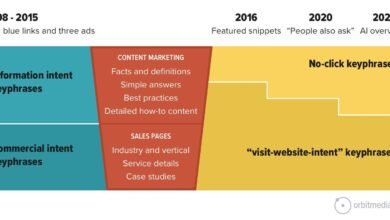
For years, we optimized for ten blue links. Today, a user searching for “best payroll software for small business” might get a comprehensive AI overview that answers their question without them ever clicking your site. This is the “zero-click” reality.
Signs your market is becoming AI-answer-first:
- Your impressions are stable or growing, but organic clicks are flat or declining.
- Informational queries (e.g., “how to calculate ROI”) show full AI summaries at the top.
- Competitors are appearing in AI citations even if they rank lower in traditional results.
Real-time SEO agility means shrinking your feedback loops. We used to audit quarterly; now, we monitor weekly. Here is how the operational loop has shifted:
| Feature | Old SEO Loop | Real-Time AI SEO Loop |
|---|---|---|
| Cadence | Monthly / Quarterly audits | Weekly monitoring / Rapid iteration |
| Primary Input | Keyword volume & difficulty | SERP features & User intent shifts |
| Primary Output | New blog posts | AEO blocks, Schema updates, Entity clusters |
| Success Metric | Rankings & Clicks | Visibility (Impressions), Citations, Conversions |
The stakes are high. Recent data suggests that only about 40.3% of U.S. Google searches result in organic clicks, while nearly 60% of AI-driven searches end without a website visit. If you don’t adapt, you risk losing brand relevance. But if you do, you build a compounding advantage: a content engine that feeds both the AI and the user.
A quick glossary (in plain English): AI Mode/SGE, zero-click, entities, topical clusters
If you only remember one thing, remember this: Google is moving from a library catalog (keywords) to a conversation partner (entities).
- Zero-click search: A search journey where the user’s query is satisfied directly on the results page (SERP) by a snippet, calculator, or AI summary.
- SGE / AI Mode: Google’s Search Generative Experience, now evolving into AI Mode. It uses generative AI to synthesize answers from multiple sources.
- Entities: The specific nouns (people, places, brands, concepts) search engines recognize as distinct objects. Example: “Nike” is an entity; “running shoes” is a keyword associated with it.
- Topical Clusters: A group of interlinked pages covering a subject in depth to establish authority. Essential for showing AI you are a credible source.
The modern AI SEO strategy stack: traditional SEO + AEO + GEO (and where each fits)

I often see teams panic and abandon their SEO roots to chase “AI hacks.” That’s a mistake. Modern visibility is multi-surface. You need a stack that addresses all three layers of the search ecosystem.
Here is how I separate these in practice:
| Strategy | Primary Goal | Optimization Unit | Key Signals |
|---|---|---|---|
| Traditional SEO | Rank in blue links & drive clicks | Keywords & Backlinks | Crawlability, Intent match, Page speed |
| AEO (Answer Engine Opt.) | Get cited in direct answers | Q&A Blocks & Structure | Conciseness, Formatting, Schema |
| GEO (Generative Engine Opt.) | Influence AI summaries & brand perception | Entities & Semantics | Topical authority, Citations, Author credibility |
In the real world, this means one topic—like “project management methodologies”—is treated differently. You write the blog post for depth (Traditional), include a definitions table for extraction (AEO), and link it to your “Agile” and “Waterfall” guides to map the entities (GEO).
Traditional SEO fundamentals that still matter (even with AI answers)
I still audit these first because no AI can cite a page it can’t read.
- Technical Accessibility: Can Googlebot crawl and render your page?
- Search Intent: Does the content actually solve the user’s problem?
- E-E-A-T: Experience, Expertise, Authoritativeness, and Trustworthiness are the bedrock of being cited.
- Internal Linking: Helping bots understand page relationships.
AEO: how to format content so AI systems can lift clean answers
AEO Block Recipe:
- Heading (H3/H4): State the specific question (e.g., “What is AEO?”).
- Direct Answer: Provide a 40–70 word objective summary immediately following the heading. No fluff.
- Supporting Bullets: Add 3–5 bullet points for context or steps.
- Source Note: Briefly cite a statistic or expert if applicable to boost trust.
Example: If I’m targeting “What is GEO?”, I don’t start with “In the rapidly changing world of marketing…” I start with: “Generative Engine Optimization (GEO) is the process of optimizing content to increase visibility in AI-generated search results. It focuses on entity density, semantic relevance, and authoritative sourcing rather than keyword frequency.”
GEO: how to build semantic clusters and entity trust for generative visibility
GEO isn’t about keyword stuffing; it’s about convincing the LLM (Large Language Model) that your site is the definitive source on a topic. Data suggests that 41% of marketers saw increased traffic after implementing GEO-focused structures.
GEO signals I prioritize:
- Entity Density: Using the correct industry terminology and related concepts naturally.
- Corroboration: Citing external authoritative sources.
- Structured Sections: Using lists and tables to organize data.
- Original Insights: Adding proprietary data or unique expert takes that AI can’t hallucinate.
My step-by-step AI SEO strategy workflow for real-time agility (monitor → decide → publish → validate)

Here is the loop I run. In a stable market, you might do this monthly. In 2025, if you aren’t looking weekly, you’re missing opportunities. For those of you with limited resources, tools like Kalema can serve as your AI SEO tool to speed up the research-to-brief-to-draft phases, but the strategy must be yours.
The Agile SEO Dashboard:
| Signal | Where to look | What it means | Next Action |
|---|---|---|---|
| CTR Drop / Impression Hold | Search Console (Performance) | Zero-click or AI answer taking traffic. | Add AEO blocks; check for Featured Snippet opportunity. |
| New AI Overview | Live SERP check | Intent is now informational/summarized. | Optimize for citation; deepen content beyond the summary. |
| Ranking Decay | Rank Tracker | Content decay or competitor refresh. | Refresh content; update stats; check entity gaps. |
If you only have 2 hours/week: Spend 30 minutes on Step 1 & 2, and 90 minutes updating your top 3 priority pages with AEO blocks.
Step 1: Set the baseline (topics, pages, and the metrics I actually watch)
Stop trying to fix everything. Pick your top 20 “money pages” (conversions) and top 20 “traffic pages” (awareness). Create a simple spreadsheet baseline.
- Top Queries per page.
- Current Rank.
- Impressions (Visibility).
- Conversions (and Assisted Conversions if you have GA4 set up).
Step 2: Monitor the SERP like a product release (what changed since last week?)
Every Monday, I scan the SERPs for my top 5 keywords. I look for:
- New SERP Features: Did a video carousel appear? Do I need video?
- AI Summaries: Is Google providing a “how-to” list directly?
- Competitor Shifts: Did a competitor switch from a blog post to a calculator tool?
Step 3: Diagnose intent fast (and map the query to the right content type)
I’ve made the mistake of writing a 3,000-word ultimate guide when the user just wanted a checklist. It tanked. Watch the SERP to determine the format:
- “What is…” -> Definition + Context (Glossary/Wiki style).
- “Best X for Y…” -> Comparison Table + Reviews (Listicle).
- “How to calculate…” -> Tool or Step-by-step formula.
Step 4: Build or refresh a topical cluster (pages, entities, and internal links)
Don’t publish orphans. If you write about “Employee Onboarding Software,” you need supporting pages like “Onboarding Checklist,” “Best Practices for Remote Onboarding,” and “Onboarding vs Orientation.” This cluster signals deep expertise to the AI.
Step 5: Draft content that’s easy to cite (AEO blocks + evidence + clear structure)
This is where speed matters. I often use an AI article generator to turn my brief into a first draft. It handles the heavy lifting of structure and initial wording. But here is the rule: no draft goes live without a human pass.
- Does this sound like our brand, or like a robot?
- Are the statistics verified and dated?
- Did we include one unique insight or story no one else has?
- Is the internal linking helpful, not just keyword-matching?
Step 6: On-page + technical pass (titles, headings, schema, and indexability)
In the 10 minutes before publishing, I do this checklist:
- Title Tag: Front-load the main keyword.
- Meta Description: Sell the click (even if CTR is lower).
- H1/H2/H3 Hierarchy: Logical flow for parsers.
- Schema: Add ‘Article’ or ‘FAQ’ schema if relevant.
- Canonical: Ensure it points to itself (if original).
Step 7: Validate and iterate (measure visibility, citations, and business outcomes)
Don’t just look at clicks. If impressions go up but clicks go down, check if you are being cited in an AI answer. If you are, that’s a branding win. Log your changes: “Added FAQ schema on Oct 10.” Check back in two weeks. Did impressions jump? If yes, rinse and repeat.
Execution details that compound results: structure, schema, internal links, and multimodal optimization

To scale this across a whole site, you need consistency. Whether you are writing manually or using an Automated blog generator to maintain a publishing cadence, the output must adhere to strict structural standards. It’s not about churning out spam; it’s about operationalizing quality.
Here is how I decide on Schema markup:
| Schema Type | Best For | Requirement | Common Pitfall |
|---|---|---|---|
| FAQPage | Q&A sections | Exact match Q&A text | Marking up Q&A not visible on page |
| Article | Blog posts / News | Author, Date, Headline | Missing author or update date |
| HowTo | Tutorials / Guides | Step-by-step list | Skipping steps or supplies list |
Content formatting that AI can reliably extract (without writing for robots)
Write for humans first, but format for machines. I use tables whenever I’m comparing data (Price, Features, Pros/Cons). I use bulleted lists for non-sequential items and numbered lists for processes. This structure makes it incredibly easy for an AI to parse your content and say, “According to [Your Brand], here are the steps…”
Multimodal basics: captions, alt text, and entity-rich visuals

We often forget that Google’s AI models are multimodal—they read images too. Don’t just upload a screenshot named “image1.png”.
- Filename:
seo-workflow-diagram-2025.png - Alt Text: “Diagram showing the 4-step real-time SEO workflow: Monitor, Decide, Publish, Validate.”
- Caption: “Figure 1: This agile loop allows teams to react to SERP volatility weekly.”
This adds context and entities that text alone might miss.
Internal linking that supports topical authority (and helps crawlers and readers)
Before I publish, I enforce a “3-5 link” rule. I link up to the pillar page (the main category), sideways to related articles (siblings), and conversion-focused to a product or contact page. This isn’t just for SEO juice; it helps the user (and the bot) navigate your expertise.
Common mistakes I see in AI-driven SEO (and how to fix them fast)

I’ve audited dozens of sites recently, and the same errors keep popping up. If you are doing any of these, fix them in this order.
- Publishing raw AI drafts. 70% of marketers believe AI-only content lacks nuance. It’s true. It often reads flat and lacks the specific examples that build trust. Fix: Always have a human editor inject brand voice and verify facts.
- Optimizing for “rankings only.” If you ignore zero-click visibility, you’re playing an old game. Fix: Start tracking impressions and brand mentions as key KPIs.
- Isolating GEO/AEO. Treating these as separate from your main SEO strategy leads to disjointed content. Fix: Integrate the “AEO block” into your standard blog templates.
- Ignoring Content Decay. AI loves freshness. Leaving high-performing posts untouched for years is a recipe for replacement. Fix: Refresh your top 10 pages quarterly.
- Skipping E-E-A-T. AI content is ubiquitous; human expertise is the differentiator. Fix: clear author bylines and “about us” pages are mandatory.
Mistake #1: Publishing AI drafts without a human editorial pass
The biggest risk is factual hallucinations or generic advice that harms your brand authority. I always ensure a human expert reviews the draft to add “frictional” value—real-world anecdotes or counter-intuitive advice that an LLM wouldn’t predict.
Mistake #2: Optimizing for “rankings only” and ignoring AI answer visibility
It’s not bad news that clicks are down; it’s just a different scoreboard. If you appear in the AI snapshot, you are building top-of-mind awareness. Use that visibility to drive brand searches later.
Mistake #3: Treating GEO/AEO as separate from core SEO fundamentals
I ask myself: “Is this page technically sound?” before I worry about entity density. If the page takes 5 seconds to load, the smartest AI optimization won’t save it.
FAQs + next steps: how I’d start this week (without getting overwhelmed)

What is GEO and how does it differ from traditional SEO?
GEO (Generative Engine Optimization) optimizes content to be cited by AI systems using semantic clusters and authority, whereas traditional SEO focuses on ranking blue links using keywords and backlinks. Think of Traditional SEO as organizing a library, and GEO as teaching a professor about your subject.
Why does AEO matter for modern content strategies?
Answer Engine Optimization matters because search behaviors are shifting to conversational queries. If your content isn’t structured to answer questions directly (AEO), you disappear in a zero-click world.
How should content be structured for AI Mode or SGE?
Use a clear hierarchy (H2s/H3s) that mirrors user questions. Start sections with direct, factual answers. Use schema markup to explicitly tell search engines what the content is. Avoid wandering intros.
Can AI tools fully replace human writers?
No. AI scales the drafting and research process, but humans are essential for E-E-A-T, brand voice, strategic direction, and accuracy.
What role do multimodal elements play in SEO agility?
Images with rich metadata (alt text, captions) provide another entry point for AI to understand and cite your content. They are essential for comprehensive visibility.
The Bottom Line
If I were starting from zero today, here is my 3-step plan:
- Audit the baseline: Identify my top 10 traffic pages and check the SERP for AI Overviews.
- Implement AEO blocks: Rewrite the intros of those 10 pages to include clear, definitional answers.
- Set a weekly rhythm: Schedule 30 minutes every Monday to check for SERP changes and react.
The goal isn’t to outsmart the AI; it’s to be the most reliable source it can find. Start small, measure what matters, and keep your content agile.