Winning the AI Box: The Best Software for Tracking AI Overview Positions (best AI rank tracking tools)
Introduction: Winning the AI Box (Google AI Overviews) starts with measurement

Last month, I ran a simple experiment that kept me up at night. I searched for my own brand name on ChatGPT twice within ten minutes. The first time, it cited three of our top articles and called us a “market leader.” The second time—using the exact same prompt—it didn’t mention us at all, instead recommending a competitor I hadn’t thought about in years.
That is the reality of the new search landscape. Unlike the static “blue links” of traditional SEO, where ranking #1 usually means you stay there for a while, AI Overviews and LLM responses are dynamic, probabilistic, and frustratingly volatile. If you are an SEO or marketing manager, this creates a massive blind spot. You suspect these AI boxes are stealing your traffic, but you can’t prove it because you can’t measure it reliably.
Checking your position manually once a week isn’t tracking; it’s guessing. To win in this environment, you need data that turns chaos into trends. In this guide, I will break down exactly what AI rank tracking (or AEO) is, how to measure your visibility without drowning in data, and which software is actually worth your budget—whether you are a one-person startup or an enterprise lead.
What I’ll cover (and who this is for)
If you are looking for a magic button to fix your rankings, this isn’t it. But if you want a reliable system to measure and improve your presence in AI answers, here is what we will cover:
- Plain-English Definitions: What AEO is and how it differs from SEO.
- The Mechanics: How prompt sets, sampling, and citation tracking actually work.
- Tool Comparison: A transparent look at the best AI rank tracking tools for SMBs, agencies, and enterprises.
- Evaluation Checklist: The exact criteria I use to vet software.
- 60-Minute Setup: A step-by-step SOP to build your dashboard today.
- Mistakes & FAQs: The common traps beginners fall into.
AI rank tracking (AEO) in plain English: what we’re tracking and why it’s different from SEO

Traditional SEO tracking is like taking a class photo: everyone stands still, you snap the picture, and you can clearly see who is in the front row. AI rank tracking is more like polling a room full of people. If you ask 100 people for a recommendation, 60 might say “Brand A,” 30 might say “Brand B,” and 10 might say nothing.
Because Large Language Models (LLMs) generate answers word-by-word based on probability, the output can change based on the user’s location, slight phrasing variations, or just the model’s “mood” that millisecond. Therefore, we aren’t tracking a static position (like “Rank #3”). We are tracking probability and presence over time.
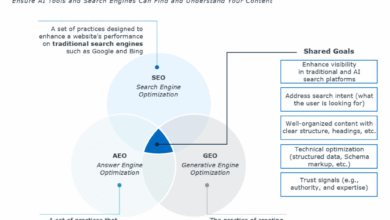
This is what we call AEO (Answer Engine Optimization). It is the practice of optimizing content so that generative engines—like Google’s AI Overviews—cite your brand as the authoritative answer. When I started tracking this, the biggest surprise wasn’t that our rankings changed, but that the citations changed. A model might summarize our content perfectly but link to a third-party review site instead of our domain. That is a lost click, and that is what we need to measure.
Where AI answers show up (AI Overviews vs ChatGPT/Gemini/Perplexity)
Your customers are asking questions in more places than just the Google search bar. Visibility now needs to be tracked across:
- Google AI Overviews (SGE): The new box at the top of search results.
- ChatGPT (OpenAI): Often used for research and “how-to” queries.
- Perplexity: A “citation-first” engine that acts like a research assistant.
- Gemini (Google) & Claude (Anthropic): Growing rapidly for complex analysis.
- Bing Copilot: Integrated directly into Windows and Edge.
If you sell “payroll software for small business,” you need to know if you appear in the vendor list generated by ChatGPT, not just the Google ad slots.
Mini glossary: the 6 metrics I actually look at
Don’t get bogged down in fancy dashboards. These are the only metrics that drive decisions:
- Mention Rate: The percentage of times your brand appears in the answer text.
- Citation / Link Presence: The percentage of times your URL is linked (this is the money metric).
- Share of Voice (SoV): How often you appear compared to your top competitors.
- Sentiment: Is the AI describing you positively, negatively, or neutrally?
- Position/Order: Are you the first recommendation or the fifth?
- Competitor Benchmarking: Which competitor is showing up when you aren’t?
Note: If I only track one metric at first, I start with Citation Presence because it is the closest proxy to attributable traffic.
How AI Overview position tracking works: prompts, sampling, and the metrics that matter

Here is the technical reality check: LLM-based responses vary per query execution. If you run a check once on Monday morning, that is a snapshot, not data. To get reliable insights, the best AI rank tracking tools use statistical sampling.
This means they don’t just check “best CRM” once. They might check it five times, or check five variations of that question (“top CRM,” “best CRM software,” “CRM tools for sales”). They aggregate these results to tell you: “You have 80% visibility for this topic.”
Why one screenshot is misleading (sampling over snapshots)
Think of it like the weather. Looking out the window right now tells you if it’s raining (a snapshot). But checking the 10-day forecast gives you the trend (sampling). In AEO, a single screenshot can be noise. You might disappear for one search but appear for the next ten. We look for the trend line—is your visibility moving from 40% to 60% over the last month?
How I build a prompt set (branded + non-branded + intent clusters)
You can’t just track keywords; you track “prompts”—the natural language questions users ask. I organize my prompt sets into three buckets. Here is a template you can steal:
- Branded Prompts: “What is [My Brand]?”, “Is [My Brand] legit?”, “[My Brand] pricing”
- Category/Non-Branded: “Best [Product Category] for [User Persona]”, “Alternatives to [Competitor]”
- Problem-Solving Intent: “How to fix [Problem my product solves]”, “Checklist for [Process]”
Why this matters: I once found that we owned the answer for “best tool for X” but were completely invisible for “how do I do X”. That insight came solely from prompt-level tracking.
Cost reality: pay-as-you-go vs subscription (and when each wins)
This is usually the deciding factor for my clients. AI queries are expensive to run (computationally), so these tools aren’t cheap.
| Model | Best For | Pros & Cons |
|---|---|---|
| Pay-as-you-go | Startups, periodic audits, irregular usage | Pro: Zero waste. You buy credits and use them when needed. Con: Can get expensive if you forget to turn off a daily monitor. |
| Subscription | Agencies, Enterprise, Continuous Monitoring | Pro: Predictable billing and historical data retention. Con: You pay even if you don’t look at the dashboard. |
Budget Tip: If I’m only checking visibility once a month for a quarterly report, I stick to pay-as-you-go to avoid burning cash on unused runs.
How I evaluate the best AI rank tracking tools (a beginner-friendly checklist)

The market is flooded with new tools claiming to “hack” AI search. Most are vaporware. Here is the rigorous checklist I use to separate the signal from the noise. I personally won’t compromise on data transparency—if a tool can’t show me the exact response text it analyzed, I won’t use it.
Coverage: which engines and surfaces does it track (including Google AI Overviews)?
First, does it track where my customers are? For B2B software, I need Perplexity and ChatGPT coverage. For local businesses or ecommerce, Google AI Overviews (SGE) and Bing Copilot are non-negotiable. I start with where my leads come from, not just where the tool is strongest.
Data quality: citations, sources, de-duplication, and volatility handling
Does the tool differentiate between a “mention” (text only) and a “citation” (link)? This is critical. I also verify in demos if they have clear change logs. Volatility is normal, but I need to know if a drop in visibility is due to my content or a change in the AI model itself.
Workflow fit: integrations with traditional SEO reporting
If you are managing a team, you don’t want another login. The ability to pull AEO data into existing reports (like Looker Studio or alongside SE Ranking/Semrush data) is a huge plus. It keeps the “AI panic” contained within your standard reporting cadence.
Quick scoring rubric (copy/paste)
When evaluating tools, give them 0-2 points per category. Total score helps you shortlist the top 2 for a trial.
- Coverage: Tracks my priority engines? (0-2)
- Prompt Tracking: Allows custom conversational prompts? (0-2)
- Reporting: Exports clear, white-label reports? (0-2)
- Cost Control: Fits my budget model (wallet vs plan)? (0-2)
- Actionability: Tells me why I ranked (citations/sources)? (0-2)
Advice: You don’t need perfection—just enough signal to act. If a tool scores an 8/10, it’s good enough to start.
Best AI rank tracking tools: comparison table + my picks by business type

Here is the landscape as it stands today. I have categorized these by “best for” because an enterprise tool is overkill for a freelancer, and a wallet tool is a nightmare for an agency with 50 clients.
Note on Pricing: Prices and features change rapidly in this sector. All pricing notes below are estimates based on available public data —always check the vendor’s pricing page for the latest figures.
Comparison table: pricing model, coverage, and best-fit (SMB → enterprise)
| Tool | Cost Model | Key Strength | Best For |
|---|---|---|---|
| AI Rank Checker | Pay-as-you-go | Flexible wallet system, no contracts | SMBs / Periodic Audits |
| LLMrefs | Subscription (~$79/mo) | Prompt-level trends & GEO hygiene | Growth Marketers |
| Peec AI | Subscription (~€99/mo) | Multi-engine share-of-voice | Agencies (EU/Global) |
| Profound | Subscription (~$499/mo) | Enterprise-grade sampling & history | Enterprise Teams |
| SE Ranking (Add-on) | Subscription Add-on | Integrated with SEO suite | Existing SE Ranking Users |
| Superprompt.com | Subscription | Visibility optimization focus | Performance Marketers |
If you’re overwhelmed, start by circling your team type and budget model in the table above.
Best for budget flexibility: pay-as-you-go tracking (e.g., AI Rank Checker)
For startups or consultants who just need to “spot check” a client’s status before a pitch, AI Rank Checker is a strong contender. The pay-as-you-go wallet system means you aren’t bleeding money on a monthly subscription you barely use. I use tools like this when I want to do a quarterly visibility snapshot without committing to a contract.
Best for prompt-level visibility trends: LLMrefs-style trackers
LLMrefs and similar tools shine when you need to understand the why. They focus heavily on prompt-level tracking and competitor benchmarking. They often provide guidance on “GEO hygiene”—like setting up an llms.txt file to help bots crawl your site. My weekly routine with tools like this is simple: check the trend line every Monday, ignore the daily noise.
Best for agencies: multi-client dashboards, exports, and share-of-voice (Peec AI, ScrunchAI)
If you have clients asking “why aren’t we in ChatGPT?”, you need nice reports fast. Tools like Peec AI and ScrunchAI offer multi-client dashboards and share-of-voice metrics that look great in a monthly PDF. The ability to export data is crucial here because clients don’t want raw prompt lists—they want a clear trend graph showing they are beating their competitors.
Best for enterprise rigor: large-scale sampling + recommendations (Evertune, Profound)
Enterprises can’t make decisions on “vibes.” They need statistical significance. Platforms like Profound and Evertune are built for this, often processing massive amounts of queries to ensure the data is statistically valid . They include historical data retention and alerts, which are critical for risk management. At this scale, I care more about confidence intervals than I do about saving $50 a month.
Best if I want AI visibility inside my SEO suite (SE Ranking, AccuRanker AccuLLM)
For teams already embedded in an ecosystem, standalone tools can be a friction point. SE Ranking’s AI Visibility Tracker and AccuRanker’s AccuLLM bring these metrics into your existing dashboard. If my team already lives in one SEO tool, I will often pay for the convenience of having AEO data alongside my keyword rankings, even if a specialized tool might have slightly more features.
Turning tracking into action: how I ship content updates faster
Tracking is useless if you don’t fix the gaps. Once I identify a prompt where we are missing (e.g., “Best CRM for startups” lists our competitor but not us), I map that to a specific page on our site. I then need to update that page to explicitly answer that user intent.
To speed this up, I often use an AI article generator to draft the new sections or FAQs. This isn’t about letting AI do the thinking; it’s about getting a workable draft in front of me so I can edit, add sources, and publish in 30 minutes instead of 3 hours.
My step-by-step setup: from zero to an AI visibility dashboard in 60 minutes

You have chosen a tool. Now, let’s set it up so it actually delivers value. Here is the SOP I would hand to a new hire to get this running in under an hour.
Step 1: Pick KPIs that match business goals (not vanity metrics)
When I’m reporting to leadership, I keep it to 2–3 KPIs maximum to avoid glossy-eyed stares.
- Goal: Awareness. KPI: Brand Mention Rate. (Review Monthly)
- Goal: Traffic. KPI: Citation / Link Presence. (Review Weekly)
- Goal: Market Share. KPI: Share of Voice vs. Competitor X. (Review Quarterly)
Step 2: Build a starter prompt list (copy/paste template)
Don’t overthink this. Start with 20 prompts. Use this structure:
| Prompt | Intent | Target Page |
|---|---|---|
| “Is [Brand] reliable?” | Branded / Trust | /reviews or /about |
| “Best [Category] software” | Commercial | /best-[category]-tools |
| “How to [Action] with [Category]” | Informational | /blog/how-to-[action] |
Step 3: Run a baseline + set a cadence you can actually maintain
Run your initial scan to get a baseline. Then, be realistic. If you are a one-person team, do not set up daily tracking—you won’t look at it, and the notifications will just stress you out. Weekly tracking is the sweet spot for most businesses. I set a calendar reminder for Tuesday mornings; otherwise, tracking dies after week two.
Step 4: Turn insights into a content backlog (what to update first)
Look at your baseline. Where are you missing? Prioritize prompts that have high commercial intent. If you are missing from a “Best X” list, that is an immediate revenue leak. Add these to your content backlog with a simple tag: “AEO Optimization.”
Step 5: Publish consistently (and scale safely when you’re ready)
The only way to influence AI results is to publish better, more authoritative content. Consistency is key here. I use tools like Kalema’s AI SEO tool to maintain a steady publishing velocity. It helps me turn my content briefs into high-quality first drafts. For WordPress users, an Automated blog generator can streamline the technical publishing steps, but remember: automation reduces busywork, it doesn’t replace editorial review. Always fact-check and humanize before you ship.
Common mistakes beginners make with AI Overview tracking (and how I fix them)
I have made plenty of mistakes so you don’t have to. Here are the most common patterns I see.
Mistake #1: Tracking only 3–5 prompts (and assuming it represents the whole market)
Symptom: You think you are winning because you rank for your own brand name.
Fix: Expand your list. You need at least 20–30 prompts covering different intents (informational, commercial, navigational) to see the full picture. You are likely invisible for the queries you aren’t checking.
Mistake #2: Changing prompt wording every time (so trends are meaningless)
Symptom: Your data is jumping all over the place because you asked “best tool” last week and “top software” this week.
Fix: Lock your core prompt set. Treat prompts like software test cases—they must remain identical to measure change over time.
Mistake #3: Overreacting to daily volatility
Symptom: Panic when visibility drops 10% on a Tuesday.
Fix: Wait for confirmation. My rule is that I don’t change strategy until I see a drop persist across 3 consecutive scans or reporting periods. It’s easy to panic—patience saves you from wasted work.
Mistake #4: Ignoring citations/links (visibility without proof of impact)
Symptom: High “mention” rates but zero traffic increase.
Fix: Shift your focus to Citation Presence. A mention feels good for the ego, but a citation changes the business case.
Mistake #5: Tracking without shipping changes
Symptom: A beautiful dashboard and a stagnant site.
Fix: Implement a “Measure → Decide → Ship → Re-measure” loop. One updated page per week beats a perfect tracking plan that never results in a site update.
FAQs: best AI rank tracking tools, pricing models, and prompt-level tracking
What is AI rank tracking or AEO?
AI rank tracking, or AEO, is the process of monitoring your brand’s visibility within generative AI responses (like ChatGPT or Google AI Overviews). Unlike SEO, which tracks static links, AEO tracks the probability of your brand being mentioned or cited in synthesized answers.
Do I need prompt-level tracking?
Yes. A slight change in phrasing (e.g., “best cheap CRM” vs. “best free CRM”) can generate completely different AI answers. Prompt-level tracking helps you isolate exactly which user questions trigger your brand and which do not.
How does pay-as-you-go tracking compare to subscription models?
Pay-as-you-go is best for irregular audits or small budgets—you only pay for what you check. Subscription models are better for agencies or teams needing continuous, daily monitoring and historical data trends without unpredictable costs.
Why integrate AI visibility tracking into traditional SEO tools?
Integration allows you to see the full search picture in one place. It unifies your reporting, simplifies your tech stack, and helps your team adopt AEO metrics faster because they are already familiar with the interface.
Which tools suit different business needs (SMB vs agency vs enterprise)?
If you are an SMB, start with a pay-as-you-go tool like AI Rank Checker. If you are an agency, look for multi-client reporting in tools like Peec AI. If you are an enterprise needing rigorous data compliance and scale, look at Profound or Evertune.
Conclusion: my next actions to start winning the AI Box this week
We have covered a lot, but don’t let the analysis paralysis set in. Here is the recap:
- AI Tracking is Probabilistic: You are measuring trends, not static positions.
- Sampling Matters: One check is noise; repeated checks are data.
- Choose for Utility: Pick the tool that fits your budget model and workflow, not just the one with the flashiest marketing.
Ready to start? Here are your next 3 moves to execute today:
- Build your list of 20 prompts. Mix branded, competitor comparison, and “how-to” queries.
- Run a baseline scan. Use a pay-as-you-go tool if you aren’t ready to commit, but get the data.
- Ship one update. Find one prompt where you are missing, update the relevant page on your site, and check again next week.
The AI landscape is shifting fast, but the winners aren’t the ones with the most expensive software—they are the ones who build a habit of measuring, shipping, and improving. Good luck.