Best SEO Techniques 2026: Advanced Organic Traffic With Modern Search & AI Visibility
Introduction: Advanced organic traffic in 2026 (and what I’ll show you)

I recently pulled a Search Console report for a client and noticed a trend that is becoming all too common: impressions were climbing steadily, but organic clicks remained flat. A few years ago, this would have signaled a metadata issue. In 2026, it signals something entirely different: the searcher got their answer without ever visiting the website.
With AI Overviews appearing in over a quarter of all searches—and nearly half of long-tail queries—the game has changed. We are no longer just fighting for a blue link; we are competing to be the source that an AI engine cites.
If you are tired of the “SEO is dead” hype, you are in the right place. This isn’t about abandoning traditional search; it’s about evolving your workflow. I’m going to walk you through a practical, newsroom-grade system—a “Content Factory”—that optimizes for both Google’s traditional index and the new generation of answer engines (GEO/AEO). We will cover technical foundations, content clustering, social signals, and the new metrics you need to report to leadership.
Quick reality check: Why clicks don’t equal visibility anymore

Search is becoming a conversation, not a list. When a user asks a complex question, an AI model (like ChatGPT or Google’s Gemini) synthesizes an answer using data from trusted sites. If your content provides that data, you win visibility—often in the form of a citation or brand mention—even if you don’t get the click immediately. The goal has shifted: you are optimizing to be the source of truth, not just a destination for traffic.
What changed in 2026 search: the new rules behind the best SEO techniques 2026

To understand the best SEO techniques for 2026, we have to acknowledge the fragmentation of search behavior. Users aren’t just “Googling it” anymore. They are asking Perplexity for summaries, searching TikTok for visual proof, and using voice assistants for quick facts. Here is how the success metrics have shifted:
| Old SEO Success Metric | 2026 Success Metric |
|---|---|
| High click-through rate (CTR) | Share of Voice in AI Answers & Citations |
| Ranking #1 for a keyword | Being the primary source for a topic cluster |
| Traffic volume | Qualified traffic + Brand Mentions |
| Bounce rate | Engagement quality & “Zero-click” influence |
Consider a query like “best CRM for small agencies under $50.” In the past, this showed ten links. Now, an AI Overview summarizes the top three options, comparing features directly in the SERP. If your product page isn’t structured for that extraction, you simply don’t exist in that answer.
AI Overviews + zero-click: why impressions can rise while traffic stalls
Current data indicates that AI Overviews appear in roughly 25.8% of searches, but that number jumps to nearly 55% for long-tail queries (7+ words). Consequently, zero-click search rates in the US have settled between 40–60%. If your reports show high impressions but stagnant clicks, it likely means your content is appearing in these overviews but users are satisfied with the summary. You are visible, but your funnel needs to account for this new top-layer attribution.
Search is multi-platform now: Google + ChatGPT/Perplexity + social search

Google’s market share has dipped below 90% as LLM-powered platforms like ChatGPT and Perplexity gain traction. Interest in these platforms has surged over 4,000% in the last five years. My rule of thumb for 2026 is simple: If your audience asks a question in your DMs, they are asking it in AI chat too. Your content must be retrievable across this entire ecosystem, not just on Google.
GEO + AEO basics: the visibility layer behind best SEO techniques 2026

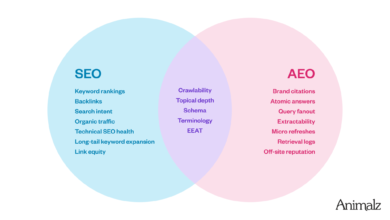
We need to distinguish between three disciplines that now overlap. Generative Engine Optimization (GEO) and Answer Engine Optimization (AEO) are not replacements for SEO—they are the visibility layers on top of it. Here is how I break them down:
| Discipline | Goal | Key Tactics |
|---|---|---|
| Traditional SEO | Rank links in SERPs | Keywords, Backlinks, Technical Health |
| AEO (Answer Engine Opt) | Win the “Direct Answer” | Q&A formatting, Schema, Concise summaries |
| GEO (Generative Engine Opt) | Be cited in AI syntheses | Statistics, Quotes, Authority, Structured Data |
Decision Guide:
- Prioritize AEO for “What is,” “How to,” and definition-based queries.
- Prioritize GEO for complex comparisons, reviews, and multi-faceted topics.
- Keep SEO as the foundation for crawlability and discoverability.
What are GEO and AEO, and why do they matter?
GEO focuses on optimizing content so generative AI models can easily retrieve, understand, and cite it. AEO is narrower, focusing on providing the single best answer for voice search or featured snippets. They matter because they are the gatekeepers of modern traffic. I’ve seen pages that rank #4 or #5 in organic results drive more business value than #1 because they were the primary citation in the AI Overview.
E‑E‑A‑T for beginners: how to prove real experience in a world of AI content

With AI content flooding the web, Google and users filter for “human” signals. E-E-A-T (Experience, Expertise, Authoritativeness, Trust) is your differentiator. Here is a checklist I use even on small sites to signal experience:
- Author Bios: Link to LinkedIn profiles and list specific credentials.
- First-Hand Evidence: Use phrases like “In our testing…” or “When I tried this…”
- Original Visuals: Replace stock photos with screenshots or photos of your team/product.
- Clear Editorial Policy: Publish a page explaining how you vet your content.
- Cited Sources: Link out to reputable data, showing you’ve done the research.
- Contact Info: Ensure your physical address and phone number are visible in the footer.
Technical SEO that still matters in 2026 (crawl, trust, and machine-readability)

You don’t need to be a developer to handle the technical basics, but you do need to ensure machines can read your site effortlessly. If an AI bot hits a wall of JavaScript or confusing navigation, it moves on.
| Issue | How to Detect | Beginner Fix |
|---|---|---|
| Poor Crawlability | Google Search Console (GSC) “Not Indexed” report | Update robots.txt to allow bots; submit sitemap. |
| Slow Core Web Vitals | PageSpeed Insights / GSC | Compress images; use a caching plugin. |
| Missing Schema | Schema.org Validator tool | Use a reputable SEO plugin to add Article/Product schema. |
| Broken Internal Links | Broken Link Checker tools | Redirect (301) or update links to relevant pages. |
Is traditional SEO still relevant in 2026?
Absolutely. You cannot optimize for an AI engine if the crawler cannot find your page in the first place. Traditional SEO ensures you are indexed; GEO ensures you are chosen. I still check my technical health monthly—ignoring it is the fastest way to become invisible.
Structured data + “answer formatting” for AI systems
Schema markup is like handing the AI a business card that tells it exactly who you are. Beyond schema, structure your actual text for extraction. My go-to page pattern is:
Summary (the answer) → Detailed Steps → Context/Nuance → FAQs → References.
This structure gives the AI a quick snippet to grab while keeping the human reader engaged with depth.
My “Content Factory for AI Visibility” workflow (step-by-step, beginner-friendly)

Consistency beats intensity. Instead of writing random blog posts, I use a “Content Factory” workflow designed to produce citation-ready assets efficiently. Here is the exact order I use:
| Workflow Step | Output | Quality Bar |
|---|---|---|
| 1. Intent Research | Brief with user questions | Must answer “Why now?” |
| 2. Topical Clustering | 1 Pillar + 5 Sub-topics | Interlinked comprehensively |
| 3. Drafting | First draft document | Covers all headings/points |
| 4. Editorial/Humanize | Final Polish | Includes examples & data |
| 5. Distribution | Social/Video assets | Platform-native formats |
Step 1: Start with intent (what the searcher actually wants in 2026)
Before writing a word, I map the intent. A user searching “best SEO software” might just want a list (Commercial intent), but “how to reduce SEO costs” implies a problem (Informational intent). I use a simple mental template: “The user is [Feeling] and wants [Outcome], so I will provide [Format].”
For example, if the query is “why did my traffic drop,” the user is anxious and wants a diagnosis. My page structure starts with immediate troubleshooting steps, not a history of Google updates.
Step 2: Build a topical cluster that’s easy to cite
Don’t just write one post. Build a cluster. For this article on “SEO Techniques,” I would plan supporting content like:
- How to implement FAQ schema
- The rise of Zero-click searches
- Case study: Measuring AI citations
- UGC strategies for Reddit
- Video SEO basics
By linking these together, you signal to AI engines that you are an authority on the broader topic, not just a keyword stuffer. If you only build one cluster this month, make it one where you have unique expertise.
Step 3: Draft fast, then raise the editorial bar
The drafting phase is where many get stuck. I focus on speed first—getting the structure and core arguments down. Tools like the AI article generator can accelerate this process significantly by laying out the groundwork and ensuring comprehensive coverage. However, the magic happens in the edit.
My Editing Checklist:
- Did I remove generic fluff words (e.g., “game-changing”)?
- Is there a specific example for every concept?
- Are the statistics sourced?
- Does the tone sound like a human expert?
Step 4: On-page SEO that aligns with AEO (titles, headings, summaries, FAQs)
If you do nothing else, add an Answer Summary. This is a 40–70 word block near the top of your page that directly answers the main query. It’s catnip for AI Overviews. Also, ensure your H2s and H3s are questions users actually ask. Instead of “Conclusion,” try “What are the next steps?”
Step 5: Publish + refresh cadence (how to stay current without chasing every trend)
The web is decaying faster than ever. I mark core pages for a quarterly refresh. I check for broken links, update statistics (marking them as current), and add any new developments. Pro tip: Don’t update just to update. Only touch the page if the answer has changed or performance has dropped.
Diversify beyond Google: UGC, social search, and multimedia that AI engines cite

Here is a competitive gap most businesses miss: User-Generated Content (UGC) and social platforms are now primary search engines. Reddit traffic is up ~40% year-over-year. If you aren’t visible there, you are missing a massive chunk of discovery.
| Channel | Best Format | Optimization Tip |
|---|---|---|
| Detailed text post/comment | Be helpful first; link only if necessary. | |
| YouTube | How-to Video / Shorts | Use chapters and detailed descriptions. |
| Carousel / Personal Story | Focus on professional insights/data. | |
| Quora | Answer specific Q&A | Include credentials in your bio. |
To maintain this volume without burning out, automation is key. An automated blog generator can help you scale the production of supporting content, freeing you up to engage authentically on these platforms.
What role do user-generated content and social platforms play?
They provide the “human verification” that AI looks for. When an AI sees a Reddit thread confirming your software works, it increases the likelihood of citation. My mini-playbook for Reddit:
1. Find relevant subreddits.
2. Monitor for questions you can answer.
3. Write a genuine, complete answer.
4. (Optional) Add a “source” link at the very end if it adds value.
Good: “Here is the exact fix for that error…”
Bad: “Check out my blog post about this error!”
Multimedia basics: video, images, and multimodal SEO
Multimodal search means searching with images and video. Ensure your images have descriptive filenames (not IMG_123.jpg) and alt text. For video, upload transcripts. I’ve found that a simple video embedded in a blog post increases time-on-page and signals quality to Google.
How I measure success in 2026: from rankings to citations, mentions, and revenue signals

Reporting is the hardest part of the new SEO. Clients want clicks, but we are delivering visibility. I’ve shifted my reporting dashboard to include these modern KPIs:
| KPI | What it tells you | Where to find it |
|---|---|---|
| Brand Mentions | Are you being talked about? | Google Alerts / Social Listening tools |
| AI Citation Freq. | Are you a trusted source? | Manual spot checks / Specialized tools |
| Assisted Conversions | Did SEO help the sale? | GA4 “Conversion Paths” |
| Non-Branded Clicks | Is new audience finding you? | Google Search Console |
How should success be measured now?
Focus on impact over vanity metrics. If traffic is down 10% but leads are up 15%, you are winning. This usually means you’ve lost low-quality “browser” traffic to zero-click answers, but retained the high-intent buyers. If I only had 30 minutes a week, I’d track: Organic Leads, Top 5 Page Traffic, and Brand Search Volume.
Common mistakes with the best SEO techniques 2026 (and how I fix them) + FAQs
- Mistake: Chasing Hacks.
Why it hurts: AI models prioritize established consensus, not tricks.
The Fix: Focus on comprehensive, accurate content. - Mistake: Ignoring Schema.
Why it hurts: Robots can’t understand your context.
The Fix: Install a schema plugin today (takes 30 mins). - Mistake: Thin AI Content.
Why it hurts: No E-E-A-T signals = no trust.
The Fix: Add human stories, data, and examples to every draft. - Mistake: Measuring Only Clicks.
Why it hurts: You’ll panic when impressions rise and clicks flatten.
The Fix: Report on visibility and downstream conversions.
FAQ: How can I optimize content for AI-driven search?
- Use Structured Data: Ensure your content types (Article, Product, FAQ) are marked up.
- Write Answer Summaries: Place clear, direct answers at the top of sections.
- Target Long-Tail Queries: Answer specific, conversational questions.
- Build Topical Clusters: Prove authority by covering a topic completely.
- Add Human Insight: Include opinions and experiences AI can’t generate.
Conclusion: my 2026 action plan for advanced organic traffic (next steps)
Winning organic traffic in 2026 isn’t about outsmarting the algorithm; it’s about feeding it what it wants: structured, authoritative, and human-verified information. To recap:
- Shift focus from just clicks to citations and visibility.
- Implement the “Content Factory” workflow to ensure consistency.
- Don’t neglect the technical foundation or social distribution.
Your Action Plan:
This Week: Audit your top 10 pages. Add answer summaries and check schema.
This Month: Build one complete topical cluster around a high-value keyword.
This Quarter: Establish a repurposing routine for social/video.
The landscape will keep changing, but a solid system lasts. If you are ready to systematize your research, writing, and publishing with high editorial standards, exploring tools like Kalema can help you build that intelligence engine without losing your unique voice.