Off-Niche Authority: Building Niche-Specific How-To Guides for Woodworking Website SEO
Introduction: Why I build off‑niche authority for woodworking website SEO (and how you can, too)
I’ve seen it happen too many times: a talented woodworker spends three weekends building a beautiful mid-century modern credenza, takes decent photos, and writes a blog post about it. Then… nothing. The project gets a few likes on Instagram, but the website traffic is flatlining. It’s frustrating because the craftsmanship is there, but the digital visibility isn’t.
The problem usually isn’t the project itself; it’s that the content isn’t packaged for how search engines—and the new wave of AI answer engines—actually work in 2025. Modern woodworking website SEO isn’t just about stuffing keywords into a paragraph. It’s about building “off-niche authority”: creating a structured, trustworthy knowledge base that proves you are the expert on a specific slice of the craft.
In this guide, I’m going to share the exact framework I use to turn scattered project posts into a cohesive SEO asset. We’ll cover what off-niche authority really means, a step-by-step workflow for drafting high-ranking how-to guides, and the specific on-page and technical tactics you need for AEO (Answer Engine Optimization), visual discovery, and voice search.
What “off‑niche authority” means in woodworking website SEO (in plain English)
When I talk about off-niche authority, I’m not talking about trying to be the next This Old House. I’m talking about earning deep trust in a specific vertical—like “beginner hand tool joinery” or “small workshop organization.” It’s the difference between having a single successful project post and having a site that Google (and ChatGPT) recognizes as a reference library.
This matters more now than ever because of the shift toward AI-driven search. As of mid-2025, AI Overviews are appearing in over 50% of U.S. search results . This changes the game completely. Users often get their answer right on the results page. If your content isn’t structured to provide that answer—if it’s just a wall of text without clear headings or data—you get bypassed.
Think of it this way: A single blog post is like a single board. It might be a nice piece of walnut, but you can’t build anything with just one board. A knowledge base—a cluster of related, interlinked guides—is the whole workbench. It supports everything else you do. Off-niche authority isn’t about chasing viral trends; it’s about building that workbench so solidly that search engines have no choice but to cite you.
The new discovery stack for woodworking: traditional rankings + AI answers + visuals + voice

People don’t just type “how to cut dovetails” into a search bar anymore. The discovery process has splintered. Today, a user might ask a voice assistant, “What saw is best for cutting dovetails?” while their hands are covered in glue. Later, they might snap a photo of a joint with Google Lens to identify it. Your content needs to show up in all these places: traditional blue links, AI-generated citations, visual mood boards, and voice answers.
Beginner-friendly goal: become the most quotable source for a small set of projects
If you are just starting, don’t try to cover everything. Pick a lane. Your goal is to be the most “quotable” source for a small set of projects. “Quotable” means your steps are distinct, your safety warnings are clear, and your materials lists are complete. If an AI can easily read and summarize your guide, you win.
Copy this positioning statement:
“My site is the go-to resource for [Specific Audience, e.g., apartment woodworkers] who want to build [Specific Project Type, e.g., modular furniture] using [Specific Toolset, e.g., hand tools and a jigsaw].”
My niche-specific how‑to guide framework (the workflow I use to scale woodworking SEO)

Consistency is the hardest part of building authority. You can’t just wait for inspiration to strike. You need a production line—a repeatable workflow that takes you from idea to published guide without the headache. This framework ensures every piece of content you publish contributes to your woodworking website SEO.
When I need to scale this process, I use tools like a SEO content generator to build the initial structure, or an AI article generator to draft the heavy lifting. But remember: tools are accelerators, not replacements for your shop knowledge.
Here is how I map intent to structure before I ever write a word:
| Intent Type | Target SERP Feature | Recommended Sections | Media Needed |
|---|---|---|---|
| How-To / Project (e.g., “Build a floating shelf”) |
Featured Snippet (List) / AI Overview | Materials List, Cut List, Tools, Safety, Steps, Mistakes | Process photos, Cut diagram, Result shot |
| Troubleshooting (e.g., “Why is my varnish sticky”) |
Direct Answer / Paragraph Snippet | Diagnosis, Quick Fix, Prevention, Product advice | Close-up of defect, Comparison shot |
| Tool Review (e.g., “Best router for beginners”) |
Comparison Table / Video | Specs Table, Pros/Cons, Who is this for?, Alternatives | In-hand usage shots, Spec chart |
Step 1 — Pick a tight woodworking topic cluster (so you don’t publish randomly)
I made the mistake early on of publishing random projects: a birdhouse one week, a router sled the next. My site was a mess of unrelated topics. Search engines didn’t know if I was an expert on rough carpentry or fine furniture. You need to pick a cluster.
Good starter clusters for 2025 emphasize trends like sustainability or small spaces:
- Beginner Shop Essentials: Workbench, saw horses, tool storage, French cleat wall.
- Small-Space Living: Modular shelving, folding desks, nesting tables.
- Outdoor Basics: Planter boxes, simple benches, potting station (using rot-resistant woods like Cedar or White Oak).
Step 2 — Map search intent to the exact guide type (how‑to vs. troubleshooting vs. tools)
Before you pick up a chisel—or a keyboard—spend five minutes on Google. Type in your idea. What comes up?
- Videos dominating? You’ll need strong visuals or a video embed to compete.
- Step-by-step lists? That’s a “How-To” intent. You need a numbered list structure.
- Forum discussions (Reddit/Lumberjocks)? That’s a “Troubleshooting” intent. People are confused; they need a direct answer.
Step 3 — Build the “answer-first” outline (so AI and humans can follow it)
Don’t bury the lead. I learned this the hard way when I wrote a 500-word intro about the history of oak trees before telling people how to sand them. No one read it. Structure your outline for immediate value.
Copy this outline template:
- H1 Title: Action-oriented and specific.
- Intro/Outcome: “By the end of this guide, you will have…”
- Tools & Materials: Bulleted lists (crucial for snippets).
- Cut List: A table with dimensions (Thick x Width x Length).
- Safety Note: Specific to the tools used.
- Step-by-Step Instructions: H3s for major phases, numbered lists for actions.
- Common Mistakes: “Don’t glue the panel in the groove.”
- FAQ: Questions people actually ask.
Step 4 — Draft the guide with precision (measurements, safety, and clarity)
When drafting, precision is your best friend. Vague steps like “sand until smooth” are useless to a beginner and invisible to search engines. Instead, write: “Sand with 120 grit until the pencil marks disappear, then switch to 180 grit.”
What I check before I publish:
- Safety: Did I mention eye protection or dust masks?
- Accuracy: Are the measurements in the cut list actually correct? (I double-check math here).
- Assumptions: Did I assume they know what a “dado” is? If so, I define it or link to an explainer.
Step 5 — Add media that actually ranks: photos, diagrams, and a short video plan

Visuals are massive for woodworking SEO. If you don’t have a professional setup, that’s fine. A smartphone with decent shop lighting works. Focus on:
- The Hero Shot: The finished project, well-lit, uncluttered background.
- Process Shots: Close-ups of complex steps (e.g., the router bit depth).
- Diagrams: A simple SketchUp export or even a clean hand-drawing of the cut layout.
Step 6 — Publish as a series (internal links, updates, and expansion paths)
One guide is good; a series is authoritative. If you write about building a workbench, your next post should be “How to install a woodworking vise” and link back to the bench. Create a path. I try to update my core guides every 90 days—checking links, adding new tips I’ve learned in the shop, or clarifying steps based on reader comments.
On-page woodworking website SEO essentials (titles, headings, schema, and internal links)

Once the content is drafted, you need to tighten the screws. This is the technical side of things that ensures your guide gets indexed and ranked. If you are managing a lot of content, a Bulk article generator can help standardize this formatting across dozens of posts, but you must always review the output for quality.
Here is your pre-publish checklist for on-page SEO:
| Element | What to do | Example |
|---|---|---|
| Title Tag | Match intent + constraint + outcome. | DIY Floating Shelves: Easy Weekend Build (No Special Tools) |
| Meta Description | Summarize benefit + call to action. | Learn how to build sturdy floating shelves with basic tools. Includes free cut list and safety tips for beginners. |
| Headings (H2/H3) | Use keywords naturally; break up steps. | H2: Cutting the Lumber / H3: Rip Cuts on the Table Saw |
| Image Alt Text | Describe image + context. | Applying polyurethane to white oak dining table with a foam brush |
Title tags & H1/H2s: make the outcome and constraints obvious
I aim for titles that solve a problem immediately. Use this formula: [Project Name] + [Constraint/Benefit] + [Audience Level].
- Simple Garden Bench for Beginners (2×4 Construction)
- How to Cut Dovetails by Hand: Step-by-Step Guide
- Small Workshop Organization: 5 Cheap Storage Hacks
HowTo + FAQ schema: when it helps (and when it’s overkill)
Schema is just code that helps Google understand your content. For woodworking, HowTo Schema is gold. It tells Google, “Here are the tools, here are the materials, and here are the steps.” This is what helps you get those rich snippets with photos right in the search results. If you are on WordPress, most SEO plugins handle this. Use FAQ schema only if you are answering distinct questions, like “Can I use pine for outdoors?”—not just restating your intro.
Internal linking: build a “shop class” path through your content
Think of your internal links as guiding a student through a shop class. You wouldn’t hand someone a router before teaching them safety. Link early to prerequisite knowledge (e.g., “Before you start, check out my guide on squaring lumber“). Then, link forward to the next logical step (e.g., “Once built, see how to apply a durable wipe-on poly finish“).
2025 discovery upgrades: AEO, visual search, and voice SEO for woodworking guides
The biggest competitive gap I see right now is that most woodworking sites are still writing for 2015. They write long, rambling essays. To win in 2025, you need to optimize for the machines that answer questions: AI Overviews (AEO), Google Lens, and voice assistants.
With generative AI influencing an estimated 6.5% of organic traffic today and growing , you can’t afford to be unstructured.
AEO for woodworking SEO: write sections that can be quoted accurately
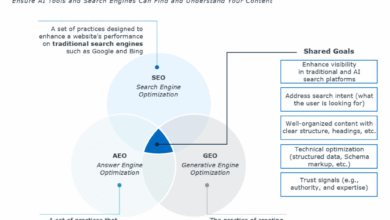
Answer Engine Optimization (AEO) is about being the source the AI quotes. To do this, include “Direct Answer Blocks” in your content. These are 40–60 word paragraphs that directly answer a specific question.
Example:
H3: What grit should I sand pine before staining?
“For pine, sand up to 150 grit or 180 grit. Going higher than 180 grit can polish the wood fibers too much, preventing the stain from penetrating evenly and causing a blotchy finish. Always wipe away dust with a tack cloth before staining.”
Visual discovery: optimize images for Google Lens and AI mood boards

Visual search is huge for DIY. When someone sees a cool table, they snap a pic. If your image is optimized, you show up. Don’t name your file `DSC_001.jpg`. Name it `modern-oak-coffee-table-hairpin-legs.jpg`. In the alt text, include the material, the style, and the use case: “Modern white oak coffee table with black hairpin legs in a minimalist living room.”
Voice search: format questions the way people ask them in the garage
When I’m in the shop, I don’t type. I yell at my phone. “Hey Google, how long does wood glue take to dry?” Your content should reflect this conversational tone. Use natural language questions as H3 or H4 headers.
- “Can I use a circular saw instead of a table saw?”
- “Do I really need to pre-drill screw holes?”
- “How do I fix a wobbly table leg?”
Authority signals beyond content: links, trust, and community for woodworking sites
You can write the best content in the world, but you still need some authority signals to rank for competitive terms. In the home/DIY niche, a small number of high-quality backlinks (5–10) can move the needle significantly.
A realistic backlink plan: 5–10 contextual links that actually fit woodworking
Don’t buy links. It’s risky and rarely works long-term. Instead, try this simple outreach plan:
- Identify 20 relevant blogs or local maker spaces (e.g., “Best woodworking blogs for beginners”).
- Write a genuine email proposing a guest post or a resource addition.
- Aim for “contextual” links—links embedded in relevant articles, not just footer links.
- Be patient. If you get 1–2 wins a month, you are winning.
Trust builders that help SEO and readers: safety, sourcing, and transparent recommendations
Google evaluates E-E-A-T (Experience, Expertise, Authoritativeness, and Trustworthiness). In woodworking, “Safety” is a huge trust signal. Always include a safety disclaimer. If you recommend a finish, cite the manufacturer’s cure time. If you use affiliate links, disclose them clearly at the top. This transparency builds trust with readers and tells search engines you are a legitimate operation.
Common mistakes I see in woodworking website SEO (and the fixes) + FAQs + next steps
I want to leave you with a clear path forward. I’ve made plenty of mistakes building sites, and I want you to avoid them. If you are feeling overwhelmed, remember that tools like an AI content writer can help you draft faster, but you must bring the strategy.
7 mistakes (and fixes) that block rankings for woodworking how‑to guides
- Mistake: Targeting broad keywords like “Woodworking.”
Fix: Target specific long-tail keywords like “How to build a beginner workbench with 2x4s.” - Mistake: No printable cut list.
Fix: Add a simple HTML table or PDF download for dimensions. - Mistake: Wall of text instructions.
Fix: Break steps into numbered lists with bold verbs. - Mistake: Missing safety warnings.
Fix: Add a “Safety First” box at the top of every project. - Mistake: Generic file names for images.
Fix: Rename every image with descriptive keywords before uploading. - Mistake: Ignoring internal links.
Fix: Link to at least 3 other related posts on your site. - Mistake: Inconsistent updates.
Fix: Set a calendar reminder to review your top posts every 6 months.
FAQs: AEO, visual discovery, and backlinks for woodworking SEO
What is AEO and why should I care?
AEO stands for Answer Engine Optimization. It means structuring your content so AI tools (like ChatGPT or Google AI Overviews) can easily understand and “quote” your answers. It matters because AI is becoming the primary way people find quick answers.
How do I optimize images for Google Lens?
Focus on clarity and metadata. Ensure your subject is well-lit and centered. Use descriptive file names and alt text that describe the object, material, and style.
Do backlinks still matter for niche sites?
Yes. While content is king, backlinks act as “votes of confidence.” In a niche like woodworking, even a handful of links from other reputable DIY sites can establish your authority.
Next actions: my simple plan to publish your first 3 authority guides

Ready to build your workbench? Here is your plan for the next week:
- Day 1: Pick one “Cluster” (e.g., Outdoor Projects) and choose 3 specific topics.
- Day 2: Draft the “Cornerstone” guide (the biggest, most detailed one).
- Day 3: Gather your photos and create a simple cut list.
- Day 4: Publish the cornerstone guide with full on-page SEO (Title, Schema, Alt Text).
- Day 5-7: Draft and publish the two supporting guides, linking them back to the cornerstone.
Start small, stay consistent, and focus on being the most useful, safe, and accurate teacher in the room. That is how you build authority that lasts.