Winning the AI Box: 5 Generative AI Search Best Practices for Dominance

I’ve spent the last few months auditing SERPs (Search Engine Results Pages) across various industries—from SaaS to local services—and the shift is undeniable. The era of the predictable “10 blue links” is fading. Instead, we are seeing the rise of the “AI Box”—those synthesized answers from Google AI Overviews, ChatGPT, and Perplexity that sit right at the top of the user journey.
For many of us in SEO, this is terrifying. We see search volumes holding steady, but click-through rates (CTR) on traditional rankings are dipping because the answer is served immediately. But here is the opportunity: rather than fighting for a click, we can fight for the citation.
In this article, I am stripping away the hype to give you a pragmatic, newsroom-grade playbook. I will cover the five specific generative AI search best practices that actually influence whether your content gets cited in that top box, along with the measurement frameworks to track it. This isn’t theoretical; it is about adjusting your content operations to survive and thrive in a zero-click world.
What is GEO (Generative AI Search Optimization), and How Do AI Answers Choose What to Cite?

To win the placement, you have to understand the machine. Generative Engine Optimization (GEO)—sometimes called Answer Engine Optimization (AEO)—is the practice of optimizing content specifically to be extracted, synthesized, and cited by AI models, rather than just ranking in a list.
Think of the AI not as a search engine, but as an overworked research assistant. When a user asks a question, the AI doesn’t want to read a 3,000-word story about the history of the topic. It wants to find a trusted source, extract the specific answer, and synthesize it immediately. This process relies on three core steps: Retrieval (finding the page), Synthesis (understanding the answer), and Citation (crediting the source).
Why does this matter for your business right now? Data suggests that while AI-search traffic might currently represent a small slice of total clicks, the intent is incredibly high. Some estimates indicate that while click volume may drop, the conversion value of being the “cited authority” is significantly higher. If you aren’t in the AI box, you are invisible to the 40% of searches that now end without a traditional click.
GEO vs. Traditional SEO (What Changes, What Stays the Same)

I often hear operators worry that they have to throw out their entire SEO playbook. That’s not true. Think of GEO as an evolution, not a replacement.
- What Stays: Technical foundations like crawlability, site speed, and general authority still matter. If the bot can’t crawl you, the AI can’t read you.
- What Changes: The goal shifts from “ranking #1” to “being the source of truth.” In traditional SEO, we optimized for keywords. In GEO, we optimize for answers and context.
In the old model, a user might click three links to piece together an answer. Now, the AI does that piecing together. If your content is hard to parse, the AI skips you.
How AI Systems Pick Sources: Relevance, Extractability, and Trust
When I analyze pages that consistently appear in AI Overviews, they almost always share three traits:
- High Relevance: They answer the specific user intent directly, without fluff.
- High Extractability: The content is formatted so a machine can easily “lift” the answer (think bullet points and clear headings).
- High Trust: The page has strong E-E-A-T signals (Experience, Expertise, Authoritativeness, Trustworthiness) that give the AI “confidence” to cite it without hallucinating.
Best Practice #1: Build “Answer-First” Pages That AI Can Lift Cleanly

If you take only one thing from this article, let it be this: Schema helps, but it won’t rescue unclear writing. The biggest mistake I see teams make is burying the lead. They write 500 words of background before answering the core question.
To win generative AI search best practices, you need to adopt an “answer-first” structure. This means providing a direct, concise answer immediately following a heading. When using tools like Kalema’s AI article generator to draft your initial content, you should specifically look for templates or settings that prioritize this modular structure. It makes the drafting process significantly faster while ensuring the output is structurally sound for AI extraction.
For example, if the heading is “What is SOC 2 Compliance?”, the very next sentence should be a robust, standalone definition. Don’t start with “In today’s security landscape…” Start with “SOC 2 Compliance is a voluntary standard for service organizations…”
The “Citable Block” Template (Copy/Paste)
I use a specific mental model for this called the “Citable Block.” You can give this to your writers as a standard requirement for every major H2 section:
[Heading: The Core Question]
[Direct Answer]: A 2–3 sentence definition or direct response. No fluff.
[Key Takeaways]:
- Point 1 (Data or Fact)
- Point 2 (Actionable insight)
- Point 3 (Nuance or context)
[The “However”]: A short sentence on limitations or exceptions (this adds validity).
Table: AI-Extractability Checklist
Here is a checklist I use when auditing pages to see if they are “machine-readable.”
| Page Element | What to Do | Why It Helps AI |
|---|---|---|
| Introductory Definition | Place the direct answer immediately after the H1 or H2. | Allows the AI to grab a “Featured Snippet” style summary. |
| Headings | Use question-based headings (e.g., “How much does X cost?”). | Matches the natural language queries users ask chatbots. |
| Lists | Use bullet points for features, benefits, or steps. | AI models prefer structured lists over dense paragraphs. |
| Paragraph Length | Keep paragraphs under 3–4 lines. | Reduces complexity and token usage for the model. |
| Table of Contents | Include jump links at the top. | Helps the bot understand the document structure instantly. |
A note on tradeoffs: Don’t oversimplify complex topics just to get a snippet. If you are in a regulated industry like finance or health, accuracy trumps brevity. Always prioritize being right over being short.
On-Page Basics That Still Matter
Don’t forget the wrapper. Your title tags and meta descriptions might not be read by the AI for the answer, but they help the bot decide if your page is relevant enough to analyze. Ensure your internal linking is strong; links act as context signals, telling the AI, “This page is related to these other trusted pages.”
Best Practice #2: Use Structured Data (Schema) So Answer Engines Understand Your Content

Structured data is essentially a translator. It takes your human-readable content and translates it into a language (JSON-LD) that machines understand natively. Research suggests that pages with robust schema are significantly more likely to be cited in generative results because the AI doesn’t have to guess what the content is.
You don’t need to be a developer to get this right, but you do need to be strategic. The goal is to explicitly tell the search engine: “This text is a question, this text is the answer, and this text is the author.”
How Structured Data Helps with Generative AI Visibility
When an AI scans your page, it looks for entities—people, places, concepts, and prices. Without schema, it has to infer these relationships using Natural Language Processing (NLP), which is prone to error. With schema, you are hard-coding the relationships. This clarity significantly boosts your “trust score” in the retrieval phase.
Table: Schema Types to Prioritize
I see a lot of people spamming schema where it doesn’t belong. Here is where you should actually focus your efforts:
| Schema Type | Best For | Common Mistake |
|---|---|---|
| Article | Blog posts, news, guides. | Forgetting to include the “Author” and “DatePublished” fields. |
| FAQPage | Pages with a Q&A section. | Marking up FAQs that aren’t visible on the actual page. |
| Organization | Homepage, About page. | Inconsistent NAP (Name, Address, Phone) data across the web. |
| HowTo | Step-by-step tutorials. | Skipping the “Step” breakdown and just wrapping the whole body. |
Technical Hygiene That Supports Citations
If you’re not getting indexed, you won’t get cited. Period. Check your canonical tags to ensure you aren’t confusing the AI with duplicate versions of the same content. A simple troubleshoot: if your content isn’t showing up in standard Google Search, it definitely won’t show up in the AI Overview.
Best Practice #3: Win Citations with Credibility (E-E-A-T) and Transparent Sourcing
In the world of GEO, trust is the new currency. Large Language Models (LLMs) are trained to reduce “hallucinations” (lies). To do this, they prioritize content that looks authoritative. If your page looks like a generic content farm, the AI will ignore it to avoid the risk of spreading misinformation.
This is where E-E-A-T (Experience, Expertise, Authoritativeness, Trustworthiness) becomes an operational requirement, not just a guideline. My personal rule is simple: If I can’t cite the primary source, I don’t state it as fact.
Credibility Checklist (Fast Wins)
- Author Bios: Don’t use “Admin.” Use a real name with a link to a LinkedIn profile or bio page.
- Citations: Link to primary sources (government data, original studies) rather than other blogs.
- Date Stamps: Display “Last Updated” clearly. Old content is often assumed to be inaccurate.
- Originality: Include unique data, a quote from an internal expert, or a screenshot of a process you tested.
Template: “How I Tested/Researched This” Box
Adding a methodology box at the top or bottom of your articles is a massive trust signal. It tells the reader (and the AI) that you did the work.
How We Researched This Guide:
To ensure accuracy, the Kalema editorial team reviewed [Number] industry reports and tested [Number] tools directly. All statistics are sourced from [Year] primary data. This article was reviewed by [Expert Name] for technical accuracy on [Date].
Best Practice #4: Publish Fast, Iterate Faster—Freshness and Time-to-Citation as a Workflow
Here is a reality of the AI era: the models are hungry for the new. While traditional SEO can take months to mature, I’ve seen new articles appear in AI citations within days of publishing. Speed is a multiplier.
However, maintaining high velocity without burning out your team is the hard part. This is where you need a system. Using a tool like Kalema’s Bulk article generator allows you to maintain a consistent baseline of content production—keeping your site “fresh” in the eyes of the crawlers—while your human editors focus on high-value updates and strategic deep dives.
Why Speed of Publishing is Important
Freshness decay is real. AI models prioritize the most current answer, especially for queries related to technology, finance, or news. If your competitor updated their guide yesterday and yours is from 2022, they win the citation.
Beginner-Friendly Cadence: What to Publish Weekly vs. Monthly
You don’t need to post daily, but you do need a pulse. Here is a realistic cadence for a small marketing team:
- Weekly: Publish 1–2 new deep-dive articles. Refresh 1 older article with new data.
- Monthly: Update your core “Hub” page. Audit your schema for errors.
- Quarterly: Full E-E-A-T review. Prune content that is no longer accurate.
Best Practice #5: Build RAG-Ready Content Hubs and Add Multimodal/Interactive Assets

The most advanced opportunity in GEO right now is optimizing for RAG (Retrieval-Augmented Generation). This is a fancy way of saying: create content that is so deep and structured that AI tools can use it as a database.
Additionally, AI is becoming multimodal. It reads images and watches videos. If you are text-only, you are fighting with one hand tied behind your back. When you use an SEO content generator to build out your topic clusters, ensure you aren’t just creating isolated posts, but interconnected hubs that cover every angle of a topic—definitions, processes, and data.
A Simple RAG Workflow for Content Teams
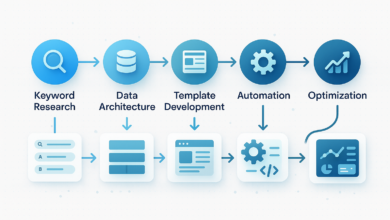
You don’t need a PhD to do this. Just follow this workflow:
- Identify a Core Topic: e.g., “Payroll Compliance.”
- Gather Proprietary Data: Look at your customer support tickets. What do people actually ask?
- Create a Canonical Hub: Build one massive page that answers every basic question.
- Link to Spokes: Create smaller pages for specific sub-questions, all linking back to the hub.
Multimodal & Interactivity Checklist
Make your content easy for AI to “see” and “watch.”
- Video Transcripts: Always include a full transcript. AI can read text faster than it can watch video.
- Alt Text: Be descriptive. Instead of “chart,” use “Bar chart showing 20% growth in SEO traffic.”
- Calculators/Tools: Interactive elements keep users on the page, signaling high engagement to the algorithm.
How I Measure GEO Results: KPIs, Dashboards, and Next Steps
We are in the early days of GEO measurement, and I’ll be honest—it’s messy. Traditional rank trackers don’t perfectly capture AI visibility yet. However, we can track directional signals.
Table: GEO KPI Dashboard
You can start tracking these manually or with emerging tools.
| Metric | How to Track | What to Improve |
|---|---|---|
| AI Citation Rate | Manual checks (search your key terms in ChatGPT/Gemini). | formatting and E-E-A-T signals. |
| Share of Voice | Count how often you appear in the top 5 AI answers vs. competitors. | Increase content depth and relevance. |
| Time-to-Citation | Days between publishing and appearing in an AI overview. | Publishing velocity and indexing speed. |
Common GEO Mistakes (And How I Fix Them)
- The “Wall of Text”: Fix: Break it up with H2s and bullet points immediately.
- Vague Intros: Fix: Move the definition to the very first sentence of the section.
- Invisible Authors: Fix: Add a verified author bio with links to social proof.
- Stale Data: Fix: Set a calendar reminder to update stats every 6 months.
FAQs
What is generative AI search optimization (GEO)?
GEO is the process of optimizing content to be cited in AI-generated answers (like Google AI Overviews) by focusing on structure, relevance, and authority, rather than just keywords.
How does structured data help with generative AI visibility?
It creates a clear map for the AI, defining exactly what your content is (entities, questions, answers), which reduces the processing power needed to understand and cite you.
Why is speed of publishing important?
AI models prioritize freshness. New content is often indexed and cited quickly to answer current queries, giving agile publishers a significant advantage.
Next Steps: My 2-Week Implementation Plan
Progress beats perfection, especially in this fast-moving environment. Here is a realistic plan to get you started:
- Day 1–2: Audit your top 10 pages. Reformat the intros to use the “Citable Block” structure.
- Day 3–5: Implement Article and Organization schema on your core pages. Add real author bios.
- Week 2: Publish one deep-dive “Hub” page using the RAG workflow. Set up a simple spreadsheet to track citations for your top 5 keywords.
The “AI Box” isn’t going away. By focusing on being the most extractable, trusted answer in your niche, you turn this disruption into your biggest growth lever. Get to work.