Introduction: I’m not fighting the AI box—I’m learning to win inside it

Last week, I searched for a specific technical error code I was seeing in a client’s audit. Before I could even scroll to the first organic result—the place where my content usually fights for attention—the answer was already there. Google’s AI Overview had synthesized the solution from three different sources, presenting a clean, bulleted fix right at the top of the page.
It was convenient for me as a user, but as an SEO, it felt like a warning shot. We are entering a phase where the goal isn’t just to rank; it’s to be cited.
If you are noticing your impressions holding steady while your click-through rates (CTR) slide, you aren’t alone. AI Overviews are fundamentally changing the geography of the search results page. But panic isn’t a strategy. In this article, I’m going to walk you through exactly what AI Overviews are, the real numbers behind their impact, and a practical, newsroom-grade workflow to optimize your content for this new reality—without the hype.
AI for SEO starts with understanding AI Overviews (and what GEO actually means)

To fix a problem, we first need to define it without the buzzwords. AI Overviews (formerly part of the Search Generative Experience or SGE) are AI-generated summaries that appear at the very top of Google’s search results. They don’t just list links; they read multiple pages, synthesize the information, and present a direct answer to the user’s query.
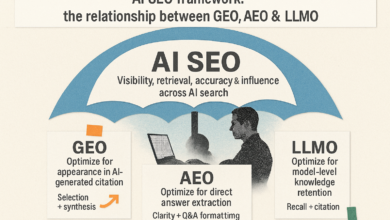
This shift has given rise to a new discipline: Generative Engine Optimization (GEO). Think of GEO not as a replacement for traditional SEO, but as an extension of it. It’s the practice of structuring your content so that AI models can easily retrieve, understand, and trust it enough to cite it as a source.
Here is the quick breakdown of the concepts we will use:
- AI Overviews: The answer box generated by Google’s Gemini model at the top of the SERP.
- GEO: Optimizing content specifically for AI retrieval and citation.
- E-E-A-T: Experience, Expertise, Authoritativeness, and Trustworthiness—Google’s framework for quality.
- Schema Markup: Code that helps search engines understand the context of your data.
What are AI Overviews?
You have likely seen them: a shaded background at the top of the search results with a conversational answer and a carousel of link cards. Unlike a Featured Snippet which usually pulls from a single source, AI-generated summaries synthesize paragraphs from several different websites. This means inclusion isn’t a winner-take-all game anymore; it’s about being one of the reliable voices in the chorus.
What is GEO (Generative Engine Optimization)?
I treat GEO as a distribution problem, not a magic trick. Generative Engine Optimization is about clarity. It involves formatting your content so that large language models (LLMs) can parse your facts and figures without hallucinating. It’s less about “keywords” and more about “information gain”—providing unique value that the AI needs to construct a complete answer.
How AI Overviews choose sources (high-level signals for beginners)
While Google doesn’t publish their exact recipe, reverse-engineering successful citations shows clear patterns. Inclusion often correlates with:
- Topical Relevance: Does your site cover the entity (topic) comprehensively?
- Structured Data: Can the machine easily read your pricing, dates, and steps?
- E-E-A-T Signals: Is there a clear author with verifiable expertise backing the claims?
- Technical SEO: Is the page fast, mobile-friendly, and easy to crawl?
What changed in the SERP: prevalence, CTR impact, and why this is now a business problem

Let’s look at the reality of the situation. This isn’t just a “future trend” anymore; it is a current operational reality for US businesses. According to Semrush/Datos research, AI Overviews prevalence in U.S. desktop searches hit 13.14% in March 2025, a massive 102% increase from just two months prior. Other datasets suggest that globally, AI answers appear in over 50% of searches depending on the query type.
The business impact is direct: organic CTR drop. When the answer is provided on the SERP, users click less. Studies from Authoritas and Pew Research indicate that click-through rates can drop between 30% to 80% when an AI Overview is present. For informational queries—like “how to fix a leaky faucet”—the top organic result sees a click drop of approximately 34.5%.
This means your reporting needs a narrative shift. Rankings might look stable, but if an AI box pushes you down the pixel height of the screen, your traffic will dip. Here is the snapshot I share with stakeholders to explain the volatility:
Data snapshot table: AI Overviews by the numbers
| Metric | What we’re seeing | Why it matters |
|---|---|---|
| Prevalence | ~13% of US Desktop searches (March 2025) | It is no longer an edge case; it is a standard SERP feature. |
| CTR Impact | 30–80% drop on organic clicks | Traffic volume is decoupling from ranking position. |
| Screen Real Estate | Occupies ~67% of desktop fold | Even #1 rankings are pushed below the immediate view. |
Method note: Data based on Semrush/Datos and Authoritas studies as of March 2025.
Intent shift: not just informational anymore
Initially, we thought this would only affect Wikipedia-style questions. That’s changed. We are seeing a rapid expansion into commercial queries and transactional queries. For example:
- Commercial: “Best payroll software for small business” now triggers comparison matrices.
- Local/Navigational: “Emergency plumber Austin cost” generates price ranges and local map packs.
Embracing the AI box: the opportunity for SEOs (and what I’d optimize for now)
It is easy to look at those CTR numbers and feel defeated. But here is the perspective shift: I’m not fighting the AI box; I’m learning to win inside it. AI for SEO strategy is moving from a traffic-hoarding model to a brand-visibility model.
When your brand is cited in an AI Overview, you gain a massive trust signal. You are being presented as the verifiable source of truth. This shifts our goals. I used to report strictly on sessions; now I also report on brand visibility and assisted conversions.
From “ranking” to “being the source”: updated SEO success metrics
Here is what I am tracking to prove value in this new environment:
- Cited Sources: Tracking which queries trigger an AI answer where my brand is linked.
- Branded Search Lift: Are people searching for my brand after seeing us in an AI summary?
- Assisted Conversions: Users might not click immediately, but they often return later.
- On-Page Engagement: When they do click, are they staying? AI sends higher-intent traffic.
AI for SEO playbook: a practical GEO workflow to increase AI Overview inclusion

Theory is great, but let’s talk about execution. How do we actually get into these boxes? I’ve refined a workflow that focuses on structure and credibility. This isn’t about tricking the robot; it’s about being the easiest source for the robot to cite.
Step 1: Map the query to intent + the “question behind the question”
Before writing a single word, I look at the search intent mapping. If the user searches for “what is SOC 2 compliance,” they want a definition. But if they search for “SOC 2 compliance checklist for startups,” they want a process. AI Overviews favor content that anticipates the next logical step. I look for query modifiers like “cost,” “best,” “vs,” and “steps” to dictate my format.
Step 2: Build a topic cluster that answers follow-ups (so AI has more to cite)
AI models love context. If you only answer the surface-level question, you are thin content. I build question clusters based on People Also Ask data.
If you only do one thing: Don’t just write one post. Create a hub. If you are writing about “SEO tools,” link out to detailed reviews of each tool you mention. This creates topical authority that signals to the AI that you are an expert, not just a keyword stuffer.
Step 3: Structure the page for extraction (headings, short answers, lists, tables)
This is where answer-first writing comes in. Humans skim, and so do bots. I make sure every H2 is followed immediately by a direct, concise answer (40–60 words) before diving into the details.
Before: “When considering the various factors that influence the cost of a plumber, one might find that prices vary based on location and severity…”
After: “The average cost for an emergency plumber in Austin is between $150 and $450 per hour. Factors influencing this price include time of day, severity of the leak, and parts required.”
Use tables for SEO whenever you are comparing data. AI models digest HTML tables incredibly well.
Step 4: Add credibility signals (E‑E‑A‑T) that businesses can actually implement
You cannot fake E-E-A-T SEO. Your content needs a byline from a real person. I ensure every article has an author bio that links to their LinkedIn or other publications. We also cite primary sources. If I claim a statistic, I link to the study. It sounds basic, but “citing your sources” is one of the strongest signals for becoming a cited source yourself.
Step 5: Implement schema and technical SEO basics (the unglamorous advantage)
I start with the simplest schema my CMS supports. FAQ schema and HowTo schema are critical here. They explicitly tell Google, “Here is the question, and here is the answer.” Only about 12% of domains are effectively using the structured data needed for AI optimization, which gives you a massive advantage if you just implement the basics. ensure your page is mobile-friendly and loads fast—technical hygiene is the ticket to entry.
Step 6: Publish and refresh with governance (so the summary stays accurate)
AI hates outdated information. I’ve established a content governance cadence where high-traffic pages are reviewed quarterly. We check stats, update years (e.g., changing “2024” to “2025”), and ensure links work. If you are managing a large library, tools like the Automated blog generator can help you scale this maintenance, ensuring your content freshness signals remain high without bogging down your entire team.
Optional: Draft faster without losing editorial standards
I use AI to help me move faster, but I never publish without a human pass. Tools like the AI article generator are excellent for drafting outlines and summarizing research, which frees me up to focus on editorial QA and adding those unique expert insights that the AI can’t fake. It’s about content intelligence, not just churning out words.
Workflow table: GEO implementation checklist (beginner-friendly)
| Step | Owner | What I check | Done when… |
|---|---|---|---|
| 1. Intent Map | Strategist | Is this informational or commercial? | Query type is identified. |
| 2. Structure | Writer | Are H2s followed by direct answers? | Answer block is <60 words. |
| 3. Credibility | Editor | Is there an author bio & source links? | Author is verified. |
| 4. Schema | Dev/SEO | Is FAQ or HowTo schema valid? | GSC Rich Results test passes. |
| 5. Refresh | Content Ops | Is data from the current year? | “Last Updated” date is current. |
How I measure AI Overview visibility (and what to report to stakeholders)
The hardest part of AI Overview tracking is that Google Search Console doesn’t yet have a filter for “Appeared in AI Overview.” However, we can use proxies. I track my impressions vs clicks carefully. If impressions are high but clicks drop on a specific page, I check the SERP. Usually, an AI Overview is the culprit.
For more granular data, I look at specialized tools. Platforms like Writesonic, Otterly.ai, and Profound have popped up to help monitor AI visibility. If you are building a comprehensive stack, integrating these with a content intelligence platform like Kalema helps you not just track, but actually execute the improvements needed to win that visibility.
What to track now (practical metrics)
- CTR Deltas: Watch for sudden drops in CTR on high-ranking informational pages.
- Branded Queries: An increase here suggests people are seeing your name in the AI summary and seeking you out.
- Assisted Conversions: Use GA4 to see if organic search is starting the journey, even if it’s not the last click.
Tool comparison table: monitoring platforms vs native analytics
| Tool Type | Best For | Limitations |
|---|---|---|
| Native (GSC/GA4) | Free, high-level trend spotting | No direct “AI Overview” filter yet. |
| Otterly.ai / Profound | Specific AI visibility tracking | Additional cost; emerging tech. |
| Writesonic | Content optimization & AI gaps | Best for content creation vs pure tracking. |
Common mistakes I see with AI for SEO (and how to fix them fast)

I’ve shipped my fair share of mistakes. Here are the most common AI for SEO mistakes I see teams make, and how to fix them quickly.
Mistake-to-fix list
- Mistake: Burying the answer.
Why it hurts: AI can’t extract the summary if it’s hidden in paragraph 4.
Fix: Add a 2-sentence definition immediately under your first H2. (Time: 10 mins) - Mistake: Missing author signals.
Why it hurts: Low E-E-A-T means low trust.
Fix: Add a verified author byline and link to a bio page. (Time: 15 mins) - Mistake: Ignoring schema.
Why it hurts: You are making the bot guess the context.
Fix: Install a plugin to generate FAQ schema for your Q&A sections. (Time: 20 mins) - Mistake: Static data.
Why it hurts: AI avoids citing “2021” stats in 2025.
Fix: Update your stats and the “Last Reviewed” date. (Time: 30 mins)
Conclusion: my AI Overview-ready SEO checklist + FAQs beginners ask

We are in a transition period, and that is always uncomfortable. But remember: the goal of search hasn’t changed, only the interface has. Users still want accurate, trustworthy answers. By shifting your focus to GEO, structuring for extraction, and maintaining high content governance standards, you turn this threat into a massive visibility opportunity.
3-bullet recap: what I’m doing differently because of AI Overviews
- I prioritize answer-first formatting over long-winded introductions to ensure extraction.
- I focus on citations and brand visibility metrics alongside traditional traffic numbers.
- I am doubling down on structured data to speak the AI’s language clearly.
Next actions (3–5): a beginner-friendly plan for this week
- Audit your top 10 pages: Check if they have a clear answer block at the top. (Owner: You, 1 hour)
- Add Schema: Implement FAQ schema on your most informational posts. (Owner: Dev/SEO, 2 hours)
- Refresh Author Bios: Ensure every post has a credible human attached to it. (Owner: Editor, 30 mins)
FAQ: What are AI Overviews and why do they matter for SEO?
AI Overviews are generative summaries that appear at the top of Google search results, synthesizing answers from multiple web sources. They matter because they push organic links down and can satisfy user intent without a click, meaning SEOs must optimize to be cited within the summary to maintain visibility.
FAQ: How prevalent are AI Overviews in search results now?
As of March 2025, AI Overviews prevalence is around 13% for U.S. desktop searches, though some global datasets show them appearing in over 50% of queries. While frequency varies by niche, the trend is clearly moving toward broader adoption across all query types.
FAQ: How do AI Overviews impact organic CTR?
They have a significant impact. We typically see an organic CTR drop of 30–80% for queries where an AI Overview is present. However, being cited in the overview can recover some of that visibility and drive higher-intent traffic to your site.
FAQ: What is Generative Engine Optimization (GEO)?
GEO is the practice of optimizing content specifically for AI search engines. It involves using clear structure, direct answers, and technical signals like schema to help AI models retrieve, verify, and cite your content in their generated responses.
FAQ: What content strategies can improve chances of getting into AI Overviews?
To improve your odds, focus on: 1) Answer-first formatting (direct answers at the top), 2) Implementing FAQ and HowTo schema, 3) demonstrating high E-E-A-T (expert authorship), 4) ensuring technical crawlability, and 5) keeping content freshly updated.
FAQ: How can businesses measure and optimize their presence in AI-generated search contexts?
Start by monitoring Search Console for impression/click divergences. For deeper insights, you can use AI search monitoring tools like Profound or Otterly.ai. Optimize by treating your content as a database of facts—structure it well, and the AI is more likely to use it.