The Best of Both Worlds: AI Visibility Products That Boost Your SEO (Best AI SEO Tools for Beginners)
When I first saw AI summaries pushing my standard organic results down below the fold, I didn’t panic, but I did pay attention. The search landscape is shifting under our feet. For years, we optimized for ten blue links. Now, we are optimizing for a conversation.
This guide isn’t about chasing the latest shiny object or drowning in a sea of identical software. It’s about solving a specific business problem: how to maintain traffic and brand visibility when over 50% of U.S. searches now feature AI Overviews. I’ve written this for growth managers and content leads who need a practical framework—not just a list of vendors.
In the next few minutes, I’ll walk you through exactly what Generative Engine Optimization (GEO) is, break down the tool categories that actually matter, and give you a repeatable workflow to pilot these tools without blowing your budget.
Search intent + what this guide will help me do
If you are searching for “best AI SEO tools,” you likely have two distinct needs. First, you need software to handle traditional tasks like keyword research and audits faster. Second, and perhaps more urgently, you need to understand which platforms can track and influence your visibility in AI-generated answers.
This guide is designed to bridge that gap. By the end, you will be able to choose the right tool category for your current stage, set up a baseline for measuring AI visibility, and implement a workflow that optimizes content for both search engines and AI agents.
What’s inside (framework + comparisons + checklists)
- The market shift: Why SEO is evolving into GEO.
- Tool taxonomy: A clear breakdown of suites vs. visibility platforms vs. content optimizers.
- Selection rubric: A scoring table to evaluate tools objectively.
- Step-by-step workflow: From idea to measurement (including a 14-day pilot plan).
- Troubleshooting: Common mistakes I’ve made and how to fix them.
If you only do one thing from this article, skip to the selection rubric and run your current tool stack against it to see where you have gaps.
Why SEO is becoming AI visibility (GEO) in the US—and why it changes tool choice

We need to be honest about the state of the SERP (Search Engine Results Page). A year ago, a query like “best CRM for small business” yielded a list of articles. Today, it often triggers a comprehensive AI overview that synthesizes answers from multiple sources, pushing the actual clicks further down the page. If your brand isn’t cited in that summary, you are effectively invisible to a large segment of users.
The numbers back this up. By August 2025, AI Overviews appeared in over 50% of Google search results in the U.S., a massive jump from just over 6% in January 2025 . This isn’t a fad; it’s a fundamental change in user behavior. Users are getting answers directly on the result page, which means our toolset needs to change from purely tracking “rankings” to tracking “citations” and “mentions.”
What is Generative Engine Optimization (GEO)?

Generative Engine Optimization (GEO) is the practice of optimizing content specifically to be cited and synthesized by AI search engines. Here is the mental model I use to distinguish the terms:
- Traditional SEO: Optimizing to rank a URL in the blue links. (Getting invited to the room).
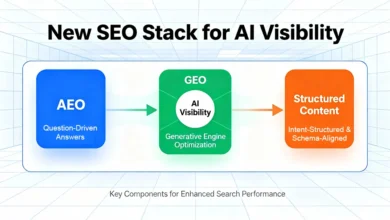
- AEO (Answer Engine Optimization): Optimizing to win the specific answer box or featured snippet. (Getting the microphone).
- GEO: Optimizing to be a primary source cited in an AI-generated synthesis. (Getting quoted in the conversation).
How common are AI-generated summaries in search right now?

The penetration of AI summaries is deeper than many realize. With presence in over 50% of U.S. searches , the “zero-click” reality is here. This creates anxiety, but it also creates opportunity. While competitors fight for the remaining blue links, forward-thinking brands are optimizing their content structure to be easily parsed and trusted by Large Language Models (LLMs).
My advice? Don’t panic. Instead, start tracking whether your brand appears in these summaries alongside your traditional rank tracking. The two metrics often tell different stories.
Where AI answers pull information from (and why PR/social now matter)
Here is the part most tool roundups skip: AI agents don’t just crawl your sitemap. They look for consensus across the web. Research indicates that approximately 34% of AI citations come from PR coverage and digital news, while around 10% come from social channels .
This means if you are only using technical SEO tools, you are missing a third of the picture. A founder quote in a major publication or a widely shared LinkedIn post can often influence an AI overview more than a meta tag update. Your tool stack needs to help you connect these dots.
AI visibility products explained: what “best AI SEO tools” includes (and what it doesn’t)

The term “AI SEO tool” has become a catch-all bucket that confuses buyers. To make a smart purchase, you need to separate the “writers” from the “trackers” and the “optimizers.” Here is the taxonomy I use.
1) Traditional SEO suites adding AI features (Semrush, Ahrefs, SE Ranking, HubSpot, etc.)
If you already have a subscription to a major suite, check their new features before buying anything else. Tools like Semrush and Ahrefs are rapidly integrating AI “Copilots,” snippet tracking, and keyword clustering.
- Best for: Comprehensive keyword research, backlink analysis, and technical audits.
- Not ideal for: deeply tracking Share of Voice (SoV) across emerging engines like Perplexity or Claude.
- Typical outputs: Keyword lists, audit reports, rank tracking graphs.
My take: If I’m starting from zero, I’d rather master one suite than juggle five specialized tools.
2) Purpose-built AI visibility & citation tracking platforms (Writesonic, Profound, Bluefish AI, Superprompt.com)
This is the newest category. These platforms are designed specifically to monitor AI engine results. For example, Profound (founded in 2024) focuses on tracking citations, while Bluefish AI (which raised $20M in 2025 ) targets brand presence in AI search.
- Best for: Brands that need to know “What does ChatGPT say about us vs. our competitor?”
- Not ideal for: Traditional technical SEO audits or link building.
- Typical outputs: Citation counts, sentiment analysis, AI visibility scores.
When I’d consider this: When executive leadership starts asking about AI share-of-voice, these tools provide the specific data traditional suites often lack.
3) Content optimization tools (briefs, topical coverage, on-page recommendations)
Tools in this category focus on ensuring your content covers a topic comprehensively enough to be considered an authority.
- Best for: Creating content briefs, checking entity coverage, and optimizing on-page elements.
- Not ideal for: Tracking rankings or technical site health.
- Typical outputs: Content scores, topic gaps, keyword frequency suggestions.
The trap to avoid: Don’t blindly stuff keywords to reach a “100” score. I still sanity-check every recommendation against real user intent.
4) Technical SEO & structured data helpers (schema, crawlability, templates)
Technical readiness is the foundation of GEO. If a bot can’t parse your content, it can’t cite it. These tools help with schema markup and structured data.
- Best for: Implementing JSON-LD schema, improving page speed, and ensuring clean crawl paths.
- Not ideal for: Content creation or keyword strategy.
- Typical outputs: Schema code, validation reports, technical health scores.
How I evaluate the best AI SEO tools (a beginner-friendly checklist + scoring table)

It is easy to get overwhelmed by features you will never use. When I evaluate software, I look for tools that fit into a workflow, not just tools that generate data. Here is a framework to help you decide.
Non-negotiables vs nice-to-haves (so I don’t overbuy)
Non-negotiables:
- Accurate rank tracking (desktop vs mobile).
- Reliable keyword volume and difficulty data.
- On-page optimization workflow (briefs or grading).
- Clear reporting that non-SEOs can understand.
Nice-to-haves:
- AI citation share-of-voice (unless you are enterprise).
- Integrated PR mention monitoring.
- Automated internal linking suggestions.
- Customizable dashboards (simpler is often better for small teams).
Table: Quick scoring rubric for AI SEO tools (1–5)
| Category | Questions to ask | Red flags | Score (1-5) |
|---|---|---|---|
| Traditional Suite | Does it track AI features in SERPs? Is the learning curve manageable? | Data hasn’t been updated recently; interface is stuck in 2015. | |
| AI Visibility Platform | Can I see which queries trigger AI citations? Do they track multiple engines? | Claims to “guarantee” AI placement; opaque metrics. | |
| Content Optimizer | Does it suggest entities, not just keywords? Is the editor easy to use? | Suggests keyword stuffing; generates robotic text. | |
| Technical Helper | Does it validate schema against Google’s guidelines? | Requires developer help for basic changes. |
My 14-day pilot plan (test before I commit)
Don’t sign an annual contract on day one. Here is how I pilot a tool:
- Days 1-3: Set up the project and track 10 priority keywords (5 brand, 5 non-brand). Check the baseline data.
- Days 4-7: Use the tool to optimize ONE existing page. Follow its recommendations for on-page and schema.
- Days 8-14: Monitor the results. Did the workflow save time? Did the page move? (Note: Rankings fluctuate, so look for improved impressions or click-through rates).
If the data is messy or the tool feels like friction, walk away. Sunk cost bias is real—don’t let it trap you.
A practical workflow to use best AI SEO tools for both rankings and AI answers (step-by-step)

Tools are useless without a process. This is the exact workflow I use to go from “idea” to “published & optimized.”
Step 1: Choose the right query (intent + business value)
I don’t just pick high-volume keywords. I look for queries where I can provide a unique answer. I map the intent: is it informational (they want to learn) or commercial (they want to buy)? For beginners, I recommend targeting specific, long-tail questions where AI answers might be vague, allowing your specific expertise to shine.
Step 2: Build a brief that’s optimized for humans and AI (SERP + AI Overview patterns)
Before writing, I scan the current SERP. What questions are the AI Overviews answering? What are they missing? My brief always includes:
- Target Keyword & Intent.
- Must-Answer Questions (these become H2s/H3s).
- Entities/Terms to include naturally.
- Unique Angle (data, personal experience, contrarian view).
Step 3: Draft with structure that AI systems can quote (and editors can trust)
AI models love structure. I write with clear definitions, short paragraphs, and direct answers immediately following headings. To speed this up, I sometimes use an AI article generator to create a structured first draft. However, I never publish this raw. I act as the editor-in-chief, refining the voice, verifying facts, and adding the human nuance that machines miss.
Step 4: On-page SEO essentials (title tag, meta, headings, internal links)
This is where precision matters. I treat the meta description as ad copy—it needs to earn the click. I ensure my H1 and H2s are aligned hierarchically. For internal links, I don’t just add them randomly; I place them where a user naturally needs more context. This helps bots understand the relationship between my pages.
Step 5: Technical & structured data basics (schema + crawlability)
You don’t need to be a developer to win here. I prioritize standard schema types like Article, FAQPage, and Organization. This structured data acts like a nametag for your content, telling AI agents exactly what your content is about. Start small, validate using Google’s Rich Results Test, and iterate.
Step 6: Publish consistently and scale responsibly (automation without spam)
Consistency builds trust. To maintain a steady cadence without burning out, I rely on a content calendar and clear quality gates. For larger projects, a Bulk article generator can help build out topic clusters efficiently, but the same rule applies: QA is mandatory. I check for “AI-ness” (repetitive phrasing) and ensuring every piece adds value.
Step 7: Measure what matters (rankings + AI visibility + leads)
Finally, I track performance. I look at ranking improvements, but I also watch Search Console for click trends. If rankings are up but clicks are flat, AI Overviews might be eating the traffic. In that case, I shift strategy to optimize for brand mentions within that overview.
Comparison table: AI visibility platforms vs traditional SEO suites vs content intelligence (what I’d pick first)
Deciding where to put your budget is tough. Below is a comparison to help you match the tool to your actual needs. Note that Kalema fits as a comprehensive content intelligence platform—it’s not just an AI SEO tool, but a strategic engine for quality output.
| Tool Category | Primary Goal | Best For | Typical Pitfall |
|---|---|---|---|
| Traditional SEO Suite | Rank Tracking & Audit | Generalists & Agencies | Feature bloat (paying for tools you don’t use). |
| AI Visibility Platform | Citation & Brand Tracking | Brands focused on GEO/Reputation | Expecting direct traffic data (metrics are often directional). |
| Content Intelligence (e.g., Kalema) | High-Quality Production | Scale with Editorial Control | Thinking it replaces strategy (it amplifies it). |
| Technical Helper | Crawlability & Schema | Site Health & Developers | Getting lost in code vs. creating content. |
Table: Which tool category matches my goal?
| My Goal | Best Tool Category | What to expect in 30 days | Common pitfall to avoid |
|---|---|---|---|
| Launch my blog & get traffic | Content Intelligence / Suite | 10-15 published posts; baseline data. | Publishing thin content just to fill the calendar. |
| Protect brand in AI search | AI Visibility Platform | Baseline citation report & sentiment check. | Panic-reacting to one bad AI answer. |
| Fix drop in rankings | Tech SEO / Audit Tool | List of technical errors fixed. | Ignoring content quality issues. |
A simple “starter stack” for beginners (and when I’d upgrade)
If I were starting a business today with a limited budget, this is the stack I would build:
- 1 All-in-one Suite: For keyword research and basic tracking.
- 1 Content Workflow Tool: To handle briefs and production quality.
- Google Search Console: It’s free and essential.
When to upgrade: I only add specialized AI citation tracking when I have enough content volume to meaningful influence the conversation, or if PR is a major channel for us.
Common mistakes when using best AI SEO tools (and how I fix them)
I have made plenty of mistakes so you don’t have to. Here are the most common traps and how to fix them quickly.
Mistake 1: Chasing tools before I have a workflow
I’ve bought tools before I had a process, and they just sat there collecting digital dust. The Fix: Map out your Step 1-7 workflow on paper first. Only buy a tool if it speeds up a specific step.
Mistake 2: Optimizing for AI Overviews and forgetting the human reader
It’s easy to write robotic answers to please the GEO algorithms. The Fix: Always run the “Reader Test.” Can a human skim the article and get value? If it reads like a dictionary, rewrite it with examples and voice.
Mistake 3: Publishing at scale without quality gates
Volume is great, but spam kills brands. The Fix: Implement a mandatory editorial review. Even a 5-minute spot check per article can catch 90% of issues like hallucinations or repetitive phrasing.
Mistake 4: Measuring only rankings (not citations, mentions, conversions)
Rankings are vanity; revenue is sanity. The Fix: Track a balanced scorecard. If rankings drop but qualified leads stay steady, you might be winning via AI answers or other channels. Be patient.
FAQs + next steps: how I’d start this week
To wrap things up, here are the answers to the questions I hear most often, followed by a plan you can execute this week.
FAQ: What is Generative Engine Optimization (GEO)?
GEO is the process of optimizing content to be cited in AI-generated responses (like Google AI Overviews or ChatGPT). Unlike SEO, which focuses on ranking a link, GEO focuses on being the trusted source of information the AI uses to build its answer.
FAQ: How common are AI-generated summaries in search results today?
They are becoming the new standard. By August 2025, over 50% of Google search results in the U.S. included AI Overviews . If you are ignoring this, you are ignoring half the market. Don’t panic, but do start adapting your content structure.
FAQ: What types of tools help improve AI visibility for brands?
The main categories are AI Visibility Platforms (like Writesonic, Profound, Bluefish AI) which track citations, and Content Intelligence tools which help you create the authoritative content that gets cited. If you aren’t publishing regularly yet, start with content tools.
FAQ: Are traditional SEO tools adapting to AI search trends?
Yes. Major players like Semrush and Ahrefs are adding AI features, including snippet tracking and AI copilots. For many beginners, these integrated features are a great starting point before investing in specialized niche platforms.
FAQ: What emerging trends should content creators optimize for in 2026?
Keep an eye on multimodal search (optimizing images and video for AI analysis), predictive SEO (anticipating user needs), and advanced schema markup. The best way to prepare? Ensure your content is structured, accurate, and easy for a machine to parse.
FAQ: How should brands prepare organizationally for AI SEO?
Align your teams. SEO, PR, and Brand need to talk. Since AI citations often come from news coverage, your PR wins are now SEO wins. Even a weekly 15-minute sync between these functions can improve your strategy significantly.
Wrap-up: 3 things I want to remember
- SEO and GEO are linked: You can’t win AI visibility without solid technical and content foundations.
- Tools solve specific problems: Don’t buy a Ferrari to go to the grocery store. Match the tool to your stage.
- Process beats hype: A consistent workflow of publishing quality, structured content will outperform “hacks” every time.
Next actions (3–5 steps I can do this week)
If I were starting today, here is exactly what I would do:
- Pick 10 priority queries and manually check the SERP to see if AI Overviews appear.
- Audit your tool stack using the rubric above. Cancel what you don’t use.
- Run a 14-day pilot on one new tool or feature to test its impact on your workflow.
- Optimize one key page with better structure (H2s, definitions) to target an AI citation.