The GEO Shift: Why Marketing Is Moving Toward Generative Engines (Generative AI Marketing Explained)
Introduction: The GEO shift (and what it means for me as a marketer)


I distinctly remember the moment the panic set in. It wasn’t when ChatGPT launched, but about six months later when I looked at a client’s analytics dashboard. Rankings were stable—positions 1 through 3 for major terms—but organic traffic was slowly bleeding out. The impressions were there; the clicks weren’t.
That was my wake-up call. We are watching marketing discovery move from classic search lists toward "generative engines"—systems that read our content and synthesize an answer right on the results page. This is the GEO shift. For U.S. businesses, this isn’t futurism; it is an immediate pipeline issue. If you are a content lead, a founder, or a growth marketer, you are likely asking: "How do I protect my visibility when the search engine does the reading for the user?"
This article is the playbook I wish I had back then. It is a practical, intermediate guide to generative AI marketing. We will look at exactly what changed, how it impacts your SEO metrics, and a step-by-step plan to optimize your content so that when an AI answers a customer’s question, your brand is the one it cites.
What I mean by “generative engines” (in one sentence)
Generative engines are AI-driven systems (like ChatGPT, Gemini, or Google’s AI Overviews) that synthesize direct answers and actions from multiple sources rather than just providing a list of links to visit.
Generative AI marketing basics: GEO vs. SEO (and why beginners should care)

When I talk about generative AI marketing, I don’t just mean using tools to write blog posts faster. I mean marketing to the AI. This is Generative Engine Optimization (GEO). It complements traditional SEO, but the mindset is different. In SEO, I optimize to get a human to click a blue link. In GEO, I optimize to get an AI to trust my content enough to quote it, summarize it, or recommend it.
The visibility surface has changed. We are moving from ranking slots to being part of the "synthesis." If an AI Overview summarizes the "best CRM for small businesses," you want to be one of the three options mentioned, not the link buried below the fold.
Here is how I distinguish the two disciplines:
| Feature | Traditional SEO | Generative Engine Optimization (GEO) |
|---|---|---|
| Primary Goal | Earn a click to the website. | Earn a citation or mention in the answer. |
| Unit of Optimization | Keywords and Pages. | Entities, Facts, and Data Structures. |
| Success Metric | Traffic (Sessions, Users). | Share of Voice, Mentions, Assisted Conversions. |
| Content Style | Comprehensive, sometimes lengthy guides. | Structured, concise, fact-heavy "answer blocks." |
| Key Risk | Algorithm updates dropping rank. | Being excluded from the AI’s "consideration set." |
The simplest mental model: from “blue links” to “generated answers + actions”
Think about the last time you searched for something complex. Maybe you asked, "What is the best payroll software for a 10-person team?" In the old world, you clicked five links and made a spreadsheet. In the new world, the engine gives you a shortlist with pros and cons immediately. The user journey ends inside the interface.
For us, this means the "consideration phase" happens without a site visit. If your pricing and features aren’t clear enough for the engine to read, you don’t even make the shortlist.
Where generative AI marketing shows up in a typical business workflow (quick map)

Before we dive into optimization, it helps to see where GenAI fits into our daily work. It’s not just about the output; it’s about the process.
- Research & Briefing: turning scattered keywords into structured topic clusters.
- Content Production: drafting variations for different personas (human check required).
- Personalization: dynamically changing landing page copy based on user segments.
- Reporting: analyzing vast amounts of unstructured feedback data.
Why marketing is shifting toward generative engines now (the business reasons, not the buzz)

Why is this happening now? It isn’t just because the technology is cool. It’s because the economics of attention have shifted. As a marketer responsible for pipeline, I care about this shift because my competitors are already moving from experimentation to what we call the "run phase."
According to recent reports, 72% of marketers ranked GenAI as the top consumer trend heading into late 2025 . That is a massive jump. We are seeing a move toward hyper-personalization that wasn’t possible before. We used to segment audiences by broad demographics; now, generative engines allow us to tailor messaging to specific contexts—time, location, and even emotional sentiment—at scale.
But the biggest driver is efficiency. I’m not talking about replacing writers; I’m talking about speed to market. The ability to version campaigns for five different industries in an afternoon rather than a week is a competitive advantage that is hard to ignore.
What the adoption numbers suggest (U.S. reality check)
The numbers paint a clear picture of the U.S. market reality. The global generative AI in marketing market is projected to reach US$26.6 billion by 2030 . More immediately, daily consumer usage of AI tools has nearly doubled recently .
In plain English: Your customers are using these tools to find you, and your competitors are using them to target your customers. If you aren’t optimizing for these engines, you are effectively invisible to a growing segment of the market.
The real catalyst: personalization at scale + faster paths to purchase
Here is the part people miss: speed. Internal data from platforms like Microsoft Advertising suggests that AI-enabled journeys accelerate purchases . When a user gets a confident, synthesized answer, they convert faster. We are seeing non-linear paths where a user asks a question, gets a recommendation, and clicks "buy" or "demo" without ever visiting a blog post.
How generative search changes SEO and content strategy (what I optimize differently in GEO)

If traffic volume is dropping but intent is getting higher, our strategy has to adapt. When I work on content now, I optimize for "inclusion" rather than just ranking. I want my content to be the source that the AI cites.
Generative engines crave structure. They don’t want to wade through 500 words of fluff to find a definition. They want clear entities (who, what, where) and relationships. To get "lifted" into an AI overview, your content needs to be machine-readable. Here is what I changed in my own content strategy:
- Structure First: Every article gets a table of contents and clear H2s/H3s.
- Direct Answers: I include 40-50 word "answer blocks" immediately after headings.
- Entity Coverage: I make sure to define proper nouns, concepts, and relationships clearly.
- Citations: I link to authoritative sources to signal trust to the engine.
What “zero-click” really means for a beginner (and what it doesn’t)
Don’t let the term "zero-click" scare you. It primarily affects simple queries: definitions, dates, and quick comparisons. If you rank for "what is SEO," yes, you will lose traffic. But for complex implementation queries—like "how to build a GEO strategy for SaaS"—users still click. They need the deep dive, the templates, and the human nuance. Deep content still wins.
On-page elements that help generative engines “trust and lift” your content
To help an engine trust you, you need to speak its language. This often means Schema markup. Think of Schema as digital sticky notes you leave for the robot. Instead of hoping Google understands that "Kalema" is a software tool, I use SoftwareApplication schema to explicitly tell it so.
The Before/After:
Before: A messy paragraph listing features and pricing buried in a wall of text.
After: A labelled HTML list of features, followed by a clear comparison table, wrapped in valid Schema. The engine lifts the table directly into the answer.
A step-by-step GEO playbook for generative AI marketing (what I’d implement this quarter)

If I had 30 days to turn a website around for the generative era, I wouldn’t try to boil the ocean. I would focus on structure and authority. You can use tools like a SEO content generator to help with the heavy lifting of structure, but the strategy needs to be yours. Here is the exact workflow I would run.
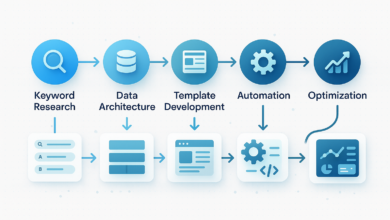
| Step | Action | Output |
|---|---|---|
| 1 | Audit existing high-traffic pages. | List of 10 priority pages to refresh. |
| 2 | Map keywords to Questions & Entities. | Updated content briefs. |
| 3 | Restructure for "liftability." | Pages with tables, lists, and bolded answers. |
| 4 | Inject credibility signals. | Added citations, dates, and author bios. |
| 5 | Technical hygiene check. | Schema validation. |
Step 1: Audit what you already have (and what generative engines can reuse)
I start by looking for pages that rank well but have declining clicks. These are prime candidates for GEO. I score them on a simple rubric: Do they answer the user’s question in the first 200 words? Is the data fresh? If not, they go on the "Rewrite" list.
Step 2: Re-map keywords into questions, entities, and decision criteria
Stop thinking just "CRM software" and start thinking "What criteria does a user need to choose a CRM?" (Price, integrations, support). Generative engines build answers based on these attributes. I map every target keyword to the underlying questions people are actually asking.
Step 3: Build “AI-liftable” page structures (answer blocks, lists, and tables)
This is the most impactful change you can make this week. If you have a comparison, make it a table. If you have a process, make it a numbered list. AI models are statistically more likely to pull content that is visually structured. I always ensure my definitions are concise (under 300 characters) and follow the heading immediately.
Step 4: Add credibility signals (sources, dates, author, and real-world constraints)
Trust is the currency of GEO. If an AI isn’t sure a fact is true, it (hopefully) won’t say it. I make sure every claim is backed by a citation . I clearly display "Last Updated" dates. I also add "What depends" sections—explaining the limitations of the advice—which paradoxically makes the content more trustworthy to both humans and machines.
Step 5: Use GenAI safely in production (drafting, versioning, and QA)
You cannot scale this content strategy without help. I use tools to draft, but I never publish raw output. Using an AI article generator can get you 80% of the way there, handling the formatting and basic structure. But the final 20%—the "human in the loop"—is non-negotiable. My QA checklist always includes: "Is this voice ours?" and "Are these facts verified?"
Step 6: Technical + distribution basics that support GEO (without overcomplicating it)
You don’t need to be a developer, but you do need basic hygiene. Ensure your site is crawlable. Use internal linking to connect your entities (e.g., link "pricing" to your "product page"). If you can, use `FAQPage` schema on your Q&A sections. Done is better than perfect here.
Example template: a GEO-ready content brief I’d hand to a writer
Here is the exact structure I paste into my project management tools:
User Intent: [Informational / Commercial]
Core Entity: [Product/Service Name]
Required Structure:
- H1: Direct match to intent.
- Intro: Direct answer block (bolded core concept).
- H2: Comparison Table (Features vs. Competitor).
- H2: Step-by-Step Implementation (Ordered List).
- FAQs: 3 questions marked up with Schema.
Must-Have Trust Signals: 2 External citations, Author Bio, Last Updated Date.
Voice Check: Practitioner tone, no fluff.
AI agents and the new customer journey: how I prepare my site and stack

Beyond search, we have to talk about AI agents. These are autonomous bots that don’t just search; they act. They browse, compare, and even negotiate on behalf of users. To prepare for this, I look at automation not just for content creation, but for the entire publishing lifecycle. An Automated blog generator can help maintain the content freshness required to keep these agents fed with current data.
Imagine a user telling their AI assistant, "Find me a marketing tool that integrates with Salesforce and costs under $500." The agent scans your site. If your pricing page is a PDF or your integration list is vague, you get dropped. Agentic commerce requires radical clarity.
What an AI agent might do on my site (and where it can fail)
Agents act like very literal, impatient humans. They will scan your pricing page, read your Terms of Service, and check your FAQs. They fail when information is locked behind gates, inside images, or buried in marketing jargon. My rule is: If a 10-year-old can’t find the price in 5 seconds, neither can the agent.
Measurement shift: from last-click to assisted influence (what I start tracking)
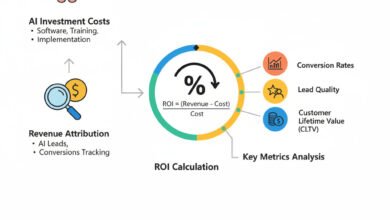
We won’t measure GEO perfectly yet, but we can measure progress. I have stopped obsessing over last-click attribution for top-of-funnel content. Instead, I track "Assisted Conversions" in GA4 and "Brand Search Lift." If more people are searching for my brand specifically, it means the generative engines (and my content) are doing their job upstream.
Risks, ethics, and common mistakes in generative AI marketing (and how I fix them)
It is easy to get swept up in the efficiency and forget the risks. The biggest danger isn’t AI taking our jobs; it’s us losing our brand’s soul by publishing mediocrity. I have seen teams push thousands of pages of unedited AI slop, only to watch their brand reputation tank.
Ethical AI marketing means maintaining a "human in the loop." It means verifying accuracy because AI hallucinations are real. It means being transparent with your audience about what is AI-assisted.
Common mistakes & fixes (5–8 items)
- Mistake: Publishing without review.
Fix: Implement a mandatory human editorial pass for tone and accuracy. - Mistake: Generic "AI voice."
Fix: Feed the AI your specific brand guidelines and style examples. - Mistake: Ignoring citations.
Fix: Force every claim to have a linked source. - Mistake: Optimizing only for keywords.
Fix: Shift focus to answering specific user questions and covering entities. - Mistake: Burying the answer.
Fix: Move the direct answer to the very top of the section (BLUF: Bottom Line Up Front). - Mistake: Neglecting Schema.
Fix: Use a plugin or tool to auto-generate basic schema for articles and FAQs.
FAQs + my next steps checklist (so I can act on GEO this week)
We have covered a lot. To recap: Marketing is shifting to generative engines, which means we need to optimize for answers, not just clicks. This requires structure, facts, and trust signals. Here are the answers to the questions I hear most often.
FAQ: Why is marketing shifting toward generative engines now?
It is the convergence of backend efficiency and frontend consumer demand. Marketers can produce personalized content at scale, while consumers prefer the speed of synthesized answers over hunting through links.
FAQ: What are AI agents and how do they influence marketing?
AI agents are autonomous software that perform tasks for users, like research or booking. They change marketing by creating non-linear journeys where decisions happen inside the bot, requiring your data to be crystal clear and accessible.
FAQ: How does generative search affect SEO and content strategy?
It reduces clicks for simple queries but increases the value of deep, expert content. Strategy shifts from "ranking #1" to "being included in the AI overview" via high-quality, structured data.
FAQ: What challenges does generative AI raise for marketers?
The main challenges are maintaining accuracy (avoiding hallucinations), preserving a distinct brand voice, ensuring data privacy, and adapting to attribution models that no longer rely solely on clicks.
FAQ: How can brands adapt to maintain visibility in AI-driven ecosystems?
Brands must adopt GEO strategies: audit content for clarity, use schema markup, focus on entity coverage, and ensure all business data (pricing, specs) is machine-readable.
My plan for this week:
- Monday: Audit my top 5 converting pages. Do they have clear "answer blocks"?
- Tuesday: Update one key article with a comparison table and Schema markup.
- Wednesday: Brief my writer (or AI tool) using the new GEO-ready template.
- Thursday: Check my analytics for "assisted conversions" to establish a baseline.
- Friday: Set up a "human-in-the-loop" checklist for all future content.