Visibility Review: Best AI Brand Monitoring Tools for Assessing Your Presence in AI
Introduction: My Visibility Review of the best AI brand monitoring tools (and who this is for)

I distinctly remember the moment this problem moved from ‘future tech’ to ‘immediate crisis’ for my team. A qualified prospect—a mid-market buyer perfect for our service—told us on a demo call, ‘I asked ChatGPT for the top three vendors in your space, and you weren’t on the list.’
We were ranking #1 on Google for that keyword. In the world of traditional SEO, we were winning. But in the world of Generative Engine Optimization (GEO), we were invisible.
That is the reality of AI brand visibility today. It isn’t just about SERPs anymore; it’s about how Large Language Models (LLMs) perceive, cite, and recommend your brand. This article is my personal visibility review of the best AI brand monitoring tools available in 2026. I’m skipping the hype to focus on what actually works for intermediate SEOs and demand gen leads who need to measure this new channel, compare tools like Profound and Semrush AIO, and implement a workflow that actually protects your revenue.
Why brands need AI-specific monitoring tools (AI is a new discovery channel)

I treat AI visibility like a mix of PR, technical SEO, and product messaging. It is not a magic algorithm hack you can fix overnight. The urgency stems from a massive shift in user behavior: people are asking AI complex questions before they ever search for a keyword.
Here is why relying on traditional rank trackers is dangerous:
- Dynamic Answers: Unlike a static Google result, AI answers change based on the prompt nuance, the user’s history, and the model version.
- Unranked Influence: You might be mentioned in a paragraph without a link, or worse, mentioned negatively.
- Actionable Intelligence: Standard SEO tools can’t tell you if Claude is hallucinating your pricing model.
The market data backs this up. Recent reports indicate that AI platforms generated over 1.1 billion referral visits in June 2025 alone—a massive 357% year-over-year increase. More critically, visitors coming from AI search tend to convert at rates up to 4.4x higher than traditional organic traffic because their intent is more refined by the time they click.
Quick definitions (beginner-friendly): AI visibility, GEO, citations, narrative positioning

Before we dive into the tools, let’s agree on the vocabulary. I keep these definitions simple to explain them to stakeholders:
- AI Visibility: The frequency and prominence with which your brand appears in AI-generated responses for relevant queries.
- GEO (Generative Engine Optimization): The practice of optimizing content to increase the likelihood of being cited or recommended by AI models.
- Citations: Think of these like footnotes. A linked citation is a direct click path; an unlinked citation is a trust signal. Both matter.
- Narrative Positioning: The context of your mention. Is the AI calling you ‘expensive enterprise software’ when you actually target SMBs? That’s a narrative failure.
What to measure and where: metrics that matter + AI platforms your tool should support

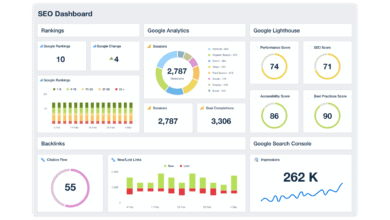
If I had to pick only two metrics for a small team to track, I’d start with Share of Voice (Mentions) and Citation URLs. However, to truly understand your standing, you need a slightly broader view. Here is what I look for in a dashboard.
My starter dashboard metrics
- Mention Frequency: How often do you appear in the top 3 recommendations?
- Sentiment Score: Is the mention positive, neutral, or negative?
- Citation Density: Which sources is the AI using to verify facts about you?
- Share of Voice vs. Competitors: If you aren’t mentioned, who is?
- Narrative Accuracy: Does the AI get your core value proposition right?
You also need to ensure your tool covers the platforms your customers actually use. It’s not just about ChatGPT anymore. A robust tool should track ChatGPT, Gemini, Claude, Perplexity, Google AI Overviews, Grok, and Microsoft Copilot. Different audiences favor different models; developers might ask questions on Llama or DeepSeek, while B2B executives might lean on Copilot.
The minimum viable AI visibility dashboard (for a beginner)
Don’t overbuild this. A good ‘red flag’ dashboard for a beginner simply tracks: ‘Did we appear for our top 20 transactional keywords?’ and ‘Was the information accurate?’. If you see a trend where you are consistently omitted from ‘Best X tools’ lists in Perplexity, that is your immediate signal to investigate your digital PR and review presence.
The Visibility Review framework: a step-by-step workflow to assess your brand’s presence in AI

Tools are useless without a process. I call this the ‘Visibility Review’ framework. It is a repeatable workflow I run monthly to benchmark performance. You can do this manually with a spreadsheet or speed it up with the tools listed below.
Step 1: Define the use case (brand protection vs demand gen vs competitive intel)
If you are a founder, you might care most about brand protection (is the AI hallucinating legal risks?). If you are a Demand Gen lead, you care about commercial intent (are we recommended for ‘best software’?). Clarify this first, because it dictates which prompts you test.
Step 2: Build a prompt library by persona, region, and funnel stage
This is where most people get lazy. They just test ‘what is [Brand Name]?’. That is vanity tracking. You need to simulate real buyers. I recommend building a library of 20–50 prompts. For example, for a mid-sized US healthcare clinic, I would test:
- Informational: ‘What are the symptoms of [Condition] in adults?’ (Do you appear in the answer?)
- Commercial: ‘Best pediatric clinics near [City] that accept [Insurance].’
- Comparative: ‘Compare [My Brand] vs [Competitor] for urgent care.’
- Transactional: ‘Is [My Brand] expensive?’
Step 3: Capture results consistently (mentions, citations, sentiment, narrative)
I maintain a simple logging schema. Whether you use a tool or a spreadsheet, you need these columns:
| Date | Model | Prompt | Mentioned? (Y/N) | Sentiment (-1 to 1) | Competitors Listed |
|---|---|---|---|---|---|
| Oct 1 | ChatGPT-4o | Best CRM for SMB | No | N/A | HubSpot, Salesforce |
| Oct 1 | Perplexity | Best CRM for SMB | Yes | Positive | HubSpot |
Pro Tip: I screenshot the answers and paste citation URLs into the log so I can audit sources later. I score what the AI says, not what I wish it said.
Step 4: Turn findings into actions (content updates, PR, technical SEO signals)
This is the payoff. If you find gaps, map them to actions:
- Issue: Missing from ‘Best X’ lists.
Fix: Your comparison pages might lack authority. You need to refresh them with ‘experience’ signals (E-E-A-T). - Issue: Wrong pricing mentioned.
Fix: Update your pricing page schema and FAQ. - Issue: Lack of citations.
Fix: You need digital PR. Get quoted in the sources the AI is citing.
Once you identify the content gap, execution speed matters. Many teams struggle to rewrite dozens of pages to match these new insights. This is where using an AI article generator can help you produce structured, intent-matched drafts faster, allowing you to deploy the necessary content updates before the next model training cycle.
Best AI brand monitoring tools: my comparison criteria + side-by-side table

Now, let’s look at the software that automates this. I have evaluated these based on how well they handle the workflow above. When I test a tool, I’m asking: Does this save me 10 hours of manual prompting? Does it give me data I can trust?
The criteria I use to evaluate AI visibility platforms (beginner checklist)
- Coverage Breadth: Does it track Perplexity and Claude, or just ChatGPT?
- Prompt Granularity: Can I track prompts by specific personas or regions (e.g., US vs UK)?
- Citation Tracking: Does it list exactly which URLs the AI is pulling data from?
- Alerting: Will it email me if a negative sentiment spike occurs?
- Export/API: Can I get this data into Looker Studio? (Crucial for enterprise).
- Onboarding: Can I get set up in 30 minutes, or do I need a sales call?
- Pricing Transparency: Is it accessible for a 3-person team?
- Historical Data: Can I see how my visibility has trended over the last 6 months?
Comparison table: coverage, metrics, alerts, and reporting
Note: Features and pricing tiers evolve rapidly. Always verify current specs during your demo.
| Tool | Best For | Platform Coverage | Key Unique Feature | Complexity |
|---|---|---|---|---|
| Profound | Enterprise / Large Brands | Extensive (All major LLMs) | Global Share of Voice & Compliance | High |
| Semrush AIO | Existing Semrush Users | ChatGPT, Gemini, Perplexity | Integrated with SEO workflows | Medium |
| Riff Analytics | Mid-Market / Enterprise | Multi-model comparison | Deep narrative analysis | Medium-High |
| Otterly.AI | SMBs / Startups | Major Chatbots | Simple ‘Win/Loss’ tracking | Low |
| Ahrefs (AI Extension) | SEO Pros | Growing coverage | Backlink correlation to AI | Medium |
My 30-minute test checklist: When you trial these, input your top 5 brand-critical prompts. Check if the tool correctly identifies the sentiment. If it thinks a competitor recommendation is ‘neutral’ rather than ‘negative’ for you, the data might be too noisy to trust.
Tool-by-tool notes (strengths, limitations, and ideal team)
Profound & Riff Analytics
These are heavy hitters. If I were running brand safety for a Fortune 500, this is where I would start. They offer sophisticated segmentation and APIs. The limitation? They often come with enterprise pricing and deeper onboarding requirements.
Semrush AIO & Ahrefs
If you already live in these tools for SEO, their AI extensions are a logical first step. Strengths include unified billing and familiar UI. However, their prompt libraries can sometimes feel less flexible than dedicated GEO tools.
Otterly.AI, Peec AI, & TryGrav.ai
These are excellent ‘entry-level’ options. They focus on answering: ‘Are we showing up?’ with simple UIs and affordable tiers. The tradeoff is usually less granular historical data or fewer export options for BI tools.
Enterprise vs entry-level tools: how I pick the right option for SMBs, agencies, and large brands

Choosing the right tool usually comes down to reporting needs rather than feature count. Here is how I decide if I were in your seat:
For SMBs (Team of 1-3):
You need speed and affordability. You likely don’t need an API. Stick to entry-level tools like Otterly or leverage the AI features in your existing SEO suite. Your goal is simply to spot big gaps.
For Agencies:
You need multi-client support and white-label reporting. You need a tool that allows for distinct project workspaces. Look for mid-market solutions that charge by ‘project’ or ‘prompt volume’ rather than ‘seat.’
For Enterprise:
If reporting to the board is mandatory, you need SLAs, SSO, and raw data export. You can’t rely on a tool that might change its metric definitions overnight. Dedicated platforms like Profound are built for this compliance and rigor. A honest caution: don’t overpay for enterprise features early if you don’t have a data analyst to process the exports.
How I operationalize AI visibility: alerts, reporting, and turning insights into content at scale

Monitoring is passive; operationalizing is active. You need a rhythm, or the data just sits there. Here is the SOP I recommend to my clients:
- Weekly Pulse Check (Monday AM): Review alerts for major sentiment drops or new competitor mentions in top prompts. (Time: 15 mins)
- Monthly Narrative Review: Analyze the ‘why.’ Are citations from 2022 dragging us down? Are we missing from the new ‘Best of 2026’ articles? (Time: 60 mins)
To manage this, I use a simple alert response table:
| Alert Type | What it means | Who Owns It | First Response |
|---|---|---|---|
| Sentiment Drop | AI is citing negative reviews | CX / Support | Audit recent review sites |
| Visibility Loss | Competitor overtook us | SEO / Content | Refresh comparison assets |
| Hallucination | Factually wrong info | Comms / PR | Correct source data |
Once you identify what needs to be fixed—say, you need ten new comparison articles to displace a competitor—the bottleneck becomes production. This is where operations tools like Kalema fit in. It’s not just an SEO content generator; it functions as an intelligence layer that helps you structure and scale the content updates required to influence AI results. You can use its automated blog generator features to rapidly create the foundational content that feeds the AI models with the correct information.
Common mistakes I see (and how to fix them)
- Tracking too few prompts.
Fix: Don’t just track your brand name. Track the problems your brand solves. - Ignoring citations.
Fix: If you focus only on the mention and ignore the source URL, you can’t fix the root cause. Always audit the sources. - Assuming one model represents all.
Fix: I’ve seen brands dominate ChatGPT but disappear in Perplexity. You must verify across models. - Vanity Metrics.
Fix: Don’t celebrate a mention if the context is ‘…is a cheaper, less capable alternative.’ Check the sentiment. - Lack of Ownership.
Fix: If everyone owns AI visibility, no one does. Assign a specific ‘GEO Lead’ even if it’s just part of their SEO role.
FAQ: Best AI brand monitoring tools and AI visibility tracking basics
Why do brands need AI-specific monitoring tools?
Generative AI is a fundamentally new discovery channel. Traditional SEO tools track static rankings, but AI answers are dynamic and synthesized from multiple sources. You need specific tools to measure narrative positioning, sentiment, and the likelihood of being cited, as these metrics don’t exist in standard rank trackers.
What differentiates enterprise platforms from entry-level tools?
Enterprise platforms typically offer API access, Single Sign-On (SSO), real-time alerting, and granular segmentation (by region or persona). Entry-level tools focus on ease of use, affordability, and quick ‘win/loss’ dashboards. If you need to integrate visibility data into a BI dashboard like PowerBI, you likely need an enterprise solution.
Which AI platforms should a monitoring tool support?
At a minimum, your tool should cover the ‘Big Three’: ChatGPT (OpenAI), Gemini (Google), and Perplexity. However, comprehensive visibility requires tracking Claude (Anthropic), Google AI Overviews (SGE), and Microsoft Copilot, as different user demographics favor different assistants.
What metrics are most useful for measuring AI brand visibility?
Start with Share of Voice (Mentions) and Citation Sources. These tell you if you are visible and where the data comes from. Once you have a baseline, add Sentiment Analysis and Narrative Framing to understand how your brand is being described. Avoid chasing raw mention counts without context.
Conclusion: my 3-point recap + next steps to improve your brand’s presence in AI
We are still in the early innings of Generative Engine Optimization, but the winners are already being decided by who shows up in the answer. If I were starting my visibility journey today, here is exactly what I would do:
- Audit your reality: Run a baseline ‘Visibility Review’ using 20 buyer-centric prompts.
- Choose your tier: Pick an entry-level tool if you are an SMB, or an enterprise platform if you need API integration. Don’t let tool selection paralyze you.
- Build the loop: Connect your findings to your content calendar immediately. A gap in monitoring should become a brief for your content team within 24 hours.
AI visibility isn’t about gaming the system; it’s about ensuring the system has the best, most accurate information about you. Start measuring it today so you can control the narrative tomorrow.