Law Firm SEO Audit: Trust Signals for Elite Legal Sites
Introduction: What I mean by a “law firm SEO audit” (and why legal sites need a different trust checklist)

My firm’s pages rank, but the phone isn’t ringing. This is the most common complaint I hear from attorneys who have invested heavily in “standard” SEO. When I review law sites, I often find they are checking the wrong boxes. They have keywords and backlinks, but they lack the specific trust signals that convince a potential client—and Google—that they are a legitimate authority.
In this guide, I will walk you through a specialized law firm SEO audit. Unlike a generic ecommerce or small business audit, a legal audit must prioritize trust, compliance, and authority above all else. Legal websites operate under Google’s strict YMYL (Your Money Your Life) standards, meaning the margin for error is razor-thin.
To put it simply: A specialized legal SEO audit checks for E‑E‑A‑T (Experience, Expertise, Authoritativeness, Trustworthiness), technical reliability, local presence consistency, content architecture, and readiness for AI Overviews. I’m going to show you exactly what to check, why it matters for your bottom line, and how to implement fixes that actually drive qualified inquiries—not just vanity traffic.
Search intent and who this guide is for
If you are a marketing manager at a mid-sized firm, a solo practitioner trying to understand why your traffic dipped, or a junior SEO tasked with fixing a multi-location legal site, this guide is for you. I won’t bore you with high-level theory. Instead, you will walk away with a repeatable workflow, a scoring rubric you can use immediately, and a clear list of priorities to fix the issues hurting your lead generation.
Quick answer: what a specialized law firm SEO audit includes
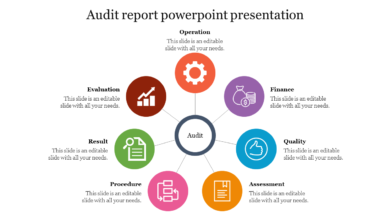
Here are the pillars I look at when auditing a high-performance legal website:
- E‑E‑A‑T & Reputation: Proving the attorneys are real, qualified experts (bios, bar admissions, awards).
- Technical Health: ensuring speed and security, specifically Core Web Vitals, because clients in legal trouble won’t wait for a slow site.
- Local SEO (GBP): Optimizing Google Business Profiles and ensuring NAP (Name, Address, Phone) consistency across the web.
- Content Architecture: Using pillar pages and clusters to build topical authority rather than loose, thin blog posts.
- Off-Page Authority: analyzing backlinks for relevance (law associations, .edu, local news) rather than just volume.
- AI & GEO Readiness: Structuring content so it can be read and cited by AI engines like ChatGPT and Google’s AI Overviews.
Why legal trust factors dominate SEO for attorneys (YMYL, E‑E‑A‑T, and the 2025 quality crackdown)

Legal advice affects a person’s livelihood, freedom, or financial future. Because of this, Google classifies legal websites as YMYL (Your Money Your Life). This means Google’s algorithms hold your site to a much higher standard of truth and safety than a hobbyist blog or a recipe site. If Google isn’t 100% sure you are who you say you are, they won’t risk showing your advice to a user in distress.
The stakes got even higher with the recent “Site Reputation Abuse” policies and core updates in 2025. Google is actively penalizing sites that host low-value, third-party, or mass-produced content that lacks human oversight. For law firms, this means the days of buying generic legal blog posts are over. You need to demonstrate E‑E‑A‑T: Experience (you’ve handled these cases), Expertise (you know the law), Authoritativeness (peers respect you), and Trustworthiness (clients vouch for you).
Think of it this way: Google wants to see the same digital proof that a skeptical referral partner would ask for. If your website looks like a template with stock photos of gavels and generic text, you look risky. My audit starts with trust signals because without them, no amount of technical tweaking will save your rankings.
E‑E‑A‑T in plain English: what ‘proof’ looks like on a law firm website
When I scan a site for E‑E‑A‑T, I am looking for tangible evidence. Here is my basic checklist:
- Detailed Attorney Bios: Do you list Bar Admission numbers, jurisdictions, and specific law school details?
- Verifiable Accolades: Are badges from Super Lawyers or Best Lawyers current and clickable, or just static images?
- Clear Practice Focus: Does the site claim you do “everything,” or does it demonstrate deep expertise in specific areas (e.g., “Brain Injury Litigation” vs. just “Personal Injury”)?
- Real Reviews: Are testimonials integrated with compliance disclaimers, and do they sound authentic?
- Author Attribution: clearly identifying who wrote or reviewed the legal content on the blog.
What changed recently: quality updates and why generic content is riskier now
The “quality content” update wasn’t just a suggestion; it was a cleanup operation. I treat this as a signal to raise editorial standards, not to panic. Sites relying on thin, outsourced content that regurgitates basic statutes saw visibility drop. Google now favors content that offers original insight, distinct legal perspective, and comprehensive coverage. If your “What is a DUI?” page reads exactly like the 10,000 other DUI pages on the web, you are vulnerable. The audit identifies these weak spots so you can upgrade them into assets.
My law firm SEO audit workflow: a trust-first checklist (with a simple scoring table)

If I only had two hours to audit a law firm’s website, this is the exact workflow I would use. It focuses on the highest-impact areas first. I recommend tracking your findings in a simple spreadsheet. Don’t get lost in fancy tool scores just yet; use your eyes and judgment first.
To do this efficiently, you might need a few tools. I use Google Search Console for data, a crawler like Screaming Frog, and sometimes an AI SEO tool to help analyze large volumes of content quickly. If you are planning to rewrite a lot of thin content, a reliable SEO content generator can help with drafts, provided you have an attorney review them. An AI content writer is great for scaling, but for audit purposes, we are looking for quality gaps.
| Audit Area | What I Check | Pass / Needs Work | Impact | Fix Owner |
|---|---|---|---|---|
| Trust / E-E-A-T | Bios, Bar #s, Awards, Disclaimers | Needs Work | High | Partner / Marketing |
| Technical | Site Speed (Mobile), Indexing, HTTPS | Pass | High | Developer |
| Local (GBP) | NAP Consistency, Reviews, Categories | Needs Work | High | SEO Manager |
| Content | Pillar structure, Thin pages, Author box | Needs Work | Medium | Content Lead |
| Off-Page | Link toxicity, Legal directory citations | Pass | Medium | SEO Agency |
Step 1: Set audit goals and baseline metrics (so ‘success’ is measurable)
Before fixing anything, know where you stand. I pull these metrics from GA4 and Google Search Console (GSC):
- Qualified Leads: Count form submissions and tracked calls, not just clicks.
- Keyword Rankings: Focus on commercial intent terms (e.g., “Chicago car accident lawyer”) rather than informational volume.
- Local Visibility: How often do you appear in the Map Pack for local searches?
- Organic Traffic: specifically to practice area pages and location pages.
Step 2: Run a trust scan (E‑E‑A‑T + reputation + transparency) before anything else
If I only had 15 minutes, I would spend it here. I scan the footer for a physical address and a clear privacy policy. I check the “About” page to see if it lists real people or just generic “Team” language. I look for a phone number that is visible on mobile without scrolling. These are the trust anchors.
Step 3: Check technical foundations (indexing, speed, mobile, security)
Next, does the site work? I check if critical pages are indexed in GSC. I run a PageSpeed Insights test specifically for mobile—because a client calling from a crash scene is on a phone, not a desktop. I ensure the site is on HTTPS; a “Not Secure” warning is a death sentence for legal conversion rates.
Step 4: Validate local visibility (GBP, NAP, reviews, proximity signals)
I verify that the Name, Address, and Phone number (NAP) in the footer matches the Google Business Profile exactly. Suite number inconsistencies are a common silent killer of local rankings. I also look at review velocity—are the most recent reviews from this year?
Step 5: Audit content quality and topical authority (practice + location architecture)
I look for “zombie pages”—thin, 300-word blog posts from 2018 that get zero traffic. I check if practice areas are organized into logical clusters (e.g., a Personal Injury hub linking to Truck Accidents) or if they are just a flat list of disconnected pages.
Step 6: Review off-page authority (links, citations, earned media)
Finally, I look at the backlink profile. I’m not counting links; I’m checking quality. Are there links from the local chamber of commerce, legal directories (Avvo, Justia, FindLaw), or local news sites? Or is it full of spammy directory links from overseas?
On-site trust and E‑E‑A‑T: what to audit on attorney bios, practice pages, and proof of credibility

Your attorney bios are likely the second most visited pages on your site after the homepage. Potential clients want to know who is fighting for them. When auditing these pages, you need to be ruthless about the quality of information provided.
| Signal Strength | What it looks like | How I fix it |
|---|---|---|
| Weak / Absent | “John is a passionate lawyer who fights for you.” (Generic) | Add specific years of experience and verifiable outcomes. |
| Moderate | Lists law school and “Personal Injury” as a focus. | Add Bar numbers, specific courts admitted to, and professional memberships. |
| Strong Trust | Bar #12345, Certified by State Board, $10M+ recovered, link to State Bar profile. | Optimize schema markup to highlight these credentials to Google. |
Attorney bio audit checklist (the ‘client would trust this’ test)
Go through your key attorney bios and check for these elements:
- Bar Admissions: State and Federal court admissions with years.
- Education: Law school and undergrad with graduation years.
- Awards: Only include verifiable ones (Super Lawyers, Martindale-Hubbell) and keep them updated.
- Speaking/Publications: A list of where the attorney has taught or written (demonstrates Expertise).
- Headshot: Professional, high-resolution, and recent.
- Representative Matters: anonymized case examples that prove experience.
Authorship and editorial transparency for legal content
When I can’t tell who wrote a legal article, I treat it as a trust gap. Every blog post or legal guide should have an author byline linking to an attorney bio. If a marketing team wrote it, add a “Reviewed by [Attorney Name]” line with a date. This “medical review” model is crucial for YMYL compliance.
Conversion trust elements that also influence SEO outcomes
SEO isn’t just about traffic; it’s about engagement. If users bounce immediately, it sends negative signals to Google. I look for clear calls to action (CTAs). A sticky “Call Now” button on mobile is mandatory. Accessibility matters too—if your font contrast is too low for an older client to read, you are losing leads and failing Core Web Vitals accessibility checks.
Technical trust for high-authority law sites: Core Web Vitals, indexing, security, and site structure

Technical SEO for law firms doesn’t need to be overly complex, but it must be robust. A site that takes 5 seconds to load on a 4G connection will lose a potential client to the competitor who loads in 2 seconds.
Indexing and crawl sanity checks (what I verify first)
I start with a “green flags vs red flags” check in Google Search Console:
- If you see “Excluded by ‘noindex’ tag” on key practice pages, then remove the tag immediately.
- If you see thousands of indexed pages for a small firm, then check for duplicate “tag” pages or parameter URLs generated by your CMS.
- If your XML sitemap hasn’t been read in months, then resubmit it.
Core Web Vitals quick wins for law firms
You don’t need a perfect 100 score, but you need to pass. Here are the metrics that matter:
- LCP (Loading): How fast the main text/image loads. Fix: Compress that giant hero image on the homepage.
- INP (Interactivity): Does the page freeze when I click “Menu”? Fix: Reduce heavy JavaScript from third-party chat widgets. Removing a chat widget can help speed, but consider the business impact—if it drives leads, optimize it, don’t just delete it.
- CLS (Visual Stability): Does the text jump around while reading? Fix: Set explicit width and height dimensions for all images and video embeds.
Structured site architecture that supports trust and practice-area clarity
Your URL structure should tell a story. A flat structure like /personal-injury-lawyer-chicago is okay, but a hierarchy is better for authority. I prefer to see:
/practice-areas/personal-injury/car-accidents
This tells Google that “Car Accidents” is a subset of “Personal Injury,” helping you build topical authority for the broader term. Ensure you use breadcrumbs so users (and bots) can climb back up the tree.
Local SEO trust signals: Google Business Profile, reviews, NAP consistency, and community alignment

For most law firms, the “Map Pack” (the 3 local results at the top of Google) is the holy grail. Your audit here focuses on consistency and proximity.
GBP audit checklist (what I look for in 10 minutes)
- Categories: Is your primary category correct? (e.g., “Personal Injury Attorney” vs just “Law Firm”).
- Service Areas: Are you listing 20 cities you don’t actually have an office in? Stick to where you truly operate.
- Hours: Are they accurate? Inaccurate hours frustrate clients and hurt trust.
- Photos: Do you have photos of the outside of the building and the reception area? Use real office photos, not stock images, whenever possible.
- Products/Services: Have you filled out the “Services” descriptions with keywords?
Location pages that build trust (not doorway pages)
If your city pages only swap the city name (e.g., “Atlanta Car Accident Lawyer” vs “Marietta Car Accident Lawyer”) with the exact same text, I treat that as a quality risk. These are “doorway pages.” To fix this, each location page needs unique content: local landmarks, specific local court information, directions from local highways, and reviews from clients in that specific city.
Reviews and reputation management (ethical and SEO-safe)
Reviews are major ranking factors. I audit how a firm responds. You should respond to every review, positive or negative. For negative reviews, keep it professional and empathetic, but vague to protect privilege.
Example: “We take client satisfaction seriously but cannot discuss specific matters publicly. Please contact our office manager directly.” This shows future clients you are responsive and professional.
Content trust and topical authority: practice-area hubs, FAQs, multimedia, and ‘helpful’ legal writing

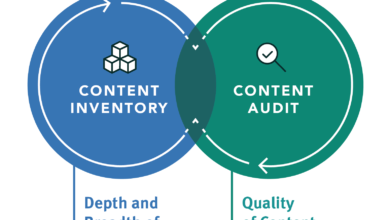
A scattered blog won’t help you rank. You need a “Pillar and Cluster” strategy. This means creating a comprehensive “Hub” page for a main practice area, supported by specific “Spoke” pages.
If you are struggling to produce enough high-quality content to fill these clusters, using an AI article generator can help create first drafts. I often use this to get the structure and basic definitions down, then hand the draft to an attorney to inject war stories, local laws, and nuance. This hybrid approach scales authority without sacrificing quality.
Pillar + cluster model for a law firm (example content map)
Here is what a healthy content map looks like for a Personal Injury firm:
- Hub Page: Car Accident Lawyer (The main overview, 2000+ words)
- Cluster Page 1: Rear-End Collisions (Specific scenario)
- Cluster Page 2: Distracted Driving Laws in [State] (Specific law)
- Cluster Page 3: What to do after a crash (Practical guide)
- Cluster Page 4: Uninsured Motorist Claims (Insurance nuance)
All cluster pages should link back to the Hub page, and the Hub should link out to them. This tells Google you are the authority on the entire topic of car accidents.
Editorial standards for YMYL legal content (what I require before publishing)
Before any post goes live, check it against these standards:
- Reviewer: Is the reviewing attorney listed?
- Date: Is the “Last Updated” date current? Laws change.
- Disclaimers: Is there a clear “This is not legal advice” disclaimer?
- Balance: Does it avoid guaranteeing results (e.g., “We will win your case”)?
On-page elements I audit on practice pages (titles, headings, internal links, FAQs)
I check the Title Tag first. It needs to be catchy but descriptive.
Bad: Smith Law | Home
Better: Dallas Criminal Defense Lawyer | Drug & DUI Attorney | Smith Law
I also look for an FAQ section at the bottom of practice pages. This is prime real estate to answer “People Also Ask” questions and capture long-tail search traffic.
AI visibility for law firms: AEO + GEO checks for AI Overviews and generative search

Search is changing. Users are getting answers directly from AI Overviews (formerly SGE) at the top of the results. To compete here, you need to optimize for AEO (Answer Engine Optimization) and GEO (Generative Engine Optimization).
AEO audit: how I structure answers to be overview-friendly
I look for one clean answer early in the content. If the user asks “What is the statute of limitations for slip and fall in Texas?”, do not bury the answer in paragraph four. Start with: “In Texas, the statute of limitations for a slip and fall claim is generally two years from the date of the incident.” Then explain the exceptions. This direct format makes it easy for AI to scrape and feature your answer.
Schema markup to prioritize on legal sites (and what each is for)
Schema is like a label maker for your code. It helps machines understand your content.
- LegalService: Defines your business type.
- Person: Defines your attorneys.
- FAQPage: Marks up your questions and answers for rich snippets.
- LocalBusiness: Connects your site to your physical address.
GEO audit: earned citations and digital PR as machine-justification signals
Generative Engine Optimization isn’t just about keywords; it’s about citations. AI models trust information that is corroborated by other authoritative sources. I check if the law firm is mentioned in reliable third-party sites—local news, university alumni pages, or legal journals. Start with one community event or one local journalist pitch to get the ball rolling.
Wrap-up: common law firm SEO audit mistakes, a mini-FAQ, and my next-step action plan
Auditing a law site is complex, but fixing it doesn’t have to be overwhelming. Focus on trust signals, and the rankings will follow.
Common mistakes (and exactly how I fix them)
- Missing Attorney Reviewer (High Priority): Fix: Add “Reviewed by [Name]” to all blog posts.
- Broken/Inconsistent NAP (High Priority): Fix: Use a tool to scan and align directories with your GBP.
- Slow Mobile Speed (High Priority): Fix: Compress images and defer non-essential JavaScript.
- Doorway Location Pages (Medium Priority): Fix: Rewrite city pages to include unique local content.
- Generic AI Content (Medium Priority): Fix: Inject specific firm experience and case examples into generic drafts.
Mini-FAQ: specialized audit, E‑E‑A‑T, AI Overviews, local trust, and GEO
What is a specialized SEO audit for law firms?
It is an audit that prioritizes trust signals (E-E-A-T), ethical compliance, and local verification specifically for YMYL legal websites. Do this quarterly to stay safe.
Why is E‑E‑A‑T important?
Because law is a “Your Money Your Life” topic. Google requires proof of Expertise, Authoritativeness, and Trustworthiness before ranking legal advice. Update your bios immediately.
How do AI Overviews affect strategy?
They push organic links further down. You must structure content with direct answers (AEO) to appear in the AI summary itself. This improves your visibility significantly.
How should law firms optimize local trust?
Focus on a complete Google Business Profile, consistent NAP across the web, and earning steady, ethical reviews. Treat your GBP like a second homepage.
What is GEO?
Generative Engine Optimization focuses on optimizing content so AI engines (like ChatGPT or Google Gemini) cite you as an authority. Build high-trust citations to win here.
My 3-bullet recap and next actions
- Trust First: Audit your bios and “About” pages before worrying about keywords.
- Technical Health: Ensure your site is fast on mobile and secure (HTTPS).
- Authority Structure: Organize content into practice hubs and validate local presence.
If I were starting from scratch today, here is what I would do:
- Today: Check your Google Business Profile for accuracy and reply to the last 5 reviews.
- This Week: Update every attorney bio with Bar numbers, specific experience, and a professional headshot.
- This Month: Run a crawl to find and fix broken links and 404 errors that frustrate users.
Ready to elevate your firm’s content strategy? Contact us for more information on how we can help you build an intelligent, authority-driven content engine.