From rankings to visibility: why your SEO reports feel out of touch

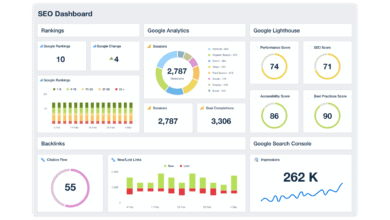
I still remember a specific Monday morning rank report meeting from a few months ago. The dashboard on the screen was full of green arrows. We were holding position #1 for three high-volume commercial terms and had cracked the top 3 for a dozen others. On paper, it was a victory lap.
But the room was quiet. The CMO finally broke the silence: “If we’re dominating search, why are demo requests down 18% this quarter?”
It was an uncomfortable moment, but it forced me to confront a reality that many of us in SEO are facing right now. Our tools are telling us we’re winning, but our business results are telling us something’s broken. This isn’t a tracking error or a seasonal dip. It’s the AI visibility gap.
The way we have measured SEO success for two decades—tracking where a blue link sits on a static page—is rapidly losing relevance. With Google rolling out AI Overviews and users increasingly turning to ChatGPT, Perplexity, and Gemini for answers, “ranking” is no longer the same as “being seen.”
In this guide, I’m going to walk you through exactly why traditional rank tracking is failing to capture the full picture of your organic performance. We’ll look at the data behind the shift, define the new metrics that actually matter, and I’ll share a practical 5-step workflow to audit and fix your visibility gap.
Who this guide is for
If you are an in-house SEO manager, a content lead, or a founder responsible for organic growth, this is for you. You likely understand the basics of SEO—keywords, backlinks, and technical health—but you’re feeling the pressure of a landscape that’s shifting under your feet.
You don’t need a PhD in machine learning to fix this, and you don’t need to rip out your entire analytics stack tomorrow. What you do need is a clear framework to explain to your leadership why the old metrics are softening and a concrete plan to adapt your content strategy for the age of generative search.
What I mean by “AI visibility”
Before we dive into the data, let’s get our definitions straight. When I talk about AI visibility, I’m referring to how often and how prominently your brand is surfaced, cited, or linked within AI-generated answers—whether that’s in Google’s AI Overviews or a chat interface like ChatGPT.
- Traditional Visibility: You rank #3. The user sees your headline and meta description. They decide whether to click.
- AI Visibility: The AI reads your content, synthesizes it, and presents the answer directly to the user, potentially citing you as a source. The user gets the value immediately, often without clicking.
What traditional SEO rank tracking actually measures (and what it doesn’t)

To understand why our dashboards are failing us, we have to look at how they are built. I’ve used almost every major enterprise SEO platform over the last decade, and while they are incredibly sophisticated, their core logic hasn’t changed much since 2010.
Most of us treat rank trackers like absolute truth, but they are really just simulations. When we see “Rank: 3,” we interpret that as “Success.” But in an AI-led SERP, that number hides more than it reveals.
How rank trackers work in plain English
If you stripped away the fancy UI, here is what a rank tracker is actually doing:
- Simulation: It acts like a user and performs a search for a specific keyword (e.g., “best CRM for small business”).
- Scraping: It scans the results page and identifies the list of organic blue links.
- Counting: It counts down from the top to find your URL. If you are the third blue link, it reports your position as #3.
- Averaging: It aggregates these positions across thousands of keywords to give you a “visibility score.”
Notice what’s missing? It’s generally looking at the list of links. It rarely accounts for whether an AI summary pushed that list 600 pixels down the screen, or if the user found their answer in the summary and never even looked at the links.
The assumptions baked into rank reports
We rely on these tools because we accept a few silent assumptions—assumptions that are now breaking.
- The Traffic Assumption: We assume a linear relationship between rank and traffic. “If I move from #5 to #1, my traffic will triple.” This falls apart when AI answers the query directly (zero-click).
- The Visibility Assumption: We assume that if we rank on Page 1, we are seen. In reality, with AI Overviews taking up massive screen real estate—especially on mobile—a #1 organic ranking might effectively be “below the fold.”
- The Format Assumption: We assume the result is a list of links. We aren’t tracking whether we were cited inside the answer block, which is where the user’s eyes actually go.
Where rank tracking is still useful
Now, I’m not suggesting you cancel your rank tracking subscription today. I still check traditional rankings—just not as my primary success metric.
Rank tracking is still excellent for benchmarking against competitors in traditional search, diagnosing technical SEO disasters (if you drop from #1 to #50 overnight, something is technically broken), and monitoring branded search terms. But as a proxy for business growth? That’s where it’s crumbling.
The visibility gap: why SEO rank tracking fails in an AI world

Here is the crux of the problem: You can have excellent SEO rankings and zero AI visibility. Conversely, you can be cited by an AI without ranking #1. This disconnect is what I call the visibility gap.
When I first saw the data on this, I had the same reaction you probably will: “Wait, shouldn’t the AI just cite the top ranking pages?” Logically, yes. But practically, no. AI models prioritize content that is structurally easy to extract and authoritative, which isn’t always the same content that has the most backlinks or perfect keyword optimization.
Let’s look at the numbers. They paint a clear picture of why your “green arrows” aren’t translating into revenue.
Data snapshot: rankings vs AI mentions
- The Disconnect: Only about 62% overlap exists between Google first-page rankings and brands mentioned in ChatGPT responses. Just because you rank doesn’t mean the AI knows—or cares—who you are.
- The Screen Real Estate: AI Overviews are now triggered in anywhere from 15% to 47% of Google searches depending on the vertical. On mobile, this dominates the entire initial view.
- The Click Decline: When an AI summary appears, click-through rates (CTR) for top-ranking pages drop by roughly 30–35%. Users are reading, not clicking.
- The Concentration: AI answers are picky. On average, an AI Overview contains only 1.74 citations, and 80% of all citations go to a small group of about 10 highly authoritative sources (like Wikipedia and major media outlets).
What this looks like for a real business
Let me ground this in a quick story. I recently audited a B2B SaaS client in the project management space. Their dashboard looked healthy: top 3 rankings for high-intent keywords like “agile workflow software.”
But when I manually ran those same queries through Google (triggering AI Overviews) and asked ChatGPT “What are the best tools for agile workflows?”, the client was invisible. The AI summaries cited big review sites (G2, Capterra) and two massive competitors, but ignored my client completely despite their #3 organic ranking.
The result? They were getting “impressions” in Search Console because their link was on the page, but they weren’t getting the clicks or the brand association. They were effectively invisible where it mattered most.
Why SEO rank tracking fails as your primary KPI in an AI-led SERP

If you are still reporting “Average Position” as your north star metric to your VP of Marketing, you are setting yourself up for a difficult conversation. Here are the four specific reasons why traditional tracking is failing us as a primary KPI.
Reason 1: It ignores AI Overviews and zero-click outcomes
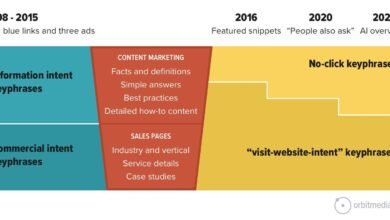
Zero-click searches now account for nearly 60% of all searches. In practice, that means the majority of search journeys end on the results page. Traditional rank trackers count these as “wins” because you ranked, but your business sees zero value if you weren’t the one providing the answer in the summary.
Think about your own behavior. If you search “how to reset iPhone,” and Google gives you the steps right there, do you click the link? Probably not. You got the value, but the website got nothing—unless they were cited as the source.
Reason 2: It can’t see AI referrals or chat-based discovery
We’re seeing a massive shift in discovery behavior. Users are having full conversations with ChatGPT or Perplexity to research products. “Compare tool A vs tool B for a small team.”
If ChatGPT recommends your product, that user might type your brand name directly into their browser later. Traditional attribution sees “Direct Traffic.” Rank trackers see nothing. Yet, total generative AI referral visits reached an estimated 2 billion in 2025. If you aren’t tracking this, you’re flying blind to a huge chunk of your funnel.
Reason 3: It overlooks earned media and community authority
This is a big one. AI models love User-Generated Content (UGC). Research suggests roughly 48% of AI citations come from community platforms like Reddit, Quora, and LinkedIn.
Your own blog might be perfectly optimized, but if the AI is pulling its answer from a Reddit thread where your competitor is mentioned as the “fan favorite,” you lose. Rank trackers only look at your domain’s ranking, completely missing the fact that the battle for visibility is happening on third-party platforms.
Reason 4: It misguides strategy and reporting
When you optimize for rank, you optimize for keywords. When you optimize for AI visibility, you optimize for answers and authority. By focusing on the wrong metric, teams end up churning out content designed to “rank” rather than content designed to be cited. This leads to the “green dashboard, red revenue” paradox that erodes leadership’s trust in SEO.
New visibility metrics that actually matter in the AI era

So, if rank is dead as a primary KPI, what replaces it? We need to shift our focus from position to presence. This requires a new set of metrics that align with how Generative Engine Optimization (GEO) and Answer Engine Optimization (AEO) work.
It’s worth noting that while manual auditing is possible, using a dedicated AI SEO tool can help automate the detection of these metrics across thousands of queries. But regardless of your stack, these are the concepts you need to measure.
| Metric | What it measures | Why it matters for business |
|---|---|---|
| Share of AI Voice | The % of AI answers for a topic where your brand is cited. | Indicates true market leadership in the “answer layer.” |
| AI Citation Frequency | How often your URL is linked as a source in AI Overviews. | Direct proxy for traffic potential from zero-click searches. |
| Generative Appearance Score | How often an AI Overview triggers for your target keywords. | Tells you how much of your keyword set is “at risk” of AI disruption. |
| Sentiment of Mentions | Is the AI recommending you or listing you as a “expensive alternative”? | Qualitative impact on brand perception and conversion. |
From rank to “share of AI voice“
Let me break down “Share of AI Voice” because it’s likely the most important new metric. Imagine there are 20 queries in your core topic cluster. If you generate answers for all of them in ChatGPT and Google AI, and your brand is mentioned in 5 of those answers, your Share of AI Voice is 25%.
This is far more telling than “Average Position 3.2.” It tells you exactly how often you are part of the conversation when the AI is acting as the expert.
How these metrics roll up to revenue
When I report to leadership now, I frame it like this: “We increased our Share of AI Voice from 10% to 25%, which correlates with a 15% lift in direct traffic and branded search.” This connects the dots between being cited by the “machine” and human users subsequently seeking you out.
A practical workflow to audit and fix your AI visibility gap

Understanding the problem is half the battle. Now let’s fix it. You don’t need to overhaul your entire website overnight. Here is a practical, 5-step workflow I use to help businesses close their AI visibility gap.
Step 1: Map where you currently appear (search + AI)
Start with a baseline audit. Don’t worry if you can only sample 20–30 key queries to start. Pick your highest-value “money keywords.”
- Check the SERP: Do these keywords trigger an AI Overview? (Note: check on mobile and desktop, as they differ).
- Check the Chatbots: Ask ChatGPT, Gemini, and Perplexity the questions your customers ask. “What is the best X for Y?”
- Log the Results: Create a simple spreadsheet. Are you cited? Is a competitor cited? Is a review site cited?
This simple exercise usually reveals immediate gaps where you rank organically but are missing from the AI summary.
Step 2: Engineer your content for AI extractability
AI models are essentially looking for confidence and structure. They want to extract a clean answer. If your content is buried in long, wandering paragraphs, the AI will skip you.
To fix this, you need a robust Content optimization platform that helps structure your data. But you can start with these basics:
- Direct Answers: Immediately after a heading (e.g., “What is X?”), provide a direct, definition-style sentence.
- Structured Lists: Use bullets and numbered lists. AI loves to scrape list items for its summaries.
- Schema Markup: Implement FAQ and HowTo schema. This gives search engines a structured map of your content.
Step 3: Strengthen authority beyond your own site
Since nearly half of AI citations come from third parties, you cannot ignore off-site SEO. If the AI sees you mentioned on Reddit, quoted in a major industry publication, and listed on G2, it triangulates that data to verify your authority.
Focus on “Digital PR.” Get your experts quoted in articles. Encourage happy customers to leave reviews on trusted platforms. Participate in niche communities. You are building the “breadcrumbs” that AI models follow to verify you are a legitimate entity.
Step 4: Operationalize with content intelligence and scalable creation
Fixing one article is easy. Fixing 500 is a challenge. This is where you need to scale your process without losing quality. Using an AI blog writer isn’t about letting a robot write garbage; it’s about using intelligence to draft structurally perfect, AI-optimized outlines that your human experts refine.
For broader site updates, a Website content generator can help you refresh older pages to meet these new structural standards (like adding FAQ sections to every service page) much faster than manual writing. The goal is to combine AI efficiency with human expertise.
Step 5: Monitor, learn, and iterate
Finally, update your reporting cadence. I recommend a quarterly “AI Visibility Audit” alongside your standard monthly reporting. Watch your new metrics. If you optimize a page for AI extractability, does your citation frequency go up? Does your zero-click traffic stabilize? Treat this as an ongoing experiment, not a one-and-done project.
Common mistakes businesses make when adapting SEO to AI search

I see a lot of panic in the industry right now, and panic leads to bad decisions. Here are the most frequent pitfalls I see teams falling into, and how I’d advise you to avoid them.
Frequent pitfalls and how I’d fix them
- The “Ignore It” Strategy: Continuing to report only rankings and traffic. Fix: Add a simple “AI Snapshot” slide to your monthly deck, even if it’s just manual data for 10 keywords. Acknowledge the shift before your boss asks.
- The “Spam” Strategy: Using AI to churn out hundreds of low-quality pages to “catch” traffic. Fix: AI models are getting better at detecting generic content. Focus on deep, expert-led content that offers a unique perspective (something AI can’t easily fake).
- The “Black Box” Mentality: Assuming AI Overviews are un-optimizable. Fix: They aren’t magic. They are based on algorithms (LLMs and RAG). Structure and authority influence them directly. Test changes and measure results.
- Ignoring Brand Defense: Forgetting to check what AI says about you. Fix: regularly search for your own brand in ChatGPT. If it hallucinates negative info or pricing, you need to correct that via public documentation and clear site data.
FAQs and next steps: bringing SEO and AI visibility together
We’ve covered a lot of ground, from the mechanics of rank tracking to the nuances of AI citations. To wrap up, let’s address the lingering questions I hear most often.
Quick answers to common questions
- Why doesn’t ranking #1 guarantee AI visibility?
Because ranking algorithms (links + keywords) are different from generation algorithms (facts + context + authority). AI seeks the best answer, which isn’t always the highest-ranked page. - Are there tools to track AI visibility?
Yes, the market is emerging quickly. Tools specifically designed for GEO are starting to surface visibility metrics like “share of voice” in AI summaries. - Does traditional SEO still matter?
Absolutely. It is the foundation. You cannot win in AI search without technical health, crawlability, and authority. GEO is a layer on top of SEO, not a replacement for it.
3-point recap and your next 30 days
If you take nothing else away from this guide, remember these three things:
- Rankings are partial truths. They measure list position, not user visibility.
- Structure is your new best friend. Formatting your content for machines (lists, direct answers) helps you get cited.
- Authority is decentralized. Your reputation on Reddit and review sites feeds the AI’s understanding of your brand.
Your next 30 days: Don’t try to boil the ocean. Next week, pick your top 5 money keywords. Audit them manually in Google and ChatGPT. Identify one piece of content that ranks well but isn’t cited. Re-engineer that page with better structure and definitions. Wait two weeks, and check again.
The shift to AI search feels daunting, but it’s really just an evolution of what we’ve always done: helping users find the best answers. The tools change, but the mission stays the same.