Global Reach: A Guide to On-Page and Off-Page SEO in the Hindi Language (Hindi SEO guide)
Introduction: Global Reach with a Hindi SEO guide (who this is for + what I’ll cover)

I distinctly remember the first time I audited a client’s site targeting the Hindi-speaking diaspora in the US. They had perfectly translated their English content into formal Hindi, yet their traffic was flatlining. The issue wasn’t the quality of the translation; it was a fundamental misunderstanding of how people actually search. They were optimizing for a library, but their users were searching like they speak—a mix of scripts, dialects, and intent.
If you are a US-based marketer or business owner looking to reach Hindi speakers globally, you might face the same confusion. You want to tap into this massive market, but the rules of engagement feel different. Is it better to write in Devanagari or Romanized Hindi? How do you handle voice search in a language that is often spoken differently than it is written?
In this Hindi SEO guide, I’m cutting through the generic advice to give you a newsroom-grade playbook. I will cover the exact on-page and off-page strategies I use, the technical non-negotiables like lang tags, and how to future-proof your site for the AI and voice-search wave of 2025–26. We aren’t just translating keywords here; we are building an asset that works.
How Hindi search works (especially for a US audience): intent, scripts, and trust signals

To win in Hindi SEO, you have to accept a messy reality: your audience is bilingual, and their search behavior is fluid. When I look at search query reports for US-based Hindi speakers, I rarely see pure, textbook Hindi. Instead, I see a spectrum.
There is a massive difference between a user typing “भारत का इतिहास” (Bharat ka itihas) in Devanagari and someone typing “India history in Hindi” or even “Bharat history.” The intent might be similar, but the Google algorithm treats these as distinct signals. For us, this means a dual-script strategy isn’t optional; it’s the only way to get full coverage.
Furthermore, trust signals are critical. In the US market, we are used to looking for “About Us” pages, but for a Hindi user navigating a business site, E-E-A-T (Experience, Expertise, Authoritativeness, Trust) is the bridge between skepticism and conversion. If your content looks like a faceless, auto-translated block of text, you lose trust instantly.
Here is what I look for when analyzing the search landscape:
- Script fluidity: Are users mixing English nouns with Hindi verbs?
- Intent overlap: Do Roman Hindi queries trigger English results or Hindi results?
- Visuals: Are the SERPs dominated by video? (Hint: in Hindi, they usually are).
Devanagari vs Roman Hindi: what changes for SEO (and what doesn’t)
Let’s get practical. The core of SEO—relevance, quality, and user experience—remains consistent regardless of the language. However, tokenization (how Google breaks down words) changes everything.
If I am optimizing for the keyword “best smartphone,” here is how the variants look in the real world:
- Devanagari: सबसे अच्छा स्मार्टफोन (Sabse accha smartphone)
- Roman Hindi (Hinglish): Sabse best smartphone
- English/Hindi Mix: Best smartphone kon sa hai
My rule of thumb is simple: The intent remains “transactional/investigation,” but the *access point* differs. If you only optimize for the Devanagari script, you miss the user typing phonetically on a QWERTY keyboard. If you only use Roman Hindi, you miss the voice search users whose speech is transcribed into Devanagari by Google.
E‑E‑A‑T for Hindi business content: how I show real expertise

Trust is the currency of the web, and this is double true for Hindi content targeting business queries. I’ve seen sites fail because they looked like spam farms. To combat this, I treat Hindi pages with the same editorial rigor as English pages.
I insist on clear author bios. “Written by the Content Team” doesn’t cut it anymore. I want to see a name, a photo, and credentials, ideally someone who is a native speaker or a subject matter expert. Additionally, I use clear editorial policies. If we update a post, we say why. “Updated on [Date] to reflect new tax laws.” This transparency signals to Google—and your users—that a human is home.
Keyword research for Hindi: a dual-script workflow I actually use

The biggest mistake I made early on was relying solely on standard SEO tools that claim to support Hindi. While tools are great for volume estimates, they are often terrible at capturing long-tail Romanized queries. My workflow now is much more manual and effective.
I start with Google Suggest and YouTube Suggest. Why YouTube? Because it is the second largest search engine for Hindi content. I type a seed keyword in English, then in Hindi, and watch the autocomplete predictions. These are your gold mines.
Once I have a list, I use a SEO content generator or a simple spreadsheet to map them out. I don’t treat scripts as separate topics; I treat them as variants of the same topic.
My Dual-Script Keyword Map Template:
| Topic Cluster | Devanagari Query (Script) | Roman Hindi Query (Phonetic) | Intent | Suggested Page Type |
|---|---|---|---|---|
| Digital Marketing | डिजिटल मार्केटिंग क्या है (Digital marketing kya hai) | digital marketing kaise kare | Informational | Long-form Guide |
| Loans | पर्सनल लोन ब्याज दर (Personal loan byaj dar) | personal loan interest rate kitna hai | Commercial | Comparison Table |
| Health | वजन कम करने के उपाय (Vajan kam karne ke upay) | weight loss tips in hindi | Informational | Listicle / How-to |
Build clusters by intent (not by exact spelling)
Beginners often create one page for “mobile price” and another for “phone ke daam.” This leads to keyword cannibalization. Instead, I group everything by intent. If the user wants to buy a phone, all spelling variants belong on one page.
I look for these intent signals:
- Best / Accha (Good): Comparison intent.
- Price / Daam / Rate: Commercial intent.
- Kaise kare / How to: Informational intent.
Content brief template for Hindi pages (what I include)
When I assign a writer—or even when I’m outlining for myself—I use a standard brief to ensure nothing gets lost in translation. Here is the operational template I use:
- Primary Keyword (Devanagari): The main search term.
- Secondary Keywords (Roman/Hinglish): Variants to weave into H2s or text.
- User Intent: What problem are they solving? (e.g., “They want to apply for a visa, not just read about it.”)
- Target Audience: Native Hindi speakers vs. Diaspora.
- Competitor Gaps: What did the top ranking result miss?
- Required Entities: Specific terms (e.g., “Form 16,” “ITR”) that must remain in English or be transliterated.
- Visuals needed: Screenshots, tables, or infographics.
On-page SEO checklist (Hindi SEO guide): titles, headings, content, and internal links

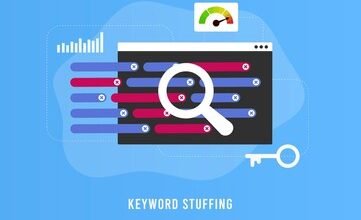
On-page optimization for Hindi is a balancing act. You need to satisfy the algorithm without alienating the reader with awkward keyword stuffing. I often use an AI article generator to help create the initial structure, but the final polish requires a human touch to ensure the cultural nuance is correct.
One specific challenge is length. Hindi words often take up more pixel width than English words. A title tag that fits in English might get truncated in Hindi. I always check my pixel width, not just character count.
On-page SEO Checklist for Hindi Pages:
| Element | Best Practice | Example |
|---|---|---|
| Title Tag | Front-load the main keyword. Use pipes to separate scripts if necessary. | SEO क्या है? (What is SEO) – Complete Guide 2025 |
| URL Structure | Keep it short. Romanized Hindi or English is preferred for easier sharing. | /seo-kya-hai or /what-is-seo-hindi |
| H1 Heading | Must match the Title Tag intent but can be more conversational. | SEO क्या है और इसे कैसे सीखें? (Complete Guide) |
| Meta Description | Include the CTA and Romanized keyword variant if it fits natural flow. | Jaaniye SEO kya hota hai aur website ranking kaise badhaye. Click to read the full guide. |
Dual-script without keyword stuffing: where I place Devanagari vs Roman Hindi
I follow a “Main vs. Support” rule. The Title and H1 are usually in the primary script (Devanagari) to catch the eye of the native reader. However, I strategically place Roman Hindi in subheadings (H2/H3) or within parenthetical definitions. For example: “…search volume (search volume kaise check kare)…”. This signals relevance to Google for both queries without reading like a dictionary.
Schema on-page: FAQ sections that win clicks and support voice answers
Voice search in India and among Hindi speakers is huge. People ask their phones questions. To capture this, I consider FAQPage schema mandatory. I write the question in conversational Hindi (the way it is spoken) and the answer in a direct, concise format.
Example FAQ pair:
Q: सबसे सस्ता hosting कौन सा है? (Which is the cheapest hosting?)
A: Bluehost और Hostinger शुरुआती लोगों के लिए सबसे सस्ते विकल्प हैं। (Bluehost and Hostinger are the cheapest options for beginners.)
Technical SEO essentials for Hindi-language pages (fast, indexable, and accessible)

Technical SEO scares a lot of content marketers, but for Hindi sites, you really only need to nail a few specific things. If I had to pick one hill to die on, it is the language tag. You must tell the browser what language the page is in.
Core Web Vitals (CWV) are also critical. In 2025, user experience is a ranking factor. A slow site kills engagement. In fact, industry data suggests sites passing all Core Web Vitals metrics achieved approximately a 22% average increase in keyword positions .
My Technical Audit Checklist:
| Item | Why it matters | How to check |
|---|---|---|
| <html lang=”hi”> | Tells Google the page is in Hindi. Vital for text-to-speech. | View Page Source & search for “lang” |
| UTF-8 Encoding | Ensures Devanagari characters render correctly, not as weird symbols. | Check <meta charset=”UTF-8″> in head |
| Hreflang tags | Prevents duplicate content issues if you have English and Hindi versions. | Use a tool like Ahrefs or Screaming Frog |
Multilingual vs Hindi-only setups: what I recommend for beginners
If you are adding Hindi to an existing English business site, the structure matters. I recommend using subdirectories (site.com/hi/) over subdomains (hi.site.com). Subdirectories inherit the authority of your main domain, which helps you rank faster. Subdomains often feel like starting from scratch. Keep it simple.
Structured data in Hindi: inLanguage, FAQPage, and VideoObject basics
Structured data is the secret weapon. When I implement schema, I always add the property inLanguage: "hi". This explicitly tells search engines that the content within that schema—whether it’s a video object or an FAQ—is in Hindi. It helps Google serve your content in specific language-filtered results.
Future-proof Hindi SEO in 2025–26: voice search, video-first SERPs, and AI answers (SGE)
The landscape is shifting. With AI-driven search (SGE), users are getting answers directly on the search page. For Hindi SEO, this means we need to optimize for “answerability.” Google favors content that can be easily summarized.
We are also seeing a shift to video-first results. If you search for “how to tie a tie” in Hindi, you will likely see a video carousel before a text article. If you aren’t playing in video, you are invisible for half the queries.
Voice search optimization in Hindi: my FAQ writing formula
To win in voice search and SGE, I use a specific formula for my content blocks. It goes like this:
- The Question: Written in natural, spoken Hindi.
- The Direct Answer: A 40-50 word summary that directly answers the question. No fluff.
- The Details: Bullet points expanding on the answer.
- The Proof: A citation or data point.
This structure is easy for AI to parse and perfect for a voice assistant to read aloud.
Video on Hindi pages: transcripts, captions, and accessibility that also helps SEO
If you embed a video, don’t just drop the YouTube link and leave. I always include a transcript or a detailed summary in Hindi text below the video. I also ensure the video has Hindi captions (CC). This text is indexable. It helps Google understand what the video is about, and it helps users who might be watching with the sound off.
Off-page tactics in this Hindi SEO guide: backlinks, citations, and brand authority (2026-ready)

Here is the hard truth about link building in 2026: traditional outreach for Hindi sites is dying. I do not buy links from low-quality directories, and neither should you. They are toxic.
Instead, I focus on creating “linkable assets”—content so good that other sites want to cite it. In the Hindi space, there is a massive shortage of high-quality, data-driven content. If you create it, you win.
Linkable Asset Ideas for Hindi SEO:
| Asset Type | Why people cite it | Example |
|---|---|---|
| Original Statistics | Writers need data to support claims. | “Survey: 60% of rural Indians use voice search” |
| Infographics | Visuals are easy to share on social media. | “Steps to file GST (Visual Guide)” |
| Free Tools/Calculators | Utility drives repeated visits and links. | “EMI Calculator in Hindi” |
Build authority with E‑E‑A‑T signals off-page (not just links)
Off-page SEO isn’t just about hyperlinks; it’s about reputation. I encourage my clients to get their authors featured on other credible platforms—even podcasts or YouTube channels. If your author is interviewed as an expert on a reputable channel, that is a brand signal. Google connects the dots. It sees that “Author A” on your site is the same “Expert A” quoted on a major news site.
Measure results and scale content safely (without losing quality)
You can’t improve what you don’t measure. For Hindi SEO, I look beyond just rankings. I track CTR (Click-Through Rate) heavily because a high ranking with a bad title tag (perhaps truncated or misspelled) is useless. I also segment my ranking tracking by intent cluster.
When it’s time to scale, consistency is the enemy of quality. This is where I lean on technology. I use tools like AI SEO tools to handle the heavy lifting of drafting and ideation. Then, I use the automated blog generator features to maintain a consistent publishing schedule, which is crucial for freshness signals.
A lightweight QA checklist I use before publishing Hindi pages
Before I hit publish, I run through a quick “sanity check.” It saves me from embarrassing mistakes. Feel free to copy this:
- Scripts Checked: Is the title legible? Is the Roman Hindi natural?
- Intent Satisfied: Does the first 100 words answer the user’s main question?
- Tech Check: Is the URL slug clean? Is the
lang="hi"tag present? - Schema Validated: Did I pass the Rich Results Test?
- Visuals: Do images have Hindi alt text?
Common mistakes (and fixes) for Hindi on-page + off-page SEO
I have seen these mistakes tank promising campaigns. Let’s fix them before they happen to you.
- Mistake: Translating Keywords Directly.
Fix: Use the dual-script research method. Don’t guess; look at the data. - Mistake: Ignoring Roman Hindi.
Fix: Include Hinglish variants in H2s or FAQs to capture phonetic searchers. - Mistake: Missing Language Tags.
Fix: Ensure your developer sets<html lang="hi">globally for Hindi pages. - Mistake: Buying Spammy Links.
Fix: Focus on Digital PR and creating one high-quality asset per quarter instead. - Mistake: Thin Content.
Fix: Ensure your Hindi content is as comprehensive as your English content. Google penalizes thin content regardless of language.
Conclusion: my 30-minute setup + next steps for your Hindi SEO guide plan

We have covered a lot, from dual-script keywords to E-E-A-T. It can feel overwhelming, but SEO is a marathon, not a sprint. If you take nothing else away, remember this: Respect the user’s search behavior. Optimize for how they speak, not how a textbook says they should write.
Your 30-Minute Quick Start:
- Open Google Suggest and type your main product keyword in Hinglish.
- Create a list of 5 questions people are asking.
- Update ONE page on your site with these questions in an FAQ section marked up with Schema.
Start there. Watch the impressions grow. And when you are ready to scale this process without burning out, check out what we are building at Kalema to make content intelligence smarter and faster.