Utah local SEO strategy: Developing an On-Page SEO Strategy for the Utah Market
When I sit down with business owners along the Wasatch Front—whether it’s a dentist in Provo or a roofing contractor in Sandy—the conversation often starts with frustration. They know people are searching; they just don’t know why their phone isn’t ringing. The reality of the Utah market is unique: it is fast, incredibly mobile-heavy, and driven by hyper-local intent. In fact, “near me” search behavior in our region has grown by approximately 156% year-over-year , and the urgency is palpable: about 76% of these local searchers visit a business within 24 hours.
This article isn’t about abstract theory. It is a practical, on-page framework designed for Utah marketers and intermediate SEOs who need a clear workflow. We aren’t going to waste time on generic fluff. Instead, I’m going to walk you through exactly how to structure your site, map your keywords to the right pages, and fix the technical elements that actually move the needle in the local map pack.
If you are tired of guesswork, here is the roadmap we will follow: researching local intent, building high-value location pages, optimizing on-page technicals, refining mobile UX, and integrating your Google Business Profile (GBP) seamlessly.
What this guide covers (and what it doesn’t)
Let’s be clear about scope so you can manage your time effectively. This guide focuses strictly on on-page SEO and content architecture—the elements you control directly on your website. I will reference citations, reviews, and your Google Business Profile, but only in the context of how your website should support them to improve conversions.
If you are looking for a guide on link-building outreach or advanced technical server management, this isn’t it. But if you want to know how to fix your site so it ranks for “emergency plumber Ogden” and actually converts that traffic, you are in the right place.
Why on-page SEO matters in Utah (search behavior, cities, and “near me” urgency)

Utah is not a monolith. Searching for services in Salt Lake City is fundamentally different from searching in Lehi or Logan. The commuting culture along I-15 creates a specific “service area” mentality that search engines try to replicate. If your on-page strategy doesn’t reflect these micro-regions, you become invisible.
Consider the behavior of a user in a parking lot in Sugar House. They are likely on a mobile device—statistics suggest 68% of Utah local searches happen on mobile—and they want answers fast. If your page takes five seconds to load or buries your phone number, you have lost them. This is the difference between informational intent (learning how to fix a leak) and local intent (needing a plumber now). Your on-page SEO must cater to that immediacy.
Utah searchers typically scan for:
- Location modifiers: City names, neighborhoods (e.g., “Avenues,” “Daybreak”), or landmarks.
- Urgency signals: “Open now,” “emergency,” or “same-day.”
- Validation: Star ratings and local phone numbers (801, 385, 435 area codes).
Utah keyword modifiers that change intent
Adding a city name isn’t just about ranking; it’s about signaling relevance. I’ve seen click-through rates (CTR) jump significantly when titles include specific modifiers rather than generic ones. Here are a few examples of how intent shifts with the query:
- Generic: “Family dentist” (Low intent, could be informational)
- City-Specific: “Salt Lake City family dentist” (High intent, ready to book)
- Neighborhood-Specific: “Sugar House pediatric dentist” (Very high intent, proximity-focused)
- Landmark-Based: “Lunch spots near Temple Square” (Immediate transactional intent)
- Regional: “Wasatch Front HVAC repair” (Broad service area search)
What beginners should measure first
Before we start fixing things, we need to know what success looks like. When I audit a local site, I don’t obsess over vanity metrics like “total traffic.” I look for actions. Here is the simple scorecard I recommend for beginners:
- Impressions & CTR: Use Google Search Console to see if you are showing up for local queries.
- Conversion Actions: Track calls, form submissions, and “Get Directions” clicks.
- Local Page Performance: Are your city-specific landing pages engaging users, or do they have a 90% bounce rate?
Step 1 — Research and map a Utah local SEO strategy to real pages

The biggest mistake I see is business owners creating content blindly. They write blog posts when they need service pages, or they create a generic “Services” page that tries to rank for ten different cities. To fix this, we need a map.
A solid strategy starts with mapping your keywords to specific page types. You need to decide: Does this keyword need a homepage, a service page, or a dedicated location page? This clarity is essential, especially if you plan to use an SEO content generator to help draft your initial content. Automation is powerful, but only if the strategy behind it is sound.
Utah Query Mapping Table
| Query Theme | User Intent | Best Page Type | Key On-Page Elements |
|---|---|---|---|
| “Plumber Salt Lake City” | Transactional / Local | Location Landing Page | Map embed, local reviews, "Salt Lake" in H1 |
| “Emergency drain cleaning near me” | Urgent / Transactional | Service Page (or Homepage) | Click-to-call button above fold, 24/7 hours |
| “How to fix a leaky faucet” | Informational | Blog Post / Knowledge Base | Step-by-step guide, video, soft CTA |
| “Best HVAC company in Utah County” | Commercial Investigation | “Areas Served” Hub or Home | Comparison, awards, testimonials, service list |
| “Park City electrical code requirements” | Informational / Niche | Blog Post | Local regulations, expert authority, internal links |
Build a Utah seed list: services × locations × qualifiers
Don’t overcomplicate your keyword list. I use a simple formula to generate a seed list for any Utah client:
[Core Service] + [City/Area] + [Qualifier]
- Example 1: “Furnace repair” + “Ogden” + “emergency”
- Example 2: “Wedding catering” + “Park City” + “prices”
- Example 3: “Personal injury lawyer” + “St. George” + “reviews”
Prioritize opportunities with a quick scoring method
You can’t build every page at once. If you are feeling overwhelmed, here is how I simplify the decision-making process. Score your ideas on a 1–5 scale based on:
- Business Value: Is this a high-margin service?
- Urgency: Do these customers buy immediately?
- Competition Gap: Is the current top result weak or irrelevant?
Start with the 5s. Usually, for a Utah business, this means your core service in your primary city.
Step 2 — Create Utah location and service pages that actually deserve to rank

Now that we have a plan, we need to build the pages. A word of caution: simply copying your “Salt Lake City” page and finding/replacing it with “West Jordan” is a recipe for disaster. Google creates “doorway page” penalties for exactly this tactic. Your location pages must offer unique value.
I recommend a Hub-and-Spoke architecture. Your main “Services” page is the hub. From there, you link out to specific “Service + City” pages only if you have enough unique content to justify them. If you can’t write 500 unique words about your work in Draper, just include Draper in your main service area list instead of making a weak page.
Avoid thin localization: what must be unique on each Utah page
To make a location page stick, you need local proof. Here is what I include to ensure the page is genuinely useful:
- Specific Project Examples: “We recently replaced a roof in the Yalecrest neighborhood…”
- Local Reviews: Embed testimonials specifically from clients in that city.
- Local Context: Mention proximity to landmarks (e.g., “Serving businesses near Silicon Slopes”).
- Service Constraints: Does the terrain in Park City affect your pricing or timeline? Mention it.
- Partnerships: Mention local suppliers or partners specific to that area.
Internal linking that supports humans first
Internal linking isn’t just for bots; it’s for guiding users. If I am on a “Plumbing” page, I should see easy links to “Water Heater Repair” and “Drain Cleaning.” More importantly, if I’m reading a blog post about “Winterizing your home in Utah,” there should be a clear, contextual link to your “Furnace Tune-up” service page. Use natural anchor text—“schedule a furnace tune-up” works better than just “click here.”
Step 3 — On-page SEO execution checklist for a Utah local SEO strategy

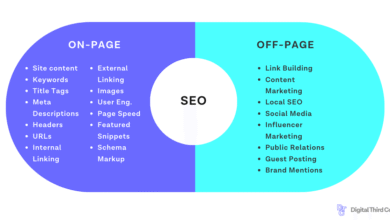
This is where the rubber meets the road. Once you have your content drafted—perhaps using a tool like an AI article generator to get the structure right—you need to refine the technical on-page elements. Even the best content will struggle if the title tags are sloppy or the headers are confusing.
When I’m editing a page, I treat it like a final polish before a product launch. I check everything from the URL slug to the meta description to ensure we are signaling relevance to both Google and the user.
On-Page Element Examples Table
| Element | Best Practice | Utah Example |
|---|---|---|
| Title Tag | Main Keyword + City + USP | Brand | Emergency Plumber Salt Lake City | 24/7 Repair | [Brand Name] |
| Meta Description | Benefit-driven summary + Call to Action | Fast, reliable plumbing in SLC & Sandy. We fix leaks, drains & heaters. Licensed Utah pros. Call for a free estimate today! |
| H1 Header | Clear, descriptive, includes primary intent | Residential Plumbing Services in Salt Lake City |
| URL Slug | Short, keyword-rich, no dates | /plumbing-salt-lake-city |
| H2 Header | Breaks up text, questions users ask | Why Hire a Local SLC Plumber? |
Title tags and meta descriptions: Utah modifiers that improve CTR
Your title tag is your billboard. Research suggests that localized keywords can improve click-through rates by up to 47% . Don’t waste this space. Instead of “Home,” use “Custom Home Builder in St. George, UT.” Be careful not to stuff keywords, though. “Plumber Plumbing Plumbers Salt Lake City Utah” looks like spam and scares people away. Keep it natural: “Trusted Salt Lake City Plumbers – Available 24/7.”
Headings and on-page structure that win skimmers
If I am scrolling on my phone, I am not reading paragraphs; I am scanning headers. Your H2s and H3s should tell the story on their own. Additionally, structuring your content with clear questions helps you capture voice search snippets.
Example Voice-Ready Header: “
How much does furnace repair cost in Utah?
”
Follow this immediately with a direct answer: “In Utah, the average cost for furnace repair typically ranges between $150 and $400, depending on parts and labor.”
Conversion-ready local pages: trust, clarity, and friction removal
Traffic means nothing without conversion. To turn a visitor into a lead, you need to remove friction. Every local page should have:
- Sticky Call Button: A phone icon that follows the user as they scroll on mobile.
- Clear Service Area: A simple map or list of cities so they know they are in the right place.
- Pricing Transparency: You don’t need exact prices, but a “starts at” range builds immense trust.
- Trust Badges: Display your Utah licenses, BBB rating, or local chamber of commerce logo prominently.
Step 4 — Mobile speed, UX, and voice search: what Utah visitors expect

I cannot stress this enough: Utah is a mobile-first market. With 68% of local searches happening on handheld devices, your desktop site is secondary. If your mobile site is clunky, you are handing customers to your competitors.
Winning on mobile means speed and usability. Pages that load in under two seconds see significantly better conversion rates. Furthermore, since many of these searches happen while driving or multitasking, voice search optimization is becoming critical.
Mobile UX checklist for local pages
- Test Load Speed: Aim for under 3 seconds on 4G networks.
- Compress Images: Giant hero images are the enemy of speed.
- Check Tap Targets: Ensure buttons are large enough for a thumb to hit easily.
- Simplify Forms: Ask for name, phone, and issue only. Remove extra fields.
- Verify Pop-ups: Ensure no interstitials block the main content on mobile entry.
- Use Readable Fonts: Minimum 16px font size for body text.
- Enable Click-to-Call: The phone number must be a clickable link, not just text.
- Prioritize Content: Put the answer/service description above the fold.
- Fix Map Embeds: Ensure Google Maps frames don’t break scrolling behavior.
- Check Contrast: Ensure text is readable in bright sunlight (outdoor usage).
Voice search on-page: write answers the way people in Utah ask questions
Voice queries tend to be conversational and question-based. Instead of typing “Italian food Provo,” a user asks, “Who serves the best pasta near me that’s open right now?”
To capture this traffic, your content needs to sound human. Avoid corporate jargon. Use “we,” “you,” and direct language. I often include an FAQ section at the bottom of location pages specifically to target these “Who,” “What,” and “Where” questions. Keep the answers concise (40–60 words) to increase your chances of being chosen as the spoken answer by Google Assistant or Siri.
Step 5 — Google Business Profile integration + on-page trust signals

Your website and your Google Business Profile (GBP) are like twins; they need to tell the same story. If your GBP says you close at 5:00 PM but your website says 6:00 PM, you lose trust. This alignment is what we call “NAP Consistency” (Name, Address, Phone).
Trust Signal Placement Strategy
| Trust Signal | Where to Place It | Example |
|---|---|---|
| NAP (Name, Address, Phone) | Site-wide Footer | Exact match to GBP: "123 Main St, Suite 100" |
| Google Review Rating | Header / Hero Section | "4.9 Stars on Google" (with link to profile) |
| Map Embed | Contact / Location Page | Interactive Google Map showing service area |
| Local Photos | About / Service Pages | Team photo in front of recognizable local landmark |
What “NAP consistency” looks like on a Utah website
Consistency means exactness. I once worked with a client who lost rank because their website listed “Ste. B” while Google listed “#B.” It seems trivial, but to a bot, it’s a discrepancy. Ensure your NAP in the footer matches your GBP exactly. Also, check other citations (Yelp, Apple Maps) to ensure they aren’t feeding bad data to the ecosystem.
Review content on-page: using social proof without overdoing it
Don’t just hide reviews on a testimonials page nobody visits. Sprinkle them throughout your service pages where they matter most—right next to the “Call Now” button. However, keep it ethical. Use real first names and cities (e.g., “Sarah M. from Sandy”) if you have permission. Authentic, imperfect reviews often convert better than polished, generic praise.
Common on-page local SEO mistakes I see in Utah

Over the years, I’ve seen the same issues crop up repeatedly on Utah business sites. Here is a quick diagnosis list so you can avoid them.
Mistake #1–#7: quick diagnosis and fix list
- Duplicate Location Pages: Symptom: 20 pages that are identical except for the city name. Fix: Consolidate into one strong “Service Area” page or write unique content for key cities.
- Keyword Stuffing: Symptom: Titles like “Dentist Lehi Dentist Utah.” Fix: Rewrite for humans. “Top-Rated Dentist in Lehi, UT.”
- Missing Local Schema: Symptom: Google doesn’t understand your hours or area. Fix: Add LocalBusiness structured data to your homepage.
- Slow Mobile Load: Symptom: High mobile bounce rate. Fix: Resize images and enable caching.
- Inconsistent NAP: Symptom: Conflicting hours/address. Fix: Audit site footer against GBP.
- No Local Content: Symptom: Generic stock photos. Fix: Upload real photos of your team and recent Utah projects.
- Ignoring Internal Links: Symptom: Orphaned pages. Fix: Link every service page to related blog posts and location hubs.
FAQs + recap: timeline, next actions, and a simple 30-day plan
FAQ: Why is on-page SEO especially important for Utah businesses?
Utah’s market is defined by high mobile usage and immediate “near me” intent. On-page SEO ensures your site is fast, readable, and relevant enough to capture this demand. Without it, you might appear in search, but you won’t win the click or the call.
FAQ: What role do Utah-specific keywords play?
Modifiers like “Salt Lake City,” “Utah Valley,” or “Wasatch Front” drastically increase relevance. They filter out unqualified traffic and attract users who are ready to buy. However, use them naturally—don’t force them where they don’t fit.
FAQ: How can I optimize for both desktop and mobile in Utah?
Focus on responsive design that adapts to screen size. Prioritize mobile speed and touch-friendly navigation first, as that is where the majority of local traffic originates. Ensure your desktop experience remains informative but keep the conversion paths just as simple.
FAQ: What is essential for Google Business Profile integration?
The absolute must-haves are matching NAP (Name, Address, Phone) and a link to your website. Beyond that, embedding a Google Map on your contact page and showcasing your Google reviews on your site creates a strong trust signal loop.
FAQ: How should content resonate with Utah audiences?
Utahns value community and lifestyle. Content that references local landmarks, outdoor activities, or community involvement tends to perform well. Being authentic about your local roots builds a connection that big national chains can’t fake.
FAQ: How long before on-page SEO yields results locally?
If you fix technical errors and optimize titles, you might see movement in 30 days. However, building genuine topical authority and climbing the map pack typically takes 3–6 months of consistent effort. Be patient and track your leading indicators like impressions.
3-bullet recap + 30-day action checklist
If you take nothing else away from this guide, remember this:
- Localize with Intent: Map keywords to the right pages, don’t just spray and pray.
- Mobile is Mandatory: Speed and usability on phones will make or break your campaign.
- Trust is Currency: Accurate NAP and real reviews are your strongest conversion assets.
Your 30-Day Plan:
- Week 1: Audit your site for NAP consistency and fix your Title Tags.
- Week 2: Map your keywords and identify content gaps (missing service or location pages).
- Week 3: Improve mobile speed (compress images) and add click-to-call buttons.
- Week 4: Update your Contact page with a map embed and add a review block to your homepage.
Start small, be consistent, and watch your local presence grow.