Best SEO Copywriting Courses for Career Growth (2026 Beginner’s Guide)

I have reviewed enough course syllabi to know that “comprehensive” often just means “long.” If you are looking for the best SEO copywriting courses, you are likely overwhelmed by the options. You have high-ticket certifications promising a six-figure freelance career, $15 Udemy courses that seem too good to be true, and endless free academies.
The fear of wasting money is real, but the fear of wasting time is worse. I follow a simple heuristic when advising colleagues: if the course hasn’t been updated in the last 12 months, I am immediately skeptical. SEO changes too fast for static content.
This guide isn’t just a list of links. It is a vetted comparison of the few programs that actually bridge the gap between “writing words” and “ranking pages.” Below, you will find a clear evaluation of paid and free options, a 30-day learning roadmap to build your portfolio, and a candid look at where AI fits into your education. We will cut through the hype and focus on what gets you hired.
Search intent & who this is for
You are likely here because you need to make a decision. You might be a junior marketer needing to prove your value in-house, a freelancer trying to justify higher rates, or a complete beginner looking for a career pivot. In this context, “career growth” doesn’t mean a certificate to hang on your wall; it means the ability to produce a portfolio piece that a client or hiring manager looks at and says, “Okay, this person gets it.”
What SEO copywriting means in 2026 (and what a course should actually teach)
Before you buy anything, let’s clarify what you are actually trying to learn. In 2026, SEO copywriting is not about stuffing keywords into a blog post until a plugin turns green. That is 2015 advice.
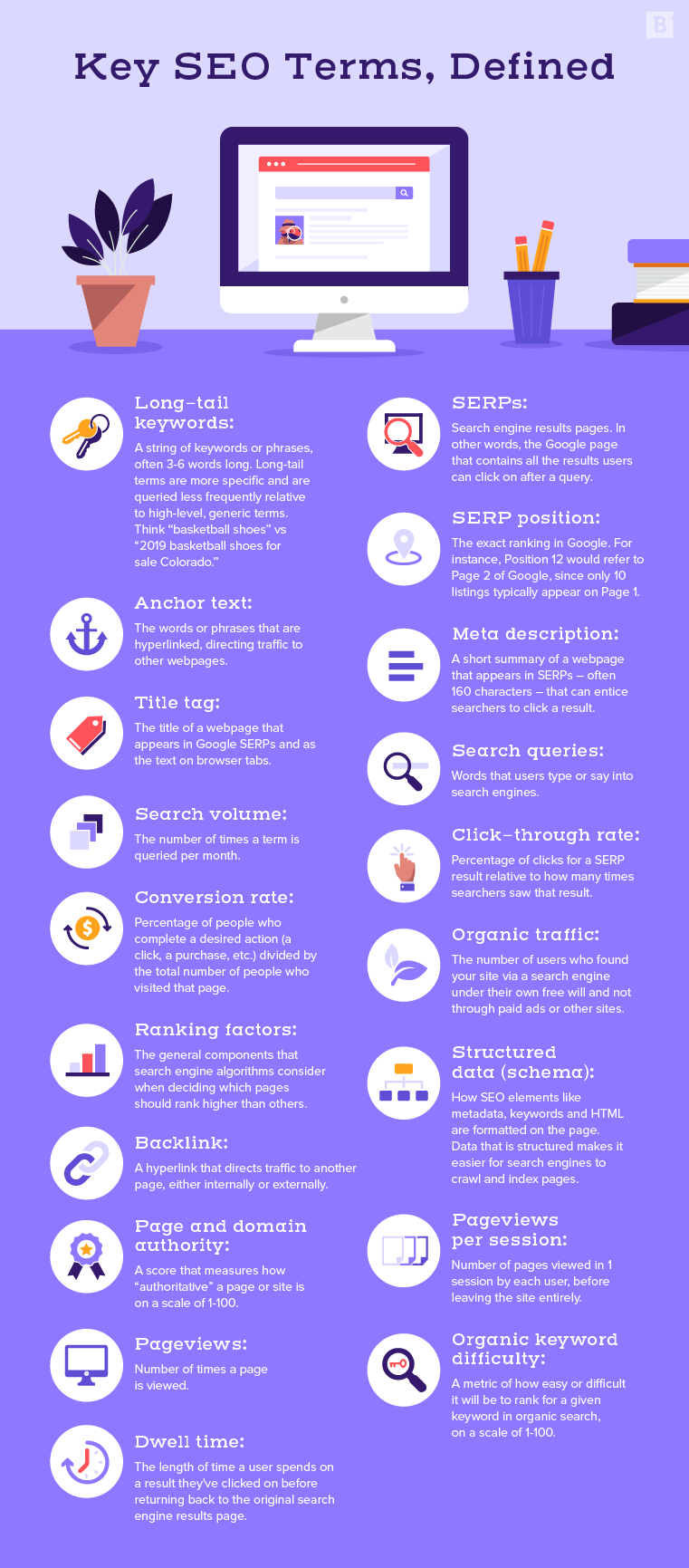
Modern SEO copywriting is the intersection of user intent (what the reader wants), persuasion (getting them to act), and on-page technical structure (helping search engines understand the page). A good course must teach you how to translate a raw keyword like “project management software” into a specific angle that addresses the searcher’s pain points while satisfying Google’s E-E-A-T (Experience, Expertise, Authoritativeness, and Trustworthiness) signals.
If a course doesn’t teach you how to structure headers (H1s, H2s) for skimmers, or how to write a meta description that improves click-through rates (CTR), it is not an SEO course. It is just a writing course.
The non-negotiables: intent, structure, and evidence
When I review a draft from a new writer, I look for three things before I even check the grammar:
- Intent Mapping: Does the article answer the specific question the user asked, or does it ramble?
- Scannable Structure: Can I understand the main points just by reading the subheadings?
- Evidence: Are claims backed by data, internal links, or credible sources?
Your training must cover these pillars.
How I evaluate the best SEO copywriting courses (a beginner-friendly checklist)

Marketing for courses is often better than the courses themselves. To avoid buyer’s remorse, use this checklist. I treat this like due diligence for a business investment.
My personal rule: If a course can’t show me examples of deliverables I will create (not just watch), it is not a course—it is content. You can watch content on YouTube for free.
Quality signals to look for (what I’d pay for)
- Recent Updates: Look for a “Last Updated” date within the current year. SEO moves fast.
- Instructor Track Record: Is the teacher actually doing the work, or just teaching it?
- Templates & Swipe Files: You want briefs, outline templates, and checklists you can use on day one of a job.
- Feedback Loops: Does someone grade your work? This is the main reason to pay a premium price.
- Measurement: Does it teach you how to use Google Search Console to see if your writing actually worked?
Red flags (what I avoid)
- Keyword Density Obsession: Any course preaching specific percentage targets for keywords is outdated.
- Guaranteed Rankings: No reputable SEO promises a #1 spot.
- No “Middle” Game: Courses that cover “what is SEO” and then jump straight to “how to sell services” often skip the actual craft of writing.
Choosing by goal: job switch vs freelancing vs in-house growth
Here is a quick decision guide based on trade-offs:
- If you need a job/career switch: You need a certification or a portfolio-heavy course (like SuccessWorks or a rigorous boot camp) to signal credibility.
- If you are a freelancer: You need project-based courses (like Udemy) that teach you to deliver specific assets you can sell immediately.
- If you are in-house: A mix of tool-based academies (HubSpot, Semrush) and strategy training works best to standardize your team’s output.
Best SEO copywriting courses (paid + certification + project-based) — comparison table

This roundup focuses on reputable options that come up frequently in professional circles. I have filtered out the “get rich quick” schemes. Note: Prices, ratings, and student counts are snapshots and change frequently. Always verify on the course page before buying.
At-a-glance table: price, updates, format, and who it’s for
| Course Name & Provider | Best For | Est. Cost | Format | Key Notes |
|---|---|---|---|---|
| SEO Copywriting Certification (SuccessWorks) |
Career Switchers / Agencies | ~$995 [Check Price] | Video + Live Coaching | Lifetime access, strict exam, and personal feedback. The gold standard for certification. |
| The Ultimate Copywriting Course (Joshua George, Udemy) |
Freelancers / Doers | ~$15–$20 (on sale) | Self-paced Video | Highly rated (4.6 stars). Covers business setup + writing. Verify update date (aim for Jan 2026 or later). |
| Content, Copywriting & ChatGPT (Ing. Tomas Moravek, Udemy) |
AI-Curious Writers | ~$15–$20 (on sale) | Self-paced Video | Integrates AI tools. Massive student base (~53k+). Good for modern workflows. |
| SEO Certification Course (HubSpot Academy) |
In-House Marketers | Free | Self-paced | Great foundational theory. Recognized on LinkedIn. Lacks deep writing practice. |
| SEO Copywriting Training (Yoast Academy) |
WordPress Users | ~$99/year (Part of Premium) | Self-paced | Technical focus. Excellent for understanding structure and the Yoast tool. |
| The Copywriter’s Initiative (AWAI / Various) |
Aspiring Pros | Varies ($400+) | Mixed | Industry-respected. Often focuses more on direct response, but solid fundamentals. |
Why this matters: A course like SuccessWorks charges a premium because of the human element—coaching and verification. Udemy courses are incredible value for information, but the accountability is zero. You have to supply the discipline.
Spotlight: certification-style programs (when ROI makes sense)
Is spending nearly $1,000 on a course like SuccessWorks worth it? It depends on your math. If you are a freelancer, one single optimized website project for a client can pay for the tuition. In that scenario, the ROI is positive immediately.
These programs offer structure and “career signaling.” Passing an 80-question exam with a 70% cutoff proves to an employer that you didn’t just watch videos while folding laundry—you retained the knowledge. If you struggle with imposter syndrome, this formal validation is often the cure.
Spotlight: Udemy-style project courses (high value if you practice)
I am a fan of Udemy for tactical skill acquisition, provided you filter aggressively. Joshua George’s Ultimate Copywriting Course (updated early 2026) and the ChatGPT-enhanced options are fantastic for seeing how an expert works.
The catch: It is easy to binge-watch these like Netflix. If you watch 10 hours of video but don’t write a single meta description, you haven’t learned anything. Treat these as workshops: pause the video, do the exercise, and build a portfolio piece alongside the instructor.
Free and low-cost SEO copywriting courses (smart starting points in the US)
You do not need to spend money to learn the basics. In fact, I recommend starting with free courses to see if you even enjoy the work. The industry giants offer incredible academies to get you hooked on their tools.
- HubSpot Academy SEO Certification: The standard for theory. It covers the “why” perfectly.
- Ahrefs Academy (SEO for Beginners): Practical, production-focused, and free from fluff. Usually 2–5 hours.
- Neil Patel’s SEO Unlocked: A longer commitment (approx. 12 hours) but covers a broad base.
- Semrush Academy: Great for technical SEO and audit basics.
- Copy That! (Class Central/YouTube): A 5-hour deep dive into copywriting fundamentals.
A simple “starter stack” (free first, paid later)
If I were starting from zero today with no budget, here is exactly what I would do:
- Week 1: Take HubSpot’s SEO Certification to get the vocabulary.
- Week 2: Watch Ahrefs’ Blogging for Business (or beginner SEO course) to understand intent and keywords.
- Week 3: Use “Copy That!” to learn how to write persuasive sentences.
- Week 4: Apply all of it to one article on a free Medium or LinkedIn page.
My 30-day learning plan to turn a course into real SEO copywriting skills

Knowledge without execution is just trivia. You need a plan to bridge the gap between “student” and “practitioner.” This roadmap assumes you can dedicate about 30–60 minutes a day. The biggest friction point I see is perfectionism—writers spending three days looking for the “perfect” keyword. Don’t do that. Momentum beats perfection.
As you move into drafting, tools can help accelerate the process. A reliable AI article generator can help you spin up rough drafts or structural ideas quickly, allowing you to focus your energy on editing, fact-checking, and adding that human spark.
Week-by-week roadmap (table)
| Week | Focus | What to Learn | What to Produce (Deliverable) |
|---|---|---|---|
| Week 1 | Research & Intent | Keyword research, SERP analysis, User Personas | 1 List of 10 target keywords mapped to user intent. |
| Week 2 | Structuring | Headings (H1-H4), Outlining, Brief creation | 2 Detailed Content Briefs (using the template below). |
| Week 3 | Writing & Optimization | Writing for the web, Title tags, Meta descriptions | 1 Full 1,500-word Draft + 5 Meta Description variations. |
| Week 4 | Publishing & Measuring | CMS basics (WordPress), Internal linking, Search Console | 1 Published URL. Set up Google Search Console. |
Pro tip: This is usually the week where it clicks. Once you hit “publish” and see your URL live, the fear disappears.
Template: SEO content brief (copy/paste)
Stop staring at a blank page. Use this to start every project.
Target Keyword: [e.g., best vegan protein powder]
User Intent: [Commercial Investigation / Informational]
Primary Audience: [e.g., Gym-goers with dairy allergies]
The Unique Angle: [e.g., Focus on taste/texture, not just macros]
Top Competitors to Beat: [List top 3 URLs]
Proposed H1: [e.g., 7 Best Vegan Protein Powders That Actually Taste Good (2026)]
Outline (H2/H3 structure):
– H2: Intro
– H2: Evaluation Criteria
– H2: Top Picks (Review)
– H2: Buying Guide
Internal Links needed: [Link to ‘benefits of plant based diet’ post]
AI in SEO copywriting courses: what to use, what to ignore, and what’s next (GSEO)

We cannot ignore the elephant in the room. AI has fundamentally changed how we produce content. However, using an SEO content generator effectively requires more skill, not less. You are no longer just a writer; you are an editor and a strategist.
The industry is shifting toward Generative SEO (GSEO), where the goal isn’t just ranking ten blue links but influencing the answers provided by AI search engines. This requires deep semantic authority—something a basic AI content writer cannot achieve without your guidance. As an AI SEO tool helps you scale, your job is to ensure accuracy, brand voice, and genuine insight.
Beginner-safe AI checklist (so you don’t outsource thinking)
- Good Uses (Speed & Structure):
- Brainstorming 10 different angles for one keyword.
- Turning a messy list of notes into a clean outline.
- Rewriting a complex paragraph to be more concise (e.g., “Simplify this for a 5th grader”).
- Generating FAQs based on common user queries.
- High-Risk Uses (Danger Zone):
- Asking AI to find “recent statistics” (it often hallucinates them).
- Writing medical, legal, or financial advice without expert review.
- Copy-pasting entire articles without reading them (Google’s readers can smell this).
Common mistakes beginners make with SEO copywriting courses (and how I’d fix them)
I have seen talented writers fail to grow because they fall into specific traps. Here is how to avoid them.
Mistake #1: Treating a course like entertainment
It feels productive to watch tutorials while eating lunch. It isn’t. You retain about 10% of what you watch passively. My fix: Adopt a “pause and produce” rule. No new lesson until I have written at least one paragraph or completed one exercise from the previous module.
Mistake #2: Optimizing for keywords instead of intent
Beginners often write for a robot. They repeat the keyword “best running shoes” five times in the intro. But if the user intent is informational (e.g., “how to choose running shoes”), a sales page won’t rank, no matter how many keywords you use. My fix: Google your keyword first. Look at the top 3 results. Are they guides, lists, or product pages? Match that format.
Mistake #3: Skipping measurement and iteration
Writing the post is only half the job. Most beginners publish and pray. My fix: You don’t need complex analytics. Just check Google Search Console 30 days after publishing. Are you getting impressions? If yes, but no clicks, rewrite your Title and Meta Description. That is SEO copywriting in action.
FAQs + my recommended next steps for choosing the best SEO copywriting courses
What types of SEO copywriting courses are available for intermediate learners?
You generally have three buckets: Certifications (SuccessWorks) for career signaling, Project-Based Marketplaces (Udemy) for tactical skills, and Tool Academies (HubSpot/Semrush) for specific workflows. If you are intermediate, skip the “what is SEO” intros and look for courses on content auditing, GSEO, or semantic strategy.
Are expensive courses worth the investment?
Yes, if you need accountability. The content in a $1,000 course is often similar to what is available for free, but the outcome is different because you have skin in the game, coaching, and a structured path. If one freelance project pays for the course, the math works.
Should we rely solely on AI in SEO copywriting courses?
No. AI is an assistant, not the author. Reliance on AI without understanding the fundamentals leads to generic, “grey sludge” content that fails to convert. Use AI to speed up your workflow, but keep your human judgment at the helm.
How to identify reliable courses?
Check the “Last Updated” date first. If it is older than a year, proceed with caution. Then, read the 3-star reviews—they are usually the most honest about what is missing. Finally, check if the instructor actually works in SEO or just teaches it.
Your Next Steps:
- Choose one course this week. Don’t overthink it. (Ahrefs or a top-rated Udemy pick are safe bets).
- Commit to the 30-day roadmap. Block out 45 minutes on your calendar every morning.
- Build 2 portfolio pieces. Use the content brief template provided above.
- Measure and iterate. Use data to prove you are more than just a writer.
The best time to start was yesterday. The second best time is right now. Good luck.