Local Success: A Cleveland Content Marketing Strategy for Content Optimization (2026 Guide)
Last month, I audited a website for a service business based right here in Cleveland. They had a beautiful design and were publishing weekly blog posts about general industry trends. But when I looked at their analytics, the reality was harsh: zero traffic from “Ohio City,” “Tremont,” or even generic “Cleveland” searches. They were writing content for the internet, not for their neighbors.
We made a few tactical shifts—updating title tags to include specific service areas, adding a clear map on the contact page, and rewriting their service pages to answer local questions. Within 60 days, their phone calls from local search tripled. It wasn’t magic; it was alignment.
If you are a Cleveland business owner or marketing lead, you don’t need another generic “content is king” speech. You need a blueprint that explains how to show up when someone in Lakewood or Downtown asks Google for help. This guide is the exact strategy I use. We will cover planning, execution, trust signals, and the measurement tools that actually matter. It is a practical path to getting found and getting chosen.
Why local SEO matters more in Cleveland than you think (data + local intent)

Here is the thing about local search: it is urgent. When someone searches for a service or product nearby, they aren’t browsing for fun; they are looking to solve a problem immediately. According to verified data, 76% of consumers who perform a local search visit a business within 24 hours. If you aren’t visible in that specific moment, you don’t just lose a click—you lose a customer who was ready to buy.
In Cleveland, this behavior is amplified by mobile usage. 78% of local mobile searches result in an offline purchase. Google knows this, which is why they prioritize the “Local Pack” (the map and three business listings) above standard organic results for queries with local intent.
Local intent isn’t just adding the word “Cleveland” to every paragraph. It’s about signaling relevance to Google through structure, address details, and content that speaks to the local experience. If you are starting from zero, here is what I prioritize first:
- Clear Location Signals: Is your address and phone number easy for bots to crawl?
- Service Area Definitions: Do you explicitly state which neighborhoods you serve?
- Intent-Matched Content: Does your page answer the specific question the user asked?
Step 1 — Build a Cleveland-first content plan (audience, neighborhoods, and keyword mapping)

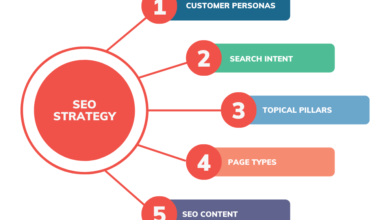
Most people skip planning and go straight to writing. That is a mistake. I start every Cleveland content marketing strategy with a “Keyword Map” that bridges the gap between what you sell and where you sell it. This prevents the common issue of cannibalization—where two of your own pages fight for the same ranking.
I typically choose between two models: a Citywide approach (one strong page for all of Cleveland) or a Neighborhood approach (specific pages for Ohio City, Shaker Heights, etc.). A word of caution: only build neighborhood pages if you have unique, relevant content for them. Copy-pasting the same text and swapping the city name is a fast way to get flagged for spam.
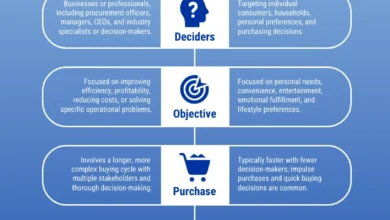
Here is the worksheet I use to map intent to page types:
| User Stage | Search Intent | Example Keyword | Recommended Page Type | Primary CTA |
|---|---|---|---|---|
| Awareness | Informational (Problem aware) | “Why is my basement leaking Cleveland” | Blog Post / FAQ | Read more / Newsletter |
| Consideration | Commercial Investigation | “Best plumbers in Tremont” | Service Page / Case Study | Request Quote |
| Conversion | Transactional (Action oriented) | “Emergency plumber near me” | Landing Page / Home | Call Now button |
For a beginner keyword map, I recommend starting small. Pick your top three services and map them to your primary location. For example: “Drain Cleaning + Cleveland” and “Drain Cleaning + Lakewood.” If the search volume exists for the neighborhood term, put it on the list.
Step 2 — Create and optimize the pages that rank (on-page SEO + local context)

Once the plan is ready, we have to execute. When I review a Cleveland service page, I look for a specific structure that satisfies both users and search engines. It isn’t just about keywords; it’s about architecture.
A high-performing local page usually follows this outline:
- H1 Headline: Includes Service + Location.
- The Hook: Acknowledges the local problem immediately (e.g., “Cleveland winters are tough on plumbing…”).
- Service Details: What you do, specifically.
- Social Proof: A review or testimonial from a local customer.
- Service Area Block: A mention of specific neighborhoods served.
- FAQ Section: Answers to 3-4 common questions (great for voice search).
The Power of “Schema”
If you want to communicate with Google directly, you use Schema Markup. Specifically, LocalBusiness schema. Think of this as translating your website into a language robots understand perfectly. It tells Google your exact hours, coordinates, and price range so they can display it in rich snippets.
Micro-Example: Title Tag Optimization
Weak: Best Plumbing Services for You
Improved: Emergency Plumber in Cleveland, OH | Available 24/7 in Ohio City & Tremont
Before hitting publish, I run through this checklist:
- Is the NAP (Name, Address, Phone) visible in the footer?
- Does the Meta Description include a reason to click (e.g., “Same-day service”)?
- Are internal links pointing to this page from the homepage?
- Is the main keyword in the H1 and at least one H2?
Step 3 — Earn local trust signals: Google Business Profile, reviews, citations, and local links

You can have the best content in the world, but if Google doesn’t trust your business entity, you won’t rank in the Map Pack. This is where “off-page” local SEO comes in. The most critical asset you own is your Google Business Profile (GBP).
Many business owners set up their GBP and forget it. That’s leaving money on the table. I treat GBP like a social media feed—uploading photos regularly, answering Q&A, and posting updates about offers. But the real currency here is reviews. 88% of consumers trust online reviews as much as personal recommendations.
My personal rule of thumb: Respond to every review—positive or negative—within 48 hours. It shows prospective customers that you are active and attentive.
Here is how I prioritize trust signals based on effort vs. impact:
| Trust Signal | Example | Effort Level | Expected Impact |
|---|---|---|---|
| GBP Optimization | Filling out every field, adding photos | Low | Very High |
| Review Velocity | Getting 2-3 new reviews weekly | Medium | Very High |
| Local Citations | Listing on Yelp, YellowPages, BBB | Low | Medium |
| Local Backlinks | Link from a Cleveland Chamber or partner | High | High |
For backlinks, look for relationships you already have. Do you sponsor a Little League team? Does your neighborhood association have a directory? These hyper-local links are often more valuable for local rankings than a link from a big national site.
Step 4 — Win modern discovery: voice search, short-form video, and interactive content for Cleveland audiences

Search is evolving. By 2025, it is estimated that 50–55% of online searches will be voice-based . When people use Siri or Alexa, they don’t search for “plumber Cleveland.” They ask, “Who is the best plumber near me open right now?”
To capture this traffic, your content needs to be conversational. I often take the “People Also Ask” questions from Google and turn them into specific H2s or H3s on a page. For example, a heading like “Where can I find free parking for your downtown office?” is perfect for voice search.
The Visual Shift
Visual content is dominating. Short-form video (TikTok, Reels, Shorts) is projected to represent up to 85% of consumer internet traffic . You don’t need a film crew. A 15-second video answering a common customer question, filmed on a smartphone, builds immense trust.
My 1-to-5 Repurposing Workflow:
1. Write one solid FAQ answer (e.g., “How to prevent frozen pipes in Cleveland”).
2. Post it as a Google Business Profile update.
3. Script a 30-second Reel: Hook (The problem) → Solution (The tip) → CTA (Call us).
4. Share the video on Instagram/Facebook.
5. Embed the video on the original service page to increase dwell time.
Step 5 — Scale with AI (without losing authenticity): my Cleveland content workflow

Let’s be honest: creating all this content manually is exhausting. I believe in a hybrid approach. AI helps me move faster, but human oversight keeps me safe. In a local context, AI can be risky—it might “hallucinate” and invent a street name or get your opening hours wrong. I never publish AI drafts without a rigorous review.
However, the efficiency gains are undeniable. I often use an AI SEO tool to handle the heavy lifting of research and briefing. Instead of spending hours staring at a blank screen, I can generate a structured outline based on real search data in minutes.
When it comes to drafting, an AI article generator can produce a first draft that is 80% there. My job then shifts from “writer” to “editor.” I add the local flavor—the mentions of the West Side Market, the specific localized pain points, and the brand voice. This hybrid workflow allows small teams to compete with big agencies.
If you are managing multiple location pages, a Bulk article generator can help you scale out the content plan we built in Step 1, provided you have a human review layer in place to ensure every page remains accurate and unique.
My Human Review Checklist:
- Fact Check: Are the address, hours, and phone number 100% correct?
- Geography Check: Did the AI mention a neighborhood we don’t actually serve?
- Voice Check: Does it sound like us, or does it sound robotic?
- Link Check: Are the internal links pointing to relevant pages?
I once caught an AI draft claiming a client’s office was next to a landmark that had closed three years ago. That small error would have killed credibility with any local reader. Always verify.
How I measure a Cleveland content marketing strategy (plus mistakes, fixes, FAQs, and next steps)

Measurement prevents panic. When you know what to look for, you don’t stress about daily fluctuations. For local SEO, I look at three buckets of metrics: Visibility (Impressions/Rankings), Engagement (Clicks/Profile Views), and Conversion (Calls/Directions/Bookings).
A simple local content dashboard I use (beginner-friendly)
You don’t need expensive software to start. Here is where I look:
- Google Business Profile Insights: Focus on “Direction Requests” and “Calls.” These are the purest signals of intent.
- Google Search Console: Filter for pages containing your city name. Look at the “Average Position” trend line over 3 months.
- Google Analytics 4: Check “Landing Page” reports to see which local pages are driving sessions that engage (spend time) on the site.
Note: Early on, I ignore vanity metrics like total impressions. Millions of views mean nothing if nobody in Cleveland is calling you.
Common mistakes (and how I fix them fast)
- Inconsistent NAP: If your Facebook says “St.” and your website says “Street,” it confuses bots. Fix: Standardize your address exactly across all platforms.
- Thin Neighborhood Pages: Creating 20 pages with identical text just to rank for every suburb. Fix: Consolidate them into one strong “Areas Served” page unless you can write unique, helpful content for each.
- Ignoring Q&A: Leaving the Q&A section on your GBP blank allows strangers to answer for you. Fix: Seed your own Q&A with your top 3 FAQs.
- No Internal Links: Your blog post about “Cleveland Roof Repair” doesn’t link to your “Roof Repair” service page. Fix: Add contextual links in the first paragraph.
- Over-Automation: Letting AI publish directly without review. Fix: Implement the checklist from Step 5.
FAQ: Why is local SEO especially important for Cleveland businesses?
Local SEO captures high-intent traffic. With 46% of all Google searches having local intent and high offline conversion rates, ignoring local optimization means invisible to the people most likely to buy from you today.
FAQ: How can AI enhance content strategy for Cleveland audiences?
AI accelerates research and drafting, allowing you to personalize content for different user needs or neighborhoods efficiently. However, it requires human oversight to ensure local facts and brand voice remain authentic.
FAQ: What’s the best way to optimize for voice search?
Focus on conversational, long-tail keywords. Structure your content with clear H2/H3 questions and provide concise, 40-50 word answers immediately following the heading to aim for “Position Zero” or featured snippets.
FAQ: How do I leverage video and interactive content effectively?
Start with short-form video (under 60 seconds) on platforms like Instagram Reels or YouTube Shorts. Focus on answering one specific question per video, add captions for silent viewing, and include a clear call to action.
FAQ: Should I create all content manually or automate with AI?
Use a hybrid model. Let AI handle the heavy lifting of research, outlining, and initial drafting to save time. Use human expertise for strategy, final editing, and verifying local accuracy to maintain trust.
Next actions: the 30-day Cleveland content optimization sprint
If you try to do everything at once, you will stall. Here is a realistic 30-day plan you can actually finish:
- Week 1: Audit & Claim. Verify your Google Business Profile, fix any NAP errors, and respond to your last 10 reviews.
- Week 2: Plan & Map. Create your keyword map (Step 1) and identify your top 3 priority pages.
- Week 3: Optimize Core Content. Update the title tags, meta descriptions, and headers for those top 3 pages using the checklist in Step 2.
- Week 4: Expand & Repurpose. Publish one new deep-dive blog post or FAQ page, and turn that content into one short-form video.
Consistency wins here. You don’t need to dominate every neighborhood overnight—you just need to be the most helpful, accurate, and visible option when your neighbor hits “search.”