Content Strategy Workflow: From Idea to Index, Fast
Introduction: a practical content strategy workflow (from idea to index) for beginners

I once published an article every Tuesday for two months straight, hitting every keyword I could find, yet my traffic line remained flat. It wasn’t the writing quality—it was the process. I was throwing content at a wall without checking if the wall was even there. The reality for many of us is that content feels chaotic: ideas are scattered, approvals drag on, and when we finally hit publish, Google ignores the page for weeks.
That changes when you stop thinking about “writing posts” and start building a content strategy workflow. I’m going to map out a simple, repeatable process that takes a topic from a raw idea to a drafted piece, through publication, and all the way to indexation and measurable results. This isn’t about hype or viral hacks; it’s a newsroom-grade system designed for lean teams and solo marketers who need consistency. By the end of this guide, you’ll be able to build a workflow in 60 minutes that works for 2025’s search landscape.
What a content strategy workflow is (and why “idea to index” is the real goal)
A content strategy workflow is the operational pipeline that governs how your content is planned, created, optimized, and distributed. Think of it like a manufacturing production line with specific quality gates. Without it, you are just blogging; with it, you are building a media asset.
Traditionally, marketers stopped at “publish.” But in today’s environment, the goal must be “idea to index.” Indexing means a search engine has crawled your page, understood it, and stored it in its database to be served to users. If you aren’t indexed, you don’t exist.
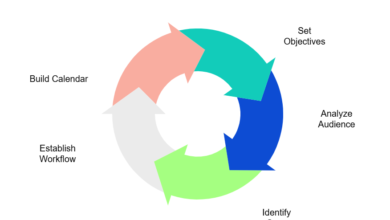
If you only do one thing: Map your stages and assign an owner to each. When I map the workflow visually, I can instantly see where my content gets stuck—usually in the “approval” or “distribution” bottleneck.
Modern workflows must also account for Generative Engine Optimization (GEO) and Answer Engine Optimization (AEO). This simply means structuring your content so that AI tools (like ChatGPT Search or Google’s AI Overviews) can easily read and cite your work. The workflow I use covers the entire lifecycle: ideation, planning, creation, review, optimization, publishing, distribution, indexing, measurement, and finally, refreshing.
Quick workflow snapshot (the 9 stages I use)

- Ideation: Sourcing questions from real customers.
- Planning: Mapping topics to a tree structure.
- Briefing: Defining the angle and requirements.
- Drafting: Creating the raw content assets.
- Review & QA: Checking facts, voice, and flow.
- Optimization: Applying On-page SEO and GEO structure.
- Publishing: Uploading and formatting in the CMS.
- Indexing: Submitting technical signals to search engines.
- Distribution: Repurposing across channels to drive traffic.
What changes in 2025+: SEO + answer engines (GEO/AEO)
We are no longer just writing for humans and ten blue links. We are writing for Large Language Models (LLMs) that synthesize answers. This shifts our workflow requirements: we need higher fact density, clearer structure, and undeniable authority. It’s not just about rankings anymore; it’s about being the trusted source AI pulls from when a user asks a question.
Step 1–2: Plan your topics (topic trees, search intent, and a simple calendar)

The biggest mistake I see beginners make is picking random keywords that look “easy.” A sustainable workflow starts with a structured plan, specifically a topic tree (sometimes called a waterfall method). This approach ensures you build topical authority rather than just a collection of disconnected posts.
Here is how I structure it: I start with a “Trunk” (a core brand theme), branch it into “Clusters” (subtopics), and finally “Leaves” (individual articles). If I run a project management software company, my tree might look like this:
- Trunk: Agile Project Management
- Branch: Scrum Methodologies
- Leaf: “Daily Standup Meeting Agenda Template” (Actionable/Commercial)
Once I have the topics, I map them to a calendar. I don’t try to publish daily. A realistic cadence for a small team is often one deep pillar piece per month, supported by two shorter posts and one refresh of an old article. This prevents burnout and keeps quality high.
| Topic Cluster | Audience Question | Search Intent | Format | Success Metric |
|---|---|---|---|---|
| Remote Work | “How do I manage a remote team?” | Informational | How-to Guide | Traffic / Time on Page |
| Remote Work | “Best tools for remote async work” | Commercial | Comparison / List | Free Trial Signups |
| Remote Work | “Slack vs Teams pricing” | Transactional | Feature Table | Click-through Rate |
Build a topic tree in 20 minutes (the trunk → branch → leaf method)
You don’t need expensive software to start. I often grab a whiteboard or a simple spreadsheet. I list 3 core themes that drive revenue. Under each, I list 5 questions my sales team gets asked. Those become the subtopics. I start rough, then refine the specific titles after I’ve published 3–5 pieces and seen what resonates.
Match content to intent (so you don’t publish the wrong page)
Nothing kills a workflow faster than writing a sales page when the user wanted a definition, or writing a history lesson when the user wanted to buy. I always verify intent by searching the keyword myself.
- Informational: Users want to know. Format: Guides, Tutorials, Definitions.
- Commercial: Users want to compare options. Format: Best-of lists, Reviews, Comparisons.
- Transactional: Users want to buy. Format: Product pages, Pricing pages.
Common rookie mistake: I used to write long, philosophical essays for keywords like “best CRM software.” The intent was purely commercial—people wanted a list of features and prices, not my opinion on the history of customer relations.
A lightweight calendar that doesn’t collapse after week two
Your calendar should be a shield, not a burden. I use time-blocking to protect my focus. For example, I dedicate Tuesday mornings solely to outlining. If I don’t block that time, meetings eat it up, and the workflow stalls. Batching is your friend here: plan a whole month’s topics in one sitting, so you aren’t making strategic decisions every single time you sit down to write.
Step 3: Create the content (briefs, drafting, review, and quality gates)

Writing without a brief is like building a house without a blueprint—you’ll inevitably have to tear walls down later. In my newsroom workflow, the brief is the most critical document. It aligns the writer, the editor, and the strategist on the goal before a single sentence is drafted.
Once the brief is approved, I move to drafting. This is where modern tools shine. I use an AI article generator to get a structured first draft, then I edit for clarity, accuracy, and voice. This hybrid approach—AI for speed, humans for soul—allows me to cut drafting time by 60% without sacrificing the unique insights that build trust.
But speed means nothing without quality control. I implemented a strict “QA Gate” in my process. No article moves to the CMS until it passes a specific checklist. I remember one time a missing brief caused a writer to produce a piece targeting “developers” when our audience was actually “CEOs.” We had to rewrite the entire thing. A 10-minute brief would have saved us 10 hours of work.
My content brief checklist (what I require before writing)
If I can’t answer these in 10 minutes, I’m not ready to draft:
- Target Reader: Who is this specifically for? (e.g., “Marketing Manager at a SaaS”)
- Core Problem: What pain point are we solving?
- Unique Angle: Why is our take different from the top result?
- Primary Keyword: What is the main search term?
- Subheadings (H2s): What are the 3–5 main sections?
- Internal Links: Which product or pillar page are we supporting?
- Call to Action (CTA): What should the reader do next?
Where AI fits in my workflow (and where it doesn’t)
I treat AI like a fast intern—helpful, energetic, but not accountable. It creates outlines, suggests titles, and drafts the boring connective tissue of an article. However, I draw a hard line: AI does not own the final facts, and it does not own the brand voice. Humans must verify every claim. I’ve seen AI hallucinate statistics that looked plausible but were completely false.
Editorial QA: the 10-minute final pass before publishing
Before I hit publish, I run a final editorial pass. This isn’t a deep edit; it’s a sanity check.
- The “Skim” Test: Can I understand the value just by reading headlines?
- The Link Check: Do all internal links work and point to relevant pages?
- The Source Check: Are all stats linked to a credible original source?
- The Human Element: Is there at least one real-world example or anecdote?
Step 4: Optimize for rankings and answer engines (on-page SEO + GEO)

Optimization isn’t something you sprinkle on at the end; it’s baked into the structure. However, the technical signals still matter immensely. I consolidate my tool stack because switching tabs kills flow—I want one AI SEO tool that supports planning, drafting, and optimization signals in one view.
Beyond traditional SEO, we now optimize for GEO (Generative Engine Optimization). This means structuring data so AI can easily extract it. While SEO focuses on keywords, GEO focuses on “fact density” and entity relationships. Research suggests that optimizing for GEO concepts like topic clusters and structured data can boost visibility in AI search results significantly.
| Feature | Traditional SEO | GEO / AEO |
|---|---|---|
| Primary Goal | Rank #1 in blue links | Be cited in the AI answer |
| Key Tactic | Keywords & Backlinks | Fact Density & Structure |
| Format Preference | Long-form text | Tables, Lists, Definitions |
| Measurement | Clicks / CTR | Citations / Brand Mentions |
On-page SEO essentials (the minimum that moves the needle)
Don’t overthink this or get lost in advanced technical rabbit holes. Here is the minimum effective dose:
- Title Tag: Include the primary keyword near the front. Keep it under 60 chars.
- URL Slug: Keep it short and clean (e.g.,
/content-strategy-workflownot/2025/05/how-to-build-a-workflow). - Headings: Use H1 for title, H2 for main sections, H3 for subsections. Nest them logically.
- Internal Links: Add 2–3 links to other relevant pages on your site.
- Alt Text: Describe images simply for accessibility and context.
GEO/AEO formatting: make your page easy to cite in AI answers
I’m not chasing hacks—I’m simply making my content undeniably clear. To do this, I use direct definitions. If the header is “What is GEO?”, the very first sentence is a clear, concise definition. I also use frequent “Key Takeaways” boxes and summary tables. This helps human skimmers, but it also spoon-feeds the AI engines the structured data they need to generate an answer about your topic.
Schema and technical basics (only what a beginner needs)
You don’t need to be a developer to get the basics right. Most modern SEO plugins handle schema automatically. Focus on Article schema (standard for blog posts) and FAQ schema if you have a question-and-answer section. This code helps search engines understand the context of your content, increasing the odds of getting rich snippets in search results.
Step 5: Publish, distribute, and repurpose (so the work compounds)

Publishing is not the finish line; it’s the starting gun for distribution. If you spend 5 hours writing a post and 5 minutes distributing it, you have failed the workflow. The most efficient teams use a “create once, distribute everywhere” model. Data suggests that multi-channel strategies correlate with over 20% higher revenue growth compared to single-channel efforts.
To scale this, tools like an Automated blog generator can handle the heavy lifting of volume, allowing you to focus on strategic repurposing. I take one article and shatter it into multiple assets: a LinkedIn carousel, a newsletter segment, and a Twitter thread.
My repurposing matrix (1 article → 7 touchpoints)
This process takes me about 60–90 minutes, but it extends the life of the content by weeks.
- Newsletter: Send a summary with a link to the full post.
- LinkedIn Personal Post: Share a personal story related to the topic.
- LinkedIn Company Page: Share the key graphic or table.
- Twitter/X Thread: Break the H2s into individual tweets.
- Sales Enablement: Send the link to the sales team to answer prospect questions.
- Internal Wiki: Link the article in internal SOPs if relevant.
- Video Script: Use the outline to record a 60-second vertical video.
Automation without losing quality (where I draw the line)
Automation is a lever, not a shortcut. I automate scheduling, social posting, and even initial drafting. Emerging Agentic AI tools are starting to handle things like updating old metadata or archiving outdated posts autonomously. However, I never automate the final approval. My rule is simple: a human must always press the final button. This protects the brand from embarrassing errors that automated systems might miss.
Step 6: From publish to index (technical signals that get you discovered faster)

It’s frustrating to hit publish and see… nothing. Indexing can lag, especially for new sites. Indexing is simply Google adding your URL to its filing cabinet. If it doesn’t file it, no one can find it.
When I’m impatient (which is often), I check a few things before panicking. Usually, if a page isn’t indexed, it’s because it’s “orphaned” (no links pointing to it) or the site structure is confusing crawl bots.
Indexing checklist (5 minutes)
- Internal Link: Did I link to this new post from an existing, high-traffic page?
- Sitemap: Is the URL in my XML sitemap?
- GSC Inspection: Did I use the “Inspect URL” tool in Google Search Console and request indexing?
- Noindex Check: Did I accidentally leave a “noindex” tag on from the draft stage?
- Canonical Tag: Is the canonical tag self-referencing (pointing to itself)?
Measure, refresh, and scale your content strategy workflow

The loop closes with measurement. I don’t try to measure everything—that’s a recipe for analysis paralysis. I track a few numbers weekly to make sure nothing is broken, and a few numbers monthly to make strategic decisions.
Content also decays. I set a rule to audit my top 10 performing pages every quarter. I check if the screenshots are old, if the stats are outdated, or if the search intent has shifted. Refreshing old content is often 5x more effective than writing something new.
Beginner KPI set (what I track weekly vs monthly)
- Weekly (Health Check):
- Impressions (Are we being seen?)
- Clicks (Are people interested?)
- Average Position (Are we moving up?)
- Monthly (Business Impact):
- Conversions/Leads (Did they take action?)
- Assisted Conversions (Did this content help a sale later?)
- Engagement Time (Did they actually read it?)
Common mistakes, FAQs, and my next-step checklist
To wrap up, I want to help you avoid the potholes I stepped in. Building a workflow takes discipline, but it buys you freedom from chaos.
7 common workflow mistakes (and how I fix them)
- Skipping the brief: Fix: Never write without an approved outline. Do this at Step 3.
- Chasing volume over intent: Fix: Check the SERP before planning. Do this at Step 2.
- Publishing without internal links: Fix: Add 3 links to every post. Do this at Step 4.
- Ignoring distribution: Fix: Schedule social posts immediately after publishing. Do this at Step 5.
- Measuring vanity metrics: Fix: Focus on conversions, not just likes. Do this at Step 7.
- Never refreshing old content: Fix: Set a calendar reminder every 90 days. Do this at Step 7.
- Thinking AI replaces strategy: Fix: Use AI to execute, not to strategize. I’ve done this too—letting AI pick topics resulted in generic fluff.
FAQs: content strategy workflow, AI, GEO, and agentic AI
What is a content strategy workflow?
It is the end-to-end process of planning, creating, optimizing, and managing content. It ensures consistency and quality, moving an idea from a concept to a measurable business asset.
How does AI improve workflow without losing quality?
AI accelerates research, outlining, and drafting, which frees up human time for high-value tasks like editing, adding examples, and strategic planning. The key is maintaining human oversight on facts and voice.
What is GEO vs SEO?
SEO (Search Engine Optimization) focuses on ranking in traditional search results using keywords. GEO (Generative Engine Optimization) focuses on optimizing content for AI answer engines by using structured data, high fact density, and clear definitions.
What is agentic AI?
Agentic AI refers to autonomous AI agents that can perform multi-step tasks without constant human intervention, such as automatically archiving old content, updating metadata, or routing approvals in a workflow.
My next-step checklist (do this this week)
If you are ready to stop the chaos, start here. This takes about 60 minutes:
- Build a simple topic tree with one “Trunk” and three “Branches.”
- Choose one “Leaf” topic that answers a specific customer question.
- Write a 10-minute brief using the checklist above.
- Draft the content using AI assistance for speed.
- Publish with the on-page SEO checklist.
- Submit the URL to Google Search Console immediately.
If you want to accelerate drafting and publishing while keeping editorial control, building a reliable system is your best investment. Good luck building your engine.