Introduction: Building a content strategy framework that actually holds up in 2026

If we’re being honest, most “strategies” I see are just color-coded calendars. I’ve been there. Early in my career, I spent hours filling spreadsheet cells with topic ideas, convinced that posting every Tuesday at 10 AM was the key to growth. We hit our deadlines, but our traffic flatlined. Why? Because we had a schedule, not a system.
A true content strategy framework isn’t about when you post; it’s the operating system that defines why you post, who it helps, and how it drives revenue. It’s the difference between throwing spaghetti at the wall and building a reliable engine.
In this guide, I’m going to walk you through the framework I use today. It’s built for the reality of 2025–2026—where AI accelerates production, answer engines (like Perplexity or ChatGPT) change discovery, and human trust is your only real moat. We’ll cover the definition, the 6-layer model, a step-by-step build, and the metrics that actually matter. No fluff, just the blueprint.
What a modern content strategy framework is (and isn’t)

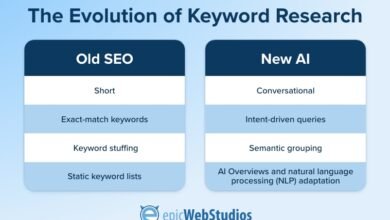
The landscape has shifted. A few years ago, keyword research and a decent writer were enough. Today, discovery is happening in answer engines (AEO) and generative systems (GEO) as much as traditional search. A modern framework integrates these new realities—AI co-creation, structured data, and ethical personalization—into a cohesive loop.
To put it simply: Traditional frameworks optimized for clicks. Modern frameworks optimize for answers and trust.
Quick answer (for beginners): the 1-paragraph definition
A modern content strategy framework is a repeatable business system that aligns content creation with user intent and business goals. It combines AI efficiency for research and drafting with strict human oversight for quality (E-E-A-T). Unlike a static plan, it includes a feedback loop to measure performance across search engines and answer engines, allowing you to update or retire content based on data, not guesses.
Framework vs. content calendar vs. SEO checklist
It’s easy to confuse the tools with the system. Think of it like building a house:
- The Framework: The blueprint. It dictates the foundation, the rooms, and how they connect.
- The Calendar: The construction schedule. It tells the crew when to pour the concrete.
- The Checklist: The inspection sheet. It ensures the wiring is safe before you close the walls.
Here is how the approach has evolved:
| Feature | Traditional Approach | Modern Framework (2025+) |
|---|---|---|
| Planning Unit | Keywords & Calendar dates | User Intent & Topic Clusters |
| Optimization | Google Rankings (SEO) | Search + Answer Engines (SEO, AEO, GEO) |
| Production | 100% Manual Human | AI-Assisted + Human QA & Insight |
| Governance | Publish and forget | Quarterly Refresh & Consolidation cycles |
The proven content strategy framework: my 6-layer model (built for SEO + answer engines)

When I’m building a strategy for a new project, I don’t start with blog titles. I use a 6-layer model that stacks logically. If you skip a bottom layer, the top ones inevitably crumble.
Layer 1: Outcomes, positioning, and non-negotiables
This is your North Star. Before a single word is written, you need to define what success looks like. Is it leads? Brand awareness? Retention?
Deliverables: Goal statement, Brand Voice guidelines, Core value proposition.
The 10-Minute Checklist:
- What business problem does this content solve?
- Who exactly are we helping? (Be specific: “SMB founders,” not “everyone”)
- What is our “compliance” bar? (e.g., medical accuracy, tone constraints)
- What makes us different from the AI summary? (e.g., proprietary data, expert interviews)
Layer 2: Audience, intent, and customer questions
We need to map intent, not just keywords. I categorize everything into Informational (learning), Commercial (comparing), or Transactional (buying). This layer also involves finding where your audience hangs out—whether that’s Google, YouTube, or niche Reddit communities.
Deliverables: Persona map, Intent classification list, Customer question bank.
Layer 3: Topic architecture (pillar pages, clusters, and internal links)
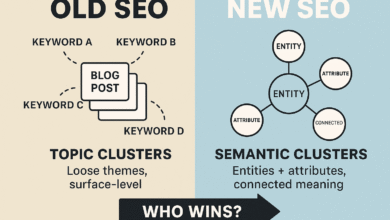
This is where authority is built. We organize content into “Pillars” (broad guides) and “Clusters” (specific supporting articles). Internal links aren’t an afterthought; they are the glue planned at this stage to tell search engines how your pages relate.
Deliverables: Topic Cluster Map, Internal Linking Strategy.
Layer 4: Production system (briefs, drafting, editing, QA)
This is your assembly line. It defines how an idea becomes a published URL. In a modern framework, this includes AI for outlining or drafting, but strict human accountability for the final output.
Deliverables: Brief templates, Workflow diagram, QA Checklist.
Layer 5: Distribution and repurposing (multi-format consistency)
Great content rarely lives on just one URL. This layer defines how a blog post becomes a newsletter, a LinkedIn carousel, and a short video script.
Deliverables: Repurposing matrix, Channel distribution plan.
Layer 6: Measurement, governance, and iteration
The feedback loop. This layer dictates when we review content (e.g., every 90 days) and what metrics trigger an update or a delete.
Deliverables: KPI Dashboard, Content Audit Schedule.
How I build a content strategy framework step-by-step (a beginner-friendly workflow)

Theory is great, but let’s get practical. Here is the exact workflow I use. If you are starting from zero, don’t try to do everything at once. Just follow these steps in order.
The Implementation Checklist
| Step | Owner | Output | Time Est. |
|---|---|---|---|
| 1. Goals | Strategist | Primary CTA defined | 1 hour |
| 2. Audit | Strategist/SEO | Content Inventory .csv | 3-5 hours |
| 3. Clusters | SEO Lead | Topic Map | 4 hours |
| 4. Briefs | Editor | Standard Brief Template | 2 hours |
| 5. Draft | Writer/AI | First Draft | Ongoing |
Step 1: Set outcomes + define your primary conversion actions
What do you want the reader to do? Don’t say “engage.” Be specific. For a SaaS company, it might be “Book a Demo.” For a service business, “Fill out the contact form.”
Action: Define one primary Call to Action (CTA) and one secondary CTA (e.g., newsletter signup) for your strategy. If you don’t know where you are driving people, you are just driving in circles.
Step 2: Quick content and SERP reality check (audit + intent)
I often see businesses trying to rank a product page for an informational query. It never works. Search your target topics. If the top 10 results are long “How-to” guides, you need to write a guide, not a sales page.
Mini-Audit: List your top 10 pages in a spreadsheet. Check: Does the content actually answer the user’s intent? Is it accurate? When was it last updated?
Step 3: Build topic architecture (pillars + clusters + internal links)
Start small. Pick one “Pillar” topic—something central to your business. Then brainstorm 5 specific questions people ask about it. These become your cluster pages.
Example (Email Marketing Software):
- Pillar: The Ultimate Guide to Email Marketing for Small Business
- Cluster 1: Best time to send newsletters
- Cluster 2: How to improve open rates
- Cluster 3: Email subject line examples
- Cluster 4: Hard bounce vs soft bounce
- Cluster 5: Best free email tools
Pro Tip: Decide how these link to each other now. The Pillar links to all clusters; clusters link back to the Pillar.
Step 4: Create a repeatable content brief (template included)
Never write without a brief. It saves hours of rewriting later. Whether you are writing it yourself or using a tool, the brief ensures alignment.
Essential Brief Elements:
- Target Keyword & Intent: (e.g., “Informational”)
- The “One Thing”: What is the single core question this answers?
- Structure: H1, H2s, H3s.
- Sources: List required stats/facts. Note: Label unverified stats as to prompt a fact-check.
- Internal Links: Which cluster pages must we reference?
Step 5: Draft efficiently with AI + keep authenticity with human oversight
You can use AI to speed this up significantly. Tools like the Kalema AI article generator can take that brief and produce a high-quality draft in minutes. However, the “human layer” is non-negotiable.
My Rules for AI Drafting:
- Fact-Check Everything: AI can hallucinate data. Verify every stat.
- Add “I” Statements: Inject personal experience AI can’t have. “I found that…” or “In my experience…”
- Review the Tone: Does it sound like your brand, or like a robot?
If you use an SEO content generator, treat it as a junior writer. It does the heavy lifting, but you are the editor-in-chief responsible for the final quality.
Step 6: Publish + repurpose + schedule updates
Once you hit publish, set a reminder for 90 days out. You’ll want to review the performance and refresh the data. If you’re solo, aim for consistency over volume—one great pillar and cluster set is better than 50 thin, random posts.
Embed SEO, AEO, and GEO inside your content strategy framework (without turning it into a checklist blog)

Optimization used to mean “put the keyword in the H1.” Now, we are optimizing for Answer Engine Optimization (AEO) and Generative Engine Optimization (GEO). This means structuring content so machines can easily parse it and serve it as a direct answer.
The On-Page Optimization Checklist:
- Title Tag: Matches intent + keyword.
- Intro: Answers the core question immediately (BLUF – Bottom Line Up Front).
- Structure: H2s/H3s clearly label sections.
- Schema: FAQ schema or Article schema added.
- Citations: External links to authoritative data sources.
SEO fundamentals that still matter
Don’t throw out the basics. Title tags, meta descriptions, and alt text still drive clicks from Google. Ensure your headings (H1, H2, H3) form a logical outline. If a user (or bot) scans just your headings, they should understand the entire article.
AEO: How to earn visibility in answer boxes and assistant-style results
Answer engines love concise, direct definitions. When writing for AEO, think “Q&A.”
Before (Not AEO friendly): “When considering the various factors that influence email deliverability, one might find that the reputation of the sender is paramount…”
After (AEO friendly): “Sender reputation is the #1 factor influencing email deliverability. High reputation scores ensure emails land in the inbox, while low scores trigger spam filters.”
GEO: How to make your content quotable for generative systems
Generative AI cites sources that appear authoritative. To rank in GEO, you need “Information Gain”—new stats, unique quotes, or expert distinct viewpoints.
Strategy: Include specific statistics and cite primary sources. Use structured data (Schema.org) to help AI understand entities (people, places, concepts) in your content. Avoid generic fluff; if everyone else says it, AI has no reason to cite you.
Execute at scale: formats, personalization, distribution, and editorial operations
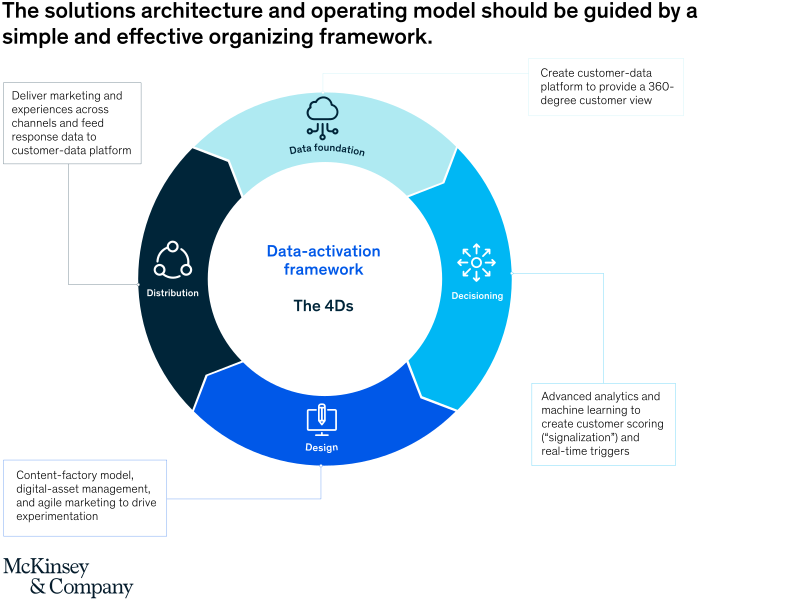
Scaling is where things usually break. You can’t just work harder; you need a workflow that multiplies effort. If you are running a larger operation, you might look into an automated blog generator to handle the volume of your cluster content while your core team focuses on deep pillar pages.
Choose the right format for the job
Not everything should be a blog post. Match the format to the user’s need.
| Goal | Best Format | Effort Level |
|---|---|---|
| Deep Understanding | Long-form Guide / Pillar | High |
| Quick Solution | Short Video / Checklist | Medium |
| Visual Demonstration | Video / Screenshot walk-through | High |
| Updates/News | Email / Social Post | Low |
Personalization without creepiness (and why it pays)
Consumers expect relevance. Verified stats show that 71% of consumers expect personalized interactions. But there is a fine line between helpful and creepy. Focus on segmentation: show advanced guides to returning users and beginner guides to new visitors. It’s not about knowing their shoe size; it’s about knowing their stage in the buying journey.
Editorial operations: roles, cadence, and quality control
If you are a solo marketer, you are the strategist, writer, and editor. If you have a team, split these roles. The biggest bottleneck is usually approval. Set a simple rule: “If no feedback in 48 hours, it auto-approves.”
Establish a cadence you can actually keep. I’d rather see a consistent weekly post than a daily sprint that burns out in a month. Consistency builds trust.
Measure, learn, and iterate: the analytics loop that keeps the framework “alive”

This is the step most people ignore. They publish and move on. But data is how we learn.
I view metrics in two buckets: Leading Indicators (are we going in the right direction?) and Lagging Indicators (did we make money?).
A simple KPI table for beginners (what to track + what to do next)
| Metric | Type | What it tells you | Action if low |
|---|---|---|---|
| Impressions | Leading | Is Google showing this? | Improve keyword targeting / freshness. |
| CTR | Leading | Is the title compelling? | Rewrite Title Tag & Meta Description. |
| Time on Page | Lagging | Is the content readable? | Improve hook, add video/images. |
| Conversions | Lagging | Does it drive value? | Check CTA placement and offer alignment. |
Iteration routine: update, consolidate, expand, or retire
Every quarter, I do a “Content Prune.” I look at the data and make one of four decisions:
- Update: Traffic is good, but decaying. -> Refresh the data/date.
- Consolidate: Two pages compete for the same keyword. -> Merge them into one “Super Guide.”
- Expand: A section is getting lots of interest. -> Spin it out into its own article.
- Retire: It gets zero traffic and is outdated. -> 301 Redirect or delete.
Common mistakes, FAQs, and next steps

We’ve covered a lot. Before you go, let’s address the potholes I usually step in so you don’t have to.
Common mistakes (and how I fix them)
- Mistake: Writing without checking intent. Fix: Google the keyword first. If the results don’t match your idea, change your idea.
- Mistake: Publishing AI drafts raw. Fix: Always add a “Human QA” step to verify facts and tone.
- Mistake: Ignoring internal links. Fix: Plan your links before you write, in the brief stage.
- Mistake: “Set it and forget it.” Fix: Schedule a quarterly audit on your calendar right now.
- Mistake: Optimizing only for Google. Fix: Add concise Q&A blocks for Answer Engines.
FAQs about a content strategy framework (2025–2026 realities)
What is the biggest change in modern content frameworks?
The integration of AI and Answer Engines. We are no longer just writing for humans and 10 blue links; we are structuring data for AI assistants and generating content with AI co-pilots.
Can I use AI to write my strategy?
AI is great for brainstorming and identifying gaps, but strategy requires business context and empathy that AI currently lacks. Use AI to execute the strategy, not define the outcomes.
Why should I care about GEO (Generative Engine Optimization)?
Because search behavior is shifting. Users are asking ChatGPT and Perplexity complex questions. If your content isn’t cited there, you are invisible to a growing segment of your market.
Recap and next actions
You have the model. Now you need momentum. Here is your plan for the next few days:
- Day 1-2: Define your Goal (Layer 1) and Audit your existing content (Layer 6).
- Week 1: Build one Topic Cluster (Layer 3) consisting of 1 Pillar and 5 supporting posts.
- Month 1: Publish the cluster, distribute it (Layer 5), and set up your tracking dashboard.
If you only do three things this week: Define your primary goal, audit your top 10 pages, and create one solid content brief. Consistency beats perfection every time.