Understanding the Opportunity: What Keyword Gaps Tell You About Your Niche (Keyword Gap Analysis Guide)
Introduction: why keyword gaps are the clearest “opportunity signals” in a niche

When I audit a new site—whether it’s a B2B SaaS platform or a local home services provider—the fastest clarity usually doesn’t come from looking at their own analytics. It comes from looking at what they aren’t ranking for.
I hear the same frustration constantly: “We’re publishing content every week, but our competitors keep winning.” The problem usually isn’t the writing quality; it’s the targeting. You might be writing about “project management tips” while your competitors are dominating the high-intent ground of “agile software comparison” and “enterprise workflow pricing.”
This is where keyword gap analysis changes the game. It isn’t just about finding a list of words to shove into a content calendar. It is a diagnostic tool that reveals the economic reality of your niche. It tells you exactly where demand exists, what formats users expect, and where your competitors have left the door open.
In this guide, I’ll walk you through a newsroom-grade approach to gap analysis. We’ll move beyond the basics and look at how AI search has changed the rules—because today, it’s not enough to rank; you need to be cited. I’ll share the exact workflow I use to find high-ROI gaps, filter out the noise, and build a content plan that actually moves the needle.
What a keyword gap analysis is (and what it isn’t)

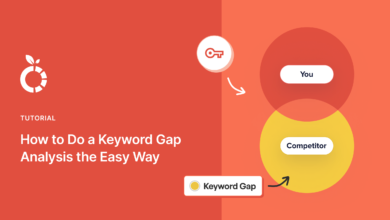
At its core, a keyword gap analysis (often called a “content gap analysis”) is the process of identifying keywords that your competitors rank for, but you don’t. It’s like walking into a competitor’s store, looking at their best-selling shelves, and realizing you aren’t even stocking those products.
However, I often see beginners misunderstand the goal. Gap analysis is not about copying your competitors’ titles word-for-word. It is not about chasing vanity metrics by targeting high-volume keywords that have zero relevance to your business. And it certainly isn’t a one-time CSV export that you look at once and forget.
Think of it as a mental model: Gap = Unmet Demand + Positioning Signal.
When you see a competitor ranking for 50 different variations of “invoice templates,” that’s a signal that the market craves utility, not just theory. Tools like SEMrush (Keyword Gap) and Ahrefs (Content Gap) make this data accessible, but the magic lies in how you interpret it.
Quick answer: what exactly is a keyword gap analysis?
A keyword gap analysis is a strategic SEO process where you compare your website’s keyword profile against major competitors to find valuable search terms they rank for but you miss. It is used to prioritize new content creation or optimize existing pages to capture traffic, leads, and AI overview citations you are currently losing to rivals.
The 4 “gap types” most tools surface

Most competitive intelligence tools break gaps down into four main buckets. Here is a preview of what they mean before we get into the workflow:
- Missing: Keywords where competitors rank, but you don’t rank at all. (Action: Usually requires creating new content).
- Weak: Keywords where you rank, but significantly lower than your competitors. (Action: Requires refreshing or expanding existing content).
- Untapped: Keywords that neither you nor your selected competitors rank for—often a blue ocean opportunity. (Action: Opportunity to lead the market).
- Shared: Keywords where both you and competitors rank. (Action: Monitor to defend your position).
What keyword gaps tell me about my niche (beyond “topics to write”)

The first time I ran a professional gap report, I was overwhelmed by 10,000 rows of data. I tried to filter by search volume, which was a mistake. I ended up targeting broad terms that brought traffic but no revenue.
Now, when I scan a gap export, I look for patterns. The keywords tell a story about the niche economics.
- Demand Patterns: Are people searching for “how to” (informational) or “buy” (transactional)? If competitors rank for 80% informational content, the niche requires education before conversion.
- SERP Expectations: If the gaps are all “best X for Y,” Google wants listicles. If they are “X vs Y,” Google wants comparisons.
- Trust Signals: Are competitors winning on terms like “reviews,” “scam,” or “legit”? That means trust is a major friction point in your industry.
Intent mapping: the fastest way to see where competitors make money
I map intent to see where the actual business value sits. It usually takes me about 10 minutes to spot the trend.
- Informational: “What is a CRM?” (Top of Funnel). Competitors use this to build audiences.
- Commercial: “Best CRM for small business.” (Middle of Funnel). This is where the evaluation happens.
- Transactional: “Salesforce pricing” or “Buy CRM software.” (Bottom of Funnel). This is where the money changes hands.
Format clues: keyword gaps that imply a specific page type
The SERP is the ultimate rubric. I don’t guess what format to write; the keyword modifiers usually tell me exactly what the user wants.
- “Best,” “Top,” “List”: Requires a listicle or directory.
- “Vs,” “Alternative,” “Competitor”: Requires a direct comparison page.
- “Price,” “Cost,” “Rates”: Requires a pricing page or a calculator.
- “Template,” “Checklist,” “PDF”: Requires a downloadable asset or tool.
- “Near me,” “In [City]”: Requires a local landing page.
How AI search changed keyword gap analysis (AI Overviews, zero-click, and citations)

Traditional gap analysis was about getting a blue link on page one. Today, the landscape is shifting. With AI Overviews appearing in approximately 18.57% of commercial queries and nearly 14% of transactional queries , the goalpost has moved.
We also have to contend with zero-click searches, which have stabilized around 31–33% . This means a third of users get their answer without ever visiting a website. In this environment, “ranking” isn’t enough. You need to be citable.
Modern, AI-aware gap analysis isn’t just about covering a topic; it’s about entity coverage. Google and AI models understand “entities” (people, places, concepts). If your competitors are ranking because they cover the entity of “project management” comprehensively—including sub-topics like methodologies, software, and certifications—you won’t beat them by writing one thin blog post.
What “being cited” changes in how I plan content
When I see a gap now, I don’t just ask, “How long should this article be?” I ask, “How easy is it for an AI to extract an answer from this?” To capture AI citations and Featured Snippets, I ensure my content includes:
- Direct Definitions: A clear “is” statement early in the text.
- Structured Lists: Logical steps or bullet points that answer “how to.”
- Data Tables: Comparisons that machines can easily parse.
- FAQ Sections: Direct questions and answers marked up with Schema.
- Pros/Cons Blocks: balanced views that AI summaries love to reference.
Quality guardrails: why “gap-filling” content can backfire
Here is the catch: In the rush to fill gaps, many teams fell into the trap of mass-producing generic content. Following the massive algorithm updates in late 2024 and 2025, sites that simply rehashed competitor content lost significant visibility—up to 71% in some product review sectors .
I once had to rewrite an entire cluster of content because we simply summarized what was already ranking. It added no new value, and Google ignored it. Now, my rule is simple: If we can’t add an original example, a unique data point, or a better user experience, we don’t publish.
My keyword gap analysis workflow (step-by-step, beginner-friendly)

Ready to actually do the work? Here is the exact process I follow. I’ll use a hypothetical “Austin Plumbing” business to keep things grounded, but this applies to SaaS or Ecommerce just as well.
Step 1: pick the right competitors (real SERP competitors, not just business rivals)
This is where most people mess up immediately. Your biggest business competitor might not be your biggest SEO competitor. If I’m a local plumber, my business rival is the guy across town. But in search results, I might be competing against Angi, Yelp, or a massive national directory.
I usually pick 3–5 domains that actively rank for the customers I want. I look for sites that are similar in size and intent. Trying to gap-analyze against Wikipedia or Amazon is usually a waste of time for a small business.
Step 2: choose my data sources (tool + Google Search Console)
I rely on tools like SEMrush or Ahrefs because their databases are massive. Ahrefs allows comparison of up to 10 competitors, while SEMrush handles five . But I always cross-reference this with my own Google Search Console (GSC) data.
My rule of thumb: If GSC shows I’m already getting impressions for a keyword (even if I rank #40), it’s usually faster to improve that page than to start from scratch. It’s low-hanging fruit.
Step 3: export and label gaps by intent and business value
I run the report and export the CSV. Then, I open a spreadsheet and start tagging. I don’t look at every single row—that’s madness. I filter for keywords with reasonable volume (e.g., 100+) and commercial intent.
I add a column called “Action” and tag them based on the gap type. I also look for SERP features. If I see “People Also Ask” boxes, I note that I need an FAQ section.
Step 4: decide “create new” vs “upgrade existing”
This is the critical decision point. I check my site: Do I have a page that should rank for this?
- Scenario A: I have a page about “Water Heater Repair,” but I’m ranking #18. This is a Weak gap. I need to refresh the content, add schema, and improve internal links.
- Scenario B: I have no page about “Tankless Water Heater Installation.” This is a Missing gap. I need to create a new page.
- Scenario C: I have a blog post about water heaters, but the keyword intent is “Buy Water Heater.” I have an intent mismatch. I need to create a product or service page, not a blog post.
Reality Check: If I can’t explain the page’s job in one sentence, I’m not ready to write it.
Step 5: validate the gap in the SERP (to avoid false positives)
Before I assign a writer, I manually search the keyword. I check to ensure the results are actually relevant. Sometimes a keyword looks commercial (e.g., “plumbing design”), but the results are all academic courses or software, not service providers.
Table: gap type → what it usually means → best next action
Here’s the cheat sheet I use when I’m deciding what to do next.
| Gap Type | What It Indicates | Best Action | Winning Format | AI Citation Note |
|---|---|---|---|---|
| Missing | You have no relevant content. | Create New | Match SERP (Blog/Service Page) | Start with clear definitions. |
| Weak | Content exists but underperforms. | Refresh / Expand | Update Statistics & Depth | Add FAQ schema & structured lists. |
| Untapped | Competitors missed this too. | Blue Ocean Strategy | Comprehensive Guide | Define the entity first. |
| Shared | You are competing head-to-head. | Defend / Optimize | Better UX / More Media | Focus on unique expert insights. |
Turning keyword gaps into an execution plan (prioritization, clusters, and scaling responsibly)

A spreadsheet of 500 keywords is not a plan; it’s a burden. To turn this into revenue, you need to prioritize. I use a simple scoring system to decide what gets built first. The goal isn’t to clear the list; it’s to do the work that pays off.
A simple scoring model I actually use (with a worked example)
I’m not trying to be mathematically perfect—I’m trying to be consistently smart. I score opportunities on a 1–3 scale across three factors:
- Business Value (Intent): 3 = Transactional, 2 = Commercial, 1 = Informational.
- Volume Potential: 3 = High, 2 = Medium, 1 = Low.
- Effort (Reverse Scored): 3 = Low Effort (Refresh), 2 = Medium (New Short Post), 1 = High (Massive Guide).
Total Score = Value + Volume + Effort. A high score means a high-value, easy-to-win keyword.
From gaps to topic clusters: how I avoid publishing random one-off posts
Once I have my top keywords, I group them. I never publish a “lonely” page. If I find a gap for “tankless water heater cost,” I look for related gaps like “tankless vs tank,” “tankless maintenance,” and “best tankless brands.”
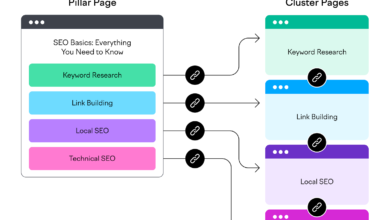
I build a Pillar Page (The ultimate guide to Tankless Heaters) and support it with 3–5 Cluster Pages that link back to it. This builds the topical authority that AI search engines reward.
Efficient execution (without generic content): briefs, structure, and automation
This is where workflow matters. You can’t spend 20 hours on every blog post, but you can’t publish AI garbage either. I use a hybrid approach.
I use tools to handle the heavy lifting of structure. For example, an AI article generator can help create comprehensive briefs and initial drafts based on the gaps we identified. It ensures the H2s map to user intent and that we cover the semantic entities required.
However, I always have a human editor do the final pass. We add original examples, verify claims, and ensure the brand voice is present. For teams needing to scale, a bulk article generator can set up the foundation for dozens of cluster pages at once, allowing the human team to focus on adding the “experience” layer that Google craves. It’s about using content intelligence to get to the 80% mark instantly, so you can spend your energy on the final 20% of quality.
Using an AI SEO tool like Kalema helps standardize this workflow, ensuring every piece of content starts with a strategy rather than a blank page.
Common keyword gap analysis mistakes (and how I fix them)

Here is a quick post-mortem of the mistakes I see teams make, so you can avoid them.
Mistake-to-fix checklist (5–8 items)
- Mistake: Chasing Volume Over Intent.
Why it hurts: You get traffic that bounces and never buys.
Fix: Prioritize commercial intent keywords, even if they only have 50 searches a month. - Mistake: Ignoring the SERP Format.
Why it hurts: You write a guide when the user wants a calculator.
Fix: Always check the top 3 results to see what format Google is rewarding. - Mistake: Treating Gaps as “Copy Paste.”
Why it hurts: You create generic content that gets filtered out by AI updates.
Fix: Use the gap as a topic prompt, but force yourself to add one unique angle or data point. - Mistake: Neglecting Existing Content.
Why it hurts: It takes longer to rank a new page than to fix an old one.
Fix: Always check your “Weak” keywords first. Refreshing page 2 content is the quickest win. - Mistake: Not Updating the Analysis.
Why it hurts: Competitors move fast.
Fix: Run a gap analysis quarterly, not once a year.
FAQ + next steps: how I keep keyword gap analysis moving (without overwhelm)
If I were starting today, I wouldn’t try to boil the ocean. I’d start small, get a win, and then scale. Here is the summary of what we’ve covered and what you should do next.
FAQ: How has AI search changed keyword gap analysis?
AI search means you need to optimize for citations, not just clicks. Your gap analysis must now include looking for missing “entities” and questions. Your content needs clear structure (H2s, lists, schema) so AI Overviews can easily read and cite your answers.
FAQ: How often should I do keyword gap analysis?
For most businesses, a full deep-dive quarterly is sufficient. However, if you are in a fast-moving industry like tech or news, I recommend doing a quick “spot check” monthly on your top 5 competitors.
FAQ: What types of keywords should I target first?
Target the “Weak” keywords with commercial intent first. These are pages you already have that are close to ranking. Improving them is faster and cheaper than building new pages from scratch.
FAQ: How can I act efficiently on keyword gaps?
Don’t write from scratch if you don’t have to. Use AI-assisted workflows to generate briefs, outlines, and first drafts. Then, use your limited time to fact-check and add human stories. A SEO content generator can handle the volume while you handle the value.
Recap:
1. Keyword gaps are unmet demand, not just missing words.
2. AI search requires you to build authority through clusters and structured answers.
3. Prioritize based on business value, not just search volume.
Your Next 3 Steps This Week:
1. Export a gap report for your top 3 competitors.
2. Identify your top 10 “Weak” opportunities and refresh those pages.
3. Pick one “Missing” topic cluster and generate briefs for it.
If you need to scale this process responsibly without hiring a dozen writers, tools like Kalema can help you turn strategic gaps into published, high-quality content efficiently.