SaaS Content Marketing Strategy: A Blueprint for Scaling in 2026
Introduction: Scaling with content (without turning into a content factory)

I remember sitting in a board meeting a few years ago, presenting a chart that showed organic traffic up 300% year-over-year. The silence that followed was deafening until the CRO asked, “That’s great, but why are demos flat?”
It was a painful lesson: volume is vanity, and traffic without intent is just server load. In the high-growth SaaS world of 2026, the problem isn’t producing enough content; it’s producing content that actually drives pipeline in an era of AI-driven discovery and distracted buyers.
If you are a founder or marketing lead operating with a lean team, this guide is for you. We aren’t going to talk about vague “thought leadership.” Instead, I’m going to share the exact framework—the AI-Optimized, Outcome-Led Content Flywheel—that I use to build predictable revenue engines. We will cover how to structure content for Answer Engine Optimization (AEO), how to operationalize AI agents safely, and how to measure what actually matters.
Search intent and what I’m optimizing for
This is an informational and how-to guide. My goal is to give you a strategy and execution blueprint you can implement immediately, not a list of tools. While the examples here are US-market oriented, the principles apply globally.
By the end of this article, you will be able to:
- Build a content portfolio that balances Product-Led Growth (PLG) and sales motions.
- Structure your articles so AI assistants (like ChatGPT or Gemini) can quote and recommend them.
- Deploy a realistic editorial workflow that scales quality, not just word count.
What “scaling with content” means for high-growth SaaS in 2026 (and why the old playbook broke)

Scaling with content used to mean hiring more freelance writers to target high-volume keywords. Today, that approach is a fast track to irrelevance. In 2026, scaling means increasing your impact and distribution while maintaining rigorous editorial standards—often with the same headcount.
The market has shifted fundamentally. We aren’t just optimizing for Google’s “10 blue links” anymore; we are optimizing for AI-driven answers (AEO) and recommendations (GEO). Research suggests that by 2026, AEO strategies will replace traditional SEO as the primary visibility driver . Furthermore, vertical and micro-SaaS segments are projected to capture over 60% of new market growth , meaning broad, generic content is losing to hyper-specific, niche expertise.
The gap I see most teams fall into is trying to patch these new realities onto an old workflow. It doesn’t work. You need a system built for privacy-first data, autonomous agents, and outcome-based pricing models.
The new reality: visibility is shifting from “10 blue links” to answers and recommendations
If I search for “best CRM,” I might get a list of links. But if I ask an AI assistant, “What is the best CRM for a mid-market fintech with SOC 2 constraints?”, I get a synthesized answer. That is the shift.
Answer Engine Optimization (AEO) focuses on being the source of that answer. It requires concise, factual structuring. Generative Engine Optimization (GEO) is about influencing the recommendation by ensuring your brand appears in the citations and logic chains the AI uses to form its opinion.
The workflow shift: autonomous AI agents + human guardrails
In my current workflows, autonomous AI agents handle the heavy lifting of data analysis, initial drafting, and even distribution formatting. However, automation without supervision is a brand risk. I’ve seen AI agents hallucinate features that don’t exist. The human role has shifted from “creator” to “editor and strategist,” owning the positioning, voice, and final approval.
SaaS content marketing strategy fundamentals I set before I scale (ICP, outcomes, pricing, data)

Before I ever approve a content calendar, I force the team to align on the fundamentals. If we skip this, we end up with a blog full of “5 Tips for Better Productivity” that attracts everyone and converts no one.
We need to define the Ideal Customer Profile (ICP), the Jobs to be Done (JTBD), and how our pricing model impacts the narrative. Whether you use usage-based pricing (pay for what you use), hybrid models, or outcome-based pricing, your content must explain that value clearly.
Here is the table I use to map our strategy before writing a single word:
| ICP Segment | Primary Pain Point | Desired Outcome (JTBD) | Required Proof | Best Content Angle |
|---|---|---|---|---|
| Mid-Market VP Finance | Unpredictable cloud costs & budget overruns | Predictable unit economics & clear forecasting | Case studies with % saved, SOC 2 badge | “How to audit usage-based billing errors” |
| Early-Stage Founder | Slow time-to-market due to compliance blocks | Launch fast without risking fines | Templates, checklists, legal vetting notes | “The MVP compliance checklist for Fintechs” |
| Ent. Security Architect | Shadow IT risks from unapproved SaaS | Full visibility & governance control | Integration docs, API specs, security whitepaper | “Technical deep dive: controlling API access” |
Note: I usually keep 1–2 primary ICPs. Narrowing the focus often reduces total traffic, but the conversion quality invariably improves.
Define the ICP in a way content can actually use
Most ICP documents are useless for writers because they focus on demographics (“Male, 35-45”). I focus on triggers and constraints. What happened yesterday that made them search for a solution today? And what is stopping them from buying (e.g., “must integrate with Salesforce”)?
If you’re stuck defining this, start here:
- Look at your last 10 closed-won deals. What job title signed the contract?
- What was the specific event that caused them to reach out?
- What was the one objection they raised during the sales cycle?
Positioning and proof: what I refuse to publish without
In 2026, trust is the scarcest commodity. I have a strict rule: if a claim can’t be verified, it gets cut or marked as . I refuse to publish “fluff.”
My personal “trust test” before hitting publish is simple: Can a skeptic verify this claim in under 2 minutes? If the answer is no, we rewrite it. We need screenshots, real data benchmarks, or direct quotes.
Pricing model messaging: how content explains value (without sounding salesy)
If you have a complex pricing model (like hybrid or outcome-based), your content must educate the buyer on how to buy. Don’t hide it.
Example: “Unlike flat-rate tools where you pay for idle seats, our usage-based model ensures you only pay when an API call is actually made. This keeps your CAC aligned with your revenue.”
My SaaS content marketing strategy framework: the AI‑Optimized, Outcome‑Led Content Flywheel

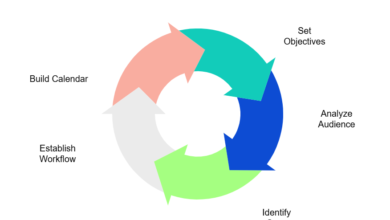
This is the engine. It’s not a linear funnel; it’s a flywheel where every piece of content feeds the next stage. I call it the “AI-Optimized, Outcome-Led Content Flywheel.” It relies on intelligent tooling to keep it spinning—using a modern SEO content generator like Kalema helps standardize the briefs and outlines, ensuring we don’t start from zero every time.
Flywheel overview (what happens in each loop)
Imagine a circular diagram with these six steps:
- Demand Research: Identifying high-intent topics, not just volume.
- Cluster Creation: grouping topics into pillars and supports.
- Creation & Optimization: Drafting with proof and AEO structure.
- Distribution: Pushing assets to the right channels.
- Conversion & Expansion: Turning readers into users (and users into advocates).
- Measurement & Refresh: Analyzing impact and updating assets.
Step 1: Demand + intent research (beyond keyword volume)
I score every topic idea on a simple rubric. If it has high volume but low intent, I usually kill it. I’d rather rank for “HR software for remote teams” (500 searches/mo) than “what is HR” (50,000 searches/mo).
My prioritization scoring:
- Pain Severity (1-5): Is this a hair-on-fire problem?
- Product Fit (1-5): Do we solve this natively?
- Sales Insight: Did a prospect mention this in a call recently?
Real-world example: I once deprioritized the keyword “social media trends” despite massive volume because the intent was pure entertainment. We focused on “social media approval workflow” instead—tiny volume, but massive conversion.
Step 2: Build a topic cluster that matches your product motion (PLG vs sales-led vs hybrid)
If you are Product-Led (PLG), your content should lead to a free trial. If you are Sales-Led, it should lead to a demo request. Here is what a mini-cluster looks like for a SaaS Billing Platform:
- Pillar Page: “The Complete Guide to SaaS Billing Infrastructure” (Broad overview)
- Support Page 1: “Subscription vs. Usage-Based Pricing: Which is right for you?” (Strategic)
- Support Page 2: “Handling failed payments: Retrying logic best practices” (Technical/Tactical)
- Support Page 3: “Billing integration guide for Stripe users” (Integration focused)
- Money Page: “Automated Billing Recovery Feature” (Product page)
Step 3: Create assets with “proof-first” briefs (so writers don’t guess)
The biggest mistake I’ve made in the past is sending a vague topic to a writer and hoping for magic. It never happens. Now, I use a “proof-first” brief. It must include the specific customer example, the data point, or the screenshot before writing begins.
Step 4: Publish, distribute, and capture demand (not just traffic)
Don’t just hit publish. I start with one or two distribution channels I can actually sustain. Usually, that is LinkedIn (for the founder brand) and our weekly newsletter. I repurpose the article into a carousel for LinkedIn and a problem-agitation-solution email for the list.
Step 5: Refresh and compound (the most overlooked scaling lever)
This is the part that feels boring. It’s also where the compounding happens. Every quarter, I review our top 10 performing posts.
My refresh checklist:
- Update all statistics (is it still 2024 data?).
- Check if the UI screenshots match the current product.
- Add a new section for a recent feature release.
- Tighten the H2s and definitions for AEO (more on that below).
Build a content portfolio that supports PLG, community, and sales (the full SaaS journey)

In 2026, the funnel isn’t linear. A user might read a blog post, join your Slack community, try the free tool, and then talk to sales. Your content needs to exist for all those stages. On a lean team, I assign ownership: Marketing owns the top, Product owns the middle, and Sales/CS owns the bottom.
| Journey Stage | Audience Question | Best Content Format | Primary CTA | Owner |
|---|---|---|---|---|
| Awareness | “Why is my process failing?” | Diagnostic Blog Post / Trend Report | Newsletter / Quiz | Marketing |
| Evaluation | “How do I solve this specifically?” | Comparison Page / Implementation Guide | Free Trial / Demo | Marketing |
| Activation | “How do I set this up?” | In-app Checklist / Video Tutorial | “Complete Setup” | Product |
| Expansion | “How do I get more value?” | Advanced Workflow Webinar / Case Study | “Upgrade Plan” | CS / Sales |
What I’d ship first (90-day priority):
- One high-quality “Alternative to [Competitor]” page.
- One deep-dive “How-to” guide solving the #1 support ticket.
- One founder-led manifesto piece on why we built the product.
Awareness to evaluation: the SEO foundation (but intent-matched)
Stop writing generic “What is X” articles. Instead, frame it around the problem. Instead of “What is Project Management?”, write “Why your engineering team hates your current project tracker.” It targets the same keyword cluster but speaks to a problem-aware buyer.
Activation and retention: content that lives inside the product
If I had to pick only one activation asset, it would be a “First 5 Minutes” guide linked directly from the welcome email. This reduces churn faster than any blog post can.
Vertical and micro‑SaaS angles: how niche positioning changes your topics
I talk to many founders who fear that going niche will limit their growth. The opposite is true. Vertical SaaS markets are exploding. If you target “CRM for Dentists,” your content can speak about HIPAA compliance and patient scheduling—things Salesforce can’t touch. That specificity lowers your Customer Acquisition Cost (CAC) drastically.
AEO + GEO: how I structure SaaS content so AI assistants can quote it (and recommend it)

We need to structure our content so that when a user asks ChatGPT, “How do I calculate SaaS churn?”, our definition is the one it cites.
The AEO Checklist:
- Direct Answers: Provide the definition immediately under the H2.
- Schema Markup: Use FAQPage and Article schema.
- Lists and Tables: AI models love structured data.
- Conversational Phrasing: Include natural language questions in H3s.
AEO basics: answer-first formatting that works for humans too
Here is a simple rule: Answer first, elaborate second. Under a heading like “What is Churn?”, the very first sentence should be a clear, standalone definition. Don’t fluff it up with “In the world of business, churn is important…” Just define it. This snippet is what AI engines scrape.
GEO basics: influencing recommendations (docs, comparisons, integrations, proof)
To influence Generative Engine recommendations, you need authority. This means having clear, well-documented integration pages and consistent pricing transparency. If a human can’t verify your pricing or features quickly, an AI model won’t trust it enough to recommend it in a “best of” list.
Personalization at scale with privacy-first first‑party and zero‑party data
Privacy is not just a legal requirement; it’s a trust enabler. I focus on collecting zero-party data—data the user intentionally gives us (like answering a quiz question about their role)—and first-party data (behavior on our site).
What I collect (and what I don’t): a simple trust-first data philosophy
I never ask for a phone number on a top-of-funnel download. It’s too much friction. But I will ask, “Are you an Agency or In-House?” because that helps me send them the right newsletter content. Users are smart; they know that if they give you data, they expect better personalization in return.
Progressive profiling ideas for SaaS content and onboarding
- On signup: Ask for “Primary Goal” (e.g., Save time vs. Save money).
- In email: Ask them to click a link to choose their preferred topic.
- On download: Ask for Company Size only if it changes the sales route.
Operationalizing content at scale: my editorial system, AI agents, and publishing workflow
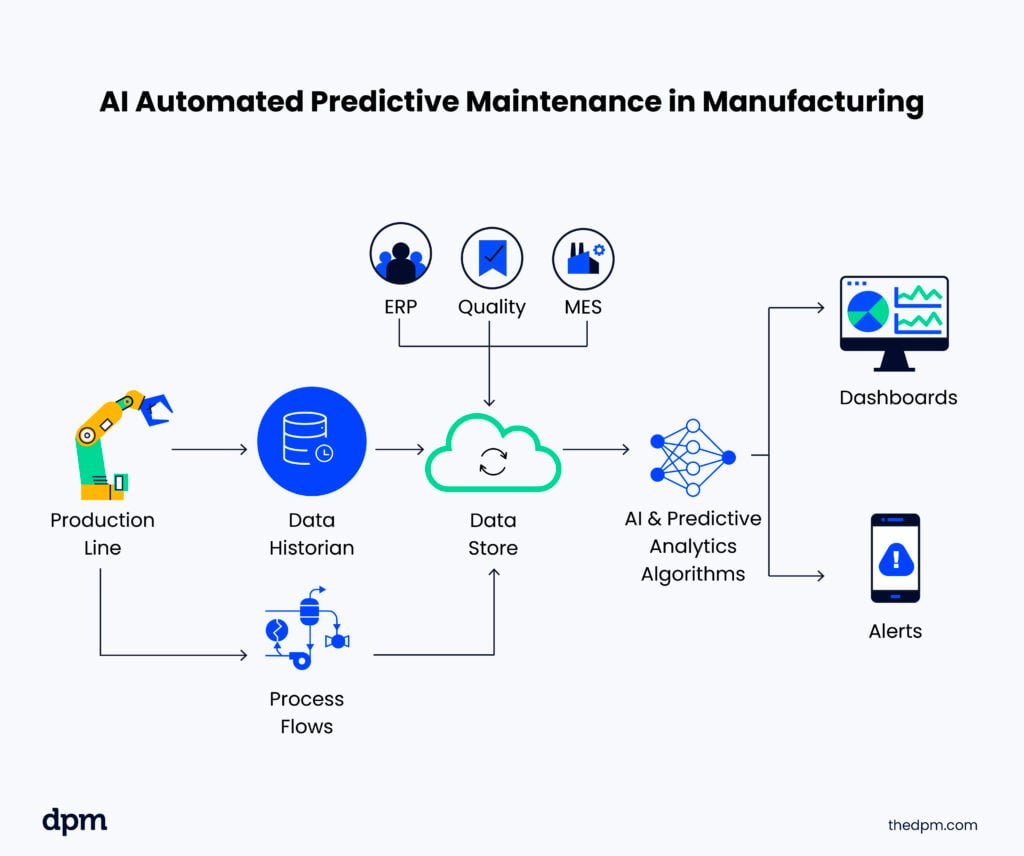
This is how we actually get the work done. I view my role as the conductor of an orchestra that includes both humans and AI agents. We use tools to help us draft, but the standard for “Done” is always human quality.
When we need to ramp up production, using an AI article generator can help get the first draft to 80% completion, allowing my senior editors to spend their time on voice, examples, and expert quotes rather than staring at a blank page.
The minimum viable editorial workflow (for a lean SaaS team)
- Intake/Ideation: Strategy alignment (Weekly).
- Brief Creation: AI-assisted, human-approved.
- Drafting: Writer or AI agent produces V1.
- SME Review: The step beginners skip. An expert must read it for accuracy.
- AEO Optimization: Formatting for answers.
- Publish & Distribute: Go live.
How autonomous AI agents change the workflow (with guardrails)
I let automation do the heavy lifting on research and outlining. I use agents to scan our published content and suggest internal links. However, I always review the output. I never let an agent publish directly to the blog without a human eye. That is the guardrail.
Publishing at scale: templates, internal links, and WordPress automation
Consistency is key. We use reusable templates for our core content types (e.g., the “Vs” page, the “How-to” guide). Once the content is approved, using a Bulk article generator or automation tool to handle the uploading, formatting, and scheduling in WordPress saves my team hours every week. Just remember: don’t publish 100 posts at once without checking a sample first.
Measurement: the KPI dashboard I use to prove content is scaling (traffic, pipeline, retention)

Here is a hard truth I learned: Rankings can go up while pipeline goes down. I measure success using a balanced scorecard, not just Google Analytics.
| Metric Type | KPI | What it tells me | Common Pitfall |
|---|---|---|---|
| Leading Indicator | Organic Impressions | Is demand growing? | Confusing impressions with clicks. |
| Volume Metric | Qualified Traffic | Are the right people visiting? | Celebrating bot traffic. |
| Conversion | Demo Requests / Trials | Is the content persuasive? | Ignoring “Assisted Conversions.” |
| Retention | Feature Adoption | Did the content help them use the tool? | Not linking content to product data. |
A simple monthly content review loop (what I look at in 30 minutes)
Once a month, I look at:
- Top 3 Winners: What worked? Can we double down?
- Top 3 Losers: Why did these fail? Wrong intent? Poor quality?
- Keyword Movements: Are we slipping on key terms? (Time to refresh).
Common mistakes, FAQs, and my next-step checklist for beginners
We have covered a lot. Before you go, let’s address the most common stumbling blocks I see teams hit, so you can avoid them.
Mistake #1: Publishing “broad SaaS SEO” topics that don’t match my ICP
The Fix: Apply the “Wallet Test.” Ask yourself: “Would someone searching for this keyword actually pull out their wallet for our software?” If not, kill it or retarget it.
Mistake #2: Treating content as TOFU only (and starving activation/retention)
The Fix: For every two top-of-funnel (TOFU) posts, write one bottom-of-funnel asset (like a comparison sheet or migration guide). This keeps sales happy and drives revenue.
Mistake #3: Using AI for speed without proof, QA, or voice consistency
The Fix: Use AI for structure and drafting, but humanize the stories. If an AI writes a stat, verify it. I’ve seen AI invent entire studies that don’t exist. Trust, but verify.
Mistake #4: Ignoring AEO/GEO structure (hard to quote, hard to recommend)
The Fix: Go back to your top 5 posts. Rewrite the introduction to define the core concept in the first 50 words. Add an FAQ section at the bottom.
Mistake #5: Measuring only traffic (and calling it success too early)
The Fix: Set up goal tracking in GA4 for “Sign Ups” and “Demo Requests.” Even if the numbers are small, tracking conversion value is better than tracking raw pageviews.
FAQ: What is Answer Engine Optimization (AEO) and why does it matter for SaaS content?
AEO is the practice of optimizing content to be cited by AI assistants (like ChatGPT, Perplexity, or Google’s AI Overviews). It matters because SaaS buyers are increasingly using these tools to research software. To win here, I structure content with clear headings, direct answers in the first paragraph, and schema markup that helps machines understand the context.
FAQ: How do autonomous AI agents change SaaS content marketing workflows?
AI agents are moving from simple text generation to managing workflows. They can now analyze search data, suggest topics, draft outlines, and even schedule posts. However, the human role remains critical for strategy, voice, and final approval. If I were a team of one, I’d start by using agents for research and outlining to save time.
FAQ: Is product-led growth still viable in 2026?
Yes, but it has evolved into Product-Led Sales. Pure PLG is hard; successful teams now combine the ease of self-service (PLG) with sales intervention for larger accounts. Content must support both: help docs for the user, and ROI calculators for the buyer.
FAQ: Why is vertical and micro‑SaaS strategy emerging for content marketing?
The general SaaS market is saturated. Growth is coming from vertical-specific solutions that solve niche problems deeply. Content for these markets converts better because it speaks the specific language of the industry (e.g., “HVAC dispatching” vs. generic “scheduling”). Don’t be afraid to be “too niche”—that’s where the money is.
FAQ: What role does pricing model play in a SaaS content strategy?
Your content must reduce the anxiety around pricing. If you use usage-based pricing, write articles explaining how to estimate costs. Transparency builds trust. I often see high bounce rates on pricing pages simply because the model wasn’t explained clearly in the blog content leading up to it.
3-bullet recap + my next 30 days (3–5 actions)
To summarize the strategy:
- Shift from volume to AEO-structured, intent-based content.
- Build a content flywheel that repurposes assets across the journey.
- Use AI agents with human guardrails to scale operations without losing quality.
Your next 30 days:
- Week 1: Define your ICP triggers and audit your current content for AEO readiness.
- Week 2: Build one topic cluster (Pillar + 3 supports) around a high-intent pain point.
- Week 3: Establish your “proof-first” brief template and write the first piece.
- Week 4: Publish, distribute to your newsletter/LinkedIn, and set up your KPI dashboard.
If you only do one thing this month, fix your briefs. Stop guessing and start validating. The results will follow.