How to Prioritize SEO Keywords: The Math-First Framework for Beginners
Introduction: Depth over Breadth—how to prioritize SEO keywords (without guessing)

When I audit a new site, the keyword list is never the problem—the priority is. Most of us sit on spreadsheets with thousands of rows exported from tools like Ahrefs or Semrush, paralyzed by decision fatigue. You have high-volume terms that look impossible to rank for and low-volume long-tails that feel like a waste of time. The result? We guess. We pick a few random topics, write them, and hope for the best.
This approach burns budget fast. To win in today’s market—especially if you are a US-based business facing fierce local and national competition—you need a defensible method. You need a math-based framework that balances volume against intent, competition, and trend velocity.
In this guide, I’ll walk you through the exact workflow I use to turn a messy keyword dump into a prioritized content roadmap. We will build an inventory, apply a weighted scoring model, and sanity-check it against real SERP data. No hype, just the operational steps to help you choose winners.
Search intent check: what you’ll be able to do after reading
This isn’t about theory; it’s about decision-making. By the end of this article, you will be able to:
- Define prioritization criteria that actually impact your bottom line, not just vanity metrics.
- Calculate a Priority Score using a transparent, weighted formula you can explain to stakeholders.
- Spot misleading volume numbers that look good but deliver zero qualified leads.
- Rank-order 50 keywords in under an hour once your template is set up.
- Build a publish-ready plan that maps specific keywords to specific page types.
What it really means to prioritize keywords (and why depth beats breadth)

Prioritization in a business context means choosing the keywords that maximize outcomes—revenue, leads, or signups—per unit of effort. It sounds simple, but most marketers default to “highest volume first.” That is a mistake. High volume often brings low intent, or what I call “empty calories” traffic.
Modern search behavior has shifted. Users are asking specific questions, often via voice or conversational AI. Research suggests that long-tail queries now constitute approximately two-thirds of all searches , and voice search—often characterized by natural language questions—is rising sharply .
Depth means covering a topic so thoroughly (through clusters and semantic relevance) that Google views you as an authority. Breadth is publishing one random article on “CRM software” and another on “email tips” without connecting them. Depth wins because search engines now prioritize topical authority over isolated keyword matches. If you run a local service business, ranking for 1,000 irrelevant visitors is worthless compared to ranking for 50 visitors who actually need your service now.
Why long-tail and question-based keywords often win for beginners
If you are starting with lower domain authority, long-tail keywords are your best entry point. They capture users who are further down the funnel and ready to act. Look for these signals of high intent:
- Commercial modifiers: “Best for,” “vs,” “review,” “price.”
- Local intent: “Near me,” city/state specific.
- Problem-solving: “How to fix,” “why is my…”
- Urgency: “Emergency,” “same day.”
The beauty of these queries is that while the volume is lower, the conversion rate is typically much higher because the user tells you exactly what they want.
The hidden cost of breadth: content sprawl, cannibalization, and slow wins
I see this constantly: a site has five different articles targeting “best CRM for small business,” but none of them rank well. This is keyword cannibalization. When you prioritize breadth—trying to rank for everything at once—you confuse search engines. They don’t know which page is the authority, so they rank none of them.
Beyond technical SEO, the operational cost is huge. Managing 50 mediocre pages takes more effort than managing 5 exceptional ones. Content sprawl dilutes your internal linking power and makes site maintenance a nightmare. Prioritization isn’t just about what to write; it’s about aggressively deciding what not to write.
Step 1 — Build a keyword inventory you can actually score

You can’t score what you haven’t organized. The first step is to get your raw data into a single view. I use a simple spreadsheet, but the columns matter more than the tool. Do not overcomplicate this. Start with a focused list of 30–100 keywords to avoid overwhelm.
Here is the basic structure you need:
| Column Name | Description |
|---|---|
| Keyword | The actual query string. |
| Volume (Monthly) | Directional estimate (remember, these are rarely 100% accurate). |
| Difficulty (KD) | The score from your SEO tool (0-100). |
| Intent Label | Informational, Commercial, Transactional, Navigational. |
| Current Rank | If applicable (leave blank if new content). |
| SERP Features | Notes on ads, snippets, or video packs. |
Where I pull keywords from (fast): customers, Search Console, SERPs, and competitors
When building this list, I prioritize sources based on reality, not just software databases. Here is my order of operations:
- Customer conversations: What specific words do they use on sales calls?
- Google Search Console: I often find the best leads here—keywords with impressions but low clicks (striking distance).
- Competitor Analysis: Which keywords are driving their top pages?
- Google “People Also Ask”: A goldmine for conversational questions.
- Google Autosuggest: Type your main keyword and see what completes the sentence (great for “near me” data).
Tag intent and funnel stage (so the math reflects reality)
Before doing any math, you must manually tag intent. A keyword with 10 searches that leads to a sale is worth more than a keyword with 1,000 searches that leads to a bounce. Use this mini rubric:
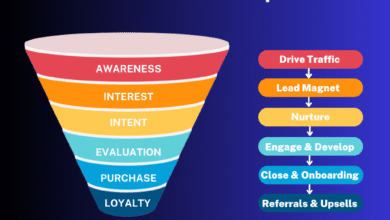
- Informational (Top Funnel): “What is SEO,” “How to unclog a drain.” (Good for traffic/authority).
- Commercial Investigation (Mid Funnel): “Best SEO tools,” “Plumber near me reviews.” (High value).
- Transactional (Bottom Funnel): “Buy SEO audit,” “Emergency plumber pricing.” (Highest value).
- Navigational: “Kalema login,” “Facebook.” (Ignore these for prioritization).
Quick SERP reality check: what Google is rewarding today
Don’t trust tool metrics blindly. Open the top 3 results for your target keyword. Ask yourself: What is the page actually doing?
If the top results are Amazon product pages and you are writing a blog post, you have an intent mismatch. If the results are massive guides from Wikipedia or Forbes, the difficulty is higher than the tool says. If you see a “Local Pack” (map results), local SEO matters more than your content depth. This 2-minute check saves weeks of wasted writing.
Step 2 — The math behind how to prioritize SEO keywords (a weighted scoring model)

Now for the fun part: the math. The goal here is to create a single Priority Score that lets you sort your list from “Must Do” to “Ignore.” To do this, we use a weighted scoring model. This sounds fancy, but it’s just a way of saying, “I care 40% about relevance and only 10% about volume.”
Here is the thing: weights are subjective. They should reflect your business goals. If you are a brand new site, you might weight “Ease of Ranking” higher. If you are an enterprise with deep pockets, you might weight “Volume” higher. Below is the model I use for typical SMBs looking for efficient growth.
Choose factors that match business outcomes (not vanity traffic)
For a robust score, I track these five factors. If you can’t measure them perfectly, estimate them consistently.
- Business Relevance: How closely does this tie to what we sell?
- Intent Strength: How close is the user to a purchase decision?
- Trend Momentum: Is this topic growing or dying?
- Search Volume: Potential traffic ceiling.
- Ease (Feasibility): Inverse of keyword difficulty (100 – KD).
A practical keyword priority formula (with weights you can tweak)
I normalize everything to a simple 1–10 scale so the math works. Here is the formula:
Priority Score =
  (0.30 x Relevance) +
  (0.25 x Intent) +
  (0.15 x Trend) +
  (0.15 x Ease) +
  (0.15 x Volume)
In this model, 55% of the score comes from Relevance and Intent. That is intentional. We want to prioritize revenue potential over raw traffic. Note that I use “Ease” instead of “Difficulty” because we want a higher number to be better.
Table: suggested scoring rubric (0–10) for each factor
To make this work, you need a standard way to assign those 1–10 scores. Use this rubric:
| Factor | Score 1-3 (Low) | Score 4-7 (Medium) | Score 8-10 (High) |
|---|---|---|---|
| Relevance | Loosely related topic (e.g., “History of pipes”) | Tangential interest (e.g., “DIY drain cleaning”) | Directly sells offer (e.g., “Emergency plumber rates”) |
| Intent | Curiosity / Info only | Comparison / Research | Ready to buy / “Near me” |
| Trend | Declining or Flat | Steady / Seasonal | Explosive growth / New trend |
| Ease | KD 70+ (Very Hard) | KD 30-69 | KD 0-29 (Very Easy) |
| Volume | < 100 searches/mo | 100 – 1,000 searches/mo | > 1,000 searches/mo |
Add modern search considerations: AEO/GEO and SERP click potential
One quick addition for the modern era: SERP Opportunity. With Generative Engine Optimization (GEO) and Answer Engine Optimization (AEO) becoming critical, traditional organic clicks are under threat. If a SERP is crowded with ads, a local pack, a featured snippet, and a “People Also Ask” box, your click-through rate (CTR) will be lower even if you rank #1.
I sometimes add a penalty to the score for “Crowded SERPs.” If the result page is wall-to-wall Google features, I might knock 2 points off the total score. This accounts for the projected decline in pure organic traffic , ensuring you prioritize keywords where you can actually get clicks.
Step 3 — Worked example: scoring keywords and picking winners

Let’s look at this in practice. Imagine a hypothetical B2B SaaS company selling “Project Management Software.” We have limited resources: one writer and a budget for 4 articles this month. We need to pick the winners.
I’ve run the math on a small sample list. If this were my site, I’d focus strictly on scores above a 7.0 for the first sprint.
Table: sample keyword set and computed priority score
Note: Values are illustrative examples based on the weighting formula above.
| Keyword | Intent | Vol (0-10) | Ease (0-10) | Relevance (0-10) | Score | Decision |
|---|---|---|---|---|---|---|
| project management software | Comm. | 10 | 1 (Hard) | 10 | 6.8 | Defer (Too hard) |
| best pm tools for marketing | Comm. | 6 | 6 | 9 | 7.9 | Ship It (High priority) |
| what is agile methodology | Info | 9 | 3 | 5 | 5.1 | Drop (Low relevance) |
| asana vs trello vs [our brand] | Comm. | 4 | 8 | 10 | 8.2 | Ship It (Top priority) |
| project plan template excel | Info | 8 | 5 | 7 | 6.5 | Maybe (Lead magnet?) |
See what happened? The “head term” (project management software) has huge volume, but the difficulty kills its score. The comparison term (Asana vs Trello…) has low volume, but high relevance and ease, making it our #1 priority. This is how you win: by picking the fights you can actually win.
How I break ties when scores are close
Spreadsheets are great, but sometimes you get three keywords with a score of 7.5. This is where experience beats spreadsheets. Here are my tie-breakers:
- Fastest to publish: Can we write this in 4 hours? (e.g., we already have the data).
- Cluster support: Does this page support a “Pillar Page” we are trying to rank?
- Conversion intent: Which one is closer to the credit card?
- Format match: Is the SERP asking for a listicle (easy) or a custom interactive tool (hard)?
Step 4 — Forecast demand: trends, velocity, and semantic clustering (using AI responsibly)

Historical volume is looking in the rearview mirror. To get ahead, you need to look at velocity. I look for keywords that are starting to spike but haven’t peaked yet. Tools like Kalema can help identify these opportunities by analyzing broader data patterns, but you can also spot them manually if you know where to look.
Furthermore, we need to group these keywords. You shouldn’t write a separate page for “best pm tools for marketing” and “marketing project management software.” They are semantically the same. Clustering allows you to target 50 keywords with just 5 strong pages, building authority faster.
Trend signals I watch (before I write)
I once missed a massive seasonal spike because I was looking at 12-month average data. Now, I check these signals:
- Google Trends 90-day view: Is the slope pointing up?
- Social-to-search lag: Trends on TikTok often hit Google Search 12–18 hours later . If people are talking about it, they will be searching for it tomorrow.
- Seasonality: Does this keyword always spike in January (e.g., “gym membership”) or July (e.g., “AC repair”)?
- GSC Impressions: If an existing page suddenly gets more impressions for a new term, that’s a breakout signal.
Semantic clustering: turning 50 keywords into 5 pages that build authority
Think of your content like a hub-and-spoke model. Your “Pillar Page” covers the broad topic (e.g., “Project Management Guide”), and your cluster pages cover the specific sub-topics (e.g., “Agile Method,” “Kanban Boards,” “Team Roles”).
By linking these together, you tell Google, “I am an expert on this entire web of topics.” This semantic clustering is often the difference between page 2 and page 1. It also prevents cannibalization because every keyword has a specific “home.”
Quick note on AEO/GEO: write answers that machines can extract
This doesn’t need to be scary. Optimizing for Answer Engines (like ChatGPT search or Google SGE) is mostly about clarity. Use clear H2s and H3s that ask questions. Provide direct, concise answers immediately following the header. If you are technical, use FAQ schema. If not, just formatting your content logically helps machines understand—and rank—your answers.
Step 5 — Turn priorities into an execution plan (content, on-page SEO, and publishing cadence)

You have your scores. You have your clusters. Now you need to ship. This is where many teams fail—they have a great strategy but a slow editorial process. To scale this, I recommend a workflow that combines human strategy with AI efficiency. You might use an AI article generator to draft the initial content based on your strict briefs, and then use an Automated blog generator to maintain a consistent publishing cadence.
Here is the exact order I’d publish in: Start with your highest-intent, easiest-to-rank keywords (the “low hanging fruit”). Then, build out the supporting cluster content. Finally, tackle the high-volume “boss level” keywords once you have established authority.
Keyword-to-page mapping: pick the right format (and avoid cannibalization)
Don’t skip this step. Before writing a single word, map it out:
- Primary Keyword: The main term the page targets.
- Secondary Keywords: 3-5 variations to include in H2s/H3s.
- Page Type: Blog post, Product Page, Landing Page, or Tool?
- URL Slug: Keep it short and keyword-rich.
- Internal Links: Which pillar page will this link back to?
I used to make the mistake of letting writers choose their own angles. Don’t do that. Define the angle in the mapping phase to ensure it aligns with the search intent you identified earlier.
On-page SEO essentials (only where they affect your score outcomes)
You don’t need a 50-point checklist. Just nail these basics to ensure your prioritization pays off:
- Title Tag: Front-load the primary keyword. Keep it under 60 chars.
- H1: Match the Title Tag closely.
- Meta Description: Write for CTR, not just keywords. Treat it like an ad.
- URL Structure: /topic/keyword-slug (clean and hierarchical).
- First 100 Words: State the answer or value proposition immediately.
Measurement: what I track in the first 30–60 days
SEO is a long game, but you should see pulses of life early. I look for:
- Impressions (GSC): Are we appearing for the target keywords? (Leading indicator).
- Rankings: Did we enter the top 50? Top 20?
- CTR: Are people clicking? If not, rewrite the Title/Meta.
- Engaged Sessions (GA4): Are they staying? If not, the content failed the intent match.
If impressions don’t move after 30 days, revisit your intent match and SERP analysis. You likely missed something in the difficulty assessment.
Common mistakes, FAQs, and next steps
We’ve covered a lot. To wrap up, let’s look at the pitfalls that trip beginners up, answer some burning questions, and give you a checklist for Monday morning.
Mistakes I see beginners make (and how I fix them)
- Mistake: Chasing volume only. Fix: Weight “Relevance” and “Intent” higher than volume.
- Mistake: Ignoring SERP reality. Fix: Always manually check the top 3 results before approving a keyword.
- Mistake: Scoring without normalization. Fix: Convert everything to a 1-10 scale so metrics are comparable.
- Mistake: Content silos. Fix: Always plan keywords in clusters (groups of 3-5), not isolation.
- Mistake: Set it and forget it. Fix: Re-score your list quarterly; trends change.
FAQs (beginner-friendly, straight answers)
Why focus on long-tail or conversational keywords?
Because they convert better and are easier to rank for. A user searching “running shoes” is browsing; a user searching “best marathon running shoes for flat feet” is ready to buy. With voice search rising, these natural language queries are becoming the norm.
How can I forecast which keywords to target?
Start small. Pick one trend signal—like Google Trends slope or rising impressions in Search Console—and track it weekly. Look for topics that are gaining velocity rather than just staring at historical averages. Validating these against your business calendar (e.g., upcoming holidays) helps you publish just in time.
What is Generative or Answer Engine Optimization?
GEO or AEO is simply organizing your content so AI can easily understand and quote it. Practically, this means using clear headings, concise direct answers (20-40 words), and structured data (schema). Think of it as making your content “machine-readable.”
How do I prioritize keywords mathematically?
You don’t need advanced calculus. Just use the weighted formula we discussed: define your factors (Volume, Intent, etc.), normalize them to a 1-10 score, apply your business-specific weights (e.g., 0.3 for Relevance), and sum them up. The math forces you to be objective.
What role does semantic clustering play?
Clustering proves your expertise. By grouping related keywords and covering them with interlinked pages, you build topical authority. It tells Google you are not just a one-hit wonder but a comprehensive resource on the subject, which lifts rankings for all pages in the cluster.
Conclusion: my 3-point recap + next actions
If you only take three things away from this, make them these:
- Inventory first: Gather your data from multiple sources, not just one tool.
- Score objectively: Use a weighted model to filter out vanity metrics and find the profit drivers.
- Execute in clusters: Publish groups of related content to build authority faster.
Your Next Steps:
- Create your “Keyword Inventory” spreadsheet today.
- Decide on your weights (e.g., heavy on Relevance) and score your top 30 keywords.
- Pick the top 3 winners and map them to a content cluster.
- Start writing (or generating) the first draft.
Don’t overthink the perfect model. The best prioritization system is the one you actually use. Good luck!