Navigating Compliance: Comparing Healthcare SEO Keyword Difficulty in the US
When I pull a keyword difficulty (KD) score for a term like “dermatologist” and see a “moderate” 45/100, I usually treat it as a trap. In almost any other industry, that score suggests a winnable battle. In US healthcare, however, that score is often hiding a wall of government health sites, massive academic publishers like Mayo Clinic, and local giants with twenty years of history.
For healthcare marketers and practice managers, relying solely on standard tool metrics is a recipe for wasted budget. The reality of ranking in this sector involves navigating strict “Your Money or Your Life” (YMYL) standards, rigid HIPAA compliance that limits how we track success, and a SERP that is increasingly dominated by AI Overviews and local packs.
I wrote this guide to bridge the gap between what SEO tools tell you and what actually happens in the search results. This is a practical, compliance-aware framework for evaluating keyword difficulty in healthcare—moving beyond the raw numbers to find the “effective difficulty” you can actually overcome.
What this guide will help me do (in plain language)
- Stop chasing impossible terms: Distinguish between “vanity metrics” and keywords that actually drive appointments.
- Compare difficulty accurately: Understand how difficulty shifts between local, national, and long-tail terms.
- Navigate compliance: Spot keywords and content types that require heavy legal/clinical review before you start writing.
- Adapt to AI Search: Decide whether a keyword is worth targeting if an AI Overview is likely to steal the click.
What healthcare SEO keyword difficulty actually means (and how tools calculate it)

If I am teaching a new marketing coordinator, I start by explaining that Keyword Difficulty (KD) is a directional metric, usually on a scale of 0 to 100. It estimates how hard it would be to rank in the top 10 organic results, primarily based on the backlink profiles of the current top-ranking pages.
However, in healthcare, the average keyword difficulty hovers around 52% according to industry data. But that average is misleading. A KD of 50 in ecommerce might mean competing with a few blogs. A KD of 50 in healthcare often means competing with WebMD, the CDC, and Healthline. These sites have massive topical authority that standard KD algorithms don’t fully weigh against a local practice website.
When I see a KD score, I view it as a preliminary filter, not the final answer. It tells me the strength of the competition’s links, but it doesn’t tell me about the trust requirements of the query.
What keyword difficulty scores usually include (and what they ignore)
Most major SEO tools calculate difficulty using these common inputs:
- Backlink quantity and quality: How many domains link to the top 10 results.
- Domain Authority (DA/DR): The overall strength of the website.
- Content relevance: How well the current pages match the keyword.
Here is what they almost always ignore—and where healthcare SEOs get burned:
- Medical Accuracy Expectations: Does the query require a board-certified reviewer?
- Local Pack Dynamics: Is the organic result pushed down by a map pack?
- Compliance Friction: Can I actually track conversions here without violating HIPAA?
- Brand Trust: Does the user insist on a known hospital brand for this condition?
A quick sanity-check: when KD is useful vs misleading in healthcare
KD is useful when I am comparing apples to apples—like choosing between “pediatric dentist” vs. “kids dentist.” It gives me a relative sense of competition.
It becomes misleading when the SERP is flooded with Google features. I’ve seen keywords with a low KD of 20 that generate zero traffic because an AI Overview answers the question instantly, or a local “3-pack” dominates the top half of the mobile screen. In healthcare, I use a mental model of “Effective Difficulty”: Tool KD + Compliance Effort + SERP Features = Real Difficulty.
Why healthcare SEO is harder than most industries: compliance, E‑E‑A‑T, and YMYL realities

The single most frequent question I get is, “Why can’t we just write a blog post about this and rank?” The answer lies in Google’s “Your Money or Your Life” (YMYL) guidelines. Google holds healthcare content to the highest possible standard because bad advice here can physically harm a user.
This means we are judged strictly on E-E-A-T (Experience, Expertise, Authoritativeness, and Trustworthiness). To rank for a medical term, I can’t just be relevant; I have to be credible. This adds a layer of difficulty that doesn’t exist for a lifestyle blog.
E‑E‑A‑T in healthcare: what I need on the page to earn trust
Before I even target a keyword, I check if we have the assets to satisfy E-E-A-T. If we don’t, the effective difficulty is 100/100. Here is my checklist:
- Author Credentials: Is the content written or reviewed by a licensed provider (MD, DO, RN, PT)?
- Citations: Do we reference peer-reviewed journals or consensus statements?
- Editorial Transparency: Is there a clear “medically reviewed by” date and bio?
- Contact Info: Is the physical location and phone number visible and consistent?
Compliance constraints that affect SEO execution (without turning this into legal guidance)
This is where my SEO plan meets the compliance calendar. In the US, HIPAA regulations restrict how we can use patient data for marketing. While this doesn’t directly change a keyword’s ranking difficulty, it changes the ROI difficulty.
For example, if I target “depression treatment,” I cannot use standard retargeting ads to bring those visitors back, as that implies a medical condition. I have to be extremely careful with testimonials; I can’t just copy-paste a Google Review onto a landing page without ensuring it doesn’t reveal private health information (PHI). If a keyword requires social proof to convert, but compliance flags testimonials as high-risk, that keyword just became much harder to monetize.
Comparing healthcare SEO keyword difficulty across keyword types (with examples and a table)

Not all healthcare keywords behave the same way. A “head term” like cardiology behaves completely differently from a “long-tail” term like best cardiologist for arrhythmia near me. Research suggests that long-tail keywords (4+ words) account for approximately 70% of medical searches, yet many practices still obsess over the short, high-difficulty terms.
Below is a breakdown of how difficulty shifts across different types of healthcare queries in the US market.
| Keyword Type | Example | Typical KD | SERP Environment | Best-Fit Page Type |
|---|---|---|---|---|
| Head Term (Broad) | “Physical therapy” | High (60-90) | Dominated by Wikipedia, WebMD, professional associations. | Homepage or Pillar Page |
| Local Intent | “Pediatric urgent care near me” | Moderate (30-50) | Heavy Map Pack presence. Organic results are often directories (ZocDoc, Yelp). | Location Page / GBP |
| Symptom Question | “Is chest pain serious” | High (70+) | AI Overviews + Featured Snippets from major publishers (Mayo Clinic). | Blog Post (High E-E-A-T) |
| Treatment Specific (Long-tail) | “CBT therapy for anxiety cost” | Low-Mod (20-40) | Mixed. Payors, providers, and forums. High intent. | Service Page / FAQ |
| Emerging Service | “Same-day telehealth prescription” | Variable | Ads heavy. Fast-moving competitors. Telehealth searches rose ~320% post-2020. | Landing Page |
Head terms vs long-tail: why “lower KD” often means “higher intent” in healthcare
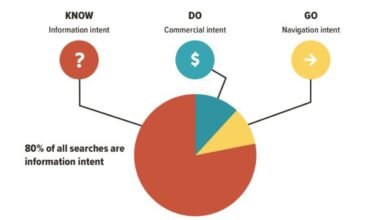
If I am advising a small clinic, I almost always ban targeting broad head terms in the first year. Ranking for “dentist” is vanity. Ranking for “emergency dentist open saturday” is revenue. The long-tail version usually has a lower KD score, but more importantly, the intent is transactional. The user isn’t browsing; they are looking for a solution now.
Local vs national SERPs: what changes the difficulty picture
For local practices, “difficulty” is less about domain authority and more about proximity and Google Business Profile (GBP) strength. Roughly 55% of medical queries include location-based terms. If I am optimizing for a local surgeon, I check the “Local Pack” difficulty first. If the top 3 spots have 500+ reviews and my client has 12, the KD of the keyword doesn’t matter—the local pack barrier is the real problem.
Informational vs appointment-driven keywords: different SERP competitors
Competitors change based on intent. For informational queries (“what is eczema”), I am fighting national publishers. For appointment queries (“eczema dermatologist near me”), I am fighting other local doctors. I always choose the fight with local doctors first—it’s a much easier win than trying to outrank the American Academy of Dermatology.
A compliance-aware workflow I use to evaluate keyword difficulty (step-by-step playbook)

When I need to build a content calendar that respects both SEO goals and compliance fears, I use this workflow. It moves from research to validation to scoring. It’s also where tools that help streamline research, like an AI SEO tool, can be valuable for scaling the initial data gathering before you apply human judgment.
Step 1–2: Start from services and real patient language (not just tool suggestions)
I never start with a keyword tool. I start with the intake forms and call logs (anonymized, of course). Patients rarely use clinical terms; they use symptom language. A doctor says “rhinoplasty”; a patient types “nose job cost.”
- Action: List your top 5 revenue-generating services.
- Action: Brainstorm 5 questions patients ask in the exam room for each.
- Compliance Note: Never copy-paste raw patient chat logs or intake forms into a keyword research tool. Strip all PHI (Protected Health Information) first.
Step 3–5: Map intent to page types + do a manual SERP reality check
Once I have a list, I run the metrics, but then I look at the live search results. This is my “what I look for first” checklist:
- Who is ranking? If it’s all government sites (.gov) or universities (.edu), I cross it off.
- Are there ads? Lots of ads mean high conversion intent (good), but high cost-per-click.
- Is there a Map Pack? If yes, I need a location page strategy, not just a blog post.
- Is there an AI Overview? If Google is summarizing the answer at the top, I need to optimize for being cited in that summary (structured data, clear definitions).
Step 6–8: Combine KD with compliance effort and authority gap (simple scoring template)
I use a simple 1-5 scoring model to prioritize. I don’t just look at KD; I look at the effort required.
| Keyword | KD (Tool) | SERP Features | Compliance/Clinical Effort | Total Priority |
|---|---|---|---|---|
| “Best cancer hospital” | 85 (Hard) | Map Pack + Top Publishers | High (Claims require strict legal review) | Low |
| “Does insurance cover braces” | 35 (Med) | Featured Snippets | Medium (Financial disclaimer needed) | High |
| “Walk-in sports physicals” | 25 (Easy) | Map Pack | Low (Standard service page) | Highest |
Note: Sometimes a low KD keyword like “cancer cure” gets deprioritized immediately because the compliance risk and burden of proof are simply too high for a standard content marketing campaign.
Execution levers that can make “hard” healthcare keywords more winnable

Sometimes you have to target a hard keyword because it’s core to your business. When KD is high, I rely on technical execution to bridge the gap. In healthcare, technical quality is a proxy for trust.
Mobile and performance: why it’s a trust signal in healthcare
If someone is anxious about symptoms, a slow-loading site isn’t just annoying—it feels untrustworthy. With over 70-90% of healthcare searches happening on mobile devices, mobile performance is non-negotiable. Yet, data suggests nearly 58% of healthcare domains fail Core Web Vitals assessments. Fixing speed is often the fastest way to improve “effective” rankings without building a single new backlink.
Structured data for healthcare pages (and where beginners should start)
Schema markup (code that helps Google understand your content) is my secret weapon. Studies have shown structured data can boost CTR by up to 35%. I start with these:
- Physician Schema: Defines the doctor’s credentials and specialties.
- MedicalOrganization Schema: Validates the clinic as a legitimate medical entity.
- FAQPage Schema: Helps grab extra space in the SERPs for question-based queries.
I always validate these using the Schema Markup Validator to ensure there are no errors that could disqualify us from rich results.
AI-powered search, zero-click, and voice: how they change healthcare keyword strategy

The rise of AI Overviews (formerly SGE) has shaken up the landscape. Recent data indicates that for non-branded healthcare queries, click-through rates (CTR) can drop by around 20% when an AI summary is present. This sounds scary, but it just means the goal posts have moved.
I assume for many definition-style queries (“what is sciatica”), I might not get the click. However, I still optimize for them to build visibility. If my brand is cited in the AI answer, or if I appear in the “People also ask” boxes, I am building brand familiarity.
Practical tactics for ‘zero-click’ visibility in healthcare
To survive in a zero-click world, I focus on:
- Answer-First Intros: Provide a direct answer in the first 50 words of a post to target featured snippets.
- Local Pack Optimization: Voice search (which accounts for ~30% of healthcare queries) often pulls from local listings. “Find a doctor near me” relies entirely on your Google Business Profile, not your blog.
- Transactional CTAs: I ensure that even if a user only scans the snippet, the next step (booking) is clear on the page if they do click through.
Common mistakes beginners make with healthcare SEO keyword difficulty (and how I fix them)

I’ve learned some of these the hard way. Here are the most frequent pitfalls I see when auditing healthcare accounts.
Mistake-to-fix checklist (5–8 items)
- Mistake: Chasing “Head Terms” too early.
Fix: Pivot to “Service + City” or “Symptom + Doctor” keywords for the first 6-12 months. - Mistake: Ignoring Local Intent modifiers.
Fix: Update title tags to include the city or neighborhood name naturally. - Mistake: Publishing medical advice without credentials.
Fix: Assign a clinician to review content and list them as a reviewer in the byline. - Mistake: Using “Doorway Pages” for locations.
Fix: Ensure every location page has unique content (specific provider bios, parking info, specific services) rather than duplicating the same text 20 times. - Mistake: Failing Core Web Vitals.
Fix: Optimize images and lazy-load third-party scripts (like chat widgets). - Mistake: Non-compliant tracking.
Fix: Use HIPAA-compliant call tracking and form tools; never store PHI in standard analytics.
The biggest offender is usually #4—thin location pages. I see practices spin up 50 pages for every suburb near them with identical content. Google hates this. It increases your “effective difficulty” because the algorithm flags your site as low-quality spam.
Summary, FAQs, and next actions for a compliance-aware keyword plan

Navigating healthcare SEO requires a balance of ambition and caution. The keyword difficulty score is just the starting point; the real work lies in assessing trust requirements and compliance feasibility.
3 key takeaways (quick recap)
- KD is directional, not absolute: In healthcare, you must factor in Trust (E-E-A-T) and SERP features to find the true difficulty.
- Start Local and Long-Tail: These keywords have higher intent, lower competition, and often bypass the massive publisher sites.
- Technical = Trust: Speed, security, and schema are critical for convincing Google your site is safe for patients.
Next actions (what I’d do in the next 7 days)
- Build a seed list: Gather 20 questions from your front-desk team and map them to service lines.
- Score your keywords: Use the template above to rate them by KD, Intent, and Compliance effort.
- Audit your top 5 pages: Check them for E-E-A-T signals (author bios, citations, updated dates).
- Implement Schema: Add `MedicalOrganization` schema to your homepage and `Physician` schema to provider bios.
- Scale responsibly: If you need to produce more content, use an AI article generator to draft outlines and structures, but always force a human clinical review before publishing.
FAQs (beginner-friendly)
Why is healthcare SEO so difficult?
It is difficult because Google categorizes it as “Your Money or Your Life” (YMYL). This means Google demands significantly higher proof of expertise, authority, and trustworthiness compared to other industries to prevent harm to users.
How has AI-powered search changed keyword strategy?
AI Overviews often answer simple definition questions directly on the results page, reducing clicks. Strategies have shifted toward targeting more complex, experience-based queries and ensuring your brand is cited within the AI summary.
Should I focus on long-tail or broad keywords?
Start with long-tail. A keyword like “pediatrician accepting new patients in [city]” is easier to rank for and drives immediate bookings, whereas broad terms like “pediatrics” are dominated by national giants.
How important is mobile and page performance?
Extremely important. Since most patients search for health issues on their phones—often in moments of stress—a slow site damages trust immediately and negatively impacts your rankings.
How can I build authority under compliance constraints?
Focus on quality over quantity. build links from local chambers of commerce, medical associations, and partners. Ensure your site infrastructure is secure (HTTPS) and that your content is medically accurate and cited.